
SEO Blog: Unlock Your 2025 Success
What is an SEO Blog and Why It’s Crucial
An seo blog is a blog strategically optimized to rank high in search engine results, making it a primary driver of organic traffic to your website.
An effective SEO blog is crucial because it:
- Helps search engines understand your content.
- Attracts visitors actively searching for your information.
- Provides the best answers quickly, ending the user’s search on your site.
With over 90% of online experiences starting with a search engine, an unoptimized blog misses a massive audience. Many businesses struggle to get noticed, but this guide provides a clear roadmap that combines the science of algorithms with the art of great writing.
I’m Guy Leon, founder and CEO of Guac Digital. My experience has proven that a powerful seo blog strategy is essential for boosting web traffic and client engagement.
Simple seo blog glossary:
The Core of Your SEO Blog Strategy: Keywords and Intent
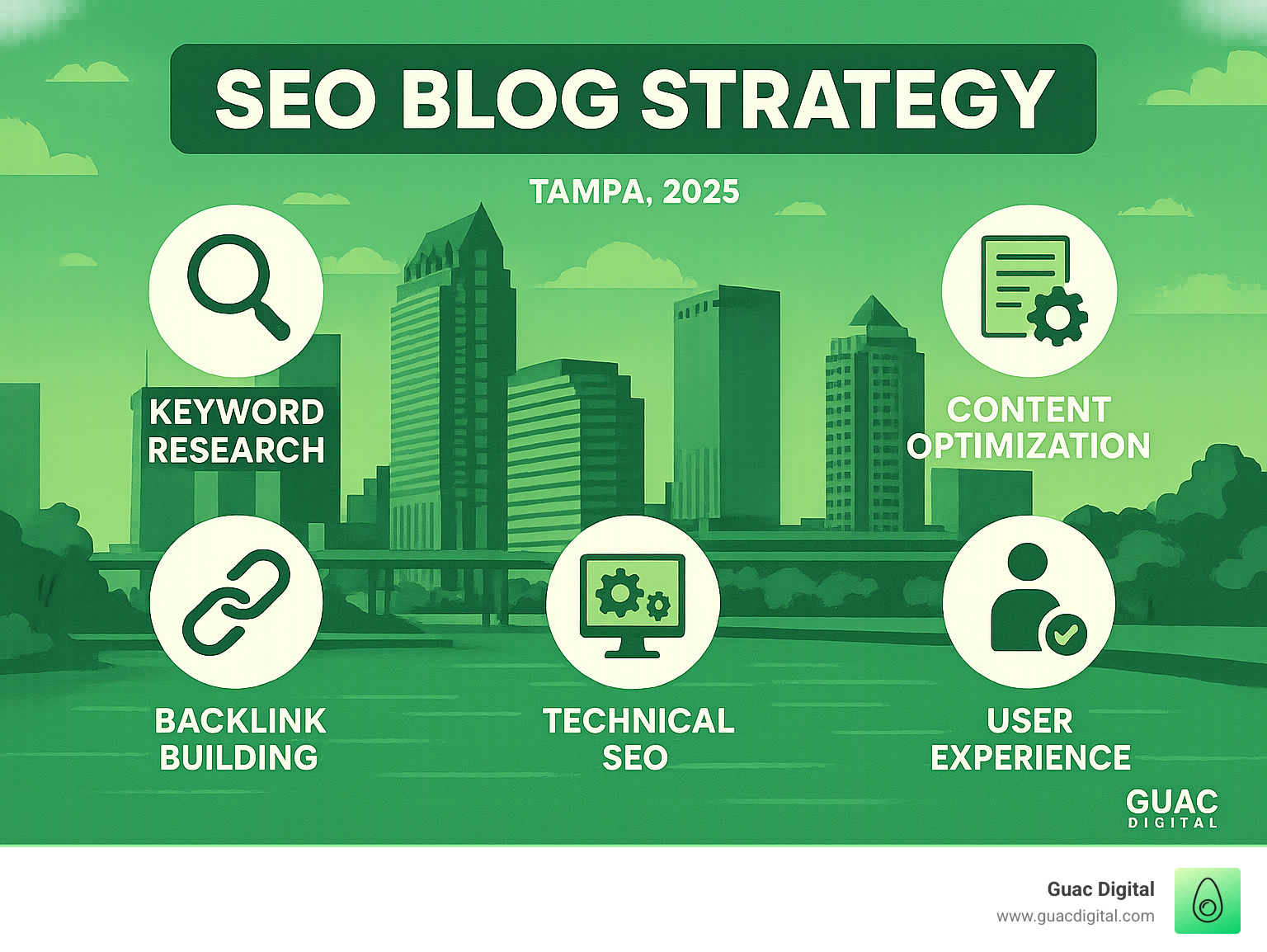
A successful seo blog requires more than great writing; it requires understanding what your audience is searching for and why. Your goal is to create the perfect answer to their query. A winning strategy rests on several key pillars:
- Keyword Research: This is the foundation. It involves finding the actual words and phrases your audience uses on Google to find solutions you offer.
- Search Intent: This is the “why” behind a search. Missing the intent—for example, providing an informational guide when a user wants to buy—means your content won’t rank.
- Topical Authority: Consistently publishing high-quality content on specific themes signals to Google that you’re a trusted expert worth ranking higher.
- Balanced Content Mix: A smart strategy includes about 70% informational content (to educate) and 30% commercial content (to drive business), building trust while achieving goals.
- Competitor Analysis: As one expert said, “All we are doing is being observant about what Google likes to rank.” Study what’s already on page one to create something even better.
To learn more, see our guide on What is Search Engine Optimization or start your research with Google’s Keyword Planner.
Best Practices for Keyword Research and Selection
The goal of keyword research is to find opportunities where your seo blog can realistically rank. Here’s how:
- Target Low-Competition Keywords: Especially for newer blogs, these are your secret weapon. Many SEO tools show keyword difficulty (KD). If your site’s Domain Authority (DA) is under 50, aim for keywords with a KD of 30 or less.
- Use Long-Tail Keywords: Instead of a broad term like “coffee,” target a specific phrase like “best organic coffee beans for French press.” The search volume is lower, but the user’s intent is much clearer and more likely to convert.
- Analyze User-Generated Content: Platforms like Quora and Reddit are goldmines for finding the real language people use to ask questions, revealing content angles that tools might miss.
Thorough keyword research removes the guesswork, ensuring you create content for an audience that already exists.
Decoding Search Intent to Improve Blog Post Performance
Understanding search intent—the “why” behind a query—is critical for your seo blog. Get it wrong, and your post won’t rank. There are three main types:
- Informational: The user wants to learn something (e.g., “how to fix a leaky faucet”). Your content should be a comprehensive guide or tutorial.
- Commercial: The user is researching a potential purchase (e.g., “best noise-canceling headphones”). They need reviews, comparisons, and detailed breakdowns.
- Navigational: The user wants to find a specific website (e.g., “Facebook login”). This is less relevant for blog content.
The best approach is to observe what Google already ranks for your target keyword. If the top results are listicles, create a better listicle. If they are how-to guides, write a more comprehensive one. Matching your content format to the existing SERPs (Search Engine Results Pages) is key.
Successful SEO is about understanding user needs and delivering the best solution.
Crafting the Perfect Post: Content Optimization and Structure
Knowing what to write is the first step; how you write it determines its success. A great seo blog post needs a solid structure and high-quality content that satisfies the user’s query so completely that it “ends the search journey.” This prevents “pogo-sticking” (users bouncing back to search results), a negative signal to Google.
Content quality and user engagement are intertwined. When users spend time on your post, it signals value to search engines. This is where understanding How to Improve SEO is vital.
Google’s E-E-A-T framework (Experience, Expertise, Authoritativeness, Trustworthiness) is crucial for assessing content quality, especially for topics affecting a person’s life or finances. Demonstrate E-E-A-T by showcasing real-world experience and citing credible sources. The goal is to create “10x content” that is significantly better than any competitor.
Essential Elements of an SEO-Friendly Blog Post
Every element of an seo blog post should guide the reader and clarify the topic for search engines.
- Compelling Title: Your title is the first thing users see. Keep it under 60 characters to avoid truncation in search results. Use a headline analyzer tool to craft titles that grab attention.
- Meta Description: This ~155 character summary doesn’t directly impact rankings but can significantly boost click-through rates by convincing users your post has the answer.
- Heading Structure: Use a logical hierarchy (H1 for the title, H2 for main sections, H3 for subsections) to create a roadmap for readers and search engines.
- Readability: Break up text with short paragraphs, bullet points, and white space. Most users scan before reading, so make your content easy to digest.
Writing Style for a High-Ranking SEO Blog
Modern SEO writing balances optimization with natural, helpful language. The goal is to be genuinely useful while strategically including terms people search for.
- Natural Keyword Integration: Include your target keyword and its variations organically. Comprehensive content naturally covers related terms, helping you rank for multiple queries.
- Avoid Keyword Stuffing: Forcing keywords into your text creates a poor user experience and can lead to Google penalties. Write for your audience first.
- Use LSI Keywords: Latent Semantic Indexing (LSI) keywords are terms thematically related to your main topic (e.g., “living room furniture” for a post on “coffee tables”). They help Google understand context. Find them with specialized SEO tools.
The key is to write for your audience. Use a conversational tone, answer questions directly, and provide real value. When you help people, Google’s rankings often follow.
Beyond the Words: Technical SEO and User Experience (UX)

Even brilliant content will fail without a solid technical foundation. Technical SEO ensures search engines can crawl, index, and understand your seo blog. Today, it’s deeply intertwined with user experience (UX).
Google measures UX with its Core Web Vitals (LCP, FID, CLS), which assess loading speed, interactivity, and visual stability. A slow or clunky site leads to high bounce rates, hurting your rankings. Site speed is a make-or-break factor for visibility. Our Engine Optimization Services address these issues, and for global sites, Using Content Delivery Networks (CDNs) can dramatically improve load times.
Key Technical SEO Elements for Your Blog
These technical elements have a powerful impact on your seo blog‘s performance:
- Clean URLs: Use simple, keyword-rich URLs like
/best-coffee-tables/instead of/post-12345/. Google recommends using words relevant to your content. - Image Optimization: Large images slow down your site. Keep file sizes under 100kb (JPG is often best) and always use descriptive ALT text for accessibility and SEO.
- Schema Markup: This structured data acts as a cheat sheet for Google, helping it understand your content’s context. Article schema can lead to rich snippets in search results.
- Canonical Tags: Use these to tell Google which version of a page is the “official” one, preventing issues with duplicate content.
- Sitemaps: A sitemap is a roadmap for Google. Submitting it via Google Search Console helps get your new posts indexed faster.
Why User Experience is Crucial for SEO Success
Google has confirmed that UX is a ranking factor. A positive user experience is essential for SEO.
- Page Speed: Slow pages lead to higher bounce rates, signaling to Google that your content isn’t meeting user needs.
- Mobile-First Indexing: Google primarily ranks your site based on its mobile version. A responsive, mobile-friendly design is non-negotiable.
- Easy Navigation: A clear site structure with logical internal linking keeps users engaged and helps them find information easily.
- Reducing Pogo-sticking: This is when a user clicks your result, then immediately returns to the search page. A great UX prevents this by satisfying user intent, signaling to Google that your content is valuable.
Google’s Page Experience signals directly tie these UX factors to your rankings.
Amplifying Your Reach: Linking, Local SEO, and Promotion
Great content is only half the battle; your seo blog needs strategic linking and promotion to reach its audience.
- Backlinks: These are links from other websites to yours, acting as powerful “votes of confidence” that boost your authority with Google. Earning them requires creating high-value content, and guest blogging is one popular strategy for acquiring them.
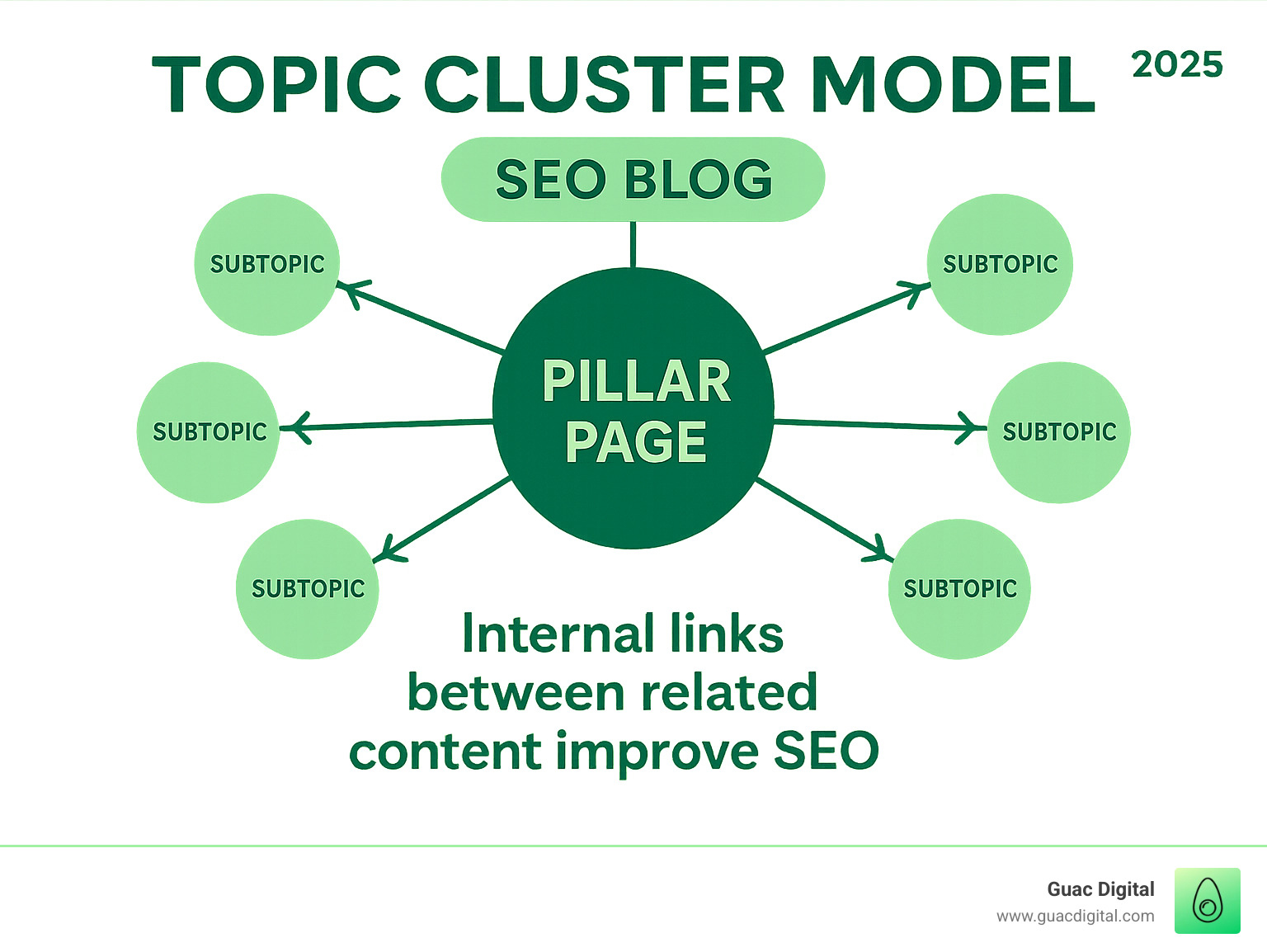
- Internal Linking: This is your secret weapon. Connecting pages on your own site helps users and search engines steer your content, spreading authority and ensuring no page is an “orphan” (a page with no internal links).
- External Linking: Linking out to authoritative sources boosts your credibility by showing you’ve done your research and are providing comprehensive value.
For businesses serving a specific area, Local SEO for Small Business can turn your blog into a powerful lead generator.
Leveraging Internal and External Linking
A smart linking strategy creates a logical site structure.
- Topic Clusters: Organize content in a hub-and-spoke model. A broad “pillar page” links to and from more specific “cluster pages,” creating a powerful network that signals topical authority.
- Avoid Orphan Pages: Ensure every page has at least one internal link pointing to it so it can be found and indexed.
- Pass Link Equity: Internal links from strong pages to newer ones pass authority, helping new content rank faster.
- Link to Authoritative Sources: This demonstrates trustworthiness. A healthy ratio of internal and external links serves your readers and signals quality to Google.
An Introduction to Local SEO for Your Business Blog
Local SEO turns your seo blog into a targeted lead magnet for your community.
- Google Business Profile: Keep your profile updated with correct info, photos, and posts. Use your blog to cover local topics.
- Local Keywords: Target location-specific phrases like “best pizza in downtown Tampa” instead of just “best pizza.” These searches show higher intent.
- Local Reviews: Great content can lead to happy customers and positive reviews, which in turn boost your local visibility.
- NAP Consistency: Ensure your Name, Address, and Phone number are consistent everywhere online to build trust with Google.
To amplify your local reach, consider Local Service Ads alongside your blog content.
Measuring Success and Future-Proofing Your SEO Blog Strategy
An effective seo blog requires constant measurement and adaptation to evolve with your audience and the digital landscape. The measurability of digital marketing is a key advantage, and Data-Driven Marketing Strategies are essential for success. Furthermore, understanding how SEO AI can improve content is critical for staying competitive.
How to Measure the Success and ROI of Your SEO Blog
Use a combination of metrics to get a full picture of your seo blog‘s performance.
- Google Analytics: Track organic traffic growth, but also look at user behavior metrics like time on page and bounce rate to see if your content resonates.
- Google Search Console: This is your direct line to Google. Monitor keyword rankings, impressions, and clicks, and get alerts about technical issues.
- Keyword Rank Tracking: Use tools to monitor your position for target keywords over time to see if your optimization efforts are working.
- Conversion Rates: The ultimate measure of success. Track how many visitors complete a desired action (e.g., fill out a form, make a purchase) to connect your blog efforts to your bottom line.
Using analytics tools to refine strategy helps you understand what’s working and why.
Adapting to AI, Algorithm Updates, and Industry Changes
The SEO world moves fast. Staying adaptable is crucial for your seo blog strategy.
- Helpful Content and E-E-A-T: Google’s updates consistently prioritize content that genuinely helps people, written by authors with demonstrable Experience, Expertise, Authoritativeness, and Trustworthiness.
- AI Content Generation: Use AI tools as assistants for research and outlining, but always combine them with human creativity and audience understanding for the best results.
- Voice and Zero-Click Searches: As more users get answers directly from search results, optimize for conversational keywords and featured snippets.
Staying informed on the future of SEO is essential for adapting your strategy.
Common Pitfalls to Avoid in Your SEO Strategy
Avoid these common mistakes that can derail your seo blog strategy:
- Keyword Stuffing: Unnaturally forcing keywords into your text harms readability and can lead to penalties.
- Poor User Experience: A slow site or difficult navigation will frustrate users and hurt your rankings.
- Ignoring Mobile Optimization: With most searches on mobile, a non-responsive design makes your content invisible to a majority of your audience.
- Neglecting Technical SEO: Broken links, indexing issues, and other technical problems can prevent your content from being found.
- Unnatural Link Building: Buying links or using link farms can get your site penalized or even removed from search results. Focus on earning links naturally.
Frequently Asked Questions about SEO for Blogs
How long does it take for an SEO blog post to rank?
The honest answer is that SEO takes time. A new seo blog post doesn’t rank overnight. Most new content takes 3-6 months to achieve meaningful rankings. This is partly due to the “sandbox effect,” where Google holds new content in a probationary period to evaluate its quality and trustworthiness before ranking it highly.
This process ensures search results remain stable and reliable. Consistency is key; blogs that succeed are those that continuously publish high-quality, helpful content, building trust with Google over time.
What is the difference between on-page and off-page SEO?
Think of it as improving your house (on-page) versus building its reputation in the neighborhood (off-page).
- On-page SEO includes everything you control directly on your website and in your seo blog posts. This covers content quality, keyword usage, titles, headings, image optimization, and internal linking. The goal is to make your content clear and relevant for users and search engines.
- Off-page SEO refers to actions taken outside your website to build authority. The most significant factor is backlink building—earning links from other reputable sites. It also includes signals like social media engagement and brand mentions.
Since you have full control over on-page SEO, it should always be your first focus.
How important are backlinks for a blog?
Backlinks are incredibly important for an seo blog. They act as “votes of confidence” from other websites and are one of the strongest ranking signals Google uses. For competitive keywords, backlinks are often the deciding factor between ranking on page one and being buried.
However, quality trumps quantity. A single backlink from a respected, relevant site is far more valuable than dozens of links from low-quality or spammy sites. Earning high-quality backlinks requires creating content so valuable that others naturally want to cite it. While challenging, the impact on your blog’s performance can be transformative.
Conclusion
Building a successful seo blog requires a commitment to strategy, patience, and consistent effort. Success hinges on mastering the fundamentals: thorough keyword research, creating content that genuinely satisfies user intent, and maintaining a solid technical foundation. Embracing E-E-A-T principles is your roadmap to building authority and trust.
SEO is a marathon, not a sprint. It can take 3-6 months to see significant results due to factors like Google’s “sandbox effect.” The digital landscape will continue to evolve with AI and algorithm updates, but the core principle of creating helpful, high-quality content for real people remains constant.
At Guac Digital, we use data-driven insights to turn blogs into powerful traffic and lead generators. Our approach combines compelling storytelling with the science of search algorithms to deliver measurable ROI for our clients.
Ready to turn your blog into a lead-generating machine? Explore our AI-powered marketing solutions to future-proof your strategy and find how we can open up sustainable organic growth for your business.