
What is search engine optimization? 7 Powerful Success Tips 2025
Why Every Business Needs to Understand SEO Basics
What is search engine optimization? It’s the practice of improving your website’s visibility in unpaid search results to attract more qualified traffic from search engines like Google.
Here’s what SEO actually does for your business:
- Drives organic traffic – 53% of all website traffic comes from organic search
- Builds credibility – Higher rankings signal trustworthiness to potential customers
- Targets ready-to-buy customers – People searching are actively looking for solutions
- Provides long-term results – Unlike ads, SEO keeps working even when you’re not paying
- Levels the playing field – Small businesses can compete with larger competitors
Think of SEO as making your website findable when people search for what you offer. Without it, you’re essentially invisible to the 8.5 billion daily Google searches happening worldwide.
The SEO industry is now worth over $122 billion because businesses recognize this simple truth: if customers can’t find you online, they’ll find your competitors instead.
I’m Guy Leon, founder of Guac Digital, where we’ve helped businesses boost their online engagement by 350% through strategic digital marketing campaigns. Having worked extensively with what is search engine optimization strategies across hundreds of client projects, I’ve seen how proper SEO transforms struggling websites into traffic magnets.
Terms related to What is search engine optimization?:
– How to improve SEO?
– How to use data in marketing?
– What is programmatic advertising?
What is search engine optimization?
What is search engine optimization? Simply put, it’s the art and science of making your website more attractive to search engines so real people can find you when they’re looking for what you offer.
Think of it this way: when someone searches “best coffee shop downtown” or “how to train a puppy,” they’re asking Google to be their personal assistant. SEO is what helps your website become the answer Google confidently recommends.
The magic happens through three key areas. First, you need technically sound website structure that search engines can easily crawl and understand. Second, your content must genuinely help people solve their problems or answer their questions. Third, other websites need to link to you as a trusted source, which signals to Google that you’re worth recommending.
Unlike paid ads where you pay for every click, organic search results are earned through quality and relevance. This makes SEO incredibly valuable for long-term business growth.
Google processes over 8.5 billion searches daily and holds 91% of the global search engine market share. That massive reach explains why businesses invest heavily in SEO – the $122 billion industry exists because organic visibility directly translates to revenue.
What is search engine optimization?—in one sentence
Search engine optimization is the process of improving your website’s visibility in unpaid search results to attract more qualified traffic from people actively searching for what you offer.
This definition cuts through the technical jargon to focus on what really matters: connecting your business with customers who are already looking for you.
What is search engine optimization?—historical evolution
Understanding how SEO evolved helps explain why today’s best practices focus on user experience rather than gaming the system.
Back in the PageRank era (1998-2010), Google ranked pages mainly by counting links. The Panda update in 2011 changed everything by penalizing low-quality content. Penguin arrived in 2012 to tackle spammy link-building. Hummingbird in 2013 taught Google to understand search intent better. BERT in 2019 brought natural language processing into the mix. The latest evolution is AI Overviews in 2024, where Google generates AI-powered summaries for many searches.
Each major update pushed SEO away from technical manipulation toward creating genuinely useful content for real people. For more detailed insights, check out Google’s Advanced Guide on How Search Works and the comprehensive scientific research on search engine optimization from industry experts.
How Search Engines Work & What They Value
Think of search engines as the world’s most efficient librarians, working 24/7 to organize the entire internet so they can instantly find exactly what you’re looking for. When you type “what is search engine optimization?” into Google, an incredibly complex process happens in milliseconds to deliver the most helpful results.
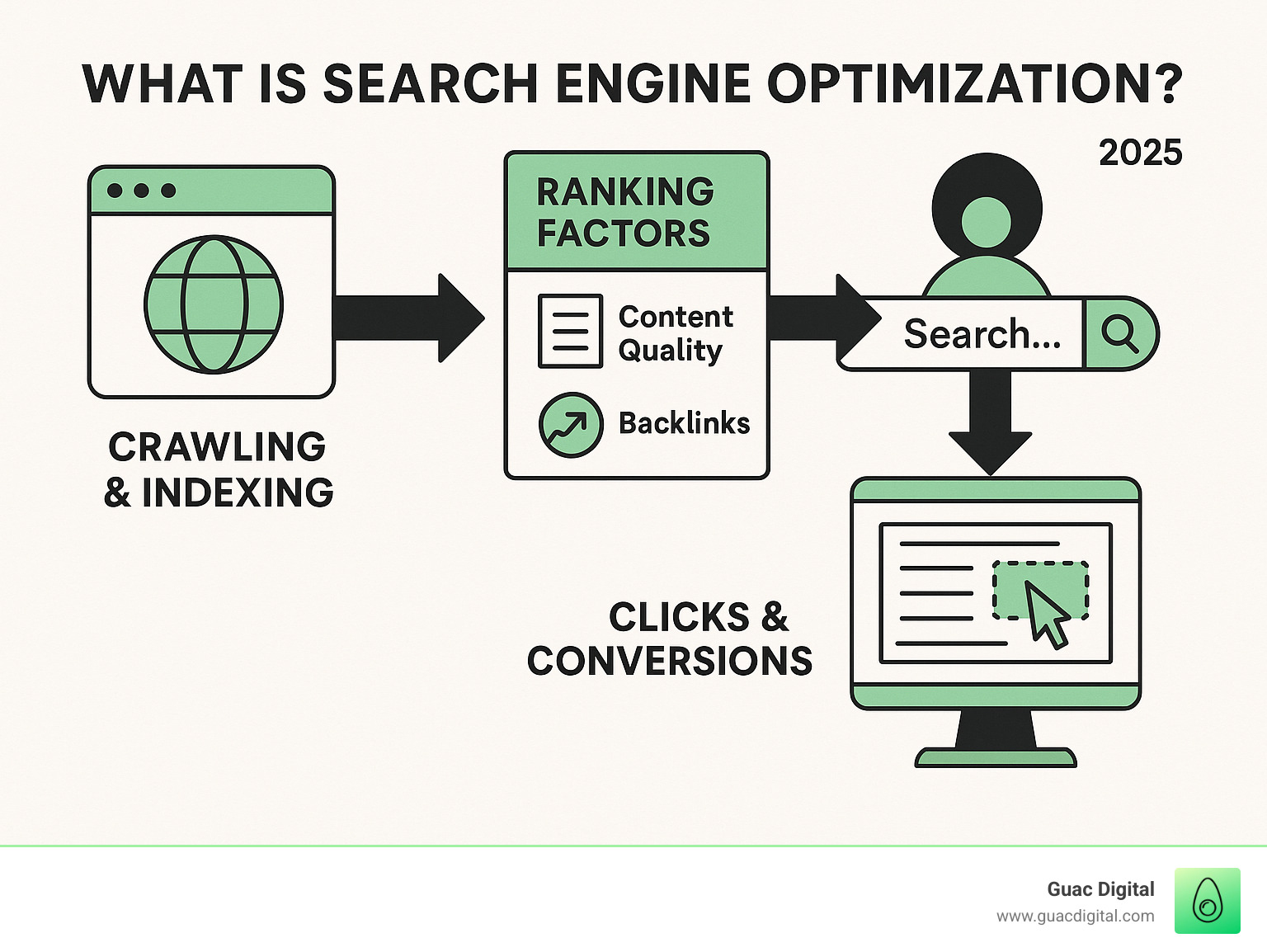
This process unfolds in three crucial stages:
Crawling comes first. Google’s bots constantly roam the web, following links from page to page like digital explorers. They’re finding new content, checking for updates, and mapping the ever-expanding internet landscape.
Indexing happens next. Once found, your pages get analyzed and filed away in Google’s massive databases. The search engine examines your content, images, videos, and technical elements to understand what your page is actually about.
Ranking is where the magic happens. When someone searches, Google’s algorithms instantly evaluate billions of indexed pages to determine which ones best match what the person is really looking for.
Google considers over 200 ranking factors in this split-second decision. Mobile-first indexing became the standard in 2021, meaning Google primarily looks at your mobile site when deciding rankings. Core Web Vitals became official ranking factors in 2021, measuring how fast your pages load and how quickly users can interact with them.
The E-E-A-T framework (Experience, Expertise, Authoritativeness, Trustworthiness) guides how Google evaluates content quality, especially for topics affecting people’s health, money, or safety.
| Ranking Factor | Google Weight | Bing Weight | Key Difference |
|---|---|---|---|
| Content Quality | High | High | Google emphasizes user intent matching |
| Backlinks | Very High | High | Bing values social signals more heavily |
| Technical Performance | High | Medium | Google prioritizes Core Web Vitals |
| User Engagement | High | Medium | Google tracks bounce rates more aggressively |
| Social Signals | Low | Medium | Bing considers social sharing more directly |
Key ranking factors in 2025
Content quality remains king, but Google’s definition has evolved dramatically. The search engine can now spot genuinely helpful content from miles away. Pages that thoroughly answer user questions, provide unique insights, and demonstrate clear expertise consistently outrank thin or generic content.
Quality backlinks still pack serious punch, but the game has changed completely. A single link from a respected industry publication now carries more weight than hundreds of directory submissions.
User engagement signals tell Google whether people actually find your content valuable. When users click your result, stay on your page, and explore other sections of your site, that’s a powerful vote of confidence.
Technical performance forms the foundation everything else builds on. Page speed, mobile responsiveness, secure HTTPS connections, and clean site architecture don’t guarantee top rankings, but poor technical performance can definitely prevent them.
Common SEO mistakes to avoid
Keyword stuffing is like wearing a name tag that says “I’m trying to manipulate Google.” Cramming your target phrase into every sentence makes content unreadable and triggers spam filters.
Duplicate content confuses search engines about which version to rank. Publishing identical content across multiple pages dilutes your ranking potential.
Ignoring mobile users is digital suicide in 2025. With mobile devices generating over 60% of searches, websites that don’t work well on phones face serious ranking penalties.
Buying sketchy backlinks might seem like a shortcut, but Google’s algorithms spot artificial link patterns faster than you’d expect. The penalties can devastate your rankings for months or years.
The golden rule: if an SEO tactic feels like you’re trying to trick Google, it’s probably not sustainable. Focus on creating genuine value for your audience, and the rankings will follow naturally.
The 3 Core Types of SEO
Think of search engine optimization like building a house – you need a solid foundation, strong walls, and a sturdy roof. In SEO terms, these are technical SEO, on-page optimization, and off-page authority building. Each supports the others, and weakness in any area can undermine your entire strategy.
At Guac Digital, we’ve learned that trying to tackle just one area rarely works. That’s why our Services for SEO take a holistic approach, strengthening all three pillars simultaneously.
On-page optimization essentials
On-page SEO is where you have the most control. It’s everything you can optimize directly on your website to help search engines understand what your content is about and why it deserves to rank.
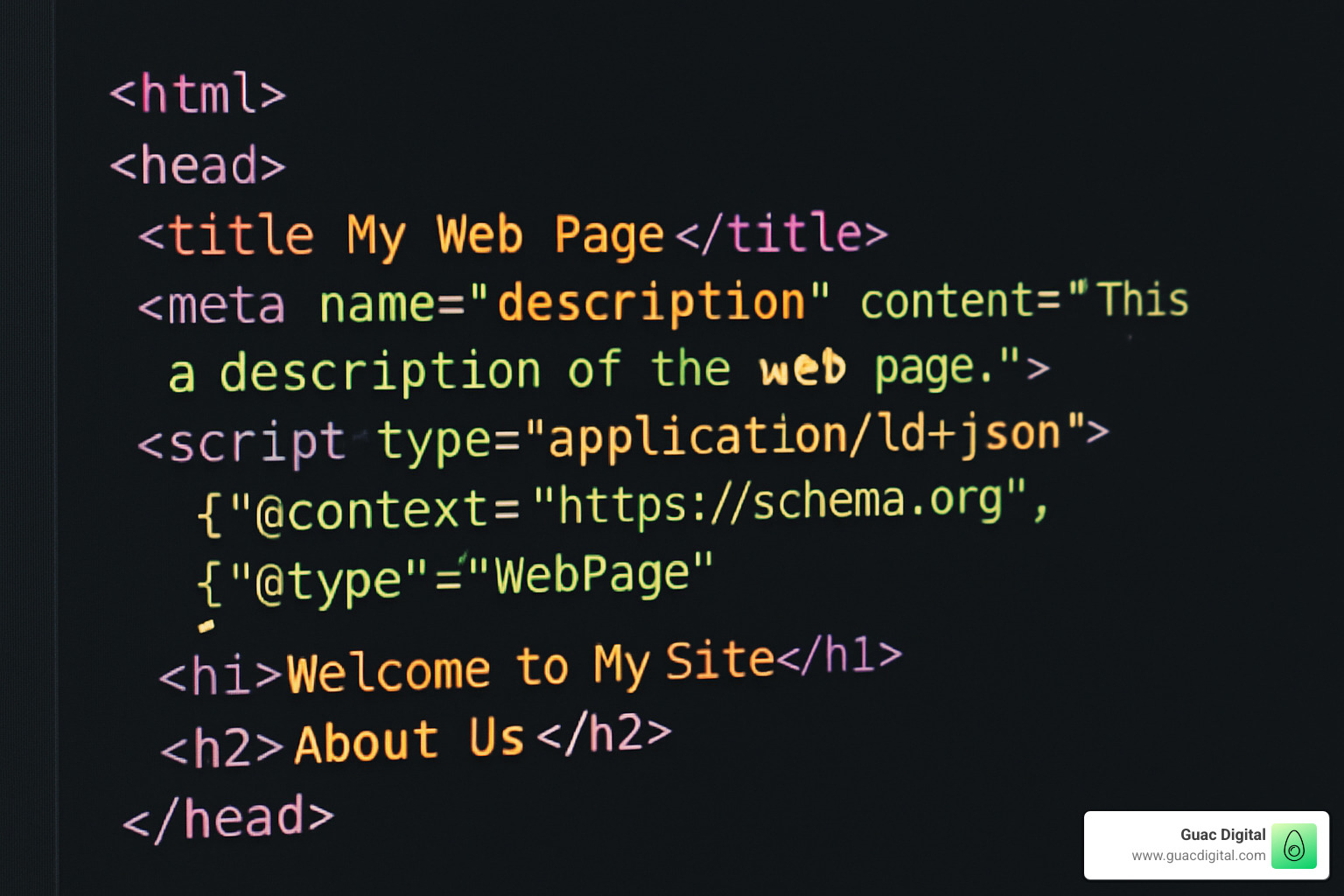
Your title tags are like movie posters for your content. They need to grab attention in search results while accurately representing what visitors will find. Keep them between 50-60 characters, include your main keyword naturally, and make them compelling enough that people want to click.
Meta descriptions don’t directly boost rankings, but they’re your sales pitch in search results. These 150-160 character snippets should read like mini advertisements that make searchers think “yes, this is exactly what I need.”
Header structure creates a roadmap for both readers and search engines. Your H1 should clearly state what the page is about, H2s should break content into digestible sections, and H3s should organize subsections logically.
Every image needs descriptive alt text – not just for SEO, but for people who can’t see images. Internal linking is like creating helpful pathways through your website. When you mention related topics, link to other relevant pages on your site.
Off-page signals that build authority
Off-page SEO is essentially the internet’s reputation system. It’s how other websites, social platforms, and digital spaces “vote” on whether your content deserves to rank well.
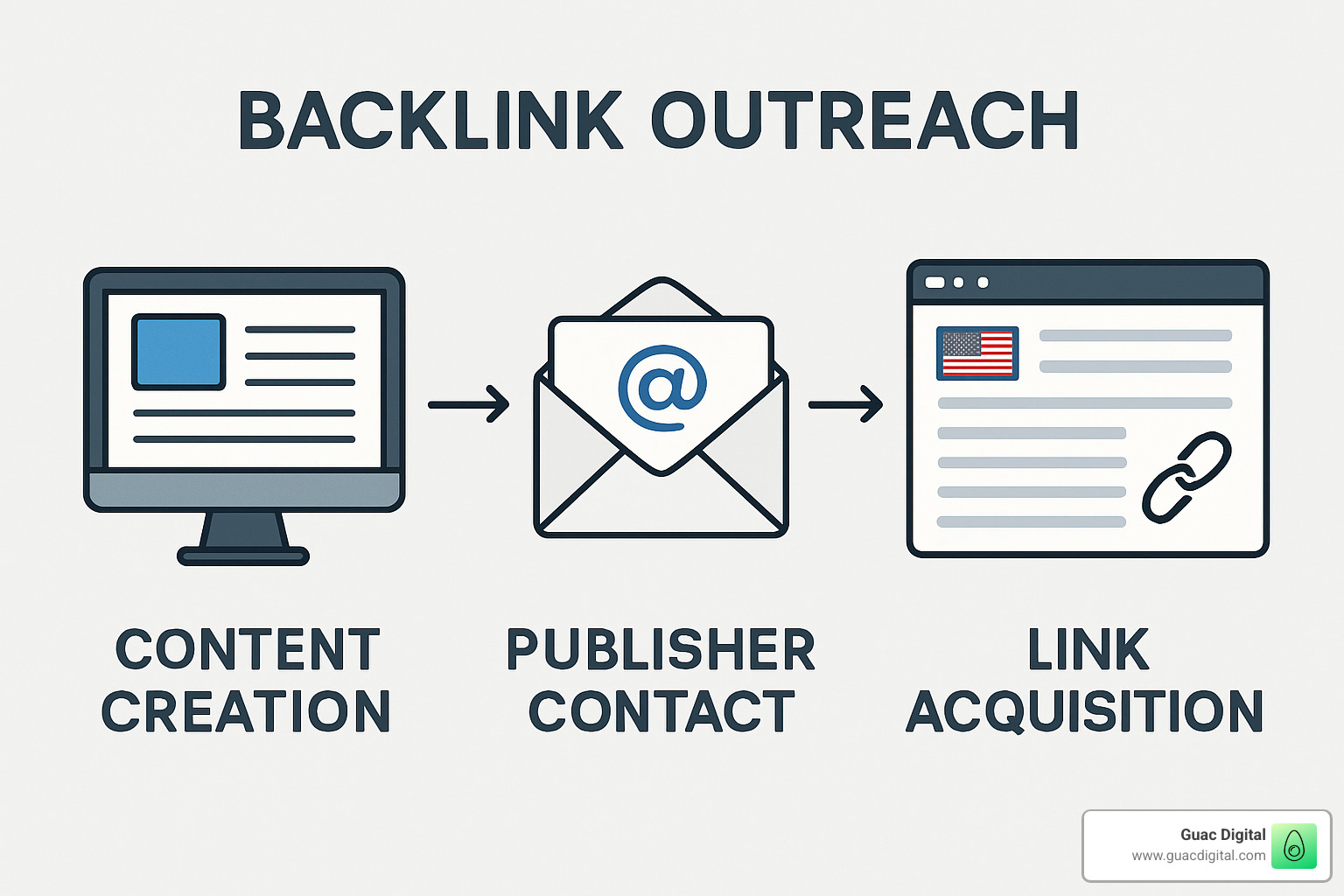
Quality backlinks remain the gold standard of off-page SEO. When a respected website in your industry links to your content, it’s like getting a professional endorsement. One link from a major industry publication often carries more weight than fifty links from random blogs nobody reads.
Digital PR extends far beyond traditional link building. When journalists mention your company in articles, when industry experts reference your research, or when thought leaders share your insights, you’re building genuine authority that search engines recognize and reward.
Social signals work indirectly but powerfully. While tweets and Facebook shares don’t directly boost rankings, they increase your content’s visibility. More eyeballs often lead to more natural backlinks from people who find and appreciate your work through social channels.
Technical foundations that power rankings
Technical SEO is the invisible infrastructure that makes everything else possible. It’s like the electrical wiring in your house – when it works properly, you don’t think about it, but when it fails, nothing else functions.
XML sitemaps act like detailed maps for search engine crawlers, showing them every important page on your site and how they’re organized. Submit these through Google Search Console to help new content get indexed faster.
Your robots.txt file functions like a bouncer at a club, telling search engines which areas they can access and which are off-limits. HTTPS security isn’t optional anymore. Sites without SSL certificates face ranking penalties and browser warnings that scare visitors away.
Mobile responsiveness determines your rankings even for desktop searches, thanks to Google’s mobile-first indexing. Core Web Vitals measure how fast your pages load, how quickly they become interactive, and how stable they remain while loading.
Structured data helps search engines understand your content’s context, potentially earning you rich snippets, knowledge panels, and other improved search features that make your results stand out.
SEO Content Best Practices
Content remains the heart of effective SEO because search engines exist to connect people with helpful information. However, creating content that both ranks well and serves your business goals requires strategic thinking beyond just writing good articles.
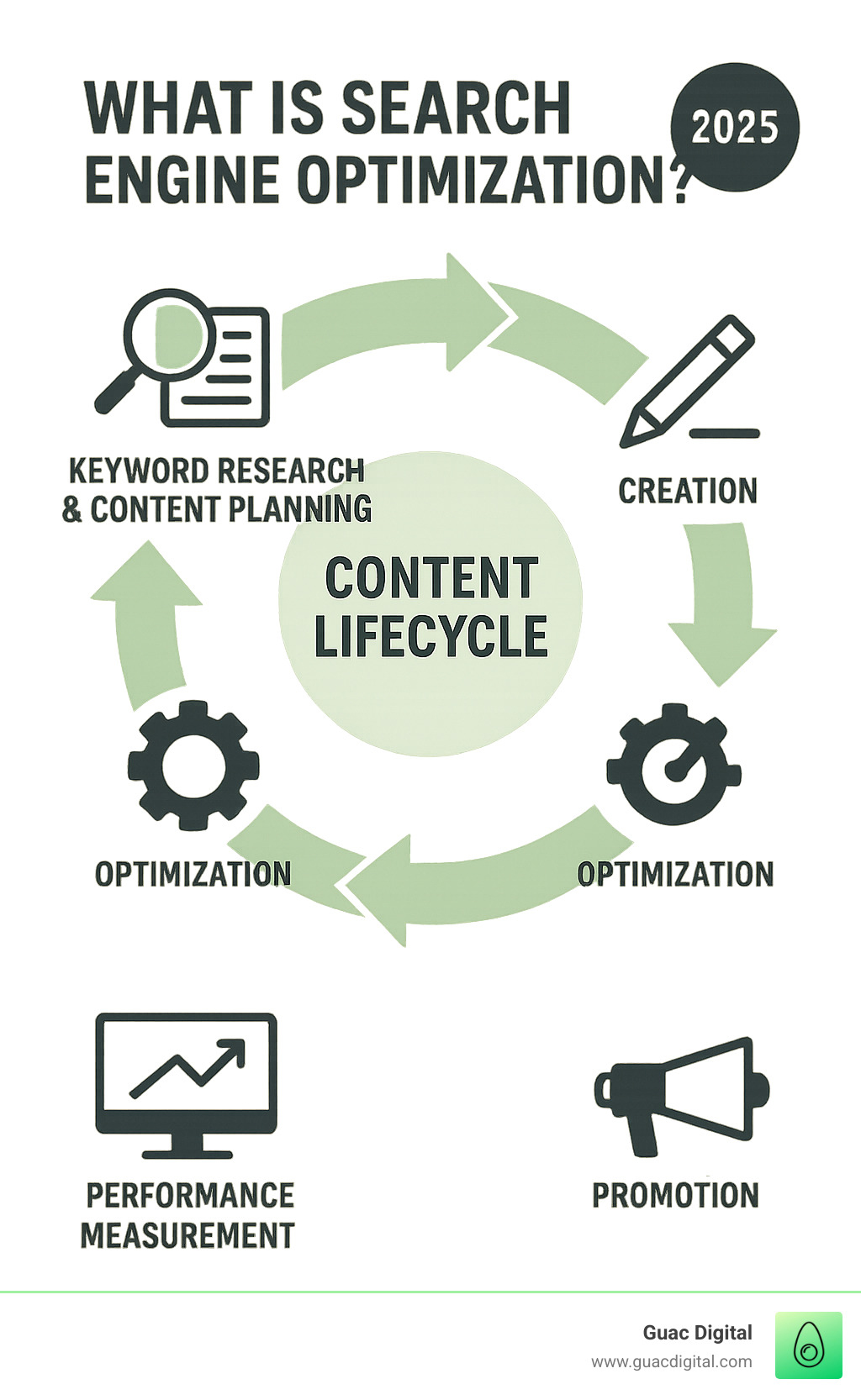
The secret to successful SEO content lies in understanding search intent – the real reason behind each query. When someone types “best running shoes,” they want product recommendations and reviews. But “how to tie running shoes” calls for step-by-step instructions with clear visuals.
Topic clusters have revolutionized how we think about content strategy. Instead of creating random blog posts and hoping they stick, smart businesses build comprehensive resource hubs around core themes. This approach shows search engines you’re an authority on specific topics while creating a better user experience.
Modern keyword research focuses on long-tail phrases that reveal specific user needs. “Digital marketing” gets massive search volume, but “digital marketing agency Tampa” shows someone actively looking for local services. These longer, more specific phrases often convert better because they capture people further along in their decision-making process.
At Guac Digital, we’ve learned that sustainable content success comes from balancing what search engines value with what actually helps your audience. Our SEO Copywriting and Content Optimization Services combine strategic keyword research with compelling copywriting that drives both rankings and real business results.
Creating content that ranks and converts
The most successful SEO content serves two masters: search engines and human readers. This might sound challenging, but it’s actually simpler than most people think. Great content that genuinely helps people almost always performs well in search results too.
Start with audience personas that go beyond basic demographics. What keeps your ideal customers awake at 2 AM? What questions do they ask Google when they think no one’s watching? Understanding these deeper motivations helps you create content that resonates on an emotional level while targeting the right search terms.
The journalistic structure works beautifully for SEO content. Lead with your most important information, then provide supporting details and context. This “inverted pyramid” approach serves both impatient readers who want quick answers and search algorithms that pay special attention to content near the top of pages.
Multimedia integration isn’t just about making pages look pretty. Content with relevant images, videos, or interactive elements consistently outranks text-only pages. Plus, visual content gets shared more often, creating natural backlink opportunities that boost authority over time.
Every piece of content needs strategic calls-to-action that feel natural rather than pushy. Maybe it’s inviting readers to download a helpful checklist, subscribe to your newsletter, or schedule a consultation. The key is making these next steps feel like obvious, valuable progressions rather than interruptions.
Measuring Success & Staying Ahead
Here’s the truth about SEO: you can’t improve what you don’t measure. Unlike running a Google ad where you see results instantly, search engine optimization builds momentum like a snowball rolling downhill – slowly at first, then with incredible force.
The challenge? Most business owners get lost in vanity metrics that look impressive but don’t actually move the needle. Rankings are nice, but do they translate to phone calls? Traffic growth feels good, but are those visitors becoming customers?
Google Analytics 4 serves as your SEO command center. Set it up to track organic traffic patterns, user behavior flows, and most importantly – conversions. The magic happens when you connect SEO activities to actual revenue.
Google Search Console gives you direct intelligence from Google itself. Think of it as having a backstage pass to see how Google views your website. You’ll spot indexing issues before they become problems, track which queries bring visitors, and identify opportunities you never knew existed.
The metrics that actually matter? Organic traffic growth shows your visibility expanding. Conversion rates reveal whether that traffic is qualified. Revenue per visitor tells you if your SEO strategy aligns with business goals.
For businesses serious about turning SEO traffic into revenue, our How to Optimize Website for Conversions guide reveals how to bridge the gap between rankings and results.
White hat vs. black hat techniques—staying compliant
Let me share a story that perfectly illustrates why cutting corners in SEO backfires spectacularly. A few years ago, we had a potential client approach us after their previous “SEO expert” promised first-page rankings in 30 days. The strategy? Buying thousands of cheap backlinks and stuffing keywords everywhere.
The result? Google penalized their site so severely that searching for their exact business name didn’t even show their website. Recovery took eight months of careful, methodical work following Google’s guidelines.
White hat SEO means playing by the rules and focusing on genuine value creation. This includes creating original, helpful content that answers real questions. Building relationships that naturally lead to quality backlinks. Optimizing your website’s technical performance for better user experience.
Black hat techniques try to game the system through manipulation. Keyword stuffing makes content unreadable while triggering spam filters. Buying low-quality backlinks from link farms creates artificial authority that Google easily detects. Cloaking shows different content to search engines versus users – a practice that guarantees penalties.
Google’s algorithms have become incredibly sophisticated at identifying manipulation attempts. The company employs some of the world’s smartest engineers specifically to catch people trying to cheat the system.
The safest path forward? Focus on creating genuinely helpful content and earning authority through expertise rather than tricks. It takes longer, but the results last longer too.
Budgeting & outsourcing SEO
One of the most common questions we hear at Guac Digital is: “Should we hire someone in-house or work with an agency?” The answer depends on your business size, competition level, and how much ongoing SEO work you actually need.
In-house SEO specialists cost around $71,000 annually in salary, plus benefits, training, and tool subscriptions that can add another $10,000-15,000 yearly. This makes sense for larger businesses with substantial websites and ongoing content needs.
SEO agencies typically charge between $2,500-15,000 monthly depending on your market competition and project scope. The advantage? You get an entire team’s worth of expertise for less than one full-time salary.
Freelance consultants average $68 per hour and work well for specific projects or ongoing guidance without full agency overhead.
For detailed cost breakdowns and ROI expectations, check out our comprehensive analysis of SEO Optimization Services Cost.
The key insight? Match your investment to your opportunity. A local restaurant might succeed with basic optimization, while an e-commerce site competing nationally often needs comprehensive, ongoing SEO programs to stay competitive.
Remember: SEO is an investment, not an expense. Done correctly, it generates compounding returns that reduce your overall marketing costs while increasing qualified leads.
Frequently Asked Questions about Search Engine Optimization
How long does SEO take to work?
What is search engine optimization without realistic expectations? Setting proper timelines prevents frustration and helps you make smart investment decisions.
Most businesses start seeing initial improvements within 3-6 months, but meaningful results typically take 6-12 months or longer. Think of SEO like planting a garden – you need patience for the seeds to grow into something substantial.
New websites face unique challenges. Google puts fresh sites through what many call a “sandbox period” where they evaluate credibility before granting significant rankings.
Competition intensity dramatically affects timelines. Ranking for “best pizza in Tampa” requires much more time and effort than ranking for “industrial copper mining equipment repair services.” More competitive keywords mean longer waits for top positions.
Content consistency accelerates results. Websites that publish valuable, well-optimized content regularly build momentum faster than those posting sporadically.
At Guac Digital, we typically see our clients’ first improvements within 60-90 days, with substantial growth happening in months 4-8 of comprehensive optimization programs. The key insight? SEO rewards consistency over quick fixes.
Is SEO different from SEM and PPC?
These acronyms confuse many business owners, but understanding the differences helps you make better marketing decisions.
SEO focuses entirely on organic (unpaid) search results. You earn visibility through creating quality content, optimizing your website’s technical performance, and building authority through backlinks. Results take time but provide lasting value even when you’re not actively working on optimization.
SEM (Search Engine Marketing) is the umbrella term covering all search engine marketing activities. Think of it as a toolbox containing both organic SEO and paid advertising strategies. Most successful businesses use both approaches together.
PPC (Pay-Per-Click) delivers immediate visibility through paid ads. You bid on keywords to display advertisements above or beside organic results. Traffic appears instantly but disappears the moment you stop paying.
The magic happens when you combine both approaches strategically. PPC provides immediate visibility and valuable keyword performance data, while SEO builds sustainable long-term traffic that reduces your dependence on paid advertising over time.
How do I choose the right keywords?
Smart keyword selection makes the difference between attracting window shoppers and genuine customers ready to buy.
Start by brainstorming seed keywords – the 5-10 basic terms that describe what you offer. If you’re a Tampa plumber, your seeds might include “plumber,” “plumbing repair,” “emergency plumber,” and “pipe installation.”
Keyword research tools reveal hidden opportunities. Google Keyword Planner, SEMrush, Ahrefs, and similar platforms show search volumes, competition levels, and related terms you probably hadn’t considered.
Understanding search intent matters more than search volume. Someone searching “how to fix a leaky faucet” wants educational content, while “emergency plumber near me” indicates immediate buying intent. Match your content format to what searchers actually want.
Long-tail keywords often convert better than broad terms. “Best digital marketing agency Tampa Florida” might have lower search volume than “marketing,” but it shows crystal-clear intent from someone actively looking for exactly what you offer.
Ranking #1 for a lower-volume keyword that converts well often produces better business results than ranking #10 for a high-volume generic term that attracts tire-kickers.
Conclusion
The journey through what is search engine optimization comes down to a single truth: SEO connects your business with people who are already searching for what you offer. Google now rewards genuinely helpful answers, so the most sustainable strategy is creating real value for users and keeping your site technically sound.
Search never sleeps—more than 8 billion queries are typed into Google every day—so every moment you delay optimization is another chance for potential customers to land on a competitor’s website instead. Companies that treat SEO as a long-term investment see compound traffic growth and reduced marketing costs over time.
You don’t have to master every ranking factor yourself. Guac Digital’s Tampa-based team has guided hundreds of brands worldwide with data-driven, programmatic SEO strategies that turn visibility into revenue. Ready to find what consistent, white-hat optimization can do for your business? Check out Boost Your Online Presence with Effective SEO Services and let’s make sure your future customers find you first.