
Big Data and Digital Advertising: 5 Ultimate Wins
Why Data is the New Gold in Advertising
Big data and digital advertising have revolutionized how brands connect with customers, changing marketing from educated guesswork into a precision science. This powerful combination enables businesses to deliver the right message to the right person at exactly the right moment.
Key Benefits of Big Data in Digital Advertising:
- Hyper-Personalization: Target customers based on behavior, not just demographics
- Predictive Analytics: Forecast consumer behavior and market trends with up to 50% better decision-making
- Real-Time Optimization: Adjust campaigns instantly for maximum ROI
- Improved Customer Journey Mapping: Track touchpoints across all devices and platforms
- Cost Efficiency: Reduce wasted ad spend through precise targeting
Every day, we create 2.5 quintillion bytes of data. Unlike traditional advertising methods like billboards, which were hard to measure, today’s digital landscape is fueled by this data. It’s what allows Netflix to recommend shows, Amazon to suggest products, and Starbucks to send personalized offers based on purchase history.
The change is remarkable: personalized marketing campaigns now deliver 20% higher sales compared to generic approaches, and companies using predictive analytics improve their decision-making by 50%. Meanwhile, 80% of Fortune 1000 companies plan to invest more in big data and AI.
This isn’t just about collecting information—it’s about turning that information into actionable insights that drive real business results. At Guac Digital, we’ve helped clients achieve a 350% boost in engagement through strategic big data and digital advertising campaigns, changing struggling campaigns into revenue-generating machines.
What is Big Data? Understanding the Fuel for Your Ad Engine
Every time you scroll, search, or shop online, you create digital breadcrumbs. Multiplied by 5 billion internet users, this creates big data. It’s the massive collection of information that powers everything from Netflix recommendations to eerily accurate ads. For big data and digital advertising, this is the fuel that turns guesses into precision-targeted campaigns.
Think of traditional data as a garden hose, while big data is Niagara Falls—overwhelming and powerful. It includes structured data (like customer spreadsheets) and unstructured data, which makes up 80-90% of all information (social media posts, photos, videos).
Big data turns guesswork into strategy. Instead of wondering what customers want, you can know. The worldwide big data analytics market is expected to exceed $655 billion by 2029, signaling a complete change in how business gets done.
Data sources are everywhere: online interactions (website visits), offline activities (in-store purchases), IoT devices (fitness trackers), and CRM systems. It’s all valuable and waiting to be turned into advertising gold. For a deeper look, check out our guide: How Big Data Analytics is Solving Big Advertiser Problems.
The Core Characteristics: The 5 V’s Explained
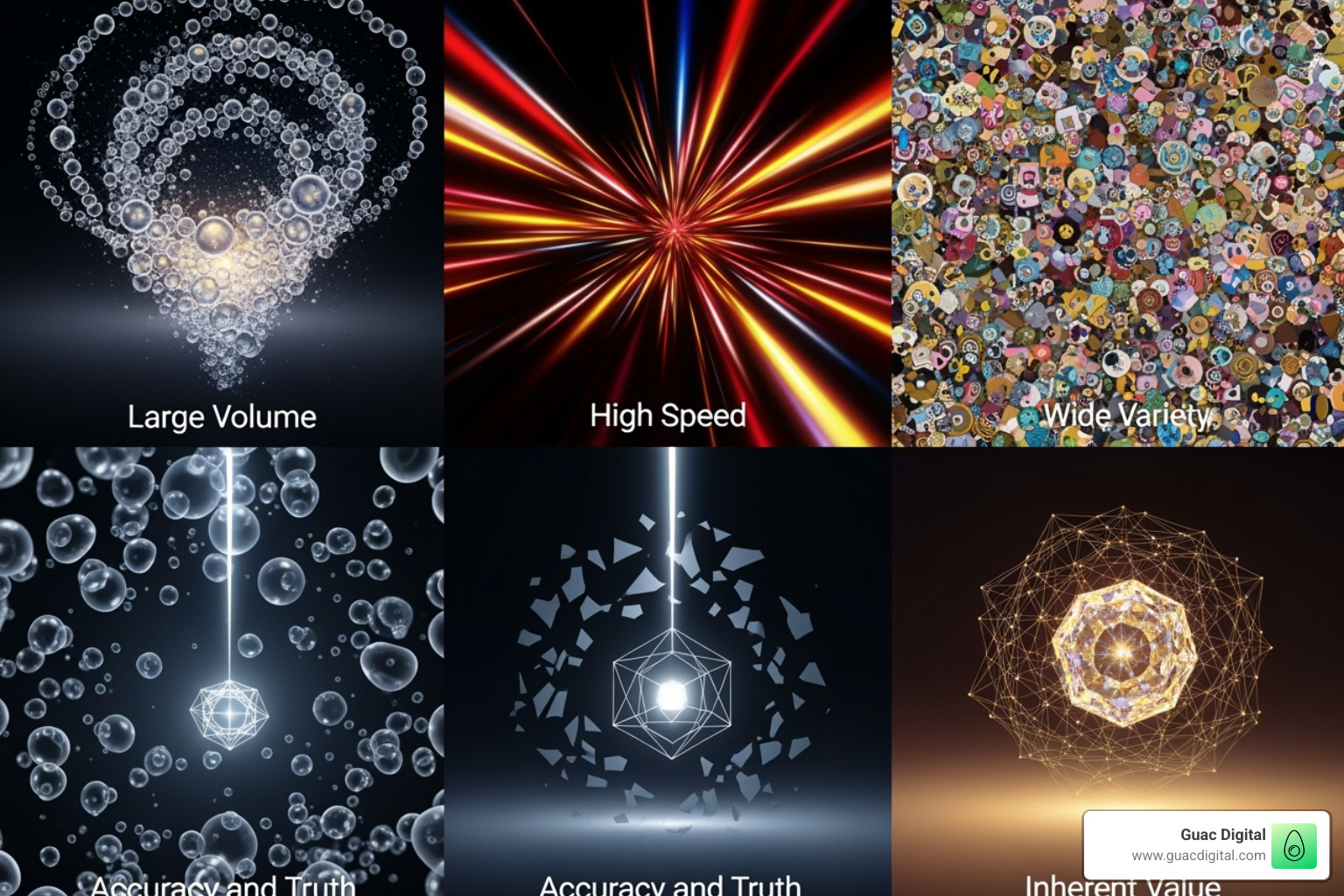
Understanding big data means knowing its five defining characteristics, the DNA of modern big data and digital advertising.
Volume refers to the sheer scale of data. We’re talking about zettabytes. Every day, we create 2.5 quintillion bytes of new data, and by 2025, experts predict we’ll have 175 zettabytes in the digital universe.
Velocity is about speed. Data streams in real-time from millions of sources. When someone clicks an ad, that information must be processed instantly to optimize the next ad they see, as social media posts get 80% of their engagement within the first hour.
Variety is about the different forms of data. It’s not just numbers; it’s text messages, images, videos, sensor readings, and social interactions. This variety helps advertisers understand not just what people buy, but how they feel and what motivates them.
Veracity is about data quality. Bad data can sink campaigns, costing US businesses nearly $3.1 trillion per year. Clean, reliable data is the difference between campaigns that soar and those that crash.
Value is where the magic happens. All the data in the world is useless if you can’t turn it into actionable insights. This is where information becomes profit and where good advertisers become great ones.
These five characteristics enable advertisers to understand, predict, and influence consumer behavior at a scale impossible just a decade ago.
The Transformative Impact of Big Data and Digital Advertising
The days of placing a billboard and hoping for the best are over. The marriage of big data and digital advertising has turned marketing guesswork into a precise science, moving from a shotgun blast approach to a laser beam’s accuracy.
| Feature | Traditional Advertising | Big Data-Driven Advertising |
|---|---|---|
| Targeting | Broad demographics (age, gender, general location) | Hyper-personalized segments (behavior, interests, intent) |
| Measurement | Post-campaign surveys, brand recall, reach estimates | Real-time KPIs (CTR, conversions, ROI), multi-touch attribution |
| ROI | Hard to quantify, often based on indirect correlations | Highly measurable, direct correlation to sales and leads |
| Personalization | Limited to broad messaging | Dynamic content, custom offers, individualized recommendations |
Companies that accept data-driven decision-making see their efficiency increase by 5% and profitability jump by 6%. This is made possible by a symphony of technologies: Artificial Intelligence and Machine Learning process massive datasets to spot patterns, CRM systems store every interaction, and Data Analytics Platforms like Google Analytics track every click and conversion in real-time. These tools are the foundation of every successful big data and digital advertising strategy. If you’re ready to build your own, our guide can help: Data-Driven Marketing Strategies: Your Blueprint for Success.
From Broad Strokes to Hyper-Personalization
Gone are the days of targeting “women aged 25-54.” Today’s big data and digital advertising allows for customer segments so specific, it’s like a personal conversation. We’ve moved beyond demographics into behavioral and psychographic targeting. We can understand that a user is a yoga enthusiast who prefers sustainable brands and is researching vacation destinations.
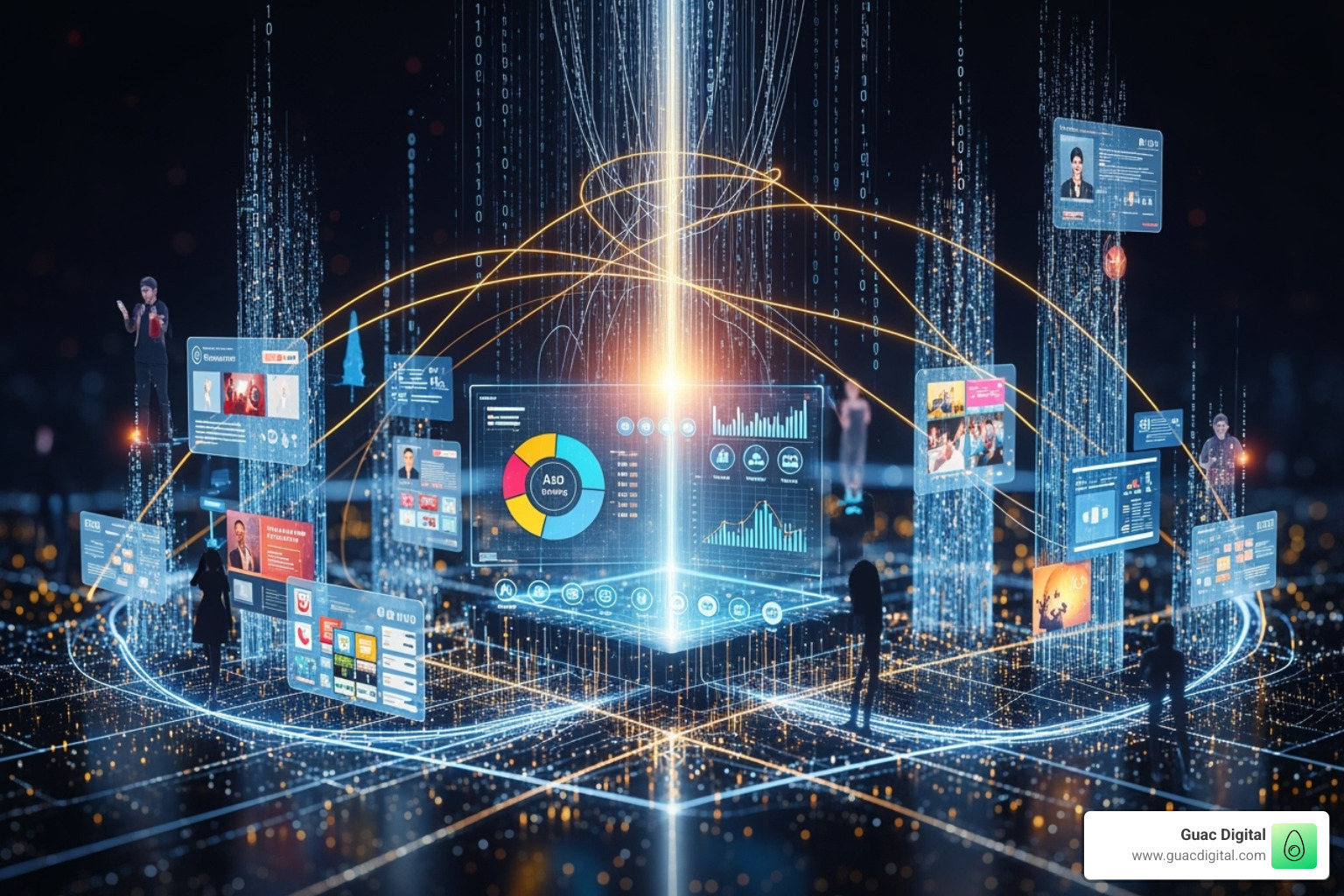
This enables Dynamic Content Optimization (DCO), where ads reshape themselves based on the viewer. An ad for running shoes might show trail gear to a warrior, city sneakers to a commuter, and beginner options to a novice—all from one campaign. The results are impressive: Personalized marketing can lead to a 20% increase in sales. At Guac Digital, we turn data into meaningful connections. See our approach: Data-Driven Advertising.
Predicting the Future: The Power of Predictive Analytics
If big data tells us what happened, predictive analytics tells us what’s next. It’s like a crystal ball powered by algorithms. For example, a retailer found that sales of certain products increased 700% before storm warnings, allowing them to stock up and market accordingly. We can forecast customer churn, identify look-alike audiences (people similar to our best customers), and optimize ad spend by predicting when and where customers are most likely to engage. Businesses that employ predictive analytics can improve their decision-making processes by up to 50%. Learn more here: How is Big Data Used in Advertising?.
Real-Time Optimization for Agile Campaign Management
In digital advertising, waiting a week for results is too slow. Big data and digital advertising make real-time optimization essential. We can A/B test hundreds of ad variations and find winners in hours. In Real-Time Bidding (RTB), an auction for ad space happens in the milliseconds it takes a page to load. This agility allows us to shift budgets instantly—for example, from static images to better-performing video ads. It’s marketing that adapts as quickly as consumer behavior. At Guac Digital, our expertise in programmatic advertising means we’re constantly optimizing for maximum ROI. Learn more: Programmatic Marketing Services.
Mapping the Customer Journey and Perfecting Content
Today’s customer journey is complex, spanning multiple devices and platforms. A customer might see an Instagram ad on their phone, Google your company on a laptop, and buy on a desktop days later. Big data and digital advertising help us track this journey using multi-touch attribution models, which show how each touchpoint contributes to a sale. This view is a game-changer for content. Knowing where someone is in their journey allows us to craft the perfect message for that moment. Since traditional tools can miss 45% of digital touchpoints, big data provides the complete picture needed to optimize every step. Learn to build your own strategy: Creating a Data-Driven Marketing Strategy.
Big Data in Action: How Top Brands Win with Data
To see the power of big data and digital advertising, look at the world’s most successful brands. Companies like Amazon, Netflix, and Starbucks aren’t just collecting information—they’re turning it into revenue and unforgettable customer experiences.
Their success stories show what happens when creativity meets data. At Guac Digital, we study these giants to adapt their winning approaches for our clients. See more examples here: Big Data Advertising Examples.
Amazon: The Kings of Recommendation
Amazon’s recommendation engine is a masterclass in big data and digital advertising. By analyzing every click, search, and purchase, it serves up suggestions that feel magically accurate. This isn’t just a cool feature; it’s a money-making machine. Recommendations like “customers who bought this also bought” drive 35% of Amazon’s total sales. Amazon has even patented “anticipatory shipping,” using algorithms to predict what you’ll order and move inventory closer to you before you even click “buy.” Amazon’s use of big data is a masterclass in personalization.
Starbucks: Brewing Personalized Experiences
Starbucks handles 90 million transactions every week, and its mobile app and rewards program provide a constant stream of data. Every purchase and check-in feeds its data engine, resulting in offers crafted just for you. Imagine walking past a Starbucks and getting a personalized offer for your usual iced coffee on a hot day. This isn’t coincidence; it’s data-driven personalization that has helped turn casual coffee drinkers into loyal customers, contributing to significant revenue growth.
Netflix: Curating Content with Precision
Netflix’s recommendation algorithm is so effective it drives 80% of all content watched on the platform. It analyzes what you watch, when you pause, and what you skip to create a detailed viewing profile. But it doesn’t stop there. Netflix A/B tests everything, including the thumbnail images for each show, to maximize engagement. This data obsession also guides its content strategy. “House of Cards” wasn’t a gamble; it was a calculated decision based on data showing an overlap between fans of political dramas, Kevin Spacey, and David Fincher. This approach reduces churn by ensuring subscribers always have something compelling to watch.
Navigating the Problems: Challenges and Ethics in Data-Driven Ads
Big data and digital advertising isn’t without its challenges. With great power comes great responsibility. As Gartner analyst Joseph Enever notes, “Better data won’t increase marketing analytics’ decision influence alone.” The human touch—interpreting data ethically and thoughtfully—is what truly makes the difference. Building consumer trust is the foundation of everything.
Data Privacy and Regulatory Compliance
There’s a fine line between a helpful ad and a creepy one. Consumer privacy concerns have reached a tipping point, leading to major regulations like GDPR in Europe and CCPA in California. These laws give consumers real control over their information and carry heavy fines for non-compliance.

The key is transparency and consent. Being upfront about what data we collect and how we use it builds trust. It’s not about collecting less data, but being more thoughtful and transparent in how we handle it. For more on these regulations, see this guide: General Data Protection Regulation (GDPR) Definition and Meaning.
The Challenge of Data Quality and Integration
Poor data quality costs U.S. businesses nearly $3.1 trillion annually. The problem isn’t just incomplete information; it’s that data is often trapped in data silos. Your CRM, website analytics, and social media insights may all tell different stories, creating blind spots that derail marketing strategies. Integrating these disparate sources requires robust systems and strong data governance to ensure consistency and accuracy. Without this foundation, even the most advanced analytics tools will produce unreliable insights.
Algorithmic Bias and Ethical Considerations
Algorithms are not neutral. They are created by humans and trained on data that can reflect historical biases. If an algorithm is trained on biased data, it doesn’t just learn patterns—it learns prejudices. This can lead to discriminatory ad targeting, where certain groups are unfairly excluded from opportunities or subjected to stereotypes. This is not only ethically wrong but also bad for business, as it limits your potential audience. The solution requires constant vigilance, diverse teams, and regular audits to ensure fairness. As this article explains, How Algorithms Can Become Unethical and Biased, the human element is essential to ensure technology serves everyone fairly.
Frequently Asked Questions about Big Data and Digital Advertising
What is the primary role of big data in digital advertising?
The primary role of big data is to transform advertising from a one-to-many broadcast into a one-to-one personalized conversation. It allows advertisers to understand audiences on a deep level—their behaviors, preferences, and intentions. This enables the delivery of relevant messages in real-time and the ability to measure campaign effectiveness with incredible accuracy, leading to higher engagement and better ROI.
How can a small business start using big data in its advertising?
You don’t need a massive budget. Start with the tools you already have. Google Analytics provides a wealth of free information about how users behave on your website. Your social media platforms offer detailed audience insights. If you have a CRM system, analyze your purchase histories and customer interactions. This first-party data is incredibly valuable. Use these insights to create targeted ad campaigns on platforms like Google Ads and Meta, which have built-in big data capabilities for audience segmentation.
What is the future of big data and digital advertising?
The future is moving toward even more intelligent and personal advertising, with a strong emphasis on privacy. Key trends include:
- Smarter AI and Machine Learning: For more accurate predictions and automated campaign generation.
- Focus on First-Party Data: As third-party cookies disappear, businesses will rely more on data collected directly from their customers.
- New Data Sources: The Internet of Things (IoT) and connected devices will offer new insights into consumer behavior.
- Ethical and Transparent Practices: Brands that respect consumer privacy and are transparent about data use will build stronger trust and loyalty. This isn’t just good ethics—it’s smart business.
Conclusion: The Future is Data-Driven and Personalized
We’ve seen that big data and digital advertising is not a passing fad but a fundamental shift in how businesses communicate with customers. From the 5 V’s that define big data to the real-world success of Amazon, Netflix, and Starbucks, the evidence is clear: data-driven strategies win.
We’ve also acknowledged the challenges. Data privacy, quality, and algorithmic bias require constant attention and ethical consideration. The human element is crucial to wield this power responsibly.
The future belongs to businesses that accept a data-driven culture. Every campaign decision and budget allocation should be backed by solid insights. The companies that get this right will leave their competitors behind.
Big data and digital advertising have become the ultimate power couple of modern marketing. The advertising of tomorrow will be smarter, more personalized, and incredibly efficient, feeling less like advertising and more like a helpful conversation. At Guac Digital, we live this evolution daily. Our expertise in programmatic marketing and big data helps clients achieve results that once seemed impossible.
The future is here, and it’s personalized. To harness the power of this ultimate power couple for your brand, explore our digital marketing services.