
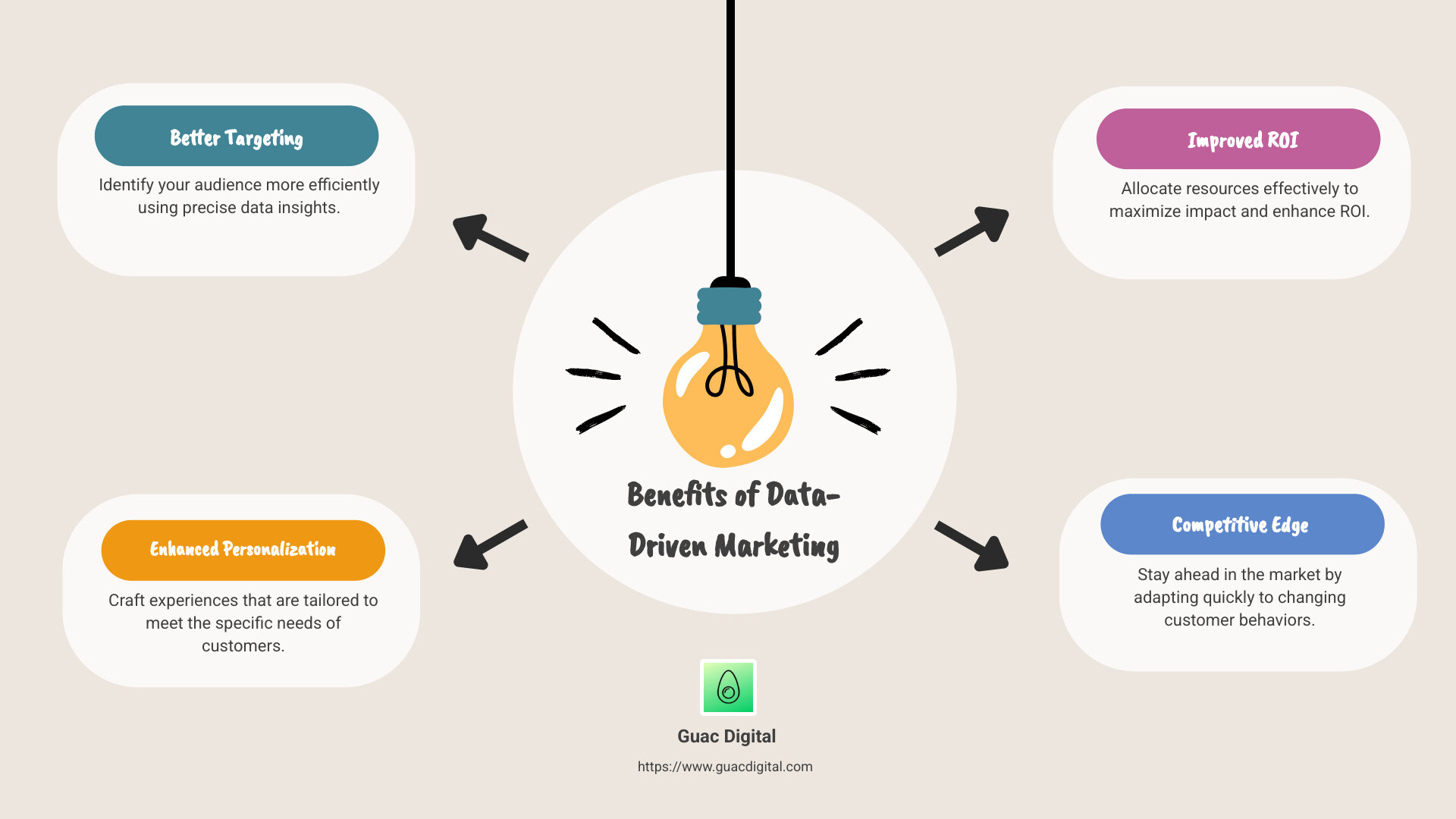
Data driven marketing strategies empower businesses to make informed and precise decisions, leveraging insights derived from customer interactions. Here’s why they matter:
- Better Targeting: Identify your audience more efficiently.
- Improved Personalization: Craft experiences custom to customer needs.
- Improved ROI: Allocate resources where they impact the most.
- Competitive Edge: Stay ahead by adapting to customer behaviors.
Understanding your customers is more crucial than ever. By collecting and analyzing data, businesses can create personalized marketing strategies that truly resonate with their audience. Not only does this engage potential customers, but it also strengthens relationships with existing ones.
Why settle for guesswork when your strategy can be data-driven?
I’m Guy Leon, leading Guac Digital to revolutionize digital marketing through data driven marketing strategies. Our success stories include crafting campaigns that have skyrocketed client engagement by 350%. Through data-driven insights, we’ve significantly improved brand visibility and interaction worldwide.
Easy data driven marketing strategies word list:
– data-driven campaign management
– data-driven insights
– data driven content marketing strategy
Understanding Data-Driven Marketing
Data-driven marketing is all about using customer information to optimize brand communications effectively. Instead of relying on gut feelings or assumptions, data-driven marketers use actual data to predict customer needs, desires, and behaviors. This approach allows for the development of marketing strategies that are more likely to yield a high return on investment (ROI).
Customer Data: The Heart of Data-Driven Marketing
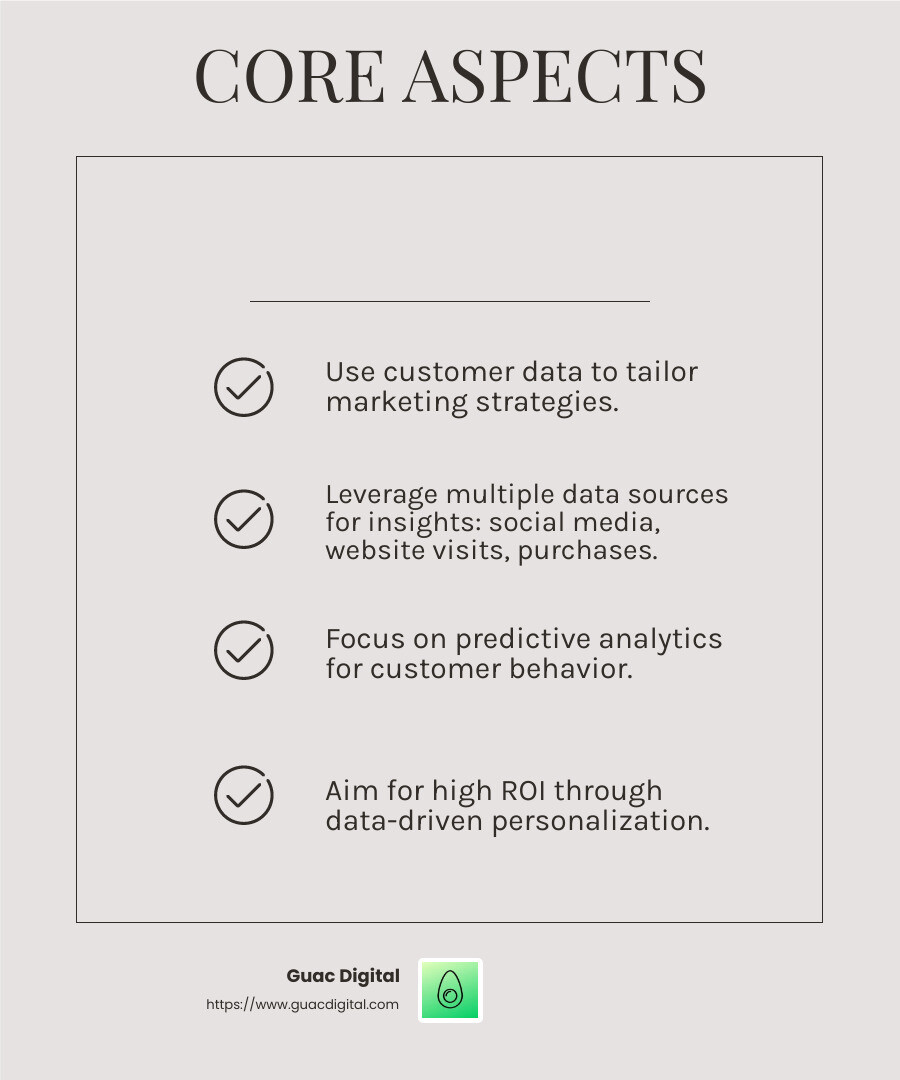
Customer data is the foundation of this approach. By collecting and analyzing data from various customer touchpoints—like social media interactions, website visits, and purchase histories—marketers gain a deep understanding of their audience. This information helps them tailor their marketing efforts to better meet customer expectations.
Example: Imagine an online store that tracks customer browsing patterns. If a customer frequently visits pages related to hiking gear, the store can personalize marketing messages to focus on hiking-related promotions.
Personalization: Crafting Unique Customer Experiences
Personalization is a key advantage of data-driven marketing. With the insights gained from customer data, businesses can create personalized experiences that make each customer feel valued. This could involve sending personalized email offers, customizing website content, or providing custom product recommendations.
- Dynamic Content: Websites can now change in real-time based on customer behavior, offering a unique experience for each visitor.
- Targeted Promotions: Customers receive offers that are relevant to their interests and past behaviors, increasing the likelihood of conversion.
Boosting ROI with Data-Driven Strategies
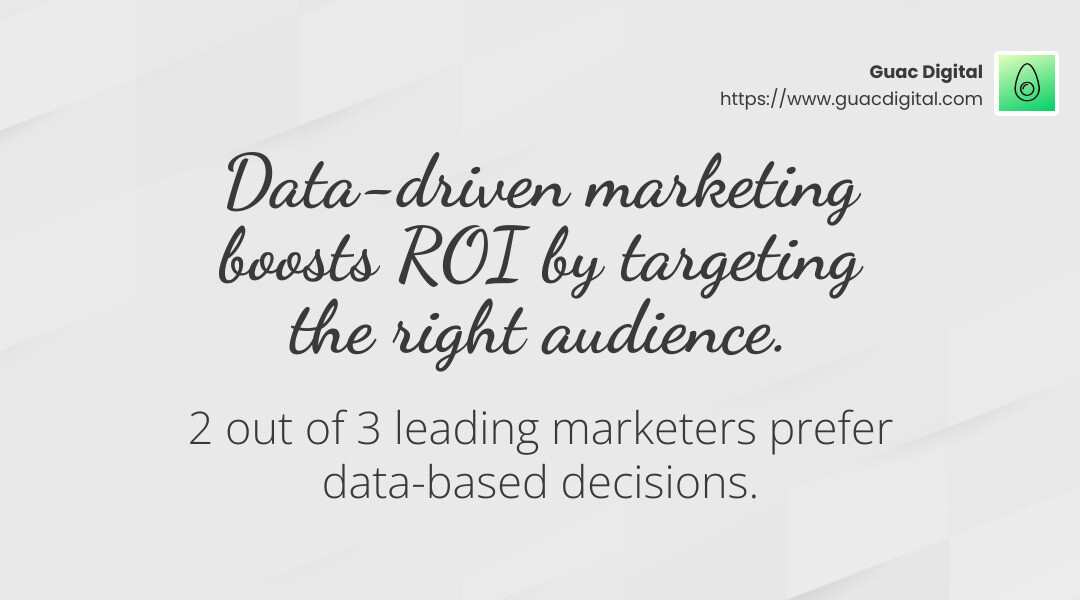
Data-driven marketing not only improves engagement but also significantly improves ROI. By targeting the right audience with the right message at the right time, businesses can make more efficient use of their marketing budget. This precision reduces wasted spending and maximizes the impact of each marketing campaign.
Real-World Success
In a Forbes article, Tom Benton, CEO of the Data and Marketing Association, highlights that with the vast amount of data available, businesses can deliver 1-to-1 customer experiences at scale. This means that even companies with millions of customers can offer personalized experiences akin to those of smaller businesses with only a handful of clients.
Case Study: A major retail brand used predictive analytics to adjust their marketing strategies in real-time based on customer engagement. This approach led to a 20% increase in conversion rates and a 15% boost in customer retention.
By leveraging data-driven marketing strategies, businesses can not only improve customer satisfaction but also achieve a competitive edge in the market. Understanding and utilizing customer data effectively is key to open uping the full potential of marketing efforts.
In the following sections, we’ll explore the top strategies that can help your business harness the power of data-driven marketing.
Top 5 Data-Driven Marketing Strategies
In today’s competitive landscape, using data-driven marketing strategies is essential to stand out and connect with your audience effectively. Let’s explore the top strategies that can help you harness the power of data.
1. Precision Marketing
Precision marketing is all about targeting the right audience with the right message at the right time. By using detailed customer data, businesses can create highly targeted campaigns that resonate with specific segments. This approach minimizes waste and maximizes impact.
- Example: A clothing retailer might use purchase history and browsing patterns to send custom promotions to customers interested in summer dresses, increasing the likelihood of conversion.
2. Omnichannel Marketing
Today’s customers interact with brands across multiple channels. Whether it’s social media, email, or in-store visits, consistency is key. Omnichannel marketing ensures that all channels work together seamlessly, providing a unified customer experience.
- Unified Customer Profiles: By sharing data across channels, businesses can create a cohesive profile for each customer, ensuring personalized interactions no matter where they engage.
3. Predictive Analytics
Predictive analytics uses data, statistical algorithms, and machine learning to identify the likelihood of future outcomes. This strategy helps businesses anticipate customer needs and behaviors, allowing them to tailor marketing efforts proactively.
- Example: A tech company might use predictive analytics to determine which customers are most likely to upgrade their devices, then target them with specific offers or information.
4. Personalization
Personalization goes beyond just using a customer’s name in an email. It’s about creating a unique experience for each customer based on their behaviors and preferences. Personalized marketing can significantly boost customer engagement and loyalty.
- Dynamic Content: Websites can adjust content in real-time based on a visitor’s past interactions, offering a unique experience custom to their needs.
5. Data Onboarding
Data onboarding involves transferring offline customer data to online platforms. This process enriches online marketing efforts by providing a more comprehensive view of customer behavior.
- Enhancing Customer Insights: By integrating offline purchase data with online interactions, businesses can better understand their customers and tailor their marketing strategies accordingly.
By implementing these data-driven marketing strategies, businesses can improve their marketing effectiveness, improve customer satisfaction, and drive growth. In the next section, we’ll dig deeper into how sharing data across channels can break down silos and create more cohesive customer experiences.
Sharing Data Across Channels
Data silos are a common challenge for many organizations. When data is isolated within different departments or systems, it becomes difficult to get a complete picture of the customer. This fragmentation can hinder marketing efforts and lead to missed opportunities.
Breaking Down Data Silos
To overcome this, businesses need to focus on breaking down data silos. By integrating data from various sources, companies can create unified customer profiles. These profiles provide a comprehensive view of each customer, capturing their interactions across all touchpoints.
- Example: Vodafone Italy successfully centralized their data by linking online and offline customer interactions. This integration allowed them to identify upselling opportunities and reduce churn.
The Power of Unified Customer Profiles
Unified customer profiles enable businesses to deliver more personalized and consistent experiences. When all customer data is in one place, marketers can tailor their messages to fit individual preferences and behaviors.
- Case Study: The Philadelphia 76ers used weather data combined with historical attendance to predict game attendance. This allowed them to adjust their marketing strategies and improve fan engagement.
Implementing an Omnichannel Strategy
An effective omnichannel strategy ensures that customers have a seamless experience across all platforms. Whether they’re engaging with a brand on social media, visiting a website, or shopping in-store, the experience should feel connected and cohesive.
- Benefits: Sharing data across channels not only improves customer satisfaction but also improves marketing efficiency. By applying successful strategies from one channel to another, businesses can optimize their efforts and achieve better results.
In conclusion, sharing data across channels is crucial for breaking down silos and creating a unified customer experience. By integrating data and implementing an omnichannel strategy, businesses can better understand their customers and deliver more personalized marketing efforts. Next, we’ll explore how using demographic data can improve campaign planning.
Using Demographic Data for Campaign Planning
Demographic data is a powerful tool for targeted marketing. It helps businesses understand who their customers are, what they need, and how to reach them effectively. By collecting details such as age, race, income, education, and marital status, companies can build detailed customer profiles.
Building Customer Profiles
Creating customer profiles involves gathering demographic data from various sources. Social media accounts, form fills, and surveys are great starting points. Publicly available data from sources like the U.S. Census Bureau can also provide valuable insights.
- Example: A high-end furniture brand struggling to attract leads can analyze income data to focus their marketing efforts on neighborhoods with higher income tiers. This targeted approach can significantly improve campaign performance.
Targeted Marketing with Demographic Data
Once customer profiles are established, businesses can use this information to design more effective marketing campaigns. Demographic data allows marketers to tailor their messages and offers to specific audience segments.
- Case Study: A company targeting Millennials might focus on mobile-first marketing strategies, given that the average Millennial spends over four hours daily on their smartphone. By segmenting their audience by age, they can prioritize campaigns that resonate with this tech-savvy demographic.
Optimizing Campaigns with Demographic Insights
Demographic data not only helps in planning campaigns but also in optimizing them. By analyzing which demographic segments respond best to certain messages or offers, businesses can refine their strategies for better results.
- Insight: A/B testing different campaign elements, such as subject lines or images, can reveal which approaches are most effective for different demographics. This data-driven approach ensures that marketing efforts are not just based on assumptions but on concrete insights.
Using demographic data for campaign planning allows businesses to reach the right audience with the right message at the right time. This precision in marketing leads to improved customer engagement and higher return on investment. Next, we’ll explore how personalizing the customer journey can further improve marketing efforts.
Personalizing the Customer Journey
Personalizing the customer journey is about creating unique experiences for each customer. It’s like tailoring a suit; it needs to fit perfectly to make the wearer feel special. In marketing, this means using data to deliver personalized recommendations and improve the overall customer experience.
Enhancing Customer Experience
A personalized customer journey begins with understanding what your customers want. By analyzing their behavior and preferences, you can offer them what they need at each stage of their journey. This approach not only improves satisfaction but also boosts customer loyalty.
- Fact: According to research, 80% of customers are more likely to buy from a brand that offers personalized experiences. This means they feel valued and understood, which encourages them to return.
Personalized Recommendations
Imagine walking into a store, and the salesperson knows exactly what you like and suggests products that match your taste. That’s the power of personalized recommendations in the digital world. By using data on past purchases and browsing history, you can suggest products or services that are most relevant to each customer.
- Example: Online platforms like Amazon and Netflix excel at this. They use algorithms to recommend products or shows based on user history, increasing the chances of a purchase or engagement.
Building Customer Loyalty
Personalization is a key driver of customer loyalty. When customers feel valued, they are more likely to stick with your brand. Offering personalized discounts, exclusive offers, or custom content can make a big difference.
- Case Study: A lawn care company segments its customers based on past purchases. If a customer bought a basic package, the company can offer an upgrade to a complete care package with a personalized email. This not only encourages a repeat purchase but also builds a stronger relationship with the customer.
The Role of Technology
Technology plays a significant role in personalizing the customer journey. Tools like CRM systems, predictive analytics, and AI help businesses gather and analyze data efficiently. This enables marketers to deliver the right message at the right time through the right channel.
- Insight: Integrating call tracking data with marketing platforms can improve personalization. For instance, if a customer expresses interest in a product during a call, they can be targeted with personalized ads or follow-up emails for that specific product.
In conclusion, personalizing the customer journey is essential for creating meaningful connections with your audience. It improves the customer experience, drives loyalty, and ultimately leads to better business outcomes. Up next, we’ll dig into how leveraging predictive analytics can further optimize your marketing strategies.
Leveraging Predictive Analytics
Predictive analytics is like having a crystal ball for your marketing strategies. It uses machine learning to analyze patterns in customer data, helping businesses anticipate future behaviors and trends. This powerful tool can transform how you connect with your audience.
Understanding Customer Behavior
Predictive analytics dives deep into customer behavior. By examining past interactions and transactions, it forecasts what customers might do next. This insight allows businesses to tailor their marketing efforts more effectively.
- Fact: Businesses that use predictive analytics are 2.9 times more likely to outperform their peers in customer engagement and satisfaction.
Machine Learning in Action
Machine learning plays a crucial role in predictive analytics. It processes vast amounts of data quickly, identifying patterns that humans might miss. This capability enables more precise targeting and personalization.
- Example: A retail company uses machine learning to analyze purchase histories and browsing patterns. It predicts which products a customer is likely to buy next, allowing for personalized marketing campaigns that hit the mark.
Optimizing Marketing Strategies
With predictive analytics, marketers can optimize their strategies by identifying high-value customers and potential churn risks. This foresight helps allocate resources more effectively and craft targeted campaigns.
- Case Study: Philips, a global company, used predictive analytics to optimize content delivery across 79 markets. By analyzing real-time data, they adjusted their marketing strategies to boost conversions. This approach led to significant improvements, like a 635% increase in newsletter signups.
Enhancing Customer Experience
Predictive analytics doesn’t just benefit businesses; it also improves the customer experience. By anticipating needs, companies can offer timely solutions, which fosters trust and loyalty.
- Insight: Predictive models can identify when a customer might need support or be ready for an upsell, allowing businesses to intervene at just the right moment.
Predictive analytics is a game-changer in data-driven marketing strategies. It empowers businesses to make informed decisions, personalize customer interactions, and ultimately drive higher ROI. Next, we’ll explore how deepening audience insights with data onboarding can further improve your marketing efforts.
Deepening Audience Insights with Data Onboarding
Data onboarding is like bridging the gap between offline and online worlds. It involves transferring offline customer data—such as in-store purchases and contact details—to online platforms. This process is crucial for gaining a fuller understanding of your audience.
Why Data Onboarding Matters
When you onboard offline data, you open up a treasure trove of information about your customers’ behaviors away from screens. This insight can be invaluable for crafting more relevant and personalized marketing campaigns.
- Fact: Companies that integrate offline and online data see a 20% increase in marketing ROI.
The Process of Data Onboarding
Data onboarding involves several key steps. First, you collect offline data, which might include purchase history or loyalty program participation. Next, this data is anonymized to protect customer privacy. Finally, it’s transferred to an online platform where it can be used for marketing.
- Example: A retailer collects data from in-store purchases. Once onboarded, this data helps tailor online ads to match customers’ buying habits, increasing the likelihood of conversion.
Enhancing Customer Insights
By combining offline data with online behavior, businesses gain a unified view of their customers. This comprehensive profile allows for deeper insights into customer preferences and patterns. It also helps identify high-value customers and tailor marketing strategies accordingly.
- Case Study: A major brand uses data onboarding to blend in-store and online purchase data. This approach reveals buying trends and helps the brand develop targeted promotions that resonate with their audience.
Improving Personalization and Targeting
Data onboarding improves personalization efforts. By understanding offline behaviors, businesses can create more accurate customer profiles and deliver content that truly resonates.
- Insight: Personalized marketing based on comprehensive data can lead to 5x to 8x higher ROI, as businesses can offer solutions that align with customers’ specific needs and preferences.
Overcoming Challenges
While data onboarding offers numerous benefits, it also presents challenges. Ensuring data accuracy and privacy is paramount. Implementing robust data management systems and adhering to privacy regulations like GDPR is essential.
- Tip: Regularly audit your data for accuracy and invest in secure onboarding processes to maintain customer trust.
Data onboarding is a powerful tool for enhancing audience insights and driving more effective data-driven marketing strategies. By integrating offline and online data, businesses can create more personalized experiences and improve customer engagement. Next, we’ll dig into how sharing data across channels can further unify your marketing efforts.
Frequently Asked Questions about Data-Driven Marketing Strategies
What is a data-driven approach to marketing?
A data-driven approach to marketing involves using customer information to shape brand communications and strategies. Instead of relying on guesswork, marketers analyze concrete data to understand customer preferences and behaviors. This method not only improves personalization but also improves ROI by ensuring that marketing efforts are targeted and effective.
What are examples of data-driven marketing?
One standout example of data-driven marketing is Spotify Wrapped. Every year, Spotify analyzes user data to create personalized playlists and insights about their listening habits. This approach not only delights users with a personalized experience but also boosts customer engagement by encouraging them to share their unique stats on social media.
Personalized marketing like this leverages data to tailor messages and offers to individual customers. It can range from customized email campaigns to product recommendations based on past purchases. By using data to understand what customers want, businesses can create relevant and engaging experiences.
What are the benefits of data-driven marketing?
Data-driven marketing offers several key benefits:
Improved Customer Experience: By using data to understand customer preferences, businesses can create more personalized and satisfying experiences. This can lead to increased loyalty and long-term relationships.
Improved Personalization: With detailed customer insights, marketers can craft messages and offers that resonate with individual needs and preferences. This personalization can drive higher engagement and conversions.
Increased ROI: Data-driven strategies allow businesses to allocate resources more effectively, targeting the right audience at the right time. This precision leads to better results and a higher return on investment.
Incorporating data into marketing strategies not only improves the customer experience but also drives business growth. By understanding and acting on customer information, companies can create more impactful and successful marketing campaigns. Next, we’ll explore how sharing data across channels can further unify your marketing efforts.
Conclusion
At Guac Digital, we believe that personalized strategies are the key to open uping high ROI in today’s competitive digital landscape. Our approach to data-driven marketing is all about leveraging big data to craft campaigns that resonate with each unique audience. This means not just reaching people, but connecting with them in a meaningful way.
Our team in Tampa, Florida, and around the world, is dedicated to designing and managing digital campaigns that are as unique as our clients. We dive deep into data to understand customer behaviors, preferences, and interactions. This allows us to create personalized experiences that foster loyalty and drive conversions.
By using data-driven marketing strategies, we help businesses achieve their goals more efficiently. Whether it’s through precision marketing, predictive analytics, or personalized customer journeys, our strategies are designed to maximize impact and ensure that every marketing dollar is well spent.
Ready to lift your marketing game? Find how our custom strategies can bring your brand’s story to life and deliver the results you need. Explore our services to learn more about how we can help you achieve your business objectives with data-driven insights.
With Guac Digital, you’re not just investing in marketing—you’re investing in a partnership that prioritizes your growth and success.