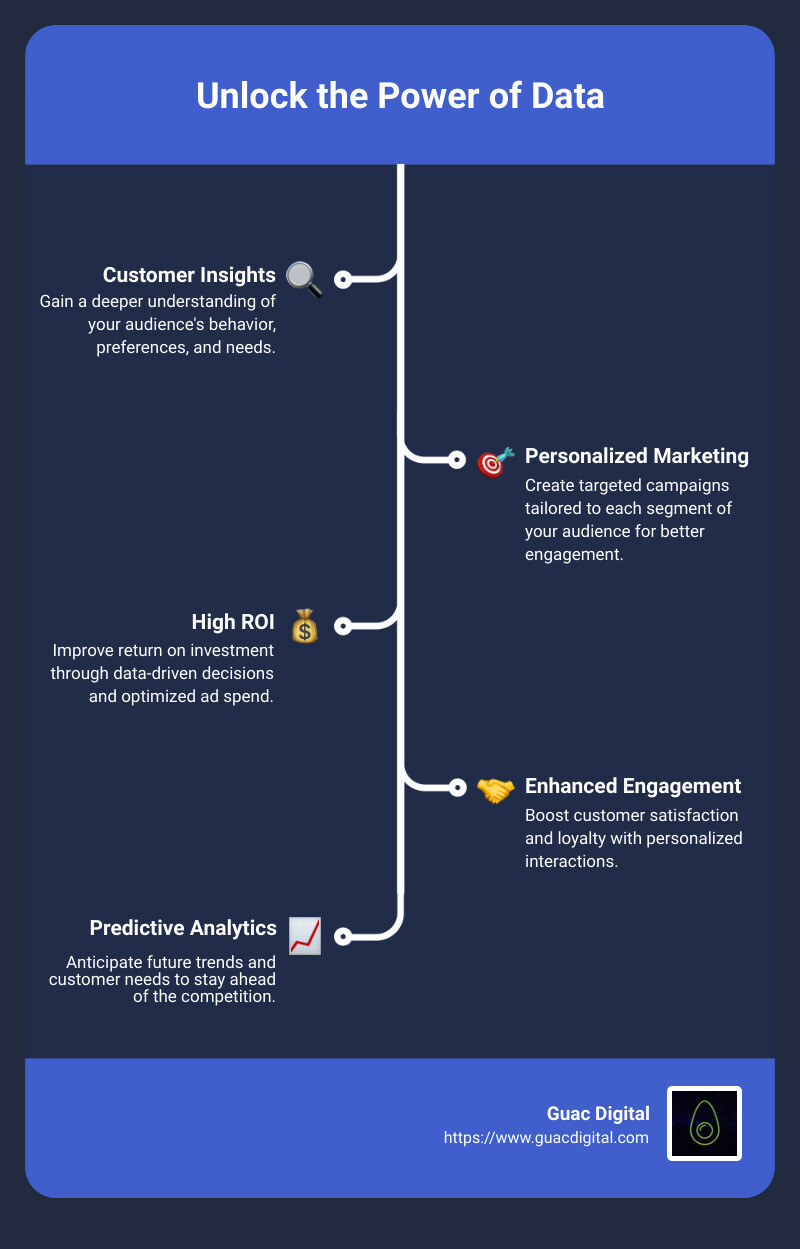
Data-driven advertising is changing the way businesses engage with customers. At its core, data-driven advertising means using vast amounts of data to tailor marketing strategies, which helps create more personalized and effective campaigns. In doing so, businesses can better understand their customers, leading to higher engagement and return on investment (ROI).
Key Takeaways:
– Data-driven advertising leverages data to create personalized and efficient marketing strategies.
– It improves customer insights, making it easier to target specific audiences.
– This approach often results in better customer engagement and higher ROI.
Data-driven advertising involves examining customer data to segment audiences and predict future behaviors. For instance, by analyzing shopping cart abandonment and product page visits, brands can create campaigns that address customer needs before they even arise, boosting satisfaction and loyalty.
Example: Lane Boots significantly increased their return on ad spend (ROAS) by 6x through data-driven advertising strategies.
As the founder and CEO of Guac Digital, I have helped numerous businesses harness the power of data to improve their marketing campaigns. Our data-driven strategies have consistently resulted in higher engagement and increased sales for our clients.
Learn How Data-Driven Advertising Can Transform Your Business:
What is Data-Driven Advertising?
Data-driven advertising is all about using data to make smarter advertising decisions. Instead of guessing what might work, you use real information to target the right people at the right time with the right message.
Definition
In simple terms, data-driven advertising means using data to guide your advertising efforts. This data can come from various sources like customer behavior, purchase history, and browsing patterns. The goal is to make your ads more effective and relevant.
Automation and AI
Automation and artificial intelligence (AI) are key components of data-driven advertising. These technologies help you analyze large amounts of data quickly and accurately. They can automate tasks like ad placement and bidding, making your campaigns more efficient.
For example, AI can help you determine the best time to show an ad to a specific user. It can also personalize the content of the ad based on the user’s past behavior. This ensures that your ads are always relevant and timely.
Customer Behavior
Understanding customer behavior is crucial for effective data-driven advertising. By analyzing how customers interact with your website, social media, and other channels, you can gain insights into their preferences and needs.
For instance, if you notice that a customer frequently browses a particular category of products, you can target them with ads for similar items. This increases the chances of them making a purchase.
Meaningful Interactions
The ultimate goal of data-driven advertising is to create meaningful interactions with your customers. This means delivering ads that are not only relevant but also engaging.
One way to achieve this is through personalization. By using data to tailor your ads to individual users, you can make them feel valued and understood. This leads to higher engagement and better results.
For example, Canva asks users for their name and what they plan to use the platform for during signup. This allows them to send personalized emails and provide relevant suggestions, enhancing the user experience.
Case Study: Emarsys Personal Logic
A great example of AI-powered personalization is Emarsys’ Personal Logic. This tool uses browsing activity and purchase history to create personalized recommendations. It helps companies deliver 1:1 personalized ads, increasing the chances of conversion.

By leveraging AI and data, Emarsys enables businesses to offer recommendations that align with each customer’s individual interests and behaviors. This not only boosts sales but also improves customer satisfaction.
In summary, data-driven advertising is about using data, automation, and AI to create more effective and meaningful ads. By understanding customer behavior and personalizing your messages, you can increase engagement and drive higher conversions.
Next, we’ll explore the benefits of data-driven advertising and how it can strengthen emotional connections with your customers.
Benefits of Data-Driven Advertising
Strengthen Emotional Connections
Data-driven advertising helps you understand how buyers engage with your brand. This knowledge allows you to create highly-targeted campaigns with personalized messaging. For example, Canva asks users for their names during signup to send personalized emails. This simple act makes communications feel more human and relevant.
By using data, you can target the right prospects in the right way at multiple touchpoints in their journey. This strengthens emotional connections and boosts customer engagement. Personalized experiences can provide 5-8 times the ROI on marketing spend, according to McKinsey.
Reduce Costs and Risks with Predictive Analytics
Predictive analytics uses data, AI, and statistical algorithms to forecast outcomes and consumer responses. By analyzing past campaign performance, you can develop accurate and targeted strategies that reduce costs and risks.
For instance, Emarsys’ Predict recommendation engine analyzes behavioral data to deliver personalized recommendations. This can be used in repurchase campaigns, abandoned cart campaigns, and enhancing the browsing experience. Personalized content in emails can lead to up to five times more clicks than regular content, and real-time website recommendations can result in up to four times more conversions.
More Efficient Media Buying Strategy
With data analytics, you gain insights into your prospects’ spending habits, demographics, behaviors, and interests. This removes guesswork from your media buying strategy, allowing you to focus on what works and avoid what doesn’t.
For example, you can use historical data and engagement trends to determine which channels to invest in. This ensures your budget is spent efficiently and effectively. Tracking metrics like return on ad spend and cost per click helps you allocate resources where they’ll have the most impact.
In summary, data-driven advertising helps you build stronger connections with your customers, reduce costs and risks, and create a more efficient media buying strategy. By leveraging data, you can increase conversions and drive better results. Next, we’ll explore specific strategies for e-commerce to make the most out of data-driven advertising.
Data-Driven Advertising Strategies for E-Commerce
Advertising on Your Website
Banner Overlay
Banner overlays are a great way to capture attention without being intrusive. They sit at the top of your web pages and can be custom based on the visitor’s previous interactions with your site. For example, if a visitor has previously shown interest in a particular product, your banner can highlight a special offer or related product to entice them back.
Exit Intent Overlay
Exit intent overlays are super effective. When a visitor is about to leave your site, this overlay can pop up with a personalized message or offer. Known contacts can see product recommendations based on their browsing history, while new visitors might get a discount code in exchange for their email address. This strategy can help reduce cart abandonment and increase conversions.
Web Acquisition Box
Web acquisition boxes are subtle, non-intrusive forms of advertising that allow users to opt-in to your offers. These boxes can change content based on whether the visitor is a known subscriber or not. For example, a new visitor might see an invitation to join your email list, while a returning customer might see a special offer or product recommendation.
Facebook Lead Ads and Lookalike Targeting
Lead Ads
Facebook Lead Ads are designed to capture potential customers’ information directly within the platform. They are great for generating leads as users can sign up or get more information with just one click. For instance, if a user recently showed interest in travel, you could target them with ads for travel gear or vacation packages, making the ad highly relevant and increasing the chances of conversion.
Lookalike Audiences
Lookalike Audiences allow you to reach new users who are similar to your existing customers. By analyzing your current customer data, Facebook can find people with similar interests and behaviors. This makes your ads more likely to resonate with these new audiences, increasing engagement and conversions.
Mobile Advertising
Push Notifications
Push notifications are a powerful way to re-engage users who have downloaded your app. They can be personalized based on user behavior and preferences. For example, WorldRemit uses push notifications to update users on daily transfer rates, driving 8% of their app traffic. These notifications are less intrusive than traditional ads and can provide timely, relevant information.
In-App Messaging
In-app messaging allows you to communicate with users while they are using your app. These messages can be personalized based on the user’s location, behavior, and preferences. For example, if a user frequently browses a particular category, you can send them messages about new arrivals or special offers in that category.
In-Store to Mobile
For retail brands with physical stores, in-store signage can encourage shoppers to engage with your brand online. Offering incentives to sign up for SMS alerts or download your app can help turn in-store visitors into known contacts. This strategy allows you to continue engaging with them through digital channels long after they leave the store.
By implementing these data-driven advertising strategies, e-commerce brands can create personalized, engaging experiences for their customers, leading to higher conversions and stronger customer relationships. Next, we’ll discuss the role of data in personalized advertising and how AI can improve these efforts.
The Role of Data in Personalized Advertising
AI-Powered Personalization
Personalized advertising is all about delivering the right message to the right person at the right time. But how do you achieve this? The key lies in high-quality data and AI-powered personalization.
AI-powered personalization uses advanced algorithms to analyze vast amounts of data and create highly personalized experiences for each user. One powerful example is Emarsys’ Personal Logic. This tool uses browser history, item-to-item similarity, and other customer data points to deliver truly personalized ads.
Here’s how it works:
Browser History: By tracking a user’s browsing activity, AI can determine what products they are interested in. For example, if someone frequently visits pages about hiking gear, the AI can recommend similar products.
Item-to-Item Similarity: AI can analyze the co-occurrence of products in user sessions. If many users who bought hiking boots also bought backpacks, the AI will recommend backpacks to someone looking at hiking boots.
Customer Data Points: This includes purchase history, search queries, and even demographic information. All these data points help paint a complete picture of the customer, allowing for more accurate recommendations.
Emarsys Personal Logic is a prime example of how AI can take these data points and transform them into actionable insights. This tool can create campaigns for top-spending customers with personalized recommendations for high-end items that match their interests and behaviors.
This approach doesn’t just increase purchases; it also improves the overall customer experience. By showing customers products they are genuinely interested in, brands can build stronger relationships and increase loyalty.
In summary, AI-powered personalization leverages high-quality data to deliver targeted, relevant ads. Tools like Emarsys Personal Logic use browser history, item-to-item similarity, and other customer data points to create a personalized shopping experience that benefits both the customer and the brand. Next, we’ll explore the challenges of data-driven advertising and how to overcome them.
Challenges of Data-Driven Advertising
Avoid Being Invasive
Data-driven advertising is powerful, but it can easily cross the line into being invasive. Consumers are increasingly aware of their data privacy rights, thanks to regulations like GDPR in the EU and CCPA in California. Transparency is key. Brands must clearly explain how they collect, use, and protect customer data to maintain trust.
Example: A study by Harvard Business Review found that 79% of consumers are concerned about data privacy. When brands are transparent about data usage, they build consumer trust and avoid being seen as intrusive.
Poor Data Quality
The success of data-driven advertising hinges on the quality of the data. Poor data quality leads to ineffective campaigns and wasted resources. Data errors, inconsistencies, and outdated information can skew results and lead to poor decision-making.
Data Quality Dimensions:
- Completeness: Ensure all necessary data is collected.
- Consistency: Standardize data formats across all sources.
- Accuracy: Regularly verify and update data.
- Validity: Ensure data meets set standards and criteria.
Tip: Invest in data quality tools and establish clear data quality policies across your organization.
Extracting the Right Information
With the vast amount of data available, extracting the right information can be challenging. Marketers need to identify the most relevant data points to inform their strategies. This requires expertise in data analysis and a robust data infrastructure.
Big Data and Data Scientists:
- Big Data: Large volumes of data generated daily.
- Data Scientists: Experts who analyze and interpret complex data.
Case Study: LiberEat used Semrush’s Market Explorer tool to gain insights into their competitors’ traffic sources. This data-driven approach helped them focus on high-potential keywords, improving their search engine rankings and driving organic traffic.
It’s Complicated
Implementing data-driven advertising is complex and resource-intensive. It requires significant time, expertise, and financial investment. Many businesses struggle with the complexity and may need third-party guidance to steer the landscape effectively.
Challenges:
- Time and Resources: Developing and maintaining a data-driven strategy is time-consuming.
- Third-Party Guidance: External experts can provide valuable insights and support.
Insight: According to Winterberry Group, investments in data-driven channels will flourish, with spending on data infrastructure predicted to top $36 billion in 2024. This highlights the growing need for robust data systems.
In the next section, we’ll discuss best practices for data-driven advertising to help you overcome these challenges and achieve your marketing goals.
Best Practices for Data-Driven Advertising
Provide Value
Data-driven advertising is all about improving customer experience through data insights. Each campaign should answer the question: “What’s in it for the customer?”
Think about the user’s problem: What are they trying to solve? Where are they in the buyer’s journey? Use this information to provide the most helpful content. For example, a software company could offer a free e-book on solving a specific business problem, rather than just a product brochure.
Outline Clear Advantages
Consumers are more likely to share their data if they see a clear benefit. Highlight what they will gain, such as personalized product recommendations or exclusive insider information.
Example: A fashion retailer could use data to send personalized style recommendations to customers based on their past purchases. According to Emarsys, personalized email campaigns can see up to five times more clicks than generic ones.
Be Transparent
Transparency is crucial for building trust with your customers. Be clear about what data you collect, how you use it, and how you store it.
Key Points:
– Data Collection: Explain what information you are gathering.
– Data Usage: Detail how you will use their data to improve their experience.
– Data Security: Assure customers that their data is secure. This is especially important with regulations like GDPR and CCPA.
Example: A company could have a dedicated webpage explaining their data policies and offering customers the ability to update or delete their information.
Implement Data Quality Best Practices
Poor data quality can derail your data-driven advertising efforts. Ensure your data is accurate, complete, and up-to-date.
Top Data Quality Dimensions:
– Completeness: Ensure all necessary data fields are filled.
– Consistency: Standardize data formats across departments.
– Accuracy: Regularly verify data for correctness.
– Timeframe: Keep data current and relevant.
For example, if a customer changes their email address, update your database to avoid sending emails to an inactive account.
In the next section, we’ll explore frequently asked questions about data-driven advertising to help you get started.
Frequently Asked Questions about Data-Driven Advertising
What are data-driven ads?
Data-driven ads are advertisements that leverage data to improve targeting, personalization, and timing. Unlike traditional ads, which are often broad and generic, data-driven ads use insights from customer behavior, demographics, and preferences to deliver more relevant and effective messages.
For example, Navigation.com used AdRoll’s Growth Platform to segment their audience by car brand, make, and model. This allowed them to deliver customized messages to returning website users, significantly boosting engagement and conversions.
What is an example of data-driven content marketing?
Data-driven content marketing involves creating and distributing content based on insights derived from data. This approach ensures that the content resonates with the target audience and meets their needs and interests.
A great example is Vineyard Vines, which uses analytics to personalize their marketing. By understanding customer preferences and behaviors, they tailor their content to engage customers more effectively, resulting in higher customer satisfaction and loyalty.
What is an example of a data-driven approach?
A data-driven approach involves using data and analytics to guide decision-making and strategy. This can be applied in various areas of marketing and advertising.
For instance, Burke Decor centralized their marketing campaign data to identify high-intent customers. By analyzing this data, they were able to refine their targeting and improve their ROI by 13.4x. This demonstrates how a well-implemented data-driven approach can significantly improve marketing performance.
In the next section, we’ll dig deeper into the role of data in personalized advertising and how it can transform your marketing efforts.
Conclusion
Data-driven advertising is no longer just an option; it’s a necessity for businesses that want to thrive in today’s competitive landscape. By leveraging data, brands can create highly targeted and personalized ad campaigns that resonate with their audience, leading to increased brand awareness, customer loyalty, and higher revenue.
At Guac Digital, we specialize in crafting personalized client strategies that harness the power of data to deliver high ROI. Our approach revolves around understanding your unique business needs and utilizing data to make informed decisions that drive growth. Whether it’s through programmatic marketing, SEO, PPC, or web design, we ensure every campaign is optimized for maximum impact.
Why Choose Guac Digital?
Personalized Strategies:
We dive deep into your business to create customized marketing strategies that align with your goals. Our data-driven approach ensures that your campaigns are not only effective but also efficient.
High ROI:
Our focus is on delivering results. By analyzing data and continuously optimizing your campaigns, we help you achieve a higher return on investment. Just like Navigation.com and Burke Decor, we aim to maximize your marketing performance.
Programmatic Marketing:
We leverage programmatic marketing to automate the buying of ad space, ensuring your ads are placed in front of the right audience at the right time. This not only improves targeting but also reduces costs and increases efficiency.
Transparency and Trust:
We believe in being transparent about our data collection and usage practices. Our commitment to adhering to privacy regulations like GDPR and CCPA ensures that your customers’ data is handled with care, building trust and long-term relationships.
In conclusion, embracing data-driven advertising can transform your marketing efforts, leading to better customer experiences and significant business growth. Partner with Guac Digital to open up the full potential of your advertising campaigns and achieve outstanding results.
Request your free marketing plan from our experts today and start your journey towards data-driven success!