
Business in Marketing: The Complete 2026 Guide to Strategy, Implementation, and Success
Quick Answer
Business in marketing refers to the strategic process of promoting, selling, and distributing products or services to target customers while building sustainable competitive advantage. It combines market research, customer relationship management, brand positioning, and promotional tactics to drive revenue growth and achieve organizational objectives in an increasingly digital and customer-centric marketplace.
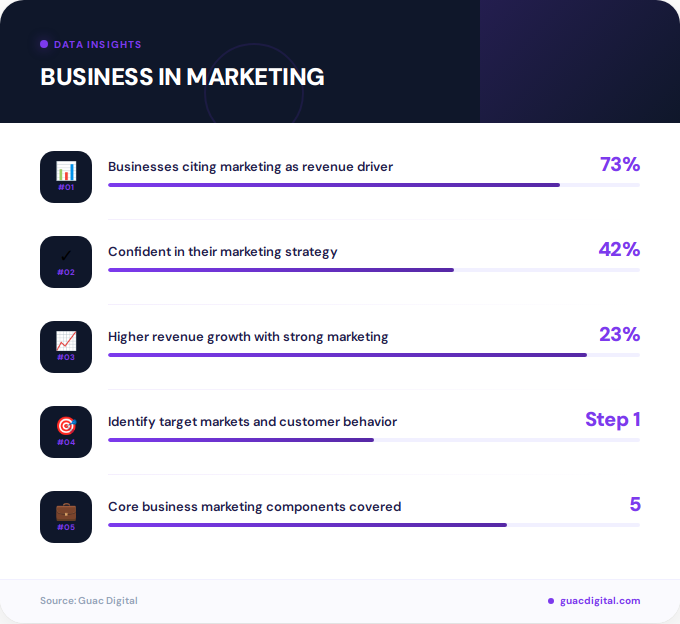
Did you know that 73% of businesses now cite marketing as their primary driver of revenue growth, yet only 42% feel confident in their marketing strategy? This striking gap reveals a critical truth: understanding business in marketing has never been more essential, yet it remains one of the most misunderstood aspects of organizational success.
Whether you’re a startup founder, small business owner, or corporate executive, mastering the intersection of business and marketing determines whether you capture market share or watch competitors pull ahead. In 2026’s hyper-competitive landscape, marketing isn’t just a department; it’s the strategic engine that powers customer acquisition, retention, and brand value.
This comprehensive guide explores the fundamental principles, proven strategies, and emerging trends that define successful business in marketing today. You’ll discover actionable frameworks backed by real data, expert insights, and practical examples that transform theoretical concepts into measurable business outcomes.
What Is Business in Marketing?
Business in marketing encompasses the systematic application of marketing principles, strategies, and tactics to achieve specific organizational goals. It represents the intersection where commercial objectives meet customer needs, creating value exchanges that benefit both parties.
At its core, business marketing involves identifying target markets, understanding customer behavior, developing compelling value propositions, and executing integrated campaigns across multiple channels. According to HubSpot’s State of Marketing report, the most successful businesses treat marketing as a revenue-generating function rather than merely a cost center.
The discipline extends beyond simple promotion to include market research, competitive analysis, pricing strategy, distribution channel optimization, and customer relationship management. Modern business marketing integrates data analytics, technology platforms, and creative storytelling to build sustainable competitive advantages in crowded marketplaces.
Why Does Marketing Matter for Business Success?
Marketing serves as the critical bridge between what a business offers and what customers actually want. Without effective marketing, even the best products remain unknown, and superior services fail to reach their intended audiences.
Research from Salesforce’s marketing statistics demonstrates that companies with strong marketing strategies experience 23% higher revenue growth compared to competitors with weak or inconsistent marketing efforts. This isn’t coincidental; marketing directly influences every stage of the customer journey.
Effective business marketing accomplishes several vital functions. It builds brand awareness, differentiates offerings from competitors, educates potential customers, generates qualified leads, nurtures relationships, and creates loyalty that drives repeat purchases and referrals. For small businesses especially, the right marketing approach can level the playing field against larger, better-funded competitors.

What Are the Core Components of Business Marketing?
Successful business in marketing relies on integrating multiple components into a cohesive strategy. Understanding these foundational elements helps organizations build comprehensive marketing programs that deliver consistent results.
Market Research and Customer Insights
Market research forms the foundation of informed marketing decisions. This involves analyzing customer demographics, psychographics, purchasing behaviors, pain points, and preferences. Businesses that invest in continuous market research adapt faster to changing customer needs and emerging opportunities.
Primary research methods include surveys, focus groups, interviews, and behavioral tracking. Secondary research leverages existing data from industry reports, competitor analysis, and market trends. Together, these insights guide product development, messaging, positioning, and channel selection.
Strategic Positioning and Differentiation
Positioning defines how customers perceive your business relative to alternatives. Effective positioning identifies unique value propositions that resonate with target audiences and distinguish your offerings from competitors.
This requires clarity about what makes your business different, better, or more relevant. Whether competing on innovation, quality, service, price, or specialization, your positioning must be authentic, sustainable, and consistently communicated across all touchpoints.
Integrated Marketing Communications
Modern business marketing demands coordinated messaging across multiple channels. Integrated marketing communications ensure that advertising, public relations, content marketing, social media, email, and sales collateral reinforce the same core messages and brand identity.
According to marketing research compiled by Sprout Social’s marketing resources, businesses using integrated approaches achieve 3.5 times better customer engagement rates than those with fragmented strategies.
| Marketing Component | Primary Function | Key Metrics |
|---|---|---|
| Market Research | Understanding customers and markets | Customer satisfaction, market share |
| Brand Strategy | Building recognition and trust | Brand awareness, recall, preference |
| Content Marketing | Educating and engaging audiences | Traffic, engagement, leads |
| Digital Advertising | Driving targeted traffic and conversions | ROAS, CPA, conversion rate |
| Customer Retention | Maximizing lifetime value | Retention rate, LTV, NPS |
What Marketing Strategies Work Best for Businesses in 2026?
The marketing landscape continues evolving rapidly, with 2026 bringing new priorities that reflect changing consumer behaviors and technological capabilities. According to LocaliQ’s small business marketing trends report, successful businesses are focusing on personalization, authenticity, and omnichannel presence.
Content-Led Growth Marketing
Content marketing remains the cornerstone of business marketing strategy. Organizations creating valuable, relevant content attract qualified audiences, establish thought leadership, and generate organic traffic that converts at higher rates than traditional advertising.
This includes blog articles, video tutorials, podcasts, infographics, case studies, and interactive tools. The key is addressing real customer questions and problems rather than simply promoting products. Businesses that prioritize content see 6 times higher conversion rates than competitors who neglect this channel.
Search Engine Optimization and Visibility
SEO enables businesses to be found when potential customers actively search for solutions. Effective SEO services combine technical optimization, quality content creation, and strategic link building to improve rankings and drive qualified organic traffic.
With 68% of online experiences beginning with search engines, visibility in search results directly correlates with business growth. Companies investing in comprehensive SEO strategies typically see returns within 6 to 12 months, with compounding benefits over time.
Paid Advertising and Performance Marketing
While organic strategies build long-term value, paid advertising delivers immediate visibility and measurable results. PPC advertising services enable precise targeting, budget control, and rapid testing of messaging and offers.
Successful businesses integrate search ads, social media advertising, display campaigns, and retargeting to create comprehensive customer acquisition funnels. The key is understanding when to hire specialized expertise versus managing campaigns internally.
Social Media Marketing and Community Building
Social platforms offer direct access to target audiences, enabling relationship building, customer service, and brand storytelling. However, success requires consistent engagement, authentic voice, and platform-specific content rather than generic broadcasting.
Businesses should focus on platforms where their customers actually spend time. B2B companies often find success on LinkedIn and Twitter, while B2C brands may prioritize Instagram, TikTok, or Facebook depending on demographics and product categories.
How Does B2B Marketing Differ from B2C Marketing?
While both business-to-business (B2B) and business-to-consumer (B2C) marketing share fundamental principles, their execution differs significantly based on audience characteristics, decision-making processes, and purchase motivations.
B2B marketing typically involves longer sales cycles, multiple decision-makers, higher transaction values, and emphasis on ROI, expertise, and relationship building. Marketing materials focus on detailed product information, case studies, white papers, and demonstrations that address rational business concerns.
B2C marketing generally features shorter decision cycles, emotional appeals, broader audiences, and lower individual transaction values. Strategies emphasize brand personality, lifestyle alignment, social proof, and seamless purchase experiences that reduce friction and encourage impulse buying.
“The most successful businesses understand that marketing isn’t about choosing between B2B and B2C tactics, it’s about understanding your specific customer’s decision journey and meeting them with the right message at the right time, regardless of category conventions.”
How Has Digital Transformation Changed Business Marketing?
Digital transformation has fundamentally reshaped how businesses approach marketing, creating unprecedented opportunities for targeting, measurement, and customer engagement. Traditional broadcast-style marketing has given way to data-driven, personalized, and interactive approaches.
The shift to digital channels enables precise audience targeting based on demographics, behaviors, interests, and purchase intent. Marketing automation platforms streamline repetitive tasks, nurture leads automatically, and deliver personalized experiences at scale. Analytics tools provide real-time visibility into campaign performance, customer journeys, and ROI.
Mobile-first experiences have become mandatory, with over 60% of searches now occurring on mobile devices. Businesses must ensure their websites perform optimally across all devices and screen sizes to capture mobile traffic effectively.
How Do You Measure Marketing Success in Business?
Measuring marketing effectiveness requires tracking metrics aligned with specific business objectives. Different marketing activities demand different measurement frameworks, but all should ultimately connect to revenue impact and customer acquisition costs.
Understanding how to measure marketing ROI enables data-driven decision making and budget optimization. Key performance indicators vary by channel but typically include awareness metrics (impressions, reach), engagement metrics (clicks, time on site), conversion metrics (leads, sales), and retention metrics (repeat purchase rate, customer lifetime value).
Advanced measurement incorporates attribution modeling to understand which touchpoints contribute most to conversions. Multi-touch attribution reveals the customer journey complexity, showing how different marketing activities work together rather than in isolation.
| Marketing Stage | Key Metrics | Success Indicators |
|---|---|---|
| Awareness | Impressions, reach, brand search volume | Growing audience, increasing mentions |
| Consideration | Website traffic, engagement rate, content downloads | Quality traffic, extended sessions |
| Conversion | Lead generation, conversion rate, cost per acquisition | Decreasing CPA, improving conversion rate |
| Retention | Customer lifetime value, retention rate, NPS | Increasing LTV, high retention |
How Should Businesses Allocate Marketing Budgets?
Marketing budget allocation depends on business size, industry, growth stage, and objectives. However, general benchmarks provide helpful starting points for strategic planning.
Small businesses typically invest 7% to 12% of revenue in marketing, while rapidly scaling companies may allocate 15% to 20% or more. Established enterprises with strong brand recognition often maintain marketing budgets around 5% to 8% of revenue. Pricing varies widely based on scope, industry complexity, and competitive intensity, typically ranging from $5,000 to $50,000+ monthly for comprehensive marketing programs.
Effective allocation balances multiple channels rather than concentrating entirely on one approach. A typical distribution might include 30% to 40% for digital advertising, 20% to 25% for content creation and SEO, 15% to 20% for marketing technology and tools, 10% to 15% for creative and design, and 10% to 15% for testing and optimization.
Budget decisions should prioritize activities with proven ROI while reserving 10% to 15% for experimentation with emerging channels and tactics. Regular review and reallocation based on performance data ensures resources flow to the highest-performing initiatives.
What Are the Most Common Marketing Challenges Businesses Face?
Despite marketing’s critical importance, businesses consistently encounter obstacles that limit effectiveness and ROI. Understanding these challenges enables proactive problem-solving and strategic planning.
Generating Quality Leads
Lead generation remains the top challenge for 61% of marketers, according to industry research. The issue isn’t typically volume but quality. Many businesses attract traffic and generate leads that never convert because targeting, messaging, or qualification processes fail to identify genuinely interested, qualified prospects.
Solutions include refining ideal customer profiles, implementing lead scoring systems, improving conversion optimization strategies, and aligning marketing and sales around shared definitions of qualified leads.
Demonstrating ROI and Attribution
Connecting marketing activities to revenue outcomes challenges many organizations. Complex customer journeys involving multiple touchpoints across weeks or months make attribution difficult. Without clear ROI visibility, securing budget and demonstrating value becomes problematic.
Addressing this requires implementing comprehensive analytics, establishing clear goals and KPIs, utilizing marketing automation platforms that track customer journeys, and adopting attribution models that acknowledge multi-touch influence rather than last-click simplicity.
Keeping Pace with Technology and Trends
The marketing landscape evolves continuously, with new platforms, algorithms, best practices, and consumer behaviors emerging constantly. Businesses struggle to maintain expertise across expanding channels while adapting strategies to reflect changing dynamics.
Many organizations address this by partnering with specialized agencies that maintain current expertise. Knowing how to choose the right agency partners ensures access to specialized knowledge without building entire departments internally.
Creating Consistent, Quality Content
Content marketing delivers exceptional results but demands significant ongoing investment in planning, creation, and distribution. Many businesses launch content initiatives enthusiastically but struggle to maintain consistency and quality over time.
Successful content programs establish editorial calendars, repurpose content across formats and channels, involve subject matter experts throughout the organization, and balance evergreen resources with timely, trending topics that attract immediate attention.
What Marketing Trends Will Shape Business Success?
Looking ahead, several emerging trends will define competitive advantage in business marketing. Organizations that recognize and adapt to these shifts position themselves for sustainable growth.
AI-Powered Personalization and Automation
Artificial intelligence enables unprecedented personalization at scale. AI-driven tools analyze customer behavior, predict preferences, generate content variations, optimize targeting, and automate complex workflows that previously required extensive manual effort.
Businesses implementing AI marketing technologies report 30% to 50% improvements in campaign performance and operational efficiency. The technology handles data-intensive tasks while freeing marketers for strategic thinking and creative development.
Privacy-First Marketing and First-Party Data
Evolving privacy regulations and browser changes limiting third-party cookies force fundamental shifts in targeting and measurement. Successful businesses prioritize building direct customer relationships and collecting first-party data through value exchanges.
This includes email subscriptions, account registrations, loyalty programs, and interactive tools that provide utility while capturing valuable preference and behavioral data. Organizations with robust first-party data assets gain significant competitive advantages.
Video and Interactive Content Dominance
Video consumption continues accelerating, with 82% of internet traffic projected to be video by 2026. Businesses incorporating video throughout customer journeys see higher engagement, better retention, and improved conversion rates compared to text-only approaches.
Interactive content including quizzes, calculators, assessments, and configurators generates 2 times more engagement than static content while providing valuable data about customer preferences and needs.
Local and Hyper-Targeted Marketing
Despite digital globalization, local relevance matters increasingly. Consumers prefer businesses demonstrating local presence, community involvement, and geographic proximity. Local SEO strategies help businesses capture nearby customers actively searching for solutions.
Hyper-targeting extends beyond geography to micro-segments defined by specific needs, behaviors, or lifecycle stages. Precision targeting reduces waste and improves relevance, driving better performance across paid and organic channels.
Key Takeaways
- Business in marketing represents the strategic integration of customer insights, brand positioning, and multi-channel tactics to drive measurable revenue growth and competitive advantage.
- Successful marketing balances short-term lead generation with long-term brand building, requiring investment in both paid acquisition and organic channels like content marketing and SEO.
- B2B and B2C marketing differ fundamentally in decision processes, messaging, and tactics, but both demand deep customer understanding and value-focused communication.
- Digital transformation enables unprecedented targeting precision, performance measurement, and personalization, making data literacy essential for marketing success.
- Effective budget allocation diversifies across proven channels while reserving resources for testing emerging opportunities and optimizing based on performance data.
- Common challenges including lead quality, ROI attribution, and content consistency require systematic processes, appropriate technology, and sometimes specialized agency partnerships.
- Future success depends on embracing AI-powered automation, building first-party data assets, prioritizing video and interactive content, and maintaining local relevance despite digital scale.
People Also Ask
What is the difference between marketing and business development?
Marketing focuses on creating awareness, generating demand, and nurturing customer relationships through communication strategies, while business development concentrates on identifying growth opportunities, building partnerships, and expanding into new markets or segments. Both functions work together to drive revenue growth.
How much should small businesses spend on marketing?
Small businesses typically allocate 7% to 12% of gross revenue to marketing, though newer companies or those in competitive markets may invest 15% to 20% or more. The exact amount depends on growth objectives, industry dynamics, and available capital, with investments ranging from $3,000 to $30,000+ monthly depending on business size and scope.
What are the 4 Ps of marketing in business?
The 4 Ps represent Product (what you sell), Price (what you charge), Place (where you sell), and Promotion (how you communicate value). This framework guides strategic marketing decisions by ensuring all elements align to deliver customer value and competitive positioning effectively.
How has social media changed business marketing?
Social media provides direct customer access, enables real-time engagement, facilitates user-generated content, and offers unprecedented targeting capabilities through paid advertising. It has shifted marketing from one-way broadcasting to two-way conversation, making authenticity, responsiveness, and community building essential competitive factors.
What is conversion optimization in business marketing?
Conversion optimization systematically improves the percentage of visitors who complete desired actions like purchases, form submissions, or downloads. This involves analyzing user behavior, testing variations, reducing friction points, and enhancing persuasive elements throughout the customer journey to maximize return on marketing investment. For ecommerce specifically, specialized CRO tactics can significantly boost revenue.
Should I hire a marketing agency or build an in-house team?
The decision depends on budget, needed expertise breadth, and growth stage. Agencies provide diverse specialized skills, scalability, and current best practices without employment overhead, making them ideal for small to mid-sized businesses. In-house teams offer dedicated focus, deep brand knowledge, and direct control, suiting larger organizations with complex, ongoing needs that justify full-time specialists.
Frequently Asked Questions
What is the most important aspect of business marketing?+
Understanding your target customer deeply is the most important aspect. All effective marketing strategies, messaging, channel selection, and tactics flow from genuine insights into customer needs, behaviors, motivations, and decision processes. Without this foundation, even well-executed campaigns fail to resonate or convert.
How long does it take to see results from marketing efforts?+
Timelines vary significantly by channel and strategy. Paid advertising can generate immediate traffic and leads within days, while SEO and content marketing typically require 4 to 6 months before showing meaningful results. Brand building and market positioning are long-term investments that compound over years, making patience and consistency essential for sustainable success.
What marketing channels deliver the best ROI for small businesses?+
Email marketing consistently delivers the highest ROI at approximately $36 to $42 for every dollar spent, followed by SEO and content marketing which provide compounding returns over time. However, the best channels depend on your specific business model, target audience, and competitive landscape. Most successful businesses use integrated multi-channel approaches rather than relying on any single tactic.
How do I create a marketing strategy for my business?+
Start by defining clear business objectives, then conduct market and competitor research to understand opportunities. Develop detailed customer personas, establish your unique value proposition and positioning, select appropriate channels based on where your customers spend time, create a content and campaign calendar, establish metrics and measurement systems, and allocate budget across initiatives. Regularly review performance and adjust based on data.
What are the biggest marketing mistakes businesses make?+
Common mistakes include targeting too broadly instead of focusing on specific niches, inconsistent execution across channels, prioritizing tactics over strategy, failing to track and measure performance, neglecting existing customers while chasing new ones, copying competitors without differentiation, and expecting immediate results from long-term strategies. Avoiding these pitfalls requires strategic thinking, patience, and data-driven decision making.
How important is brand consistency in business marketing?+
Brand consistency is critical for building recognition, trust, and perceived quality. Businesses with consistent branding across all touchpoints increase revenue by an average of 23% because customers develop clear expectations and associations. Consistency includes visual elements like logos and colors, messaging and tone, customer experience, and values demonstrated through actions and communications.
What role does customer data play in modern business marketing?+
Customer data enables personalization, segmentation, predictive analytics, and performance optimization that dramatically improve marketing effectiveness. First-party data collected directly from customer interactions provides insights into preferences, behaviors, and lifecycle stages that inform targeting, messaging, and offer optimization. As privacy regulations limit third-party data, building robust first-party data assets becomes a critical competitive advantage.