
How big data analytics is solving big advertiser problems is revolutionizing the marketing world by offering deep insights and precise targeting like never before. Here’s how it’s making a difference:
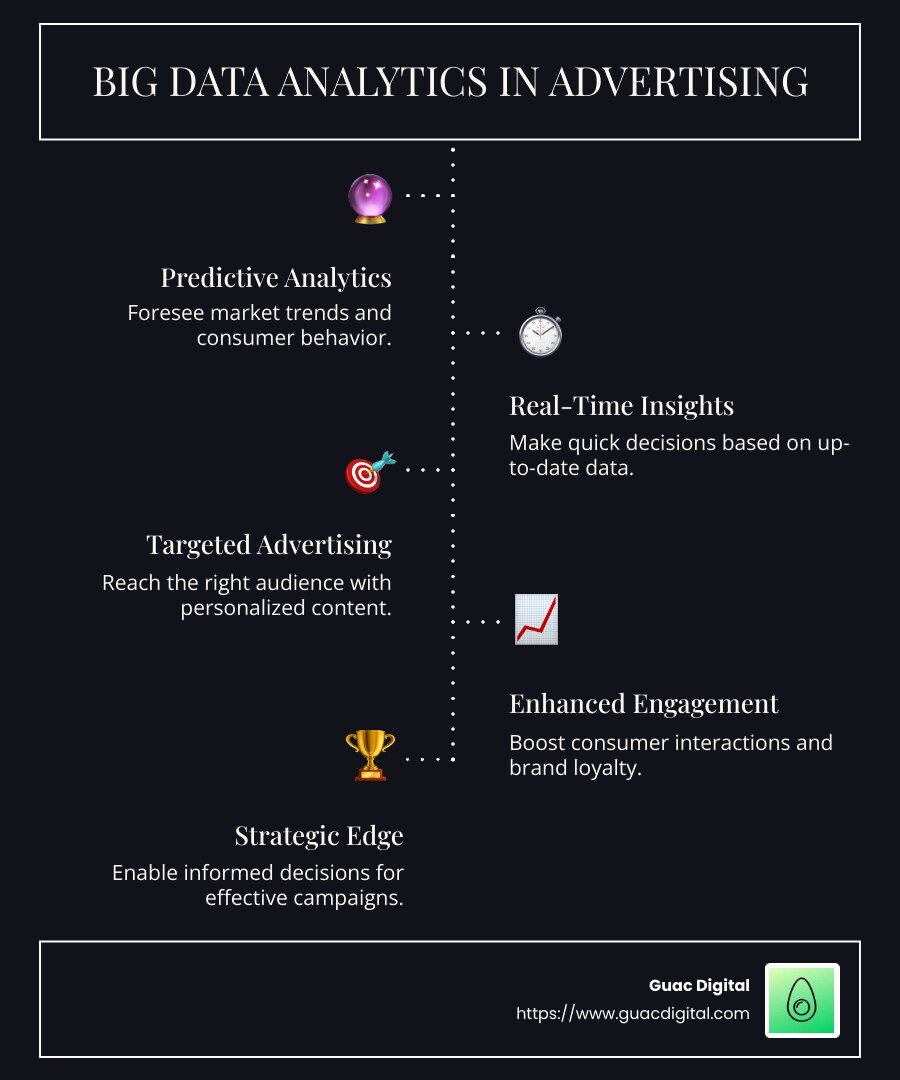
- Predictive Analytics: Foresee market trends and consumer behavior.
- Real-Time Insights: Make quick decisions based on up-to-date data.
- Targeted Advertising: Reach the right audience with personalized content.
- Improved Engagement: Boost consumer interactions and brand loyalty.
In the digital landscape, advertisers are leveraging the sheer volume of data available to refine their strategies and achieve their marketing goals. At its core, big data analytics provides advertisers with a strategic edge, enabling them to make informed decisions and drive more effective campaigns.
I’m Guy Leon, founder and CEO of Guac Digital. With experience in digital marketing, I’ve seen how big data analytics is solving big advertiser problems by boosting engagement and conversions. Let’s dive deeper into how this change is shaping the advertising industry.
How big data analytics is solving big advertiser problems vocab to learn:
– big data advertising
– big data advertising examples
– how is big data used in advertising
How Big Data Analytics is Solving Big Advertiser Problems
The Role of Predictive Analytics in Advertising
Predictive analytics is a game-changer for advertisers. By using statistical models and machine learning, it helps forecast market trends and understand consumer behavior. This means advertisers can anticipate what consumers might want next. For example, a clothing brand can predict seasonal fashion trends and align its advertising efforts accordingly.

The power of predictive analytics lies in its ability to provide market projections that inform strategic decisions. Advertisers can adjust their campaigns based on these insights, ensuring they remain relevant and effective.
Enhancing Targeted Advertising Through Big Data
Targeted advertising is all about reaching the right people with the right message. Big data makes this possible by enabling personalization and segmentation. Advertisers can now create ads that speak directly to individual preferences and interests.
For instance, Netflix uses big data to understand viewing patterns and recommend content custom to each user. This level of personalization increases engagement rates and improves user experience.

By segmenting audiences into smaller, more specific groups, advertisers can craft messages that resonate deeply with each segment, leading to higher conversion rates and improved ROI.
Leveraging Real-Time Data for Competitive Advantage
Real-time data analysis provides advertisers with instant insights into market dynamics. This allows for adaptive strategies that respond to changes as they happen. For example, if a new trend emerges on social media, advertisers can quickly adjust their campaigns to capitalize on it.

Using real-time data, advertisers can monitor consumer interactions and adjust their strategies to maintain a competitive edge. This agility is crucial in today’s market, where being the first to respond can make all the difference.
In summary, big data analytics is solving big advertiser problems by enhancing predictive capabilities, enabling precise targeting, and providing the agility needed to stay ahead in a competitive landscape. This change is not just about data; it’s about using insights to drive smarter, more effective advertising strategies.
Key Challenges in Big Data for Advertisers
Overcoming Data Processing Challenges
When it comes to big data, advertisers face three main challenges: data volume, data variety, and data velocity.
Data Volume: Advertisers collect vast amounts of data from various sources like social media, websites, and customer interactions. This sheer amount of data can be overwhelming and requires advanced tools to process effectively.
Data Variety: Data comes in different forms—structured data like numbers and dates, and unstructured data like text and videos. This variety makes it tricky to integrate and analyze data cohesively.
Data Velocity: The speed at which data is generated is staggering. Real-time data analysis is crucial for advertisers to stay relevant and responsive to market changes.
To tackle these challenges, companies are turning to advanced analytical tools. These tools, powered by cloud computing and AI integration, help process large datasets efficiently. Platforms like Amazon Web Services, Microsoft Azure, and Google Cloud offer scalable solutions that allow advertisers to analyze data in real-time, providing valuable insights that inform strategy and decision-making.
Addressing Privacy and Data Security in Advertising
As advertisers leverage big data, they must also steer the complexities of privacy and data security.
Regulations Compliance: Advertisers must adhere to regulations like GDPR, which governs how personal data is collected and used. Failure to comply can result in hefty fines and damage to brand reputation.
Secure Data Storage: Ensuring that data is stored securely is paramount. Advertisers need robust security measures to protect consumer information from breaches.
Ethical Data Use: Beyond compliance, advertisers must use data ethically. This means being transparent about data collection practices and respecting consumer privacy.
By prioritizing secure data storage and ethical data use, advertisers can build trust with consumers. This trust is essential for successful data-driven marketing strategies.
In conclusion, while big data presents challenges, it also offers immense opportunities. By overcoming data processing problems and ensuring data privacy, advertisers can harness the power of big data to create impactful, personalized campaigns. This sets the stage for the next section, where we’ll explore innovative big data use cases in advertising.
Innovative Big Data Use Cases in Advertising
Google’s Big Data Utilization
Google has revolutionized how advertisers use big data analytics to solve big problems. By leveraging search trends and ad customization, Google allows advertisers to target consumers with precision.
Google’s data-driven approach provides consumer insights that are invaluable. For instance, Google Ads uses big data to understand user behavior and preferences, enabling advertisers to create personalized ad experiences. This not only improves ad relevance but also boosts engagement rates.
Google’s data-driven attribution models are another example. By analyzing user interactions across various platforms, Google helps advertisers understand which touchpoints are most effective, optimizing ad spend and maximizing ROI.
Netflix and Predictive Content Marketing
Netflix is a master at using predictive customer behavior to improve viewer experience. By analyzing viewing patterns, Netflix can recommend content that aligns with user preferences, significantly improving customer retention.
Netflix’s recommendation engine is powered by big data. It considers metrics like the genre of shows watched, viewing duration, and user ratings to make content recommendations. This personalized approach not only keeps subscribers engaged but also attracts new ones.
Moreover, Netflix uses big data to forecast trends and make decisions about content production. By understanding what viewers want, Netflix can invest in shows and movies that are likely to be successful, ensuring a high return on investment.
Facebook’s Predictive Advertising
Facebook employs predictive advertising to expand its reach. By creating look-alike audiences, Facebook helps advertisers target new users who are similar to their existing customers. This approach increases click-through rates and conversions.
Facebook also uses big data to improve ad customization. By analyzing user interactions and interests, Facebook delivers ads that are more relevant to each user, enhancing engagement and driving sales.
These examples highlight how big data analytics is changing advertising. Companies like Google, Netflix, and Facebook are leading the way, using data to drive innovation and success. Next, we’ll explore best practices for implementing big data solutions in advertising.
Best Practices for Implementing Big Data Solutions in Advertising
Building Effective Big Data Infrastructures
To harness the power of big data, advertisers need a solid infrastructure. Cloud technologies like Amazon Web Services, Microsoft Azure, and Google Cloud are essential. They offer scalable solutions for real-time processing and data integration, which are critical for handling large data volumes.
Data management is another key component. Organizing data effectively ensures that advertisers can access and analyze information quickly. Using advanced analytical tools, such as machine learning algorithms, helps in extracting insights and making data actionable.
It’s crucial to adopt a variety of analytical approaches. This means integrating different models and techniques to suit specific needs. A flexible architecture that supports multiple tools and standards can make this process seamless.
Cultivating Data-Driven Culture in Advertising Teams
Creating a data-driven culture within advertising teams is vital. This starts with training programs that improve digital and analytical skills. Upskilling employees ensures they can handle the complexities of big data and make informed decisions.
Encouraging collaborative environments is also important. Teams should work together to share insights and develop strategies. This fosters innovation and allows for more comprehensive data analysis.
Continuous learning is key. The field of big data is always evolving, so staying updated with the latest trends and technologies is crucial. Encouraging a mindset of ongoing education helps teams remain competitive and effective.
Balancing automation with expertise is essential. While automation can streamline processes, human expertise is needed to interpret data and create meaningful strategies. Working with skilled data scientists who understand the nuances of advertising can lead to successful outcomes.
These practices lay the groundwork for effective big data solutions in advertising. By building robust infrastructures and cultivating a data-driven culture, advertisers can open up the full potential of big data. In the next section, we’ll explore how Guac Digital employs these strategies to improve client campaigns.
How Guac Digital Employs Big Data to Improve Client Campaigns
At Guac Digital, we believe in the transformative power of big data analytics to tackle complex advertiser problems. Our approach focuses on creating custom digital campaigns that resonate with audiences and deliver high returns on investment (ROI).
Custom Digital Campaigns
Every client is unique, and so are their advertising needs. We leverage big data to deeply understand our clients’ target demographics. By analyzing patterns and preferences, we craft campaigns that speak directly to the audience. This customization ensures that the message is not only heard but also remembered.
For instance, using dynamic creative advertising, we can show different ads to different segments based on real-time data. This means a young professional in New York might see a different ad than a retiree in Florida, even if both are part of the same campaign. This level of personalization boosts engagement and conversion rates.
High ROI
Our data-driven strategies are designed to maximize ROI. By leveraging predictive analytics, we can forecast trends and adjust campaigns in real-time. This proactive approach allows us to allocate resources more efficiently and capitalize on emerging opportunities.
According to a Forbes article, companies that use big data in their advertising efforts see significant improvements in their ability to target effectively and measure campaign success. At Guac Digital, we consistently achieve a high client retention rate and an average ROI of three times the investment, as highlighted on our website.
Personalized Strategies
Personalization is at the heart of our strategy. By employing advanced segmentation techniques, such as dynamic segmentation, we continuously refine audience groups to ensure relevance. This means our campaigns are always in tune with the evolving interests and behaviors of consumers.
A case study from Google showcases how big data can lead to better consumer insights and ad customization. Similarly, at Guac Digital, we use these insights to create personalized strategies that not only meet but exceed our clients’ expectations.
By integrating these big data solutions, we empower our clients to achieve their advertising goals more efficiently and effectively. In the next section, we’ll dig into the key challenges advertisers face when implementing big data strategies and how to overcome them.
Conclusion
As we look to the future of advertising, the role of big data is more crucial than ever. The advertising landscape is rapidly evolving, and continuous innovation is key to staying ahead. Big data analytics is not just a tool; it’s a strategic asset that can reshape how advertisers connect with their audiences.
Future of Advertising
The future of advertising is data-driven. Advertisers who harness the power of big data will have a competitive edge. By analyzing vast amounts of data, they can predict consumer behavior and tailor their strategies accordingly. This foresight enables them to anticipate market trends and respond swiftly, ensuring they remain relevant in a digital world.
Continuous Innovation
Innovation in big data analytics is continuous. New tools and technologies are emerging that allow for more precise targeting and personalization. For example, dynamic creative advertising and real-time data analysis are becoming standard practices. These innovations make it possible to deliver the right message to the right person at the right time, enhancing engagement and conversion rates.
Strategic Importance of Big Data
The strategic importance of big data cannot be overstated. It’s not just about collecting data; it’s about changing it into actionable insights. This change empowers advertisers to make informed decisions, optimize campaigns, and achieve higher returns on investment. At Guac Digital, we understand the value of big data in crafting personalized strategies that deliver measurable results.
In conclusion, big data is revolutionizing the advertising industry. Advertisers who accept this change and leverage data-driven insights will be well-positioned to succeed. As we continue to explore new possibilities in big data analytics, we remain committed to helping our clients steer this dynamic landscape and achieve their advertising goals.