
Big data advertising is changing the way businesses reach and engage with their audiences. It allows companies to analyze massive datasets to understand consumer behavior and make data-driven decisions. Here’s what you need to know:
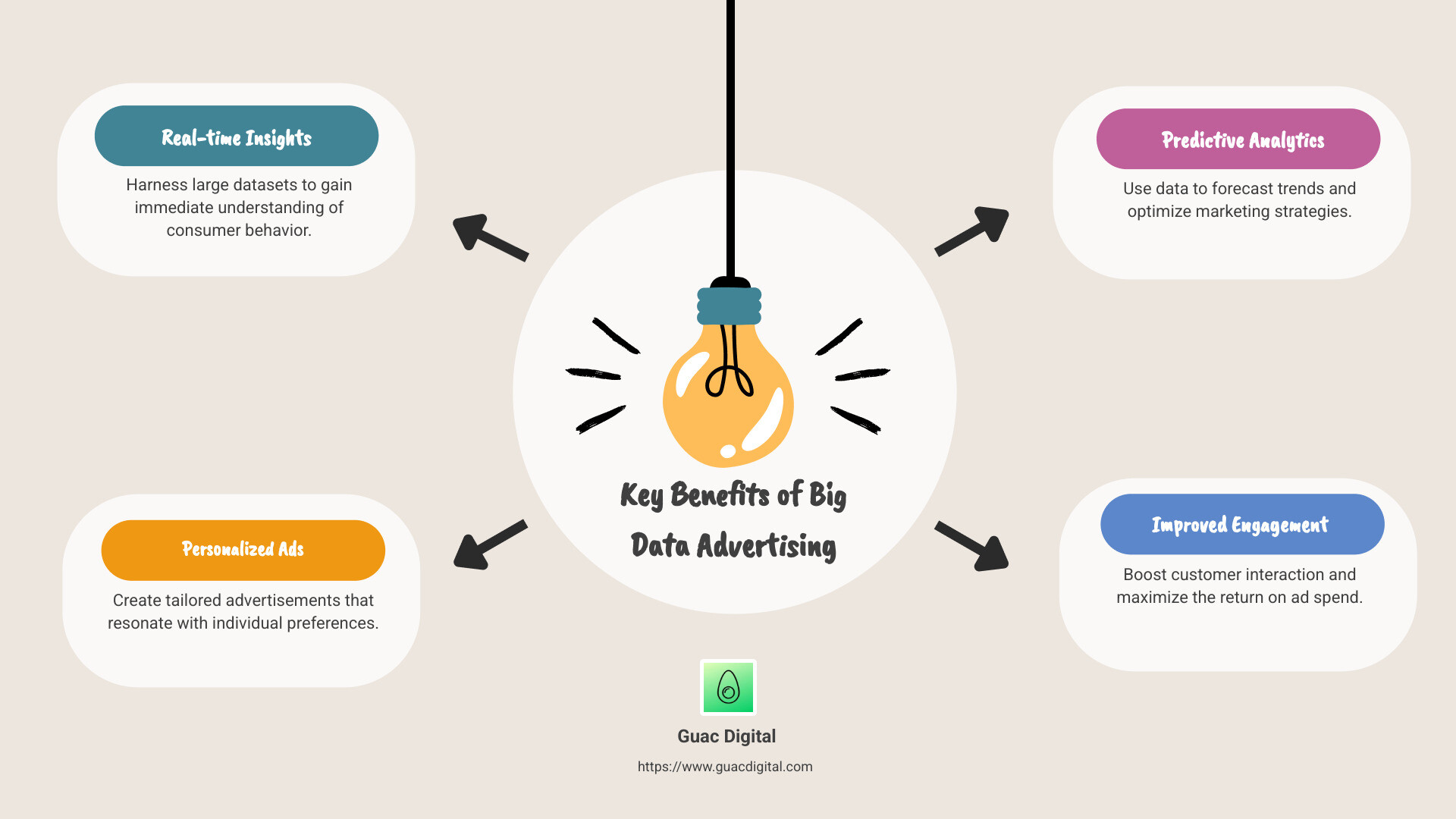
- Big data offers real-time consumer insights.
- It helps create more personalized and targeted ads.
- Leveraging predictive analytics can boost marketing ROI.
- Businesses see improved engagement and better returns on ad spend.
I’m Guy Leon, founder and CEO of Guac Digital. With years of experience in big data advertising, I’ve seen how it improves engagement and conversion rates. Let’s dive deeper into how this innovative approach is changing marketing.
Understanding Big Data Advertising
Big data advertising is revolutionizing how businesses connect with consumers. By using vast amounts of data, companies can gain deep insights into consumer behavior and create more effective advertising strategies.
Big Data and Consumer Behavior
Understanding consumer behavior is crucial for successful advertising. Big data allows marketers to analyze patterns in consumer actions, such as browsing habits, purchase history, and social media interactions. This analysis helps advertisers tailor their messages to meet specific audience needs.
For instance, companies like Amazon use big data to recommend products based on past purchases and browsing history. This type of personalization increases the likelihood of purchase and improves customer satisfaction.
Predictive Analytics in Advertising
Predictive analytics is a powerful tool in big data advertising. It involves using data to forecast future consumer behavior. By analyzing past data, businesses can predict trends and behaviors, allowing them to make proactive marketing decisions.
For example, predictive analytics can help identify potential customers who are likely to respond to a particular ad. This approach not only improves targeting but also optimizes ad spend by focusing resources on the most promising prospects.
A case study from IBM Watson Advertising showed a 25% increase in ad performance through predictive targeting and bid adjustments. This demonstrates the potential of predictive analytics to drive significant improvements in advertising outcomes.

Real-World Applications
Dynamic Segmentation: This technique uses real-time data to continuously refine audience segments. Tools like Microsoft Dynamics 365 allow marketers to create dynamic segments that adapt as consumer behaviors change, leading to more precise targeting.
Dynamic Creative: This involves showing different ads to different audience segments based on data such as location, device, and browsing behavior. By tailoring ads to specific audience preferences, businesses can improve engagement and conversion rates.
Big data advertising is not just about collecting information; it’s about leveraging that data to create value for both businesses and consumers. By understanding consumer behavior and utilizing predictive analytics, companies can craft personalized and impactful advertising campaigns.
In the next section, we’ll explore the role of big data in creating personalized and targeted advertising experiences.
The Role of Big Data in Advertising
Personalization
Personalization is at the heart of big data advertising. By analyzing data from various sources, companies can deliver ads that resonate with individual consumers. This goes beyond just using a person’s name in an email. It involves tailoring content, offers, and messages to fit each consumer’s unique preferences and behaviors.
For example, Netflix uses big data to recommend shows and movies based on a user’s viewing history. This personalized approach keeps users engaged and encourages them to spend more time on the platform.
Targeted Advertising
Targeted advertising is all about reaching the right audience with the right message at the right time. Big data enables marketers to segment audiences more precisely than ever before. By understanding factors like demographics, location, and online behavior, advertisers can craft campaigns that speak directly to specific groups.
Consider the case of Facebook, which uses big data to allow advertisers to target users based on their interests, age, location, and even recent life events. This level of targeting increases the effectiveness of ads and maximizes return on investment.
Customer Insights
Big data provides customer insights that were previously unattainable. By collecting and analyzing data from social media, website interactions, and purchase histories, businesses can gain a deeper understanding of their customers’ needs and desires.
These insights help companies to not only improve their advertising strategies but also to improve their products and services. For instance, Starbucks uses big data to understand customer preferences and tailor its offerings accordingly, such as introducing new flavors or adjusting store layouts.
Big data is changing advertising by enabling personalization, enhancing targeted advertising, and providing valuable customer insights. This means businesses can create more meaningful connections with their audience, ultimately leading to increased customer loyalty and sales.
In the next section, we’ll dig into the different types of big data analytics used in advertising and how they contribute to marketing success.
Types of Big Data Analytics in Advertising
Understanding the various types of big data analytics is crucial for maximizing the impact of advertising strategies. Each type serves a unique purpose and offers distinct insights that can drive marketing success. Let’s explore these analytics types:
Predictive Analytics
Predictive analytics is all about forecasting future outcomes. By using statistics, machine learning, and data mining, it helps advertisers anticipate consumer behavior and market trends. This type of analytics is widely used to create look-alike audiences, which expand advertising reach by targeting potential new customers who exhibit similar behaviors to existing ones.
For example, Amazon uses predictive analytics to suggest products based on past purchasing behavior, increasing the likelihood of cross-selling and up-selling.
Descriptive Analytics
Descriptive analytics focuses on analyzing past data to identify trends and patterns. While it may not predict future events, it provides a comprehensive overview of what has happened in the past, helping advertisers understand the effectiveness of previous campaigns.
This form of analytics is often used in reports that highlight key performance indicators (KPIs) and customer demographics, allowing businesses to refine their strategies based on historical data.
Diagnostic Analytics
Diagnostic analytics digs deeper to uncover the reasons behind past outcomes. It answers the “why” by examining data in detail, often using techniques like drill-down and data mining.
For instance, if a campaign didn’t perform as expected, diagnostic analytics can help identify the factors that contributed to its underperformance, such as targeting the wrong audience or using ineffective messaging. This insight is vital for making informed adjustments to future campaigns.
Prescriptive Analytics
Prescriptive analytics goes a step further by recommending actions to achieve desired outcomes. It combines insights from both descriptive and predictive analytics to suggest the best course of action.
In advertising, prescriptive analytics can optimize ad spend by suggesting the most effective channels and messages to use. It leverages artificial intelligence to analyze complex data sets and provide actionable recommendations, ensuring that marketing strategies are not only data-driven but also future-oriented.
By leveraging these different types of big data analytics, advertisers can gain a comprehensive understanding of their campaigns and audiences. This empowers them to craft strategies that are not only effective but also adaptable to changing market conditions. In the following section, we’ll explore the benefits of big data advertising and how it improves marketing efforts.
Benefits of Big Data Advertising
Big data advertising is changing the marketing landscape by offering significant advantages that improve how businesses connect with their audiences. Let’s explore the key benefits:
Real-Time Analysis
One of the standout features of big data advertising is its ability to provide real-time analysis. Unlike traditional methods that took days or weeks, big data analytics allows advertisers to process and analyze data almost instantaneously. This means businesses can make quick adjustments to their campaigns based on current data, ensuring they remain relevant and effective.
For example, if an ad isn’t performing well, marketers can tweak their strategy on the fly, optimizing campaigns for better results. This agility is crucial in today’s digital world.
Marketing Optimization
Big data provides the tools needed for marketing optimization. By analyzing vast amounts of data, businesses can fine-tune their strategies to achieve maximum efficiency and effectiveness. This involves identifying the best channels, timing, and messages that resonate with target audiences.
A practical example is the use of dynamic creative advertising, where ads are custom to different audience segments based on real-time data. This level of personalization not only improves ad performance but also maximizes return on investment (ROI).
Customer Engagement
In the field of customer engagement, big data shines by enabling businesses to understand their customers on a deeper level. Through data analysis, companies can gain insights into consumer preferences, behaviors, and needs. This information is invaluable for creating personalized experiences that foster strong customer relationships.
Personalization is key. A study found that 60% of marketers believe personalization is crucial for improving campaign results. With big data, businesses can deliver content and offers that are custom to individual preferences, enhancing customer satisfaction and loyalty.
By embracing these benefits, businesses can harness the power of big data advertising to drive success in their marketing efforts. In the next section, we’ll explore the challenges that come with big data advertising and how to steer them effectively.
Challenges in Big Data Advertising
While big data advertising offers numerous benefits, it also presents several challenges that businesses must steer. Let’s explore these problems:
Data Privacy
Data privacy is a significant concern in the field of big data advertising. With the vast amount of consumer data collected, companies must ensure they handle it responsibly and comply with data protection regulations. Mishandling personal information can lead to breaches of trust and legal repercussions.
A key aspect of maintaining data privacy is transparency. Businesses should clearly communicate how they collect and use data. This builds trust and helps mitigate privacy concerns.
Data Quality
Another challenge is ensuring the quality of the data being used. Inaccuracies, incompleteness, or inconsistencies in data can lead to poor decision-making and ineffective advertising campaigns.
To combat this, businesses must implement robust data management practices. This includes data cleansing, validation, and regular audits to maintain the integrity of their data.
Cognitive Biases
Cognitive biases can skew the interpretation of data and impact decision-making in big data advertising. These biases are mental shortcuts that can lead to errors in judgment.
For instance, the confirmation bias might lead marketers to focus only on data that supports their preconceived notions, ignoring valuable insights. To overcome this, companies should foster a culture of critical thinking and encourage diverse perspectives when analyzing data.
Understanding these challenges is crucial for businesses looking to leverage big data advertising effectively. Addressing these issues head-on will help them make better-informed decisions and maximize the potential of their advertising strategies. In the next section, we’ll address frequently asked questions about big data advertising to further clarify its impact and usage.
Frequently Asked Questions about Big Data Advertising
What is big data in marketing?
Big data in marketing refers to the massive volumes of data collected from various sources, like social media, online purchases, and web browsing. This data helps marketers understand consumer behavior, preferences, and trends. It’s not just about collecting data; it’s about analyzing it to make better marketing decisions.
In today’s marketing landscape, big data is essential. It helps businesses make informed decisions by providing insights into consumer behavior and market trends. By leveraging big data, companies can tailor their marketing strategies to meet customer needs more effectively.
How is big data used in advertising?
Big data advertising involves using data analysis to optimize marketing campaigns. Advertisers collect and analyze data to understand what drives consumer actions. This data-driven approach helps in resource allocation, ensuring marketing efforts are focused where they’ll have the most impact.
For example, predictive analytics allows advertisers to anticipate consumer needs and tailor ads accordingly. By analyzing past behavior, marketers can predict future actions and deliver personalized ads that resonate with consumers.
How is big data changing marketing?
Big data is revolutionizing marketing by providing deeper consumer insights and enabling more precise targeting. With predictive behavior analysis, marketers can anticipate trends and adapt quickly to changing consumer demands.
In digital marketing, big data allows for more personalized experiences. Marketers can create targeted campaigns based on detailed consumer profiles. This leads to higher engagement and conversion rates, as consumers receive content that is relevant to them.
By embracing big data, businesses can improve their marketing strategies, optimize resource allocation, and ultimately, drive better results. As the digital landscape continues to evolve, leveraging big data will be crucial for staying competitive and meeting consumer expectations.
In the next section, we’ll explore the benefits of big data advertising and how it can transform marketing strategies.
Conclusion
At Guac Digital, we believe in the transformative power of big data advertising. Our approach is rooted in programmatic marketing, which leverages data to automate and optimize ad buying in real time. This means we can deliver highly targeted and personalized campaigns that maximize return on investment (ROI) for our clients.
Programmatic marketing is a game-changer. It allows us to use big data to identify the best moments to reach potential customers with the right message. By analyzing data from multiple sources, we can create dynamic, personalized strategies that resonate with diverse audiences. This ensures that every advertising dollar is spent wisely, increasing efficiency and effectiveness.
Our personalized strategies are what set us apart. We understand that each client has unique goals and challenges. That’s why we tailor our campaigns to align with their specific needs. By tapping into the vast potential of big data, we help our clients engage with their audience in meaningful ways. This not only drives conversions but also builds lasting brand loyalty.
In today’s digital world, staying ahead means embracing innovation. At Guac Digital, we’re committed to helping our clients steer this landscape with confidence. Our expertise in big data advertising ensures that they are always one step ahead, ready to seize new opportunities and overcome challenges.
In conclusion, big data is not just a tool—it’s a vital part of modern marketing. By integrating it into our strategies, we’re able to deliver exceptional results for our clients, ensuring their success in a changing market.