
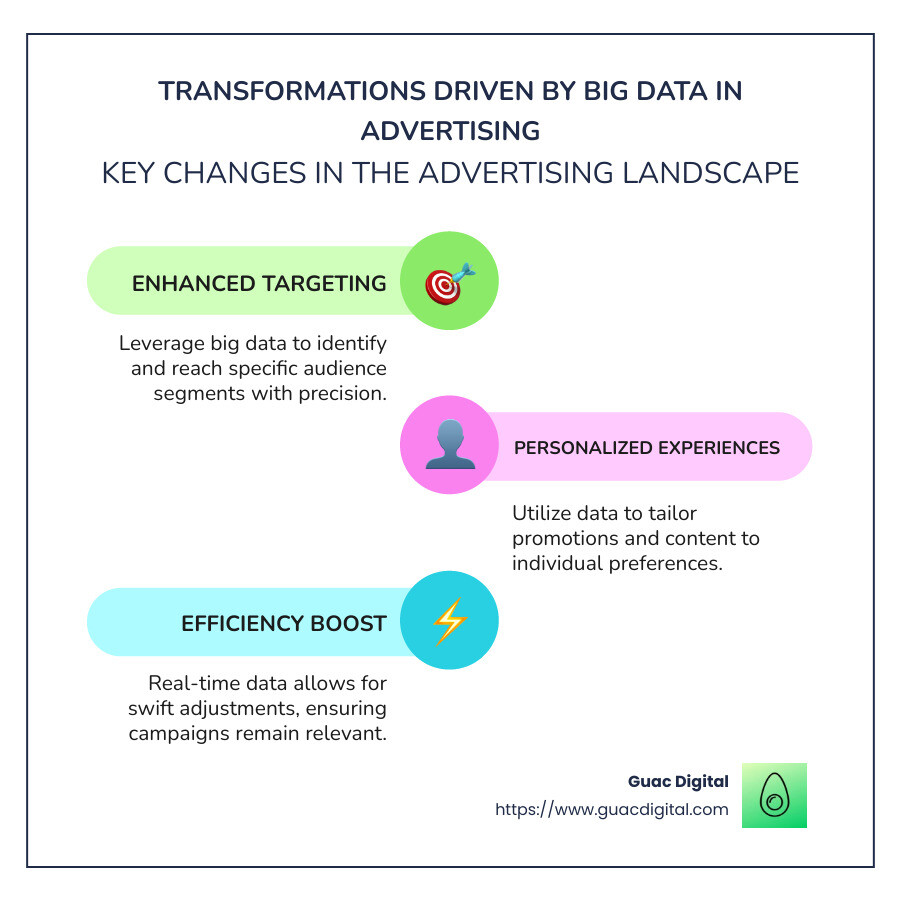
Big data advertising examples are reshaping the marketing landscape by providing unprecedented insights into customer behavior and preferences. In an age where information flows continuously, businesses leverage big data to improve targeting, personalize customer engagement, and improve efficiency in advertising. Here are some key changes driven by big data in advertising:
- Improved Targeting: Big data helps advertisers identify and reach specific segments with precision.
- Personalized Experiences: Advertisers use data to tailor promotions and content to individual preferences.
- Efficiency Boost: Real-time data allows for swift adjustments, ensuring campaigns remain relevant.
I’m Guy Leon, founder and CEO of Guac Digital, where we have transformed digital marketing through innovative strategies and big data advertising examples. Our experience in leveraging data for client success offers valuable insights into the evolving advertising industry.
Basic big data advertising examples vocab:
– big data advertising
– how is big data used in advertising
Understanding Big Data in Advertising
What is Big Data?
Big Data refers to the massive volumes of data generated by individuals and businesses every day. Imagine all the clicks, searches, and social media posts that happen around the world. That’s Big Data in action. But it’s not just about volume; it’s about how we use that data to make smarter decisions.
Big Data is crucial because it lets companies find patterns and trends that aren’t visible at first glance. This ability to see the unseen helps businesses make informed decisions, improve customer experiences, and stay ahead of the competition.
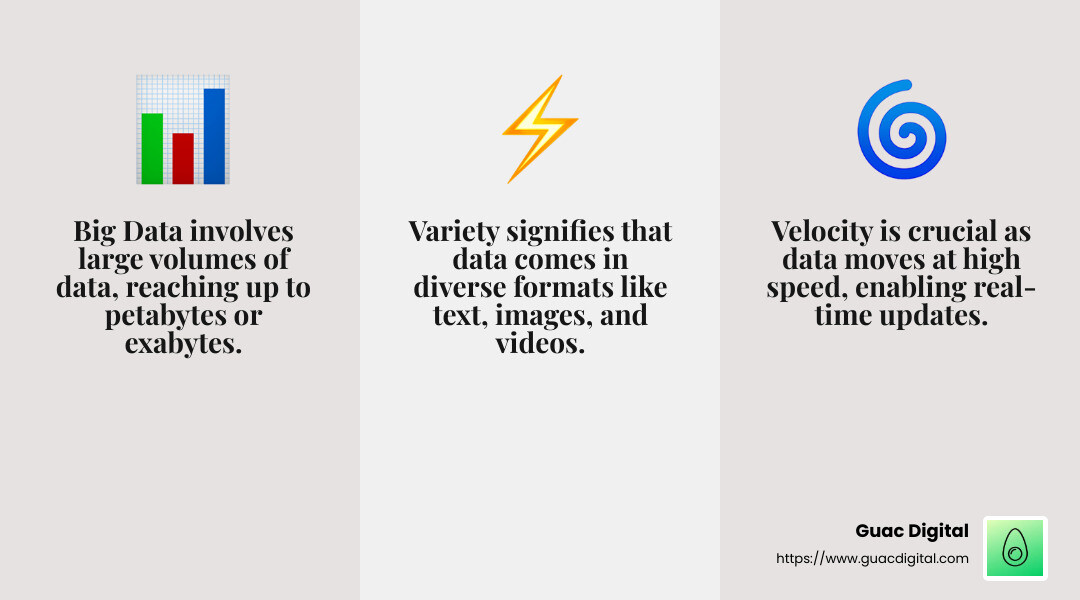
Three Key Characteristics of Big Data:
- Volume: We’re talking about a lot of data. Think petabytes or even exabytes.
- Velocity: Data moves fast. Real-time updates keep businesses on their toes.
- Variety: Data comes in many forms—texts, images, videos, and more.
Types of Big Data
Understanding the types of Big Data is essential for making sense of it all. Let’s break it down:
Structured Data: This is neat and organized, like numbers in a spreadsheet. It includes things like names, dates, and payment information. Structured data fits nicely into databases.
Unstructured Data: This is the wild child. It’s everything from tweets to videos, without a clear format. Most of the data we generate is unstructured, and it requires special tools to analyze.
Semi-structured Data: Think of this as the middle ground. It’s mostly unstructured but has some organization, like emails with subject lines and timestamps.
Each type of data has its own way of being stored and analyzed. For example, structured data can be easily queried in databases, while unstructured data might need advanced tools like machine learning to make sense of it.
By understanding these types and characteristics, advertisers can harness Big Data to create more targeted, personalized, and efficient campaigns, changing the industry one data point at a time.
How Big Data is Revolutionizing the Advertising Industry
Big Data is reshaping how advertisers reach and engage with their audiences. Let’s explore how it’s changing targeting, personalization, and efficiency.
Improved Targeting Capabilities
Segmentation and Behavioral Data
Advertisers can now use Big Data to create detailed audience segments. Instead of broad categories, they can target specific behaviors and preferences. Imagine you run a coffee shop. With behavioral data, you can target ads to people who frequently search for coffee recipes or shop for coffee machines. This level of targeting increases the chances of reaching those who are most likely to be interested in your product.
Geolocation
Geolocation data is another powerful tool. It allows advertisers to reach audiences based on their physical location. For example, a local restaurant can target ads to people within a certain radius, offering them a special discount. This precise targeting ensures ads are relevant to the audience, improving engagement rates.
Personalization and Customer Engagement
Dynamic Content and Predictive Analytics
Personalization goes beyond using someone’s name in an email. With Big Data, advertisers can create dynamic content custom to individual preferences. Think of Netflix’s recommendation system. It uses predictive analytics to suggest shows based on what viewers have watched in the past. This keeps users engaged and encourages them to spend more time on the platform.
Customer Profiles
Advertisers can build detailed customer profiles using data from various sources. These profiles help in crafting personalized messages that resonate with the audience. For instance, a fashion retailer might use purchase history and browsing behavior to recommend new arrivals to customers who have shown interest in similar items.
Efficiency and ROI Improvement
Cost Reduction and Campaign Optimization
Big Data helps in optimizing ad spend. By analyzing data, advertisers can identify which campaigns are performing well and allocate resources accordingly. This reduces wasted spend and increases return on investment (ROI). Companies like Amazon use dynamic pricing strategies, adjusting prices based on demand and competition, to maximize profits.
Real-time Adjustments
With real-time data, advertisers can make swift adjustments to their campaigns. If an ad isn’t performing as expected, changes can be made on the fly to improve results. This agility ensures that marketing efforts remain effective and relevant.
In summary, Big Data is a game-changer in advertising. It enables precise targeting, improves personalization, and boosts efficiency, leading to more successful campaigns. As the industry continues to evolve, embracing these capabilities will be crucial for staying competitive.
Big Data Advertising Examples in Action
Netflix
Netflix is a prime example of how big data advertising examples can transform a business. Their recommendation algorithms are legendary. By analyzing viewer preferences, Netflix can suggest shows and movies that align with individual tastes. This keeps users engaged and coming back for more.
Netflix collects data on what time viewers watch, how long they watch, and even if they pause and resume a show. This information helps create a personalized experience for each user. It’s no surprise that Netflix boasts a retention rate of 93%. Their ability to predict what viewers want to watch next is a testament to the power of big data in advertising.
Amazon
Amazon takes full advantage of big data through dynamic pricing and product recommendations. They change prices up to 2.5 million times a day based on shopping patterns, competitor prices, and product demand. This strategy ensures they remain competitive and maximize sales.
Product recommendations are another key area where Amazon excels. By analyzing browsing and purchase history, Amazon suggests products that customers are likely to buy. This personalized shopping experience is so effective that it accounts for 35% of their annual sales. Amazon’s use of big data not only improves customer satisfaction but also drives significant revenue.
Starbucks
Starbucks leverages big data through its loyalty programs and mobile app data usage. The Starbucks app collects data on customer purchases, preferences, and even location. This data is used to personalize offers and promotions, encouraging repeat visits.
The loyalty program rewards customers based on their buying habits, creating a personalized experience that keeps them coming back. By analyzing app data, Starbucks can also determine peak times and popular products, allowing them to optimize inventory and staffing. This strategic use of big data helps Starbucks maintain its position as a leader in the coffee industry.
These big data advertising examples from Netflix, Amazon, and Starbucks illustrate how data-driven strategies can lead to success. By understanding and leveraging customer data, these companies have transformed their advertising efforts and achieved remarkable results.
Leveraging Big Data for Competitive Advantage
Big Data Tools and Technologies
In advertising, using the power of big data is crucial for staying ahead. Companies like Netflix, Amazon, and Starbucks have shown us how effective big data strategies can be. But how do they do it? Let’s explore the tools and technologies that make it possible.
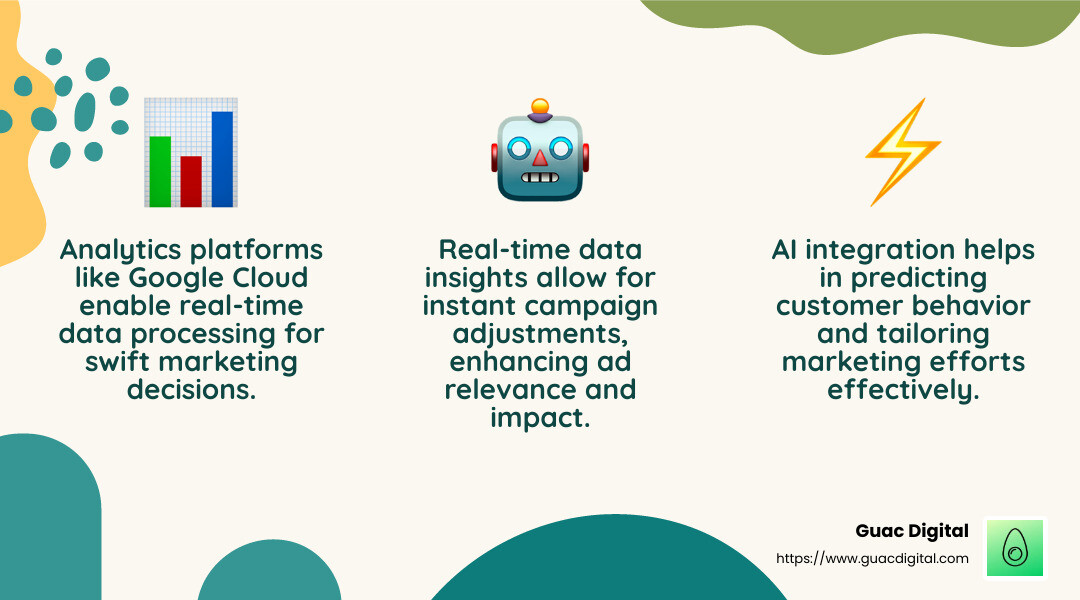
Analytics Platforms are at the heart of big data processing. Platforms like Google Cloud, Microsoft Azure, and Amazon Web Services provide the infrastructure needed to store and analyze massive datasets. These platforms allow companies to collect data from various sources, process it in real-time, and extract valuable insights.
AI Integration is another game-changer. Artificial intelligence helps businesses make sense of vast amounts of data. By using machine learning algorithms, companies can predict customer behavior, tailor marketing efforts, and optimize campaigns. For instance, AI can identify patterns in customer interactions, helping businesses anticipate future trends and adjust their strategies accordingly.
Real-time Data Processing is essential for making quick decisions. With the ability to analyze data as it’s generated, companies can respond to customer actions instantly. This is particularly useful for adjusting ad campaigns on the fly, ensuring they remain relevant and effective.
Future Trends in Big Data Advertising
The future of advertising is bright, thanks to advancements in big data. Here are some trends to watch:
AI Advancements will continue to shape the industry. As AI technology evolves, it will become even more adept at understanding and predicting consumer behavior. Expect more sophisticated algorithms that can deliver hyper-personalized advertising experiences.
Predictive Modeling is set to become more prevalent. By analyzing historical data, companies can forecast future trends and customer needs. This allows for proactive marketing strategies that anticipate and meet consumer demands before they arise.
Increased Personalization will be a key focus. Consumers today expect personalized experiences, and big data makes this possible. By leveraging data from multiple touchpoints, businesses can create custom marketing messages that resonate with individual customers.
These tools and trends highlight the transformative power of big data in advertising. As companies continue to invest in these technologies, they’ll gain a competitive edge, delivering more impactful and personalized advertising experiences.
Conclusion
Big data is reshaping the advertising landscape, offering companies the tools to deliver highly personalized and efficient marketing strategies. From giants like Netflix and Amazon to Starbucks, the use of big data has proven to be a powerful driver of success. By leveraging data analytics, AI, and real-time processing, these companies have set new standards in customer engagement and campaign optimization.
At Guac Digital, we understand the pivotal role of big data in the advertising industry. Our approach is centered around using big data to create custom digital campaigns that resonate with audiences. By utilizing programmatic marketing and focusing on data-driven strategies, we help our clients achieve high returns on investment.
Our team is dedicated to crafting personalized marketing solutions that align with our clients’ unique goals and challenges. By tapping into the power of big data, we ensure that our campaigns are not only effective but also adaptive to the ever-changing market dynamics.
As the industry continues to evolve, we remain committed to staying at the forefront of big data advancements. Our goal is to empower our clients with the insights and tools they need to thrive in a competitive landscape.
For businesses looking to lift their digital marketing efforts, partnering with Guac Digital is a step towards achieving impactful and data-driven results. Let us help you steer big data advertising and open up new opportunities for growth.