
Programmatic Display Advertising Service: 7 Powerful Success Secrets 2025
Why Programmatic Display Advertising Service Is Changing Digital Marketing
A programmatic display advertising service automates the buying and selling of digital ad space using artificial intelligence and real-time bidding technology. Instead of manually negotiating ad placements, advertisers can now reach their target audience across millions of websites, apps, and connected devices in milliseconds.
Key benefits of programmatic display advertising services:
- Automated targeting – AI identifies and reaches your ideal customers using behavioral, demographic, and contextual data
- Real-time optimization – Campaigns adjust bids and placements automatically based on performance
- Scale and efficiency – Access to over 2 million websites and apps through a single platform
- Transparent reporting – See exactly where your ads appear and how they perform
- Cost control – Pay only for impressions that meet your targeting criteria
The numbers tell the story: global programmatic ad spending is approaching $557.56 billion, with 84% of all digital advertising now bought programmatically. This shift happened because programmatic delivers better results at lower costs than traditional ad buying methods.
But here’s the challenge most businesses face: 97% of first-time website visitors don’t convert. That’s where programmatic display advertising shines – it follows your potential customers across the web, serving relevant ads at the right moment to bring them back.
I’m Guy Leon, founder and CEO of Guac Digital, where we’ve helped clients achieve a 350% increase in engagement through strategic digital campaigns including programmatic display advertising service implementations. My experience spans the evolution from manual ad buying to today’s AI-driven programmatic platforms.
Programmatic display advertising service terms to remember:
– programmatic dsp
– programmatic trading
– programmatic video
What Is a Programmatic Display Advertising Service?
A programmatic display advertising service is an automated system that uses smart algorithms to buy the perfect ad placement for your business at exactly the right moment. Think of it like having a brilliant assistant who never sleeps, constantly analyzing data and placing your ads in front of people most likely to become your customers.
The technology relies on several key players: Demand-Side Platforms (DSPs) let advertisers set up campaigns and bid on ad space. Supply-Side Platforms (SSPs) help website owners sell their ad inventory. The Ad Exchange acts as the meeting point where buyers and sellers come together, while Data Management Platforms (DMPs) collect and organize audience information for precise targeting.
According to scientific research on global ad spend, programmatic advertising made up 84% of global digital ad spending in 2022, expected to grow to 87% by 2027.
How the Ecosystem Works
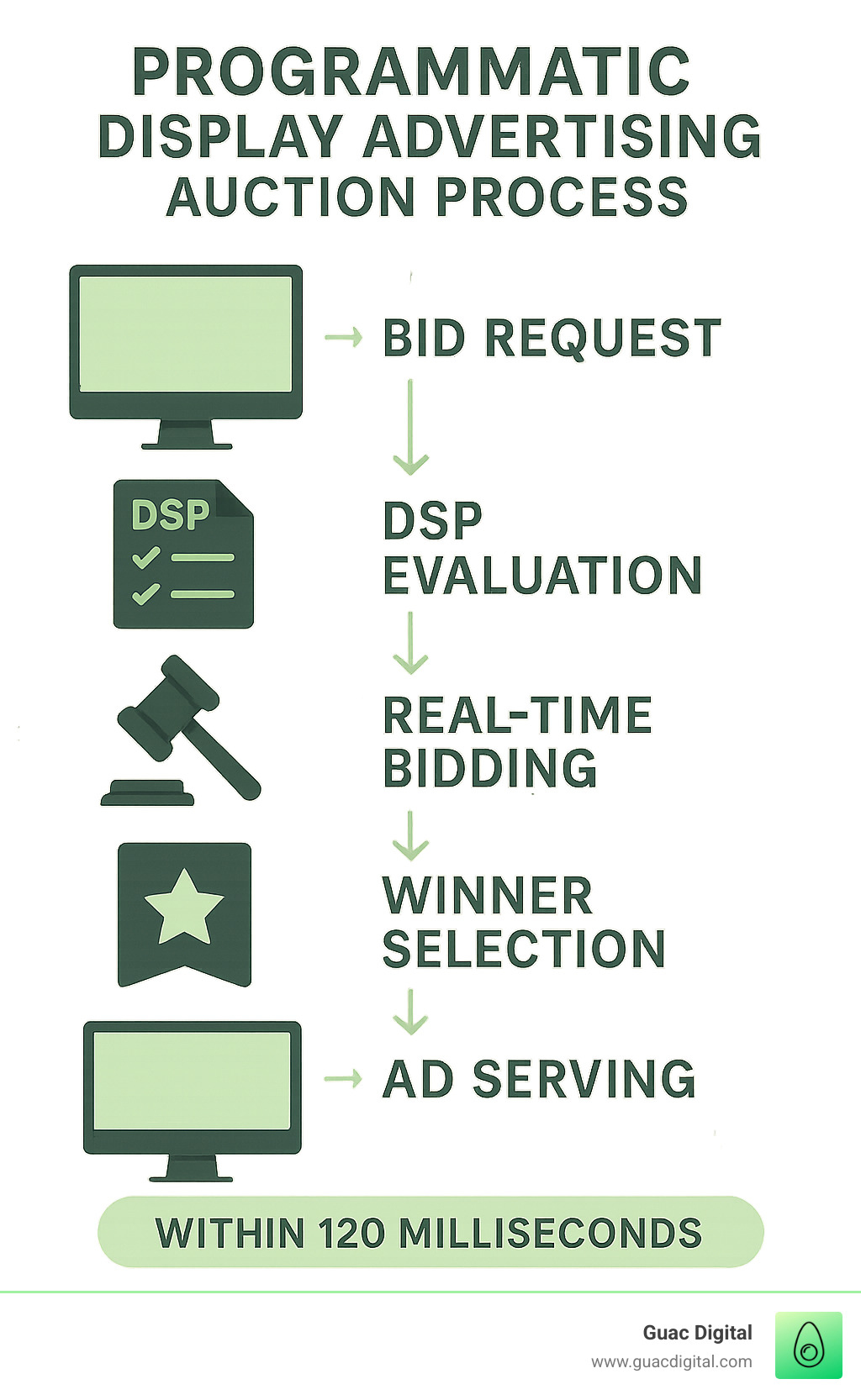
The magic happens through Real-Time Bidding (RTB). When someone visits a website, an entire auction takes place in just 120 milliseconds to decide which ad they’ll see.
Here’s the process: The site’s ad server sends a bid request to the ad exchange with user data and webpage information. DSPs evaluate this opportunity and determine bid amounts. The auction completes instantly, with the highest bidder winning. Finally, the winning ad appears on the user’s screen.
Key Components Behind Every Programmatic Display Advertising Service
Your Demand-Side Platform (DSP) serves as mission control where you create campaigns and monitor performance. Popular DSPs include The Trade Desk for transparency, Google DV360 for YouTube access, and Amazon DSP for shopping data.
The Ad Server handles ad delivery and tracks performance metrics, while your Data Management Platform (DMP) organizes audience data for targeting. The Identity Graph maps user behavior across devices to create unified customer profiles.
Real-Time Bidding (RTB) in Action
RTB operates on sophisticated auction mechanics. Publishers set bid floors as minimum prices, while most auctions use second-price auction mechanics where winners pay just one cent more than the second-highest bid.
| RTB Model | Speed | Inventory Access | Price Control | Best For |
|---|---|---|---|---|
| Open RTB | 120ms | Broad reach | Market-driven | Scale campaigns |
| Programmatic Guaranteed | Pre-negotiated | Premium/guaranteed | Fixed rates | Brand campaigns |
| Private Marketplace | 120ms | Curated inventory | Floor prices | Quality balance |
| Preferred Deals | 120ms | First-look access | Negotiated rates | Relationship-based |
Buying Options, Pricing & Targeting Tactics
Choosing the right buying approach for your programmatic display advertising service depends on your campaign goals and budget.
The open marketplace offers the broadest reach with costs typically ranging from $0.50 to $3.00 CPM. Private marketplaces (PMPs) provide curated inventory at 20-50% higher CPMs but with guaranteed quality. Preferred deals give you first access to specific inventory at fixed pricing, while Programmatic guaranteed brings predictability with direct deals for guaranteed impressions.
Pricing models include CPM (cost per 1,000 impressions) for brand awareness, CPC (cost per click) for performance campaigns, and Dynamic CPM that adjusts bids based on conversion likelihood.
For detailed strategies, check our guide on Programmatic Ad Buying.
Primary Keyword Focus: Programmatic Display Advertising Service Buying Models
Open RTB works best for massive scale and testing new audiences cost-effectively. Private marketplaces excel when brand safety is crucial and you’re targeting premium audiences. Programmatic guaranteed makes sense for brand campaigns requiring specific premium placements.
Advanced Targeting That Makes a Programmatic Display Advertising Service Unbeatable
CRM data onboarding lets you target existing customers or create lookalike audiences, consistently delivering 40-60% higher conversion rates. Geofencing creates virtual boundaries around locations for hyper-local targeting. Sequential messaging delivers different ads based on customer journey stage.
Contextual targeting places ads based on webpage content, while behavioral targeting reaches users based on online actions. Cross-device tracking follows users across devices for consistent messaging and accurate attribution.
Benefits, Risks & Brand-Safety Best Practices
Programmatic display advertising service platforms deliver significant advantages but require proactive risk management.
Core Benefits:
– Efficiency: Automated buying reduces campaign setup from days to hours
– Scale: Access to over 2 million websites globally through single platforms
– Transparency: Detailed reporting on ad placement and performance
– Real-Time Optimization: AI algorithms improve efficiency by 15-30%
Critical Risks:
– Ad Fraud: Invalid traffic can waste 10-20% of budgets
– Brand Safety: Ads may appear next to inappropriate content
– Viewability Issues: Not all served impressions are seen by users
– Data Privacy: GDPR and CCPA compliance requirements
Brand Safety Best Practices:
1. Pre-bid Filtering: Block inappropriate categories before bidding
2. Whitelist Strategy: Create approved publisher lists
3. Third-party Verification: Use IAS, MOAT, or DoubleVerify
4. Manual Review: Regularly audit placement reports
5. Private Marketplaces: Use trusted publishers for sensitive campaigns
Measuring Success of Your Programmatic Display Advertising Service
Essential Metrics:
– Viewability: Aim for 70%+ ads actually seen
– Click-Through Rate: Industry average 0.05-0.1%
– Cost Per Acquisition: Total cost divided by conversions
– Return on Ad Spend: Revenue per dollar spent
Advanced Attribution:
– View-through Conversions: Users who saw ads but converted later
– Cross-device Attribution: Mobile-to-desktop conversion tracking
– Incrementality Testing: Measuring true lift versus organic conversions
Common Pitfalls & How to Fix Them
Ad Fraud: Enable pre-bid filtering and monitor traffic quality weekly. Frequency Overload: Set caps at 3-5 impressions per user daily. Poor Creative Performance: Test multiple variants and refresh every 2-3 weeks. Privacy Compliance: Use platforms supporting Unified ID 2.0 and obtain proper consent.
Running & Optimizing Your Own Programmatic Display Advertising Service
Getting your programmatic display advertising service running successfully starts with clear goal mapping. Awareness campaigns need broad reach and controlled frequency, while conversion campaigns require focused targeting and aggressive optimization.
Creative specifications matter significantly. Standard formats like 300×250 work for most campaigns, while rich media grabs attention but costs more. Dynamic Creative Optimization (DCO) tests multiple combinations automatically, often improving performance by 50-100%.
A/B testing becomes essential – test one variable at a time for clear results. AI optimization handles bid adjustments but needs 72 hours to gather meaningful data. Weekly pacing reviews keep campaigns on budget.

Step-by-Step Launch Checklist
Budget planning: Start with conservative daily budgets – use 50% of intended budget for the first week. Audience creation: Upload CRM data and create lookalike audiences. Creative preparation: Have 3-5 variants ready from day one.
Tracking setup: Install conversion pixels and test everything twice. Brand safety: Enable blocklists and quality settings before launch. Quality assurance: Check tracking, targeting, and creative display across devices.
Ongoing Optimization for a Programmatic Display Advertising Service
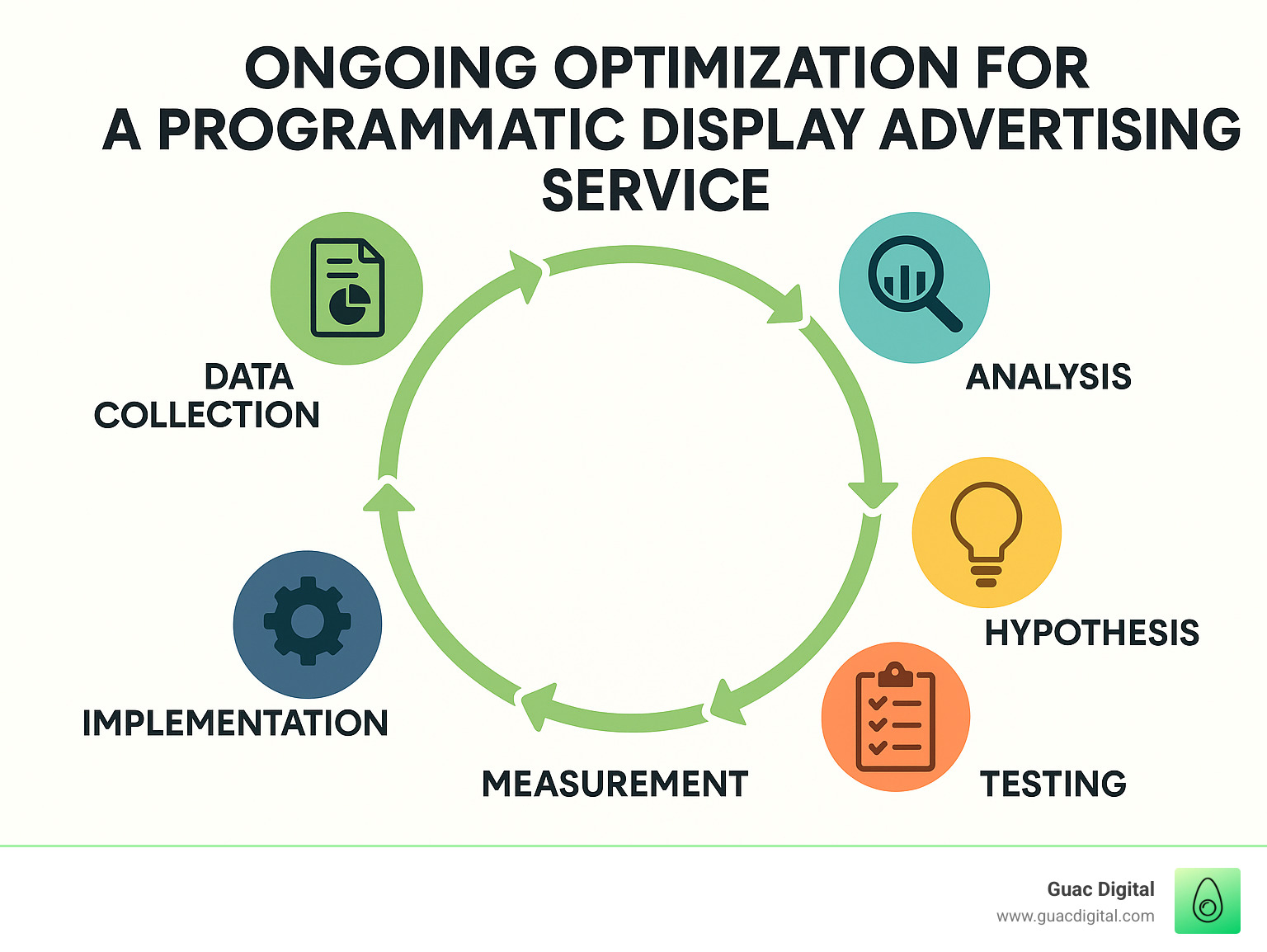
Bid adjustments should be data-driven, not gut-based. Increase bids for high-performing audiences gradually. Audience refresh prevents staleness – create new lookalikes based on recent conversions every 2-3 weeks for 20-30% performance improvements.
Creative fatigue kills performance when CTRs decline after 7-14 days. Cross-device attribution reveals full customer journeys, helping optimize bidding for each device type.
For maximizing returns, see our guide on Programmatic Advertising ROI.
Choosing Platforms, Tools & Partners
Picking the right programmatic display advertising service platform requires matching features to your specific needs and budget.
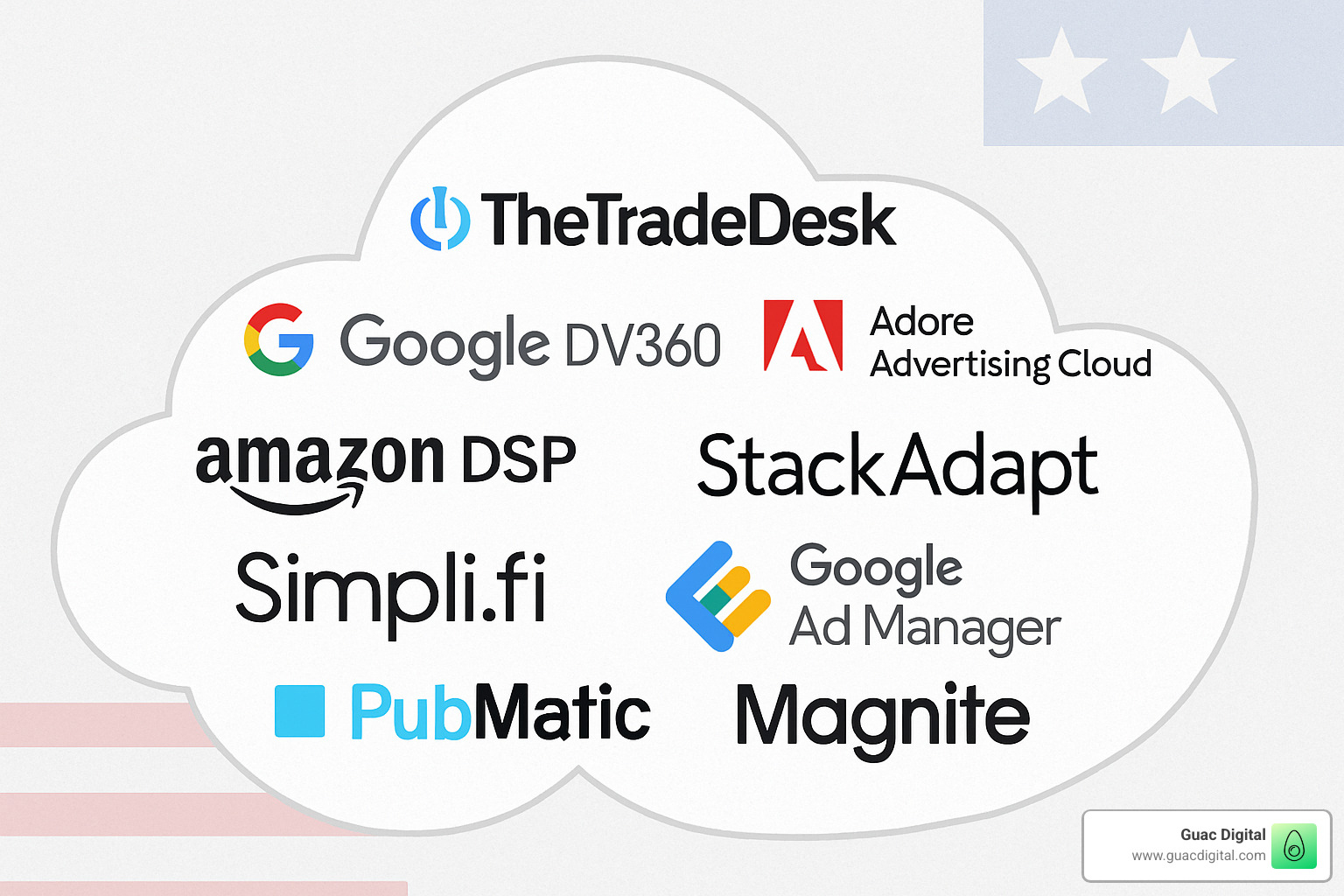
The Trade Desk excels at transparency and cross-device tracking, ideal for substantial budgets. Google Display & Video 360 offers unique YouTube and Gmail access. Amazon DSP provides shopping data for e-commerce businesses. StackAdapt specializes in native advertising, while Simpli.fi focuses on local advertising with strong geofencing.
Enterprise platforms require $10,000-50,000 monthly minimums but offer sophisticated features. Mid-market solutions balance power with accessibility. Specialized platforms solve specific problems exceptionally well.
What to Look For in a Programmatic Display Advertising Service Partner
Technical expertise goes beyond basic setup. Partners should understand header bidding, identity resolution, and cookieless targeting strategies. Transparency means seeing exactly where ads appear and all fee breakdowns.
Brand safety requires multiple verification vendors and updated blocklists. Reporting quality should provide actionable insights, not data dumps. Privacy compliance understanding of GDPR, CCPA, and cookieless future planning is essential.
Case studies from similar campaigns reveal real capabilities. Pricing structure transparency prevents hidden costs. At Guac Digital, we built our service around these principles after seeing too many clients burned by partners who overpromise and underdeliver.
Frequently Asked Questions About Programmatic Display Advertising Service
What does a programmatic display advertising service cost?
Platform fees typically consume 10-20% of ad spend. Premium platforms like The Trade Desk charge around 20% plus $1,000-5,000 monthly minimums.
Media costs vary by targeting and placement quality. Open marketplace runs $0.50-3.00 per thousand impressions, while premium private marketplaces cost $2.00-8.00. Programmatic guaranteed on top-tier sites runs $5.00-15.00+.
Additional fees include audience data ($0.50-2.00 per thousand), verification ($0.10-0.50), and ad serving ($0.05-0.20). Plan on spending at least $5,000-10,000 monthly to make programmatic worthwhile.
How fast can my ads go live?
Basic campaigns can launch within 2-4 hours once set up. Real optimization takes 24-48 hours for algorithms to collect meaningful data.
First-time setup requires 3-5 business days for proper tracking and account configuration. Complex ads or premium inventory may need 1-2 days for approval.
Do I need third-party cookies for effective targeting?
Your customer data performs 40-60% better than generic targeting. Contextual targeting based on content works effectively without tracking users. Privacy-compliant alternatives like Unified ID 2.0 maintain effectiveness while respecting privacy.
Start collecting first-party data, test contextual targeting, and work with partners understanding cookieless approaches. Many clients find cookie-independent targeting works as well or better than traditional methods.
Conclusion
The programmatic display advertising service landscape has fundamentally transformed digital marketing. With programmatic spending hitting $557.56 billion globally and powering 84% of all digital advertising, this technology has become the new standard.
Programmatic’s power lies in turning complexity into simplicity – sophisticated AI handles real-time bidding while marketers focus on strategy. Success comes from balancing automation with human insight, leveraging first-party data, and adapting to the cookieless future.
As Connected TV grows and retail media expands, programmatic meets customers across all touchpoints. The difference isn’t just in performance improvements of 200-300% – it’s in the confidence of knowing exactly where marketing dollars go and what they accomplish.
The future belongs to marketers who understand that programmatic display advertising service platforms build genuine customer connections through relevant, well-timed advertising. Let AI handle bidding and audience matching while you focus on creative strategy and customer experience.
Ready to harness programmatic’s power? Find how our team approaches Programmatic Advertising Services with the perfect blend of big data insights and personalized strategy.
The advertising world has changed forever. The question isn’t whether to accept programmatic – it’s how quickly you can use its power to grow your business.