
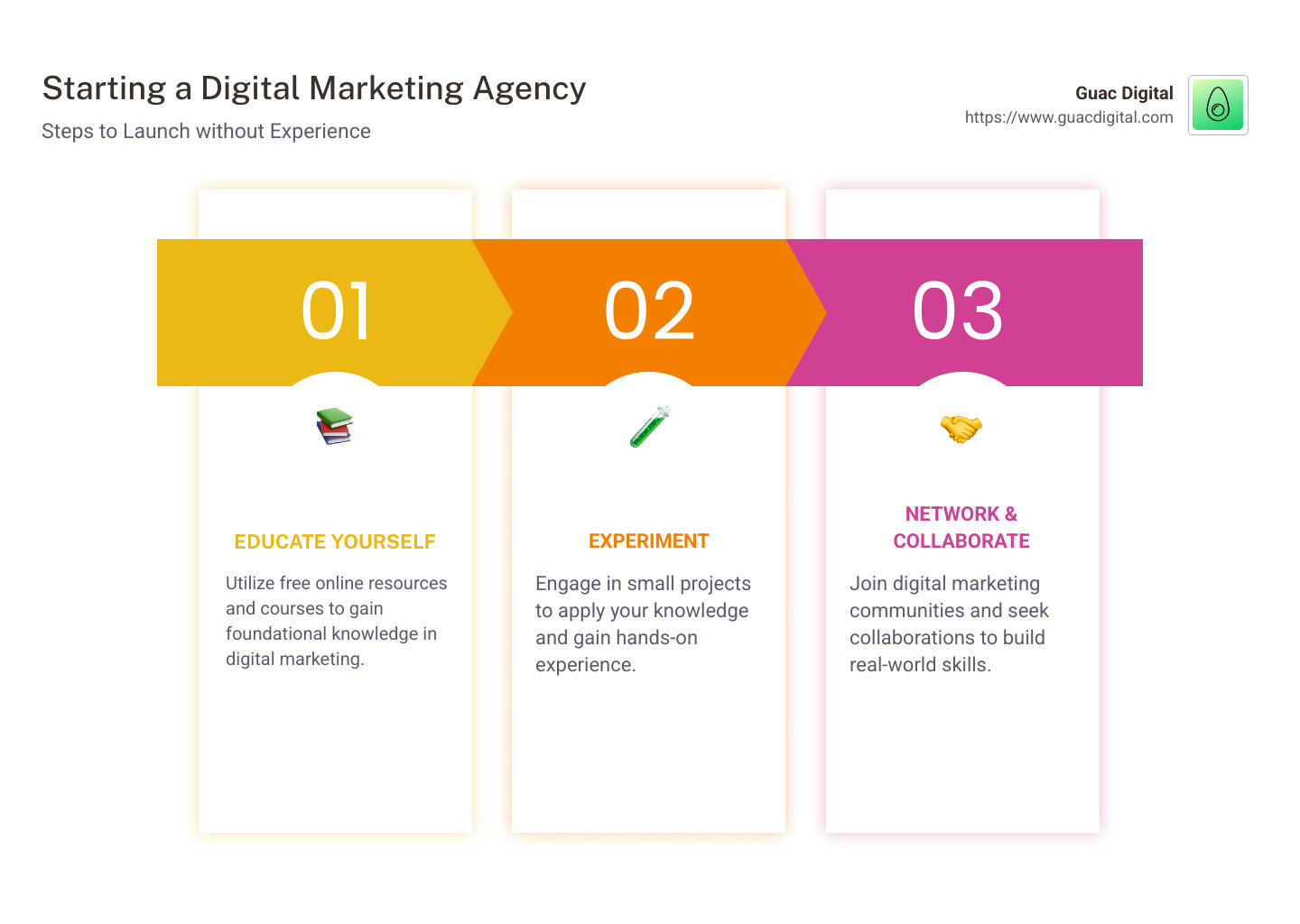
How to start a digital marketing agency with no experience is a question many aspiring entrepreneurs grapple with in today’s digital age. To give a quick answer, here’s a simple roadmap:
- Educate Yourself: Immerse yourself in free online resources and courses to build foundational knowledge.
- Experiment: Apply your learning in small, personal projects.
- Network: Join online communities and look for free collaborations to gain hands-on experience.
- Establish Your Presence: Create a professional website and social media profiles to attract initial attention.
- Specialization: Choose a niche to differentiate yourself from the competition.
When digital landscapes shift rapidly, understanding the basics of digital marketing is more crucial than ever. Today, businesses recognize the power of a robust online presence, prompting a surge in demand for digital marketing services. This industry is experiencing remarkable growth as companies of all sizes strive to improve their visibility and drive more traffic. Your aspiration to start a digital marketing agency comes at a perfect time—a time of both high demand and transformative opportunities.
I’m Guy Leon, the founder and CEO of Guac Digital. Our journey revolutionized digital marketing through innovative strategies. Transitioning from no experience to expertise, we boosted client engagement by 350% with strategic campaigns. Now, let’s dive into finding if there’s a market for your budding agency.
Determine If There is a Market for Your Services
Before diving into digital marketing, determine if there is a market for your services. Understanding the demand for your agency’s offerings can be the difference between success and struggle. Here’s how you can explore and validate your market potential:
Conduct Market Research
Start by gathering insights into your target market. This involves identifying who your potential clients are, what they need, and how they currently meet those needs. Market research is the backbone of any successful agency. It guides your strategy and ensures you’re not shooting in the dark.
- Analyze Competitors: Look at what established agencies are offering. Identify gaps in their services that you can fill. This can be a goldmine for niche opportunities.
- Study Industry Trends: Staying updated with industry publications can provide valuable insights. Publications like B2B Marketing Zone highlight trends and offer data on niche markets that are growing.
Use Online Surveys
Online surveys can be a powerful tool to gather feedback directly from potential clients. By asking the right questions, you can uncover unmet needs and tailor your services accordingly.
- Create Targeted Surveys: Use platforms like SurveyMonkey or Google Forms to create surveys that ask potential clients about their challenges and what services they wish were available.
- Analyze Feedback: Look for patterns in the responses. Are there common pain points that your agency could address?
Leverage Industry Publications
Industry publications are treasure troves of information. They offer insights into what’s working, what’s not, and what’s next in digital marketing.
- Follow Authority Blogs and Magazines: Regularly read publications by industry leaders. These sources often report on emerging trends and technologies that could influence your service offerings.
- Engage with Content: Comment on articles, join discussions, and even reach out to authors for deeper insights.
Attend Networking Events
Networking is not just about meeting people; it’s about building relationships and finding opportunities.
- Participate in Events: Attend webinars, conferences, and local meetups related to digital marketing. These events are perfect for learning about market demands directly from industry professionals.
- Engage Actively: Don’t just be a passive participant. Ask questions, share your ideas, and learn from the experiences of others.
Choose Your Niche
Choosing the right niche is a critical step when learning how to start a digital marketing agency with no experience. Specializing in a specific area not only reduces competition but also helps in building a strong brand identity.
Specialization: The Key to Standing Out
When you specialize, you position yourself as an expert in a particular field. This can be anything from SEO for e-commerce to social media management for local restaurants. Specialization allows you to tailor your services and marketing efforts to a specific audience, making it easier to resonate with them.
According to research from B2B Marketing Zone, agencies that focus on a niche have a 68% higher win rate for their proposals compared to those with a general focus. This statistic highlights the importance of narrowing down your services to cater to a specific market segment.
Reduced Competition
By choosing a niche, you naturally reduce the number of competitors. Instead of competing with every digital marketing agency out there, you’re only competing with those that offer similar specialized services. This reduction in competition can make it easier to establish your agency as the go-to expert in that field.
For example, instead of offering generic digital marketing services, you could focus on content marketing for tech startups or local SEO for small businesses. This approach not only helps you stand out but also makes your marketing efforts more targeted and effective.
Building a Strong Brand Identity
A well-defined niche allows you to build a strong brand identity. Your agency becomes synonymous with expertise in your chosen area, attracting clients who are specifically seeking those services. This can lead to increased trust and loyalty among your clients.
Consider the story of Guac Digital, a marketing agency based in Tampa, Florida. By focusing on creating personalized digital campaigns and leveraging big data, they have built a recognizable brand that stands out in the crowded digital marketing space.
B2B Marketing Zone Insights
Insights from industry publications like B2B Marketing Zone can be invaluable when choosing your niche. They provide data on emerging trends and growing markets, helping you identify potential niches that align with your skills and interests.
By choosing a niche, you set your digital marketing agency on a path to success. Specialization, reduced competition, and a strong brand identity can differentiate your agency from others and attract the right clients.
Next, we’ll explore how to decide on the type of agency you want to build.
Decide Your Agency Type
Once you’ve chosen your niche, the next step in learning how to start a digital marketing agency with no experience is deciding on the type of agency you want to build. Your choice will shape your services, client base, and overall strategy.
Content Marketing Agency
If you have a knack for storytelling and creating engaging content, a content marketing agency might be the right fit. This type of agency focuses on creating and distributing valuable content to attract and retain a clearly defined audience. You’ll help businesses build brand awareness and trust by crafting blog posts, videos, infographics, and more. Content marketing is crucial for establishing thought leadership and driving organic traffic to websites.
SEO Agency
An SEO agency specializes in optimizing websites to rank higher on search engines like Google. You’ll focus on improving a site’s visibility by using keywords, creating backlinks, and enhancing user experience. This type of agency is ideal if you have a strong analytical mindset and are passionate about staying updated with the ever-changing SEO algorithms. With SEO being a long-term strategy, your agency can build lasting relationships with clients as they see their online presence grow over time.
Social Media Marketing Agency
Social media is a powerful tool for businesses to connect with their audience. A social media marketing agency helps brands engage with their followers and build a community on platforms like Facebook, Instagram, and Twitter. You’ll create and manage social media campaigns, develop content calendars, and analyze engagement metrics. If you’re creative, enjoy interacting with people, and understand the nuances of different social media platforms, this type of agency can be a rewarding choice.
Full-Service Digital Agency
A full-service digital agency offers a wide range of services, including content marketing, SEO, social media management, PPC, and more. This type of agency is suitable if you want to cater to diverse client needs and have the resources to manage multiple aspects of digital marketing. While it requires a broader skill set and a larger team, a full-service agency can attract clients looking for a one-stop solution for their digital marketing needs.
Deciding on your agency type is a crucial step in building a successful digital marketing agency. It influences everything from your service offerings to your target clients and overall business strategy. By aligning your agency type with your skills and market demand, you set a solid foundation for growth and success.
Next, we’ll look into the formalities of registering your agency as an official business.
Register Your Agency as an Official Business
Once you’ve decided on your agency type, it’s time to make it official. Registering your agency gives it a legal identity, which is essential for building trust with clients and ensuring compliance with local laws.
Choose a Business Name
Your business name is the first impression clients will have of your agency. It should be unique, memorable, and relevant to your services. Before finalizing a name, check its availability as a domain name and ensure it complies with your jurisdiction’s registration regulations. This step is crucial to avoid legal issues down the road.
Select a Legal Structure
The legal structure you choose affects your agency’s liability, taxes, and operational flexibility. In the U.S., popular options include LLCs, LLPs, and S-Corps. For example, an LLC in California offers liability protection and tax advantages, making it a great choice for new agencies. In the UK, a Limited Company (Ltd) provides similar benefits but requires stricter compliance. Consulting a legal expert can help you choose the best structure for your needs and future goals.
Understand Taxation
Registering your agency opens up various tax benefits. You’ll need to understand the specific tax implications of your chosen legal structure. Consulting with a tax expert can help you steer deductions and tax breaks available to businesses, ensuring you’re compliant and maximizing your financial benefits.
Open a Business Bank Account
A separate business bank account is essential for managing your agency’s finances. It simplifies accounting, helps track expenses and income, and makes tax filing easier. Ensure you choose a bank that offers favorable terms for small businesses.
Obtain Necessary Permits and Licenses
Compliance with local, state, and federal regulations is non-negotiable. Depending on your location and the services you offer, you may need specific permits or licenses. For instance, certain marketing activities might require adherence to advertising standards or privacy laws. Check with your local Chamber of Commerce or a business attorney to ensure you’re meeting all regulatory requirements.
Registering your agency as an official business is a foundational step. It provides the legal and financial structure necessary for growth and instills confidence in your clients. With this groundwork laid, you can focus on building your brand and attracting clients. Next, we’ll explore how to create your official website and build a strong social media presence.
Create Your Official Website and Build Social Media Accounts
Your website is your digital storefront. It’s often the first impression potential clients have of your agency, so it needs to be both professional and engaging. Think of it as the online equivalent of a warm, welcoming office where clients can learn more about your services.
Building Your Website
Start with a simple, clean design. WordPress is a popular choice due to its flexibility and ease of use. You can customize it with themes that reflect your brand’s identity without needing to hire a designer.
Include essential pages like:
- Home: Clearly state who you are and what you offer.
- About: Share your story and what sets you apart.
- Services: Detail the services you provide.
- Contact: Make it easy for potential clients to reach you.
A well-structured website not only looks professional but can also help with SEO, making it easier for clients to find you online.
Establishing Your Social Media Presence
After setting up your website, it’s time to build your social media presence. Platforms like Facebook, Twitter, LinkedIn, and Instagram are crucial for engaging with your audience and showcasing your expertise.
Use tools like Hootsuite and Buffer to manage your social media accounts efficiently. These tools allow you to schedule posts, track engagement, and analyze performance, helping you stay consistent and relevant in your interactions.
Learning from Industry Leaders
Look at successful companies in the digital marketing space. They have mastered the art of creating engaging content that resonates with their target audience. Analyze their strategies to see what works and how you can incorporate similar tactics into your own approach.
Crafting Your Brand Identity
Your online presence should reflect your brand’s personality. Choose colors, fonts, and imagery that align with your agency’s values and mission. Consistency across your website and social media platforms helps build a recognizable brand that clients can trust.
Creating a strong digital presence is not just about being seen; it’s about making a lasting impression that encourages clients to engage with your agency. With your website and social media accounts in place, you’re ready to start attracting clients and growing your business.
Next, we’ll dive into selecting the right tools to streamline your operations and improve your service offerings.
Pick Your Tools
Choosing the right tools is crucial when starting a digital marketing agency from scratch. These tools help streamline your operations, improve efficiency, and deliver better results for your clients. Here’s a breakdown of essential tools across different areas:
Communication
Effective communication is the backbone of any successful agency. Tools like Slack and Trello are invaluable for team collaboration. Slack allows for instant messaging and file sharing, keeping everyone connected. Trello, on the other hand, helps you organize tasks and projects visually, making it easier to track progress and deadlines.
Content & SEO
Creating quality content and optimizing it for search engines is vital. Grammarly ensures your content is error-free and polished, enhancing readability and professionalism. For SEO, Semrush is a comprehensive tool that offers keyword research, site audits, and competitive analysis. It’s a one-stop-shop for boosting your online visibility.
Social Media
Managing multiple social media accounts can be overwhelming. Tools like Buffer and SocialPilot simplify this process by allowing you to schedule posts across platforms, analyze engagement, and manage all accounts from a single dashboard. These tools save time and ensure you maintain a consistent online presence.
Automation
Automation tools free up time by handling repetitive tasks. For email marketing, consider platforms like MailChimp. It automates email campaigns, helping you stay in touch with leads and clients without manual effort. Automation is key to scaling your agency efficiently.
Workflow & Operation Management
Keeping your projects on track is crucial for client satisfaction. Notion.so is a versatile tool that combines notes, tasks, databases, and calendars into one platform. It’s perfect for managing your agency’s operations and ensuring everything runs smoothly.
Choosing the right tools can significantly impact your agency’s efficiency and effectiveness. They help you deliver quality services and keep your team organized. With these tools in place, you’re better equipped to handle the demands of running a digital marketing agency.
Next, we’ll explore how to build a strong team that can help you achieve your business goals.
Build Your Team
Building a solid team is essential when starting a digital marketing agency from scratch. Your team will be the backbone of your agency’s success, helping you deliver top-notch services to clients. Here’s a breakdown of key roles you need to fill:
Chief Marketing Officer (CMO)
The CMO is the captain of your marketing ship. They set the vision and strategy for your agency’s marketing efforts. A good CMO is both a leader and a visionary, guiding the team and ensuring all marketing activities align with your business goals. They bring experience, ambition, and a knack for innovation.
Digital Marketer
Your digital marketer is the all-rounder who knows how to turn ideas into action. They handle everything from creating campaigns to analyzing data. This person should be versatile, with skills in areas like PPC, email marketing, and analytics. They keep your agency’s marketing efforts nimble and effective.
Content Writer
Content is king, and your content writer is the kingmaker. They craft engaging articles, blogs, and social media posts that resonate with your audience. A talented content writer is not only creative but also understands SEO principles to ensure content ranks well on search engines.
Social Media Manager
Your social media manager is the voice of your brand online. They manage all social media channels, engage with followers, and create strategies to grow your audience. A good social media manager is creative, quick-thinking, and up-to-date with the latest social media trends and tools like Hootsuite and Buffer.
SEO Specialist
The SEO specialist is the detective of your team, always on the hunt for ways to boost your agency’s online visibility. They conduct keyword research, optimize website content, and analyze performance metrics. A skilled SEO specialist uses tools like Semrush to stay ahead of the competition and ensure your agency ranks high in search engine results.
Building a team with these roles ensures that your digital marketing agency is well-rounded and ready to tackle any challenge. Each team member brings unique skills and perspectives, creating a dynamic and productive work environment.
Next, we’ll discuss how to start a digital marketing agency with no experience, leveraging tools and strategies to get you up and running.
How to Start a Digital Marketing Agency with No Experience
Starting a digital marketing agency with no experience might sound challenging, but with the right tools and strategies, you can make it happen. One of the most effective ways to bridge the experience gap is by leveraging AI tools and social media management platforms.
AI Tools
AI tools can be your best friend when you’re just starting out. They help automate tasks, analyze data, and even suggest content ideas. For example, AI-driven scheduling tools can optimize your posting times to maximize engagement. This means you can focus more on strategy and less on the nitty-gritty.
Social Media Management
Social media is a powerful tool for any digital marketing agency. Platforms like Hootsuite and Buffer allow you to manage multiple social media accounts from one place. These tools help schedule posts, track engagement, and analyze performance. This is crucial when you’re managing clients’ social media presence and want to ensure consistent, quality content.
AI-Driven Scheduling
AI-driven scheduling can significantly improve your social media strategy. By analyzing when your audience is most active, these tools can automatically schedule posts for optimal times. This ensures your content reaches the largest possible audience, even if you’re not online to post it manually.
Content Suggestions
Creating engaging content is key to any digital marketing strategy. AI tools can analyze trending topics and suggest content ideas custom to your niche. This helps you stay relevant and produce content that resonates with your audience. It’s like having a virtual assistant that keeps you updated on the latest trends.
By utilizing these tools and strategies, you can effectively start a digital marketing agency without prior experience. They help streamline operations, improve efficiency, and improve your ability to deliver results for clients.
Next, we’ll explore the steps to start a successful digital marketing agency without prior experience, including market research and niche selection.
Steps to Start a Successful Digital Marketing Agency without Prior Experience
Starting a digital marketing agency from scratch might seem like a tall order, especially without prior experience. But with a structured approach, it’s entirely possible. Here’s how you can get started:
Market Research
Before diving in, it’s crucial to understand the landscape. Conduct thorough market research to identify trends, demands, and gaps in the digital marketing industry. Use online surveys, read industry publications, and attend networking events to gather insights. This will help you understand what services are in demand and who your potential competitors are.
Niche Selection
Choosing a niche is a smart move. By specializing, you reduce competition and can focus on becoming an expert in a specific area. Whether it’s SEO, content marketing, or social media management, find a niche that interests you and has a demand. Specialization helps in crafting a strong brand identity and attracts clients looking for specific expertise.
Decide Your Agency Type
Determine what type of agency you want to run. Will you focus on one aspect of digital marketing, like social media, or offer a full-service digital agency? Each type has its pros and cons, so choose what aligns with your strengths and market demand.
Business Registration
Formalize your agency by registering it as an official business. Choose a business name, decide on a legal structure (like an LLC or sole proprietorship), and take care of taxation and permits. This step is essential for establishing credibility and ensuring you’re legally compliant.
Website Creation
Your website is your digital storefront. It’s often the first impression potential clients will have of your agency. Make sure it’s professional, easy to steer, and clearly communicates your services. Use platforms like Wix or Squarespace for easy website creation if you’re on a budget. Include your portfolio, testimonials, and contact information prominently.
Tool Selection
Equip your agency with the right tools to streamline operations. For communication, consider Slack; for project management, use Trello or Notion.so. For SEO, Semrush is invaluable, and for social media, platforms like Buffer or SocialPilot can be very helpful. These tools will help you manage tasks efficiently and deliver better results for your clients.
Build Your Team
As your agency grows, consider building a team. Start with core roles like a CMO, digital marketer, content writer, social media manager, and SEO specialist. If hiring is not feasible initially, consider partnering with freelancers who possess the skills you lack. This allows you to offer a broader range of services without the overhead of full-time staff.
By following these steps, you can set the foundation for a successful digital marketing agency, even without prior experience. Each step helps you build credibility and efficiency, crucial for attracting and retaining clients.
Next, we’ll look into the costs involved in starting a digital marketing agency.
How Much Does It Cost to Start a Digital Marketing Agency?
Starting a digital marketing agency requires careful consideration of various costs. While the initial investment can be relatively low compared to other businesses, understand the different types of expenses you’ll encounter. Let’s break down the costs into three main categories: fundamental costs, ongoing operational costs, and client acquisition costs.
Fundamental Costs
1. Business Registration and Legal Fees
To officially start your agency, you’ll need to register your business. This involves choosing a business name and legal structure, such as an LLC or sole proprietorship, and handling any necessary permits. These costs can vary but typically range from $100 to $500.
2. Website Development
Your website is your digital storefront. Platforms like Wix or Squarespace offer affordable options for creating a professional site, with costs ranging from $10 to $30 per month. If you want a custom-built site, expect to pay more.
3. Essential Equipment and Software
A reliable computer and high-speed internet are non-negotiable. Additionally, investing in software for design, project management, and communication is crucial. Initial costs for these tools can be around $500 to $2,000, depending on your needs.
4. Marketing and Branding Materials
Creating a strong brand identity requires investment in logos, business cards, and other promotional materials. Budget around $200 to $1,000 for these essentials.
Ongoing Operational Costs
1. Salaries and Benefits
If you’re starting with a team, salaries will be your biggest ongoing expense. A lean team can cost anywhere from $3,000 to $10,000 per month, depending on roles and experience. Alternatively, consider hiring freelancers to keep costs flexible.
2. Office Space
While many agencies operate remotely, if you choose to rent an office, expect to pay between $500 and $2,000 per month, depending on location and size.
3. Digital Marketing Tools
Tools like Semrush for SEO, Buffer for social media management, and Grammarly for content editing are vital. These tools can cost anywhere from $50 to $500 per month, depending on the package and number of users.
4. Utilities and Insurance
Even if you’re working from home, utilities like electricity and internet are ongoing expenses. Business insurance is also recommended to protect against potential risks, costing around $500 to $1,500 annually.
Client Acquisition Costs
1. Marketing and Advertising
To attract clients, you’ll need to invest in marketing. This includes online ads, attending networking events, and creating promotional content. Budget around $500 to $2,000 per month for these activities.
2. Education and Training
Staying updated with industry trends is crucial. Invest in courses, webinars, and conferences to improve your skills and those of your team. Annual costs can range from $300 to $1,000.
3. Reserve Fund
Having a reserve fund or working capital is wise to cover unexpected expenses and maintain financial stability. Aim for at least three to six months’ worth of operating expenses saved up.
Understanding these costs will help you plan effectively and ensure your agency’s financial health. Next, we’ll explore how to secure your first digital marketing client.
How to Get Your First Digital Marketing Client
Securing your first client is a big milestone when starting a digital marketing agency with no experience. Let’s explore some effective strategies to achieve this.
Online Ads
Creating targeted online ads can quickly put your agency in front of potential clients. Use platforms like Google Ads and social media to target keywords such as “digital marketing services” or “online marketing agency.” Ensure your ads have a compelling call-to-action and direct users to a dedicated landing page on your website. This approach can help you reach a broad audience and generate leads.
Existing Network
Your existing network is a valuable resource. Reach out to former colleagues or acquaintances who own businesses. Offer to review their current digital marketing strategy or provide a free consultation. This personal approach can build trust and potentially convert them into clients. Relationships can be more powerful than cold leads.
Cold Outreach
If you’re skilled in website design or digital marketing, identify local businesses with outdated websites or poor online presence. Send personalized emails offering a free website audit or suggesting improvements. Explain how your expertise can boost their business. This direct outreach can be time-consuming, but it’s effective for building initial relationships.
Introductory Discounts
Offering introductory discounts is a great way to attract new clients. During your initial meetings, propose a special rate for the first three months of service. This incentive can encourage businesses to give your agency a chance, especially when they see the value you provide.
Local SEO
Optimizing your website for local SEO is crucial, especially if you’re targeting clients in a specific area. Use location-based keywords and ensure your agency is listed on local directories. This strategy helps attract nearby businesses, even if you’re working remotely, and can significantly increase your visibility in local searches.
Online Marketplaces
Registering your agency on freelance and job marketplaces like Upwork, Freelancer, or Fiverr can be an excellent way to gain initial clients. These platforms connect you with businesses looking for digital marketing services. Start with small projects to build your portfolio and gradually take on larger assignments as you gain experience.
By implementing these strategies, you’ll be well on your way to landing your first digital marketing client. Once you’ve secured that first client, you can leverage word-of-mouth referrals to grow your business further. Next, we’ll address frequently asked questions about starting a digital marketing agency.
Frequently Asked Questions about Starting a Digital Marketing Agency
Can you start a digital marketing agency without experience?
Yes, you can start a digital marketing agency without prior experience, but it requires dedication and strategic planning. Many successful agency owners began their journey by interning at established agencies to gain practical insights. This hands-on experience is invaluable and offers a real-world understanding of client management and campaign execution.
Online courses are another excellent way to build foundational knowledge. Platforms like Google’s Digital Garage and HubSpot Academy offer free courses covering various aspects of digital marketing. These resources can help you understand essential concepts like SEO, content marketing, and social media strategies.
Additionally, practicing with a personal blog or website allows you to experiment with different marketing techniques. This practice not only hones your skills but also serves as a portfolio to showcase your capabilities to potential clients.
How do I get started in digital marketing with no experience?
To get started in digital marketing without experience, focus on training and professional development. Dedicate time to learning about different digital marketing channels such as SEO, PPC, and social media. Use online tools like Hootsuite for social media management and Semrush for SEO to familiarize yourself with industry-standard technologies.
Networking is crucial. Attend industry events, join online communities, and connect with professionals on platforms like LinkedIn. Building relationships can open doors to mentorship opportunities and potential clients.
Identify your area of interest within digital marketing. Whether it’s content creation, data analysis, or social media, specializing in a niche can help you stand out in a competitive market.
How much does it cost to start a digital marketing agency?
Starting a digital marketing agency can be cost-effective, with initial startup costs often under $300. The expenses mainly include setting up a website, purchasing domain names, and using basic marketing tools. Platforms like Wix or WordPress offer affordable options for creating a professional online presence.
The business model you choose will influence ongoing costs. A solo operation will have lower expenses compared to a full-service agency with multiple employees. Consider factors like location and the scale of operations when budgeting. Working remotely can significantly reduce overhead costs, allowing you to invest more in marketing and client acquisition.
By understanding these startup dynamics, you can strategically plan your agency’s growth and ensure financial sustainability.
These FAQs aim to address common concerns and provide a roadmap for aspiring digital marketing agency owners. Next, we will explore Guac Digital’s personalized strategies and how leveraging big data can drive high ROI for clients.
Conclusion
At Guac Digital, we believe in the power of personalized client strategies and leveraging big data to drive high ROI for our clients. As a digital marketing agency based in Tampa, Florida, we specialize in creating custom digital campaigns and websites for clients worldwide. Our approach is rooted in understanding the unique needs of each business and crafting solutions that resonate with their target audience.
Personalized Client Strategies:
We understand that no two businesses are the same. That’s why we take the time to dive deep into the core of your business, crafting strategies that align with your brand’s identity and goals. Our team works closely with you to ensure that every campaign is not only effective but also reflective of your brand’s values. This personalized touch sets us apart and helps our clients stand out in a crowded digital landscape.
Leveraging Big Data for Success:
Data is king. At Guac Digital, we harness the power of big data to inform our strategies and optimize our campaigns. By analyzing data from various digital platforms, we gain insights into consumer behavior, allowing us to make informed decisions that drive results. This data-driven approach ensures that our clients achieve maximum ROI, as we continuously refine and adjust our strategies based on real-time feedback and performance metrics.
Achieving High ROI:
Our commitment to delivering high ROI is unwavering. We focus on efficiency and effectiveness in all our campaigns, ensuring that every dollar spent is an investment towards achieving your business goals. By combining our expertise in programmatic marketing with cutting-edge tools and technologies, we help our clients reach their target audience more effectively, ultimately boosting their bottom line.
If you’re ready to lift your digital presence and achieve remarkable results, we invite you to explore our services and see how Guac Digital can help you grow your online revenues. Together, let’s create a digital marketing strategy that sets your business apart and drives success.