
We provide enterprise-grade SEO services designed to turn search visibility into measurable revenue. In this playbook we walk through the eight core areas we prioritize when we build scalable, performance-first SEO programs for companies with monthly marketing budgets from $3,000 to $100,000+. You’ll get a clear view of what each service includes, why it matters for organic revenue, and the realistic outcomes you should expect.
1. Technical SEO Audit And Fixes
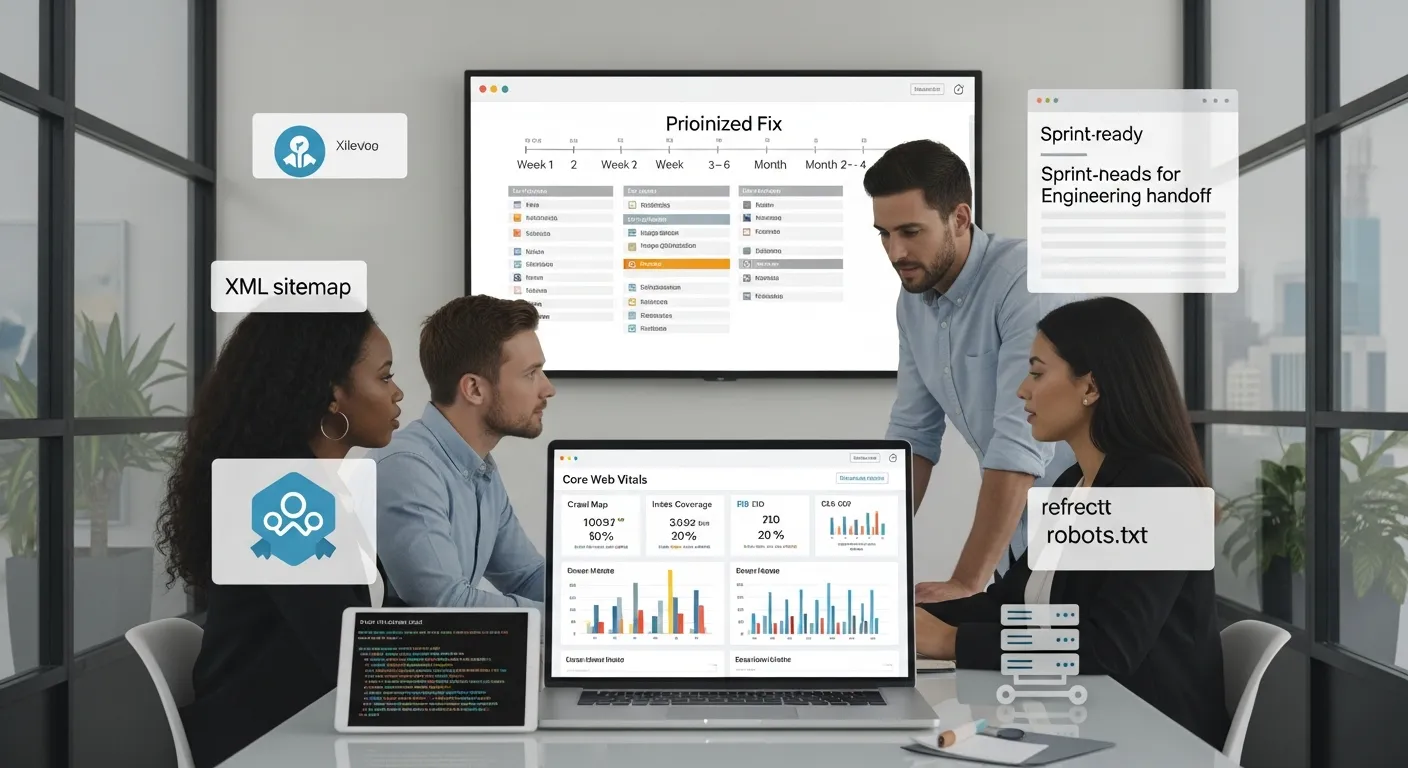
What The Audit Covers (Crawlability, Indexing, Site Speed, Mobile UX)
A technical SEO audit is the foundation of any effective SEO services package. We scan crawlability, robots and sitemap configuration, index coverage, canonicalization, redirect chains, server response codes, and XML sitemap accuracy. Site speed metrics (LCP, FID, CLS) and mobile UX are measured against current Core Web Vitals standards so technical issues don’t undermine content and link investments.
Example: For a retail client, resolving duplicate product URLs and fixing server-side redirects reduced crawl waste by 35% and allowed Googlebot to reach revenue-driving pages more frequently.
Prioritized Fix List And Implementation Timeline
We translate audit findings into a prioritized roadmap: high-impact, low-effort fixes first (e.g., critical redirect loops, noindex mistakes), followed by medium-effort performance improvements (image optimization, resource caching), then strategic platform changes (structured data, server upgrades).
Typical timeline:
- Week 1–2: Discovery, crawl, and urgent fixes
- Week 3–6: Performance and mobile UX improvements
- Month 2–4: Schema, hreflang, and platform-level changes
We coordinate with engineering teams and provide sprint-ready tickets to accelerate implementation.
Expected Impact On Organic Performance
Technical remediation eliminates barriers to indexing and improves user experience, two prerequisites for organic growth. Early wins often include faster crawl frequency, improved Core Web Vitals, and reduced duplicate content. Within 8–12 weeks clients commonly see improved impressions and steady ranking gains for prioritized keywords, creating a stronger platform for content and link-building efforts.
2. Content Strategy And High-Value Content Creation
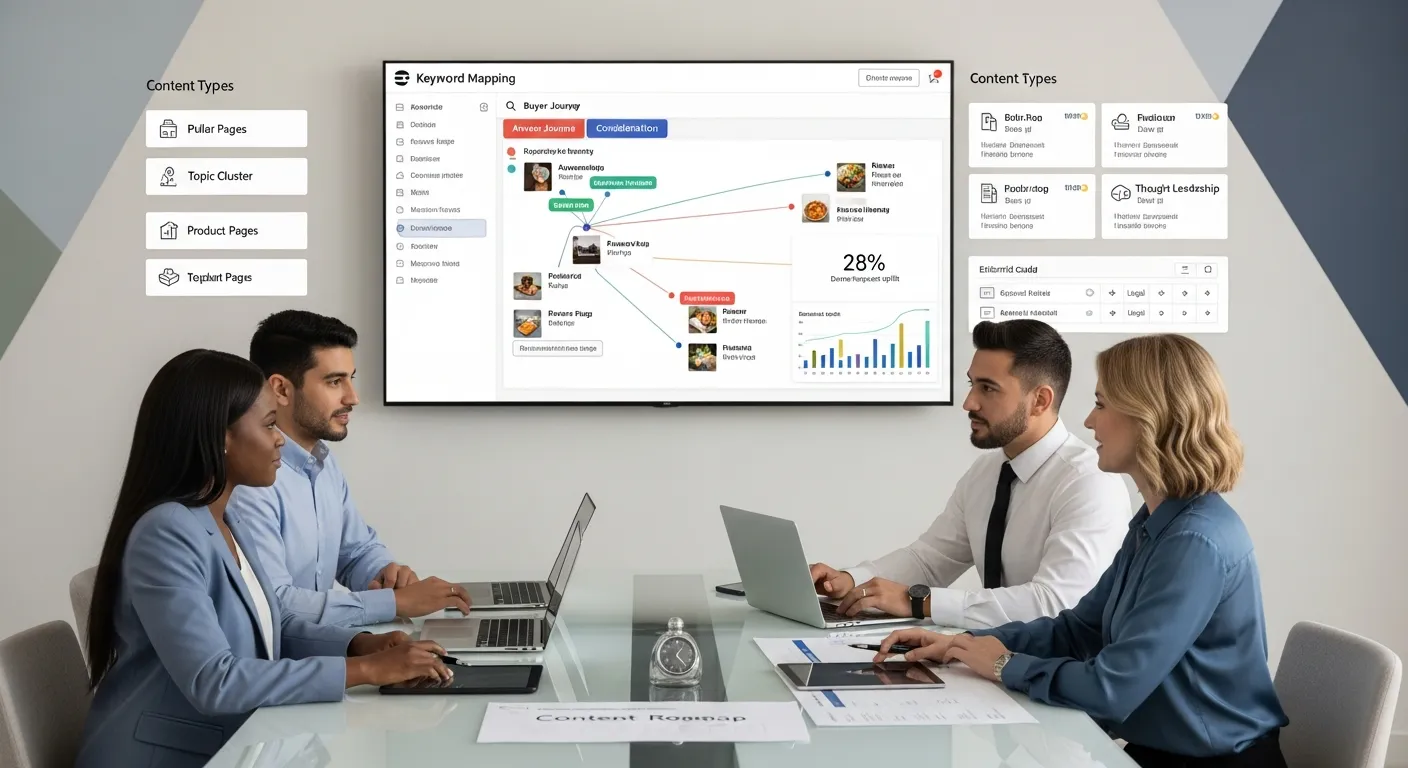
Keyword Mapping To Buyer Journeys And Revenue Opportunities
Our content strategy begins with keyword-to-revenue mapping: we align keyword intent to stages of the buyer journey and tag each keyword by expected revenue impact. That lets us prioritize content that supports direct revenue (product and category pages) and discovery (informational pillars and topic clusters).
Example: Mapping long-tail, high-intent keywords to product landing pages increased a B2B client’s demo requests by 28% within three months.
Content Types: Pillars, Topic Clusters, Product Pages, Thought Leadership
We produce a mix of content formats tailored to the roadmap:
- Pillar pages: authority foundations that link to related cluster pages
- Topic clusters: targeted articles that capture long-tail traffic and feed internal linking
- Product/category pages: conversion-focused copy optimized for revenue keywords
- Thought leadership: brand-building assets that attract editorial links and social amplification
Each asset is optimized for search intent, conversion signals, and structured data.
Editorial Calendar And Content Production Workflow
We carry out a production workflow that scales: brief → draft → SEO review → legal/brand review → publish → measure. Editorial calendars map cadence to priority cohorts so high-value pages are produced first.
To maintain velocity at scale we combine internal SMEs, in-house writers, and vetted external creators: this hybrid model ensures quality without bottlenecks. For teams that need programmatic content, we also design templates that maintain SEO integrity while speeding production.
3. On-Page SEO And Semantic Optimization
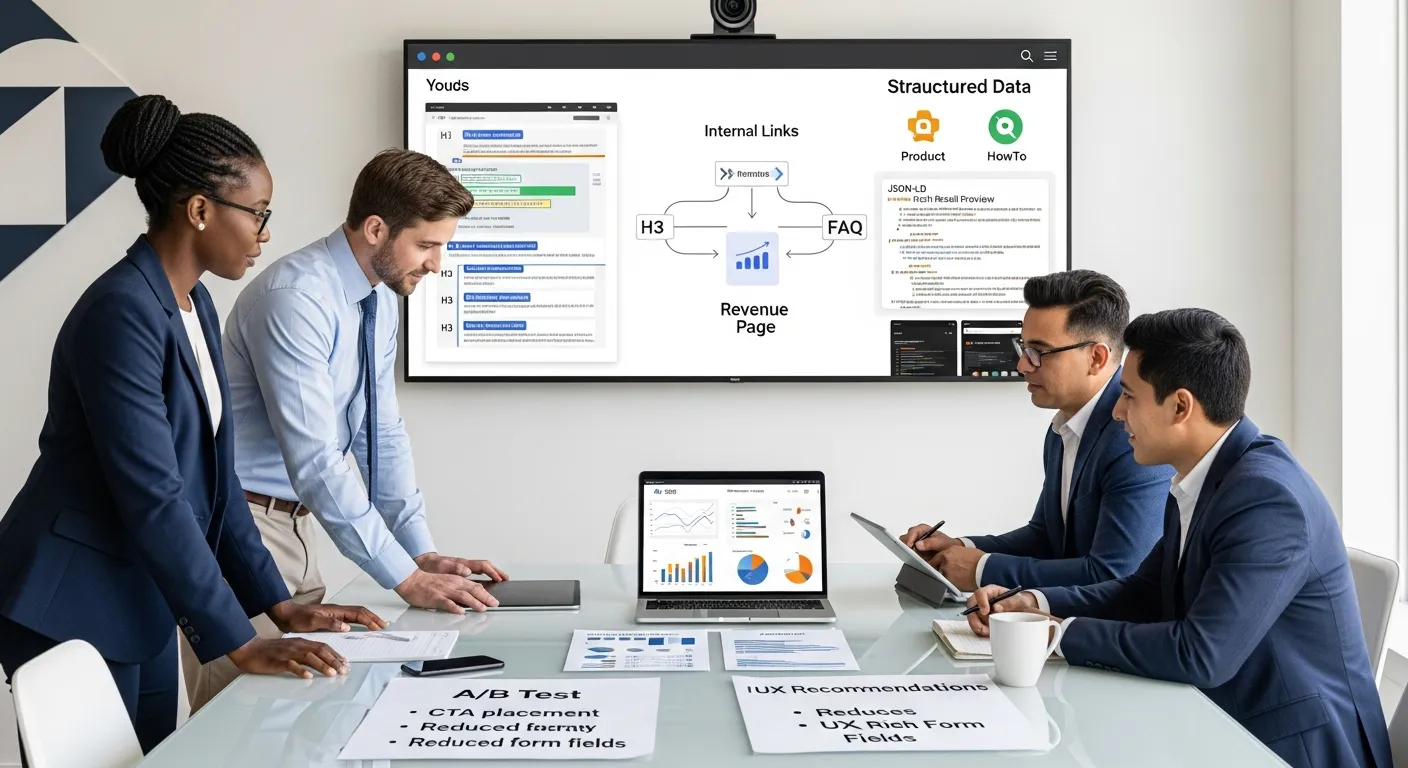
Metadata, Headings, Internal Linking, And Structured Data (Schema)
On-page SEO is where technical and content strategy meet. We optimize title tags, meta descriptions, H1–H3 hierarchy, and carry out semantic markup (schema) to improve SERP presentation and relevance signals.
Practical approach:
- Write click-focused metadata that aligns with intent
- Structure headings to reflect query subtopics
- Use internal linking to funnel authority to revenue pages
- Apply structured data (Product, FAQ, HowTo) for rich results
Example: Adding product and review schema for an ecommerce client increased rich result impressions by 42% and lifted CTR by 7%.
Page-Level Conversion Signals And UX Recommendations
SEO services should drive traffic and conversions. We audit page-level conversion elements, CTA placement, form simplicity, trust signals, and load performance, and recommend A/B tests that improve conversion without degrading rankings.
Tactical fixes, like aligning H1 copy with ad headlines or reducing form fields on high-intent landing pages, often deliver immediate lifts in lead capture and revenue per session.
4. Local SEO And Google Business Profile Optimization
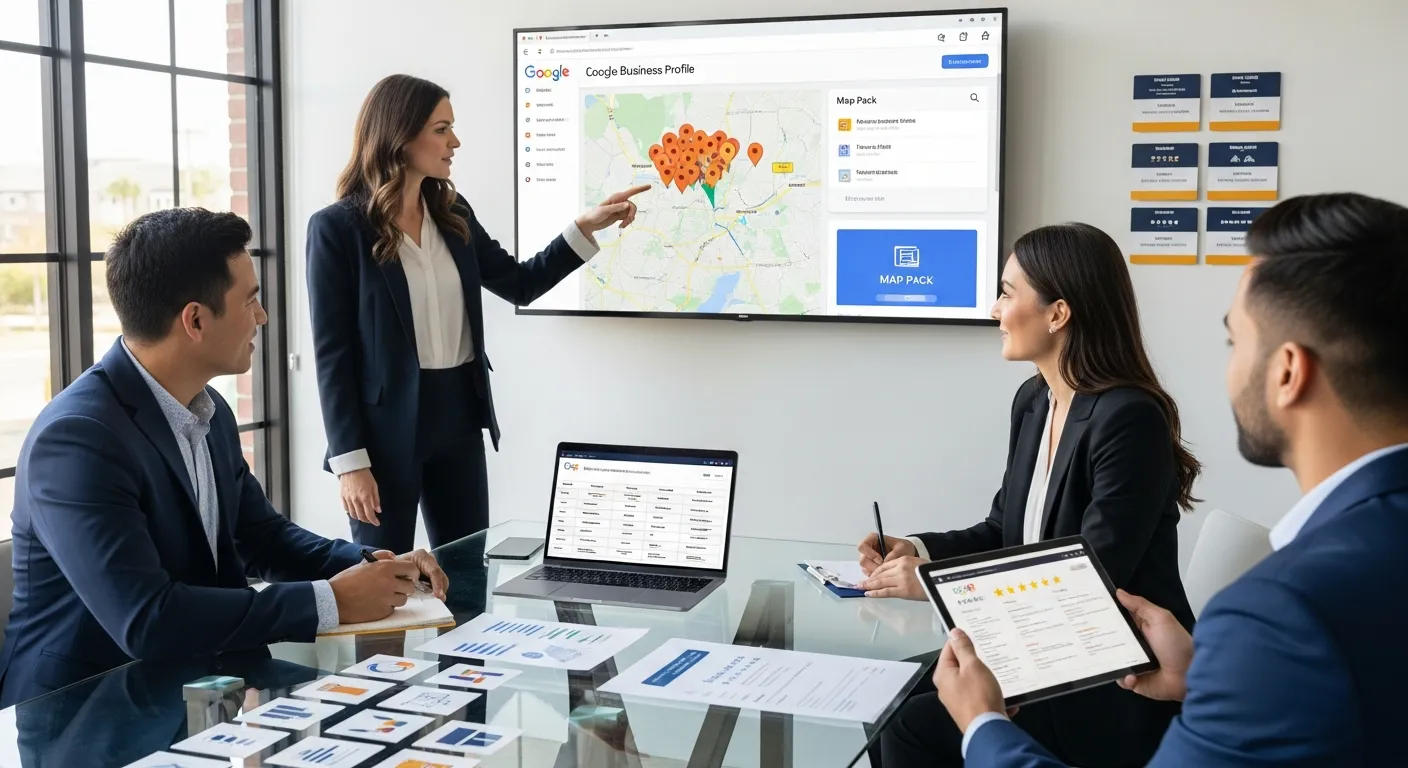
Local Citations, NAP Consistency, And Localized Content
For brands with physical locations or regionally focused services, local SEO is a high-ROI channel. We ensure NAP (Name, Address, Phone) consistency across authoritative directories, optimize localized landing pages, and create content that targets geo-modified queries.
Example: An optimized location cluster for a franchise network led to a 60% increase in map pack visibility and a significant uplift in foot-traffic attribution.
Review Management Strategy And Local Link Opportunities
Reviews are both a ranking signal and a trust metric. We carry out review acquisition workflows, respond to feedback systematically, and leverage customer stories in local pages. Local PR and partnership outreach (chambers of commerce, local suppliers) build relevant links that improve local authority.
We also monitor Google Business Profile insights to surface opportunities and prioritize locations by revenue potential.
5. Link Building, Digital PR, And Authority Growth

High-Quality Outreach, Editorial Links, And Partnership Tactics
Link building today is strategic outreach and storytelling. We combine data-driven prospecting with bespoke outreach to earn editorial links from relevant, high-authority sites. Content-led campaigns (original research, interactive tools, expert roundups) are the most scalable sources of editorial links.
Example: A timely industry report pitched to trade publications produced multiple editorial placements and referral visits that influenced lead generation.
Quality Metrics (DR/DA, Relevance, Traffic Attribution)
We evaluate potential link sources by domain authority, topical relevance, and actual referral traffic. Attribution is crucial: we map which links drove ranking changes versus those that delivered referral conversions, refining tactics toward what moves the revenue needle.
6. Programmatic And Enterprise SEO At Scale
Dynamic Page Generation, Category Optimization, And Large-Scale Indexing
For enterprise sites and large catalogs, SEO services must scale without losing signal quality. We design programmatic templates that create thousands of unique pages while preserving semantic differentiation and canonical rules. Category optimization focuses on grouping high-potential variants into indexable pages that users actually search for.
Example: Implementing dynamic templates for a marketplace cut time-to-publish for new SKU pages by 70% while maintaining unique title and meta structures.
Automation, Templates, And Personalization For Large Catalogs
Automation powers title/meta generation, schema insertion, and internal linking at scale. We layer personalization and user signals so published pages better match visitor intent (regional facets, dynamic filters). That combination improves both index health and conversion rates for catalog-heavy businesses.
7. Data-Driven SEO Reporting, Measurement, And Dashboards
Core KPIs: Organic Revenue, Assisted Conversions, CTR, Impressions
We measure SEO performance with revenue-centric KPIs: organic revenue, assisted conversions, sessions by intent cohort, CTR, and impressions. Those numbers tell us if SEO is driving business outcomes, not just ranking positions.
We set up attribution models that combine last-click and multi-touch views so stakeholders see search’s full contribution to pipeline.
Custom Dashboards And Regular Insights Reviews For Stakeholders
We build custom dashboards that surface the metrics your CROs, product owners, and executives care about. Dashboards include trend lines, segmented revenue by landing page type, and correlation analyses between technical fixes and ranking changes.
We also run regular insight reviews to translate data into prioritized experiments and roadmap adjustments.
8. Conversion Rate Optimization (CRO) For Organic Traffic
A/B Testing, Landing Page Optimization, And Funnel Analysis
CRO is part of our SEO services because more traffic is only valuable if it converts. We run hypothesis-driven A/B tests on organic landing pages, optimize funnels by reducing friction, and instrument micro-conversions to understand engagement paths.
Example: A simple headline and CTA realignment on a product landing page increased lead conversion by 18% without additional traffic spend.
How CRO Complements SEO To Maximize Revenue Per Visit
When SEO and CRO work together we increase revenue per visit and shorten the time to ROI. SEO brings qualified visitors: CRO turns those visits into measurable outcomes. We prioritize CRO tests based on traffic volume and revenue potential so experimentation resources are used where they matter most.
Conclusion
We design SEO services to be measurable, scalable, and directly tied to revenue. From technical foundations and content strategy to link building, programmatic scale, and CRO, each area contributes to a holistic growth engine that makes search a predictable revenue channel. If you want practical next steps, we recommend starting with a technical audit and a revenue-aligned keyword map to identify quick wins and long-term opportunities.
Frequently Asked Questions
What do your SEO services include and how do they drive revenue?
Our SEO services cover technical audits, content strategy, on‑page optimization, link building, programmatic scaling, reporting, local SEO, and CRO. Each area is prioritized to remove indexing barriers, capture high‑intent keywords, and convert organic traffic so search becomes a measurable revenue channel.
How long before I see results from a technical SEO audit and fixes?
After initial discovery and urgent fixes (weeks 1–2), performance and mobile improvements typically show effects within 8–12 weeks. Early wins include faster crawl frequency, better Core Web Vitals, and steady ranking gains for prioritized keywords that support long‑term organic revenue growth.
How does content strategy in SEO services connect keywords to buyer journeys?
We map keywords to buyer stages and tag each by revenue impact, prioritizing product/category pages for direct conversions and pillar/topic clusters for discovery. This approach focuses resources on high‑intent, revenue‑driving queries while feeding internal linking and authority to conversion pages.
Can programmatic SEO work for large catalogs without causing duplicate content issues?
Yes—programmatic SEO works when templates enforce semantic differentiation, canonical rules, and unique title/meta structures. Combined with automation for schema and internal linking, it scales indexable pages while reducing crawl waste and preserving relevance for indexed variants.
What KPIs should I track to measure the success of SEO services?
Focus on revenue‑centric KPIs: organic revenue, assisted conversions, sessions by intent cohort, CTR, and impressions. Use multi‑touch attribution and custom dashboards to correlate technical fixes, content efforts, and links with actual pipeline and revenue outcomes.