
Online reputation management: Perfect Your Brand 2025
Why Your Online Reputation Is Your Most Valuable Digital Asset
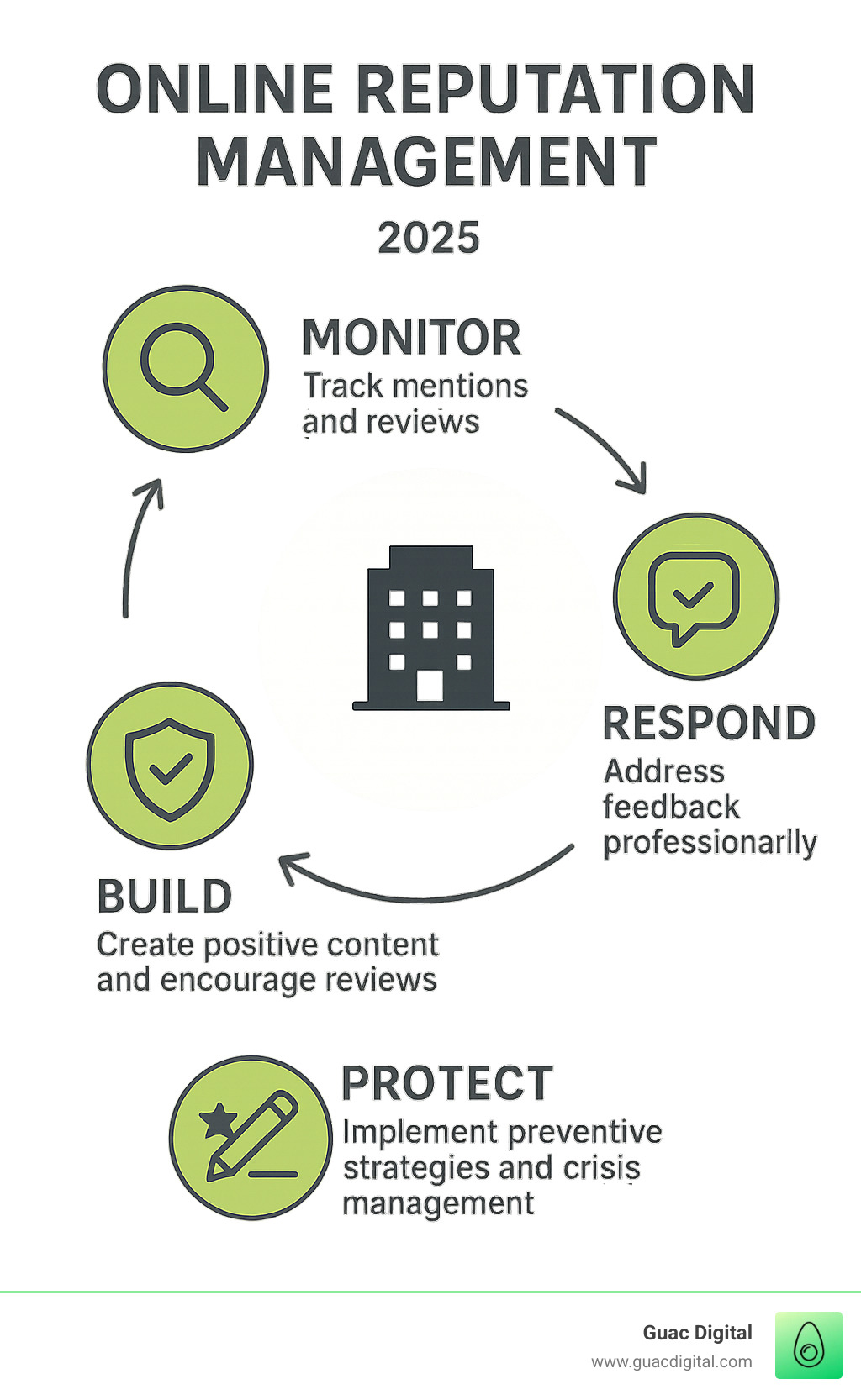
Online reputation management is the practice of monitoring and influencing how your brand is perceived online. It involves tracking mentions, managing reviews, and creating positive content to shape public perception.
Key components of online reputation management:
- Monitor – Track mentions across review sites, social media, and search results
- Respond – Address both positive and negative feedback professionally
- Build – Create positive content to strengthen your digital presence
- Protect – Implement strategies to prevent and mitigate reputation damage
Your online reputation is the first impression for most potential customers. With 97 percent of consumers searching online for local businesses, what they find can make or break your success. Think of it as your digital business card, visible to millions 24/7. Every review, post, and search result shapes how the world sees you. Unlike traditional word-of-mouth, digital “word-of-mouse” spreads instantly and permanently.
A single negative review can overshadow years of hard work. But the good news is you have significant control over your online narrative.
I’m Guy Leon, founder and CEO of Guac Digital. We’ve helped clients achieve a 350% boost in engagement through strategic digital marketing that includes comprehensive online reputation management. I’ve seen how proper reputation management transforms businesses, building credibility and customer trust.
The Foundations: Why Your Digital Footprint Matters
When you last tried a new restaurant or hired a service, you likely searched for it online. Within seconds, you had access to reviews, photos, and opinions from real customers.

Your digital footprint is the trail of information left behind online. It’s not just your website; it’s every review, mention, and search result. A staggering 97 percent of consumers search online for local businesses, meaning nearly everyone checks you out online first.
Social media and review sites like Google and Yelp have amplified this. A single bad experience can be shared with thousands in minutes—the “word of mouse” effect. Conversely, positive experiences can spread just as quickly, turning happy customers into powerful advocates.
ORM for Businesses
For businesses, online reputation management is essential for growth. Your digital reputation impacts every part of your operation:
- Brand Perception & Trust: What people find in search results shapes their opinion of you before they ever interact with your company.
- Customer Acquisition & Revenue: A higher average star rating can lead to significant revenue growth, as positive reviews encourage customers to choose you over competitors.
- Employee Recruitment: Top talent researches potential employers. A positive online presence attracts better candidates.
- Investor Confidence: A tarnished online reputation can be a major red flag for potential investors and partners.
- Search Visibility: Online reviews are a ranking factor for Google, especially in local search. This is why Local SEO for Small Business success is tied to a positive reputation.
ORM for Individuals
Online reputation management is also crucial for individuals. Your personal online presence matters more than ever.
- Professional Opportunities: Recruiters and potential employers google candidates. A clean, professional digital footprint can be the deciding factor in landing a job.
- Personal Branding: Your online reputation is how you control your narrative and showcase your expertise and values to the world.
- Privacy Protection: Managing your reputation includes protecting yourself from unwanted or false information that can surface online.
- Public Figures & Job Seekers: For public figures, proactive management is a necessity to maintain credibility. Similarly, most employers conduct online checks, making it vital for job seekers to present their best professional self online.
In our digital world, your online reputation is your first impression, business card, and reference letter all in one. Taking control of it is essential.
Core Strategies for Online Reputation Management
Effective online reputation management is like tending a garden: it requires consistent effort. You need both proactive strategies to build a strong presence and reactive ones to handle issues as they arise. It’s not a one-time project but an ongoing part of your overall digital marketing.
At Guac Digital, we help clients build long-term strategies. As a Digital Marketing Agency in Tampa, we create comprehensive campaigns that build and protect your digital presence by preparing for potential crises before they happen.
Proactive Online Reputation Management: Building a Digital Fortress
The best defense is a good offense. Proactive strategies involve filling the internet with so much positive content about you that negative items struggle to gain visibility.
- Content Creation & SEO: Develop a steady stream of high-quality content like blog posts, case studies, and press releases. Integrating this with our Website SEO Services ensures your positive content ranks high in search results, shaping your preferred narrative.
- Thought Leadership & Brand Storytelling: Position yourself as an industry expert through interviews and guest articles to build credibility. As Forbes notes, brand storytelling is the future of marketing because it connects with your audience on an emotional level.
- Profile Optimization & Review Encouragement: Ensure your brand voice and visuals are consistent across all social media platforms. Actively encourage satisfied customers to leave positive reviews on key sites like Google and Yelp.
Reactive Strategies: Damage Control and Repair
Even with a strong proactive strategy, negative content can appear. When it does, swift and strategic action is key.

- Content Suppression: This is often more realistic than removal. The goal is to push negative content down in search results by creating and promoting a large volume of positive, authoritative content that ranks higher.
- Content Removal: Removal is sometimes possible. We can help steer platform policies for violations or pursue legal takedowns for defamatory or copyrighted content. We offer guidance on processes like How to Remove Bad Reviews from Google My Business.
- Responding to Negative Feedback: A prompt, professional response can turn a negative into a positive. Acknowledge the concern and offer a solution. However, it’s also important to know when not to engage, as responding can sometimes boost the visibility of malicious content.
- Crisis Communication Plan: Having a plan ready before you need it is crucial. This plan should outline who speaks for the company and what the core messaging will be, ensuring a coordinated response across all channels.
Professional Services vs. DIY: Making the Right Choice
When facing reputation challenges, you must decide whether to handle it yourself or hire professionals. There’s no single right answer, so let’s break down the options.
| Factor | DIY Approach | Professional ORM Service |
|---|---|---|
| Cost | Low initial (time is the cost) | Higher monetary investment (tiered packages, retainers) |
| Time Commitment | Very High (constant monitoring, content creation, engagement) | Low for client (high for agency) |
| Expertise | Limited (learning curve, trial-and-error) | High (specialized knowledge, industry experience) |
| Tools | Basic (Google Alerts, social media platforms) | Advanced (proprietary software, sophisticated analytics) |
| Effectiveness | Varies (good for minor issues, can be overwhelmed) | High (comprehensive, strategic, long-term results) |
The DIY Approach
The DIY route can make sense for minor issues, like a few negative reviews. The low initial cost is appealing, as you’re trading money for time. You also have direct control over every response. For small problems, a personal touch can be effective.
However, the drawbacks are significant. Effective ORM is incredibly time-consuming, requiring hours of daily monitoring and content creation. A lack of expertise can also be a problem; without understanding SEO or crisis communication, you could accidentally make things worse. Your tools are limited compared to the sophisticated software agencies use. Finally, it’s difficult to remain objective and avoid emotional responses when your reputation is attacked.
While Forbes offers some DIY reputation management tips, they also acknowledge the limitations of going it alone.
The Role of a Professional Online Reputation Management Company
When the stakes are high, professional online reputation management is invaluable. At Guac Digital, we’ve seen how expertise can turn a reputation crisis into a success story.
Professional agencies offer comprehensive services like multi-platform review management, content suppression, and crisis management. The industry expertise is a huge factor, as strategies must be custom. What works for a restaurant won’t work for a law firm.
Professionals also bring advanced technology, leveraging big data and sophisticated monitoring tools to ensure your positive narrative dominates search results. Perhaps the most underrated benefit is objectivity. An external team can craft diplomatic, strategic responses, avoiding the emotional reactions that can fuel a crisis.
While professional services are an investment, the cost is often less than the revenue lost from a damaged reputation. This support is a key part of what a digital marketing agency does; we become an extension of your team, handling the complexities so you can focus on your business.
Vetting a Partner and Measuring Success
Choosing the right online reputation management partner is a critical decision. You need a co-pilot you can trust, who has the expertise to steer challenges and can clearly demonstrate progress.
Choosing a Reputable ORM Agency
Not all ORM companies are created equal. Here’s what to look for when vetting a potential provider:
- Transparency: A reputable company will be open about its methods and provide clear reporting. Be wary if they hide behind vague “proprietary software.”
- Case Studies & Track Record: Ask for real-world examples of how they’ve helped clients with similar issues.
- Ethical Considerations: This is paramount. Avoid companies that promise “guaranteed removals” or use unethical tactics like astroturfing (creating fake reviews). As Wikipedia notes, reputation management raises ethical questions, so prioritize partners who focus on promoting truth. Be cautious of firms associated with “The Slander Industry,” which exploits online defamation for profit.
- White-Hat Techniques: Ensure they use legitimate SEO and content marketing techniques to avoid penalties from search engines.
- Clear Communication: Look for an agency that provides consistent updates and reports.
- Personalized Strategies: A great company will develop a custom strategy for your specific situation, not a one-size-fits-all plan.
Measuring ROI and Success
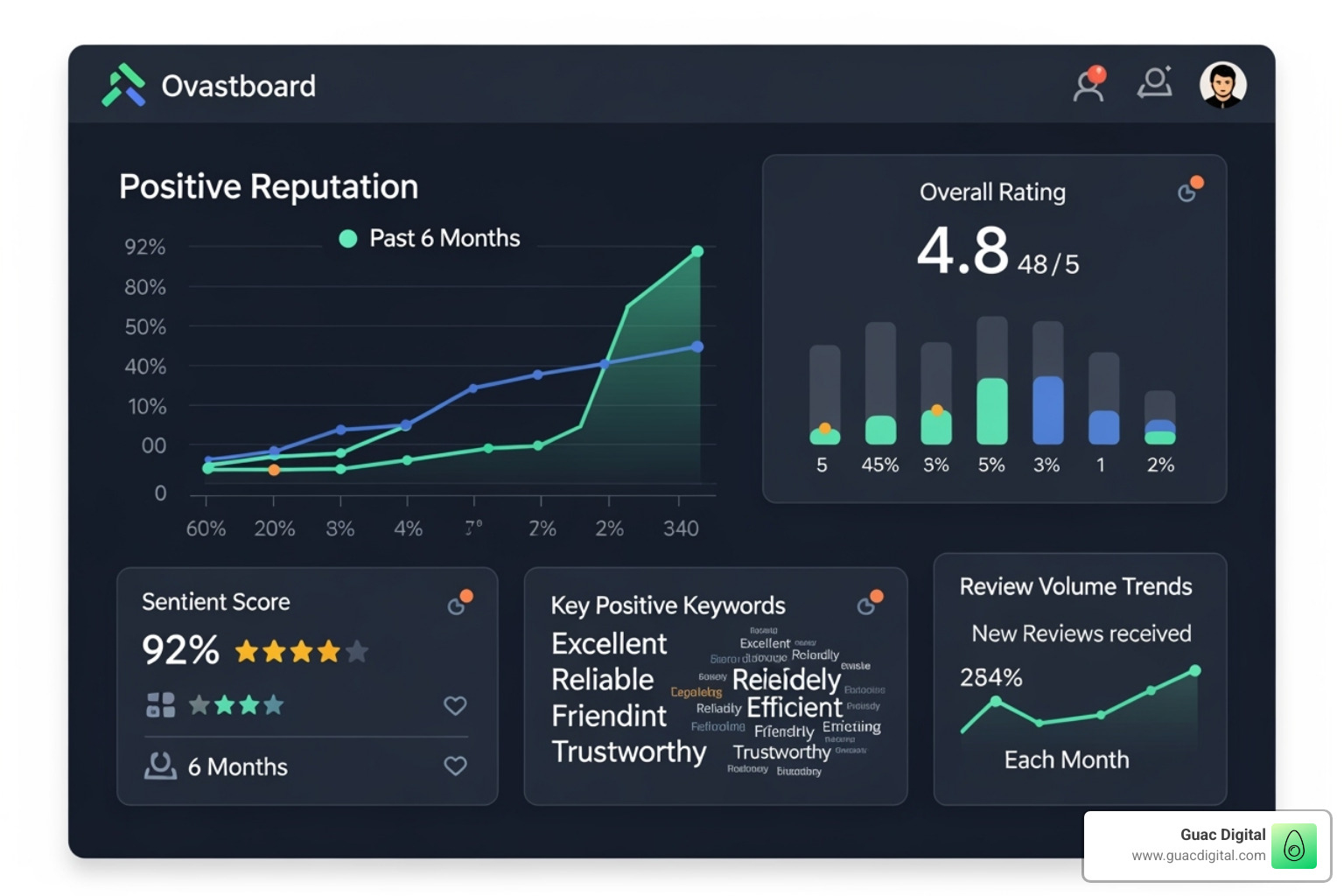
How do you know your investment is paying off? We believe in tracking clear, measurable results. Here are the key performance indicators (KPIs) to monitor:
- SERP Rankings: The most direct measure is seeing negative content pushed off the first page of search results.
- Sentiment Analysis: Tools can gauge the overall tone of online mentions, showing a shift from negative to positive.
- Review Score Improvements: A tangible metric is an increase in your average star ratings on sites like Google and Yelp.
- Website Traffic: A better reputation should lead to an increase in organic website traffic.
- Lead Generation: A better reputation should translate into more leads and customers.
- Reporting Dashboards: A good agency will provide easy-to-understand reports showing progress on these metrics.
Frequently Asked Questions about Online Reputation Management
Clients often have similar concerns about online reputation management. Addressing these common questions upfront helps set realistic expectations.
How long does it take to repair a damaged online reputation?
There’s no simple answer. The timeline depends on several factors:
- Severity of Damage: A few negative reviews can see improvement in a few months. Widespread negative press on high-authority sites will take much longer.
- Strength of Negative Content: Content on major news outlets or government sites is harder to displace than posts on smaller blogs.
- Campaign Intensity: The more resources dedicated to creating positive content and SEO, the faster the results.
Generally, expect 3 to 12 months for significant, lasting improvements. This is a long-term strategy, not a quick fix.
Can any negative content be removed from the internet?
Complete removal isn’t always possible. It’s important to understand the difference between removal versus suppression.
- Suppression is often the most realistic strategy. It involves pushing negative content so far down in search results that very few people will ever see it.
- Removal is possible in specific cases. We can report content that violates a platform’s terms of service (e.g., harassment, hate speech). Legal avenues like takedown notices can be used for defamation or copyright infringement, though this can be a complex process.
The “right to be forgotten” is primarily a European concept allowing individuals to request search engines delist certain outdated personal information, but its application is limited.
Is it ethical to pay for reputation management?
Yes, paying for professional online reputation management is completely ethical, much like hiring any other professional service. The key is to work with a company that operates ethically.
- Ethical ORM focuses on promoting truth and positive assets. It involves creating genuine content that showcases your expertise and encouraging authentic customer reviews.
- Unethical practices are major red flags. These include astroturfing (creating fake personas or reviews), trying to censor legitimate complaints, or engaging in predatory practices like those associated with “the slander industry.”
At Guac Digital, we are committed to ethical practices. We focus on highlighting your genuine strengths and building an authentic, positive online narrative.
Conclusion: Take Control of Your Online Narrative
In today’s digital-first world, online reputation management is about actively crafting the story you want the world to see. Every day, people form opinions about you based on what they find online. The question isn’t if they’re looking; it’s what they’re finding.
We’ve seen that with 97 percent of consumers searching online for local businesses, your digital presence is a make-or-break factor. Your online reputation is an ongoing investment, not a one-time project. Ignoring it is like leaving your front door wide open—the conversation about you will happen whether you’re part of it or not.
Taking control means shifting from a reactive to a proactive mindset. Instead of scrambling to fix problems, you build a strong foundation of positive content that works for you 24/7. While a DIY approach can work for minor issues, the complexity of the digital landscape often requires expert guidance.
At Guac Digital, we help clients transform their digital narratives, building credibility and customer trust. Our approach combines strategic thinking with data-driven precision to deliver measurable results that impact your bottom line.
Your reputation is your legacy in the digital age. The choice is yours: let it happen by chance, or take control and build something remarkable.
Explore our portfolio to see how we build powerful brand reputations and find how we can help you write your own success story.