
What is programmatic advertising? 7 Powerful Benefits 2025
The Evolution of Digital Ad Buying
What is programmatic advertising? At its heart, it’s the automated buying and selling of digital ad space using AI and algorithms. Gone are the days of manual negotiations – they’ve been replaced with lightning-fast auctions that match your ads to the perfect audience in milliseconds.
| Programmatic Advertising at a Glance |
|---|
| Definition: Automated, algorithm-driven purchasing and placement of digital ads |
| How it Works: Uses real-time bidding to buy individual ad impressions |
| Key Components: DSPs, SSPs, ad exchanges, and DMPs |
| Average Cost: $0.50-$2.00 CPM (cost per thousand impressions) |
| Main Benefit: Precision targeting at scale with real-time optimization |
Remember the “Mad Men” era of advertising? Those days are long gone. Today’s digital marketers aren’t spending countless hours negotiating ad placements through tedious RFPs and insertion orders. Instead, they’re using powerful technology that makes split-second decisions to deliver personalized ads to exactly the right person at precisely the right moment.
Programmatic advertising sits at the exciting crossroads of big data and automation. It gives marketers the ability to target specific audiences with incredible precision while scaling campaigns across thousands of websites simultaneously. This technology has transformed digital marketing from educated guesswork into a data-driven science that delivers measurable results.
Why should your business care about this? Because the numbers speak volumes – global programmatic ad spend reached an estimated $595 billion in 2024 and is projected to grow to nearly $800 billion by 2028. If you’re serious about digital marketing (and you should be!), understanding this rapidly growing channel isn’t optional – it’s essential.
I’m Guy Leon, founder and CEO of Guac Digital. I’ve personally helped dozens of businesses boost their ROI by implementing strategic programmatic advertising campaigns that leverage real-time data. Our approach minimizes wasted ad spend while maximizing campaign performance – something every business owner can appreciate.

Want to dive deeper into what is programmatic advertising and related topics? These resources will help you get started:
– How to use data in marketing?
– How to increase online presence?
– seo copywriting and content optimization services
What is programmatic advertising?
Programmatic advertising transforms the way we buy digital ads. Instead of lengthy phone calls, endless email chains, and manual insertion orders, it uses smart technology to automate the entire process. Think of it as having a digital marketing assistant that never sleeps – constantly analyzing data, making split-second bidding decisions, and optimizing your campaigns 24/7.
When I explain programmatic to clients at Guac Digital, I often see that lightbulb moment when they realize how much time and guesswork it eliminates. The technology uses AI and machine learning to make real-time decisions about which ads to buy, where they should appear, and exactly how much to pay for each impression.
Matt Luscombe, a former COO who shifted his marketing strategy to programmatic, put it perfectly: “By using advanced targeting capabilities through programmatic, we are able to find a broader range of people looking for accommodation and target them with our book-direct message.”
Most programmatic campaigns operate on a cost-per-thousand-impressions (CPM) model. Standard inventory typically ranges from $0.50 to $2.00, while premium placements with highly specific audiences might command $50+ CPMs. The beauty of this model is its scalability – we’ve helped Tampa businesses grow from local to national reach without the management headaches that traditional media buying would entail.
What is programmatic advertising in digital display?
Digital display was the first format to accept programmatic, and it remains the powerhouse channel today. When we talk about programmatic display advertising, we’re referring to those banner ads, interactive media units, and visual elements you see across websites and apps.
The magic happens through real-time bidding (RTB) – a lightning-fast auction process that takes place in less time than it takes you to blink:
- Someone visits a website with ad space
- The publisher’s system sends out bid requests
- Advertiser platforms evaluate the opportunity based on user data
- Bids are placed automatically based on your parameters
- The highest bid wins, and your ad appears
All of this happens in under 100 milliseconds – truly mind-boggling when you think about it!
Display inventory comes in various flavors to suit different needs:
Open exchanges offer public auctions where anyone can participate, while private marketplaces (PMPs) provide invitation-only environments for premium inventory. For advertisers seeking guaranteed volume, programmatic guaranteed deals provide fixed pricing and assured delivery.
At Guac Digital, we help our clients steer these options to find the perfect balance of reach, quality, and cost-efficiency for their unique goals.
What is programmatic advertising for small businesses?
Small businesses were once priced out of sophisticated digital advertising – but programmatic advertising has democratized access to powerful marketing technology. You no longer need a Fortune 500 budget to deliver personalized ads to exactly the right people at the perfect moment.
With CPMs starting as low as $0.50, even local Tampa businesses with modest marketing funds can access the same targeting capabilities as major brands. One small business owner we worked with recently told me: “We never thought we could afford this level of targeting precision. Programmatic has leveled the playing field for us against much larger competitors.”
What makes programmatic particularly valuable for small businesses is its flexibility. Unlike traditional media buys that lock you into large commitments, programmatic lets you start small, test what works, and scale up gradually. You can shift budgets between channels in real-time, pause campaigns instantly if needed, and make data-driven decisions without massive upfront investments.
This approach means small businesses can be nimble – testing new markets, responding to competitive pressures, and optimizing campaigns continuously based on real performance data rather than guesswork.
More info about Programmatic Advertising Explained
How Programmatic Advertising Works: Ecosystem, Platforms, Deal Types & Channels
Ever wonder how an ad magically appears the moment you load a webpage? That’s programmatic advertising in action! Think of it as a digital marketplace where ads are bought and sold in the blink of an eye – literally.

When you visit a website, a fascinating dance begins behind the scenes. The publisher’s Supply-Side Platform (SSP) announces: “Hey, I’ve got ad space available!” This kicks off a chain reaction through the ecosystem. The Ad Exchange receives this bid request along with details about you (anonymized, of course) and the available ad space. Meanwhile, the Demand-Side Platform (DSP) jumps in to evaluate whether this impression matches what its advertisers are looking for.
While this is happening, the Data Management Platform (DMP) provides valuable audience insights that help inform bidding decisions. Smart AI algorithms crunch all this data to determine the perfect bid amount. All of this culminates in a winner being selected and an ad appearing on your screen – and it all happens in less time than it takes you to blink!
Header bidding has made this process even more efficient. Publishers can now offer their inventory to multiple ad exchanges at once before calling their ad servers. It’s like having several auctions running simultaneously rather than one after another. This creates healthy competition that typically means better deals for advertisers and higher revenue for publishers – a win-win!
At Guac Digital, we’ve seen how navigating this ecosystem effectively can transform campaign performance for our Tampa clients. The difference between success and wasted budget often comes down to understanding which parts of this ecosystem will work hardest for your specific goals.
The programmatic world offers various deal types to suit different needs:
- The open market works like a public auction where anyone can bid
- Private marketplace (PMP) deals are invitation-only auctions for premium inventory
- Preferred deals give you first dibs at a pre-negotiated price
- Programmatic guaranteed arrangements are like traditional direct buys but with the efficiency of automation
Real-Time Bidding Step-by-Step
Real-Time Bidding (RTB) is truly a marvel of modern technology. It powers over 90% of programmatic transactions and happens in just 100 milliseconds – faster than you can say “programmatic”!

Here’s what happens in that split second: When you visit a webpage, the publisher’s ad server immediately sends out a bid call (0-10ms). This triggers the auction setup (10-20ms) where SSPs forward your information to ad exchanges. The bid request then gets distributed to multiple DSPs (20-40ms) who analyze the opportunity in incredible detail.
During bid evaluation (40-70ms), DSPs consider advertiser targeting criteria, your demographic and behavioral data, historical performance, and campaign goals. They then submit their bids (70-80ms), a winner is selected (80-90ms), and finally, the winning ad appears on your screen (90-100ms).
The impact of this technology can be profound. As Ross Miller, Director of Funding at a child rescue charity, shared: “When we first started using out-of-home (outdoor advertising), 50% of children we appealed for were found alive, when we switched to a more programmatic use of out-of-home our response rate went to 70%.”
At Guac Digital, we’ve fine-tuned our RTB approach by implementing sophisticated bidding algorithms that don’t just consider the value of the impression but also predict conversion likelihood based on historical data. This means our Tampa clients get more bang for their buck with every bid we place.
Key Platforms You’ll Use
Think of programmatic platforms as your toolkit for digital advertising success. Understanding which tools to use (and how to use them) makes all the difference.
Demand-Side Platforms (DSPs) are your command center for buying ads. They let you manage campaigns across multiple ad exchanges, apply laser-focused targeting, set smart bidding strategies, track performance in real-time, and optimize based on results. When choosing a DSP, consider factors like inventory access, targeting capabilities, analytics features, ease of use, minimum spend requirements, and whether you want a self-serve or managed service model.
Supply-Side Platforms (SSPs) help publishers get the most money for their ad space. They connect to multiple demand sources, set minimum price floors, block unwanted advertisers, and optimize yield. Understanding how SSPs work helps advertisers identify the best pathways to quality inventory.
Ad Servers are like traffic controllers for digital ads, making sure the right ads show up in the right places at the right times. They also track crucial performance metrics that tell you whether your campaigns are working.
Data Partners provide additional audience insights that can dramatically improve your targeting precision. These might include third-party data providers, contextual intelligence platforms, and identity resolution services.
At Guac Digital, we’ve built strong relationships with leading platform providers so our Tampa clients get access to the best programmatic technology and premium inventory sources. This gives them a significant edge over competitors who might be using more limited tools.
More info about Programmatic Ad Buying Platforms
Channels & Formats Expanding Fast
Programmatic advertising isn’t just for website banner ads anymore! The technology has expanded to reach consumers across virtually every digital touchpoint in their daily lives.
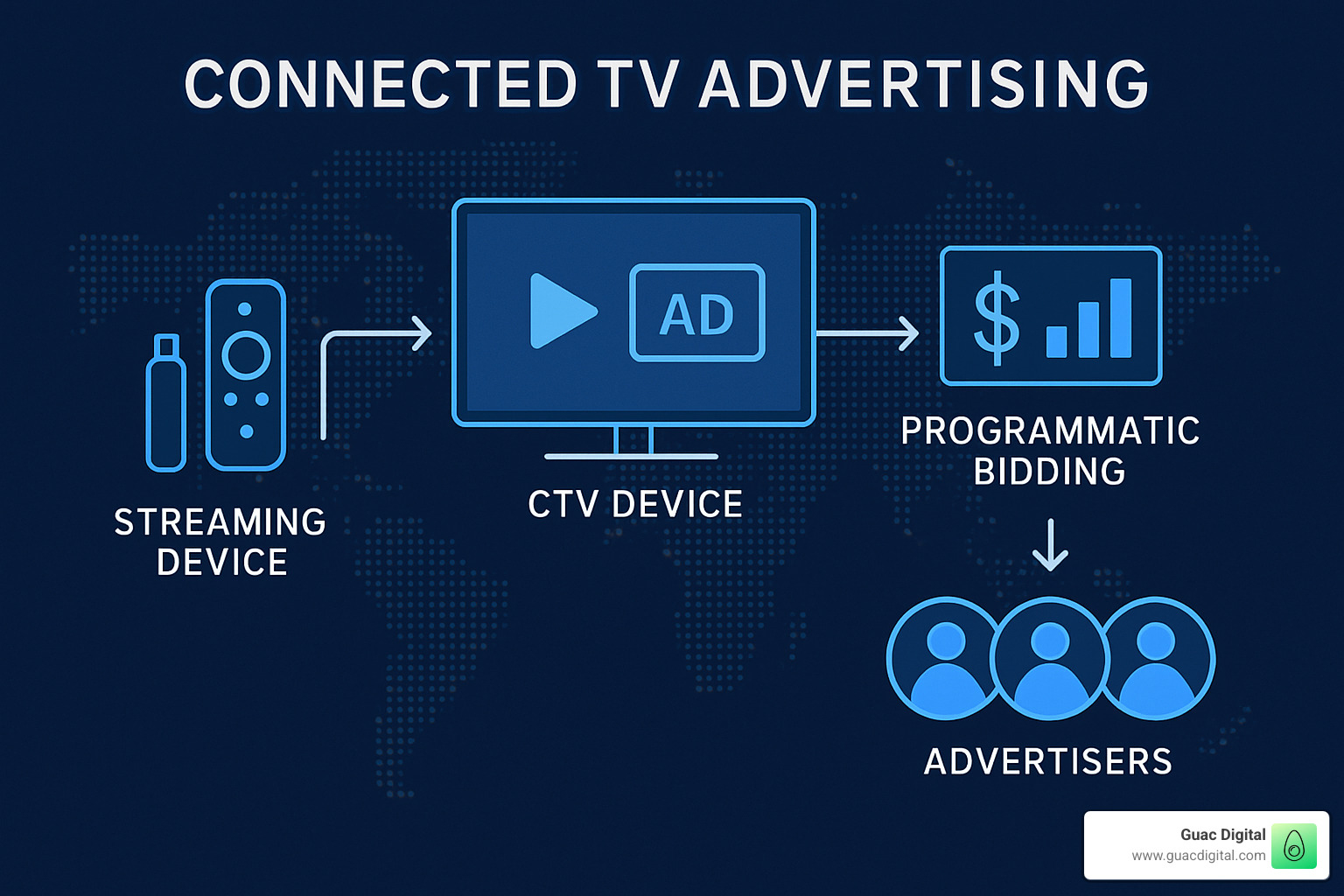
Connected TV (CTV) is booming, with 90% of CTV ad dollars in the US expected to flow through programmatic channels by 2025. This means you can now reach cord-cutters with the emotional impact of TV combined with the precision targeting of digital. It’s the best of both worlds!
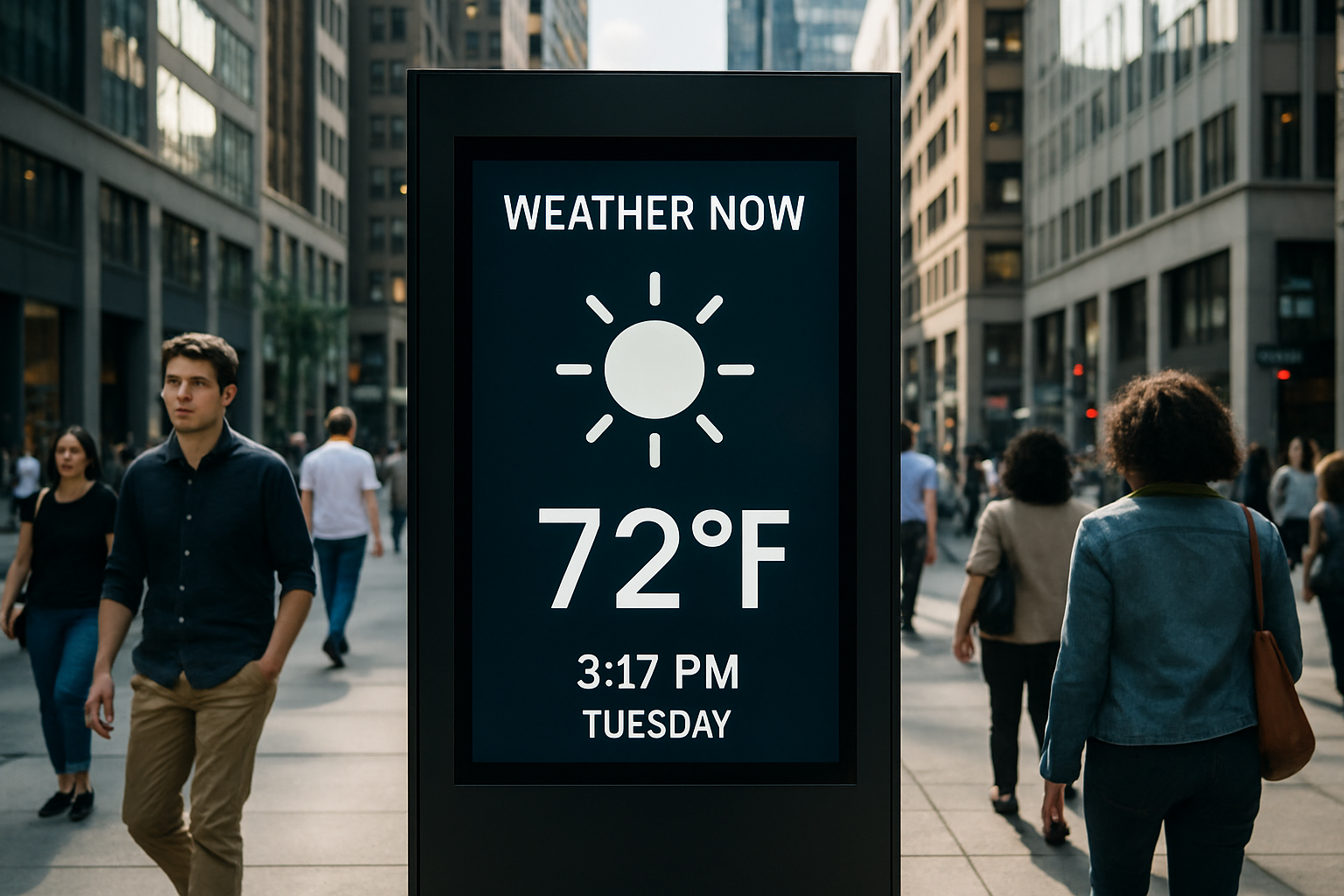
Digital Out-of-Home (DOOH) has transformed traditional billboards into dynamic advertising opportunities. Imagine a billboard that shows different ads based on the time of day, weather conditions, or local events. A coffee shop might promote hot drinks during cold mornings and refreshing iced beverages on hot afternoons. That’s the power of programmatic DOOH!
Audio advertising through programmatic channels reached $1.85 billion in 2024, growing 15.7% year-over-year. This includes streaming music services and podcasts, allowing you to reach audiences during “screenless” moments like commuting, exercising, or cooking.
Native advertising delivered programmatically blends seamlessly with surrounding content, creating a non-disruptive experience that users actually engage with. Industry reports show that native ads see 20% to 60% higher interaction rates than traditional banner ads.
Rich media formats with interactive elements capture attention in ways static ads simply can’t. According to industry data, rich media ads with video drive 6X more visits than static ads. That’s a game-changer for brands looking to stand out in crowded digital spaces.
In-game advertising has evolved far beyond simple banner ads. Today’s programmatic in-game ads include native integrations like virtual billboards in racing games that improve rather than interrupt the gaming experience.
At Guac Digital, we help our Tampa clients develop cross-channel programmatic strategies that reach their audiences wherever they consume content. By orchestrating campaigns across multiple channels, we create seamless brand experiences that drive awareness, consideration, and ultimately, conversion.
Benefits, Costs, Challenges & Future Trends
Programmatic advertising has revolutionized digital marketing, offering game-changing advantages that explain its meteoric rise. But like any powerful tool, it comes with its own set of considerations that smart marketers need to steer.
Key Benefits
Large-scale audience reach is what makes programmatic truly shine. Imagine being able to connect with potential customers across thousands of websites simultaneously while still maintaining laser-focused targeting. This isn’t just about casting a wider net—it’s about casting a smarter one.
Cost efficiency might be the benefit our clients at Guac Digital mention most often. By eliminating manual processes and reducing wasted impressions, every dollar works harder. As one of our marketing directors put it, “We’re no longer paying to reach people who have zero interest in our products. Every impression has at least some relevance to our target audience.”
The power of personalization at scale can’t be overstated. The Amanda Foundation provides a wonderful example—they used programmatic to show different animal shelter ads based on users’ interests. Dog lovers saw dogs needing homes, cat people saw cats, and the specificity went even deeper with breed preferences. This kind of tailoring was once impossible at scale.
Transparency has improved dramatically in recent years. Remember when media buying felt like a black box? Those days are fading. Today’s programmatic platforms show you exactly where your ads appear, what you’re paying, and the results you’re getting—all in real time.
The ability to measure and optimize in real time gives programmatic a tremendous edge over traditional media. When we see something working for our Tampa clients, we can instantly allocate more budget there. If something’s underperforming, we can adjust or pause it immediately—no waiting days or weeks to make changes.
Costs and Pricing Models
Programmatic advertising typically follows a CPM (cost per thousand impressions) model, with prices varying widely based on format and targeting:
- Standard display ads run about $0.50-$2.00
- Video commands higher rates at $10-$30
- Native ads typically fall in the $5-$10 range
- Audio advertising averages $8-$15
- Mobile generally costs $3-$8
For truly premium inventory or highly specific audience segments, expect to pay $50+ per thousand impressions. These might include homepage takeovers on major sites or ads targeting very narrow professional segments.
When budgeting for programmatic, remember to account for the full package:
– The actual media spend for impressions
– Platform fees (typically 10-20% of media spend)
– Data costs if you’re using third-party audience segments
– Creative production and ongoing management
At Guac Digital, we help our clients develop programmatic budgeting strategies that maximize every dollar and deliver measurable returns.
Challenges to Steer
Ad fraud continues to be the industry’s most persistent headache, costing advertisers more than $68 billion globally in 2022. Today’s bots are sophisticated enough to mimic human behavior convincingly, generating fake impressions and clicks that can drain budgets without delivering results.
Brand safety concerns keep marketers up at night, and with good reason. Without proper safeguards, your carefully crafted ad might appear alongside content that undermines or even damages your brand reputation. We’ve all seen the horror stories of premium brands appearing next to objectionable content.
Privacy regulations like GDPR in Europe and CCPA in California have fundamentally changed how advertisers collect and use data. Compliance isn’t optional—it requires careful attention to consent mechanisms and responsible data handling practices.
Perhaps the biggest challenge facing programmatic is the cookieless future. As third-party cookies disappear from browsers, the industry is racing to develop alternative targeting solutions that respect privacy while still enabling personalization.
What is programmatic advertising without third-party cookies?
As cookies crumble, programmatic advertising is evolving in fascinating ways:
First-party data has become digital gold. This information, collected directly from your website visitors, app users, and customers (with their consent), provides a solid foundation for targeting. At Guac Digital, we’re helping our Tampa clients build robust first-party data strategies that will serve them well in this new landscape.
Contextual signals are making a triumphant comeback. Instead of following users around the web, contextual targeting places ads based on the content of the page they’re currently viewing. If someone’s reading an article about mountain bikes, they’ll see ads for cycling gear—simple, effective, and privacy-friendly.
Various identity solutions are emerging to provide cookieless ways of recognizing users across the web:
– Unified ID 2.0 and similar email-based identifiers
– Publisher first-party IDs that work within specific ecosystems
– Probabilistic matching that makes educated guesses based on device characteristics
As one industry expert beautifully put it, “The death of the cookie doesn’t mean the death of personalization. It means we need to be more creative and respectful in how we deliver relevant advertising.”
Programmatic vs Traditional Buying
| Aspect | Programmatic Buying | Traditional Direct Buying |
|---|---|---|
| Negotiation Process | Automated, algorithmic | Manual, human-negotiated |
| Time to Launch | Hours or minutes | Days or weeks |
| Targeting Granularity | Highly specific audience segments | Broad demographic targets |
| Optimization Speed | Real-time | Periodic (weekly/monthly) |
| Inventory Access | Thousands of publishers simultaneously | Limited to directly negotiated deals |
| Minimum Spend | Can start small ($1,000 or less) | Often requires large commitments |
| Reporting | Real-time, granular | Delayed, aggregated |
| Human Resources Required | Minimal for execution, focus on strategy | Significant for negotiation and management |
Emerging Trends to Watch
AI-powered predictive bidding is getting smarter by the day. These sophisticated algorithms can forecast the value of impressions with increasing accuracy, allowing for more efficient budget allocation and higher ROI. We’re seeing some campaigns achieve 30-40% better performance with these advanced bidding strategies.
Attention metrics are adding depth to our understanding of ad effectiveness. Beyond simple viewability, these measure how long users actually look at ads, providing a more meaningful measure of impact. After all, an ad that’s technically “viewable” but ignored isn’t delivering value.
Blockchain technology is showing promise in the fight against ad fraud. By creating transparent, immutable records of ad transactions, blockchain could significantly reduce that $68 billion lost to fraud annually. Several major advertisers are already testing blockchain-verified campaigns.
The rollout of 5G networks will open up new creative possibilities for programmatic advertisers. With dramatically increased bandwidth, we’ll see more sophisticated rich media and video ads that deliver truly immersive experiences without buffering or latency issues.
At Guac Digital, we stay at the forefront of these trends to ensure our Tampa clients benefit from the latest programmatic innovations. We believe the future belongs to marketers who accept both the technology and the human creativity needed to make it truly effective.
Latest research on programmatic share of display spend
Getting Started: Strategy, Measurement & Optimization Best Practices
Ready to dive into programmatic advertising? I’ve helped dozens of businesses steer these waters, and I promise it’s not as intimidating as it might seem. Let’s break down how to launch a campaign that actually delivers results.
Strategic Planning
Before you spend a single dollar, you need to know what you’re trying to accomplish. Goal setting isn’t just a box to check—it’s the compass that will guide every decision you make.
Are you looking to build brand awareness and get your name out there? Or maybe you’re focused on driving conversions and sales? Perhaps you’re somewhere in the middle, working on consideration and engagement? Each of these goals requires a different approach.
I remember working with a Tampa restaurant chain that initially wanted “more customers” but couldn’t articulate what that meant. Once we defined their specific goal—increasing weekday lunch traffic by 20%—everything else fell into place.
Next comes KPI mapping. This is where you connect your business goals to actual numbers you can track. If awareness is your game, you’ll watch impressions and reach. For consideration, click-through rates and time on site become your north star. Conversion-focused? Keep your eyes on cost per acquisition and ROAS.
Audience segmentation is where programmatic truly shines. Instead of blasting your message to everyone, you can target specific groups based on demographics, interests, behaviors, and even where they are in their customer journey. One of our clients, a local jewelry store, saw their engagement rates triple when we started targeting not just “women 25-45” but “women who had recently viewed engagement rings online.”
With dynamic creative optimization (DCO), your ads automatically adapt to whoever’s seeing them. Imagine showing a “Drop a Hint” banner to someone browsing engagement rings, but a “Anniversary Sale” message to someone looking at wedding bands. That’s the power of DCO.
Your bid strategy determines how your DSP values impressions. You might choose fixed CPM bidding for predictable costs, or dynamic bidding to maximize conversions. The right choice depends on your goals and budget.
Don’t forget frequency capping—limiting how often the same person sees your ad prevents annoyance and improves efficiency. Nobody wants to see the same ad 20 times a day (trust me, I’ve seen the data on what happens when you skip this step).
Measurement & Optimization
A/B testing isn’t a one-time thing—it should be ongoing throughout your campaign. Test different creative concepts, audience segments, bidding strategies, and landing pages. One of our Tampa clients finded that changing their call-to-action from “Learn More” to “See Pricing” increased clicks by 37%.
Understanding attribution models helps you see which touchpoints contribute to conversions. Is it the first ad someone sees (first-click)? The last one before they convert (last-click)? Or something more nuanced like time-decay or data-driven attribution? The model you choose affects how you value different channels and tactics.
ROAS tracking measures the revenue generated for every dollar spent. Calculate it by dividing the revenue attributed to advertising by your ad spend. One digital marketer I work with put it perfectly: “Programmatic isn’t ‘set it and forget it.’ The real magic happens when you continuously analyze performance data and make strategic adjustments.”
More info about Programmatic Advertising ROI
Step-by-Step Launch Checklist
Getting started doesn’t have to be overwhelming. Here’s your roadmap:
- Choose your DSP based on your goals, budget, and technical resources
- Upload your creative assets in all required sizes and formats
- Set your campaign budget and bidding parameters
- Implement tracking pixels for conversion tracking and retargeting
- Configure brand safety filters to protect your brand reputation
- Launch your campaign with careful monitoring in the initial hours
- Optimize based on early performance data
That last step is crucial. In the first week of a campaign, we’re constantly adjusting bids for high-performing segments, pausing underperforming placements, and refining targeting parameters. Early optimization can make the difference between a campaign that sings and one that sinks.
At Guac Digital, we handle this entire process for our clients, from selecting the right platform to making those critical optimization tweaks that boost performance.
FAQs – Fast Answers for Marketers
How much does programmatic advertising cost on average?
This is like asking “how much does a car cost?”—it depends on what you’re looking for. Standard display ads typically run between $0.50 and $2.00 CPM (cost per thousand impressions). Premium inventory can jump to $50+ CPM. Video formats usually cost $10-$30 CPM, while native ads range from $5-$10 CPM.
Don’t forget to budget for platform fees (typically 10-20% of media spend), data costs for audience segments, and creative production. We help our Tampa clients develop efficient budgeting strategies that maximize return while keeping costs in check.
Is Google Ads a real DSP?
Yes, but with asterisks. Google Ads functions as a DSP, but it’s like comparing a Swiss Army knife to a professional toolbox. Google Ads gives you access to Google’s own inventory (Google Display Network, YouTube, etc.) but lacks the breadth that independent DSPs offer.
Third-party DSPs connect to multiple ad exchanges, opening doors to a much wider range of publishers. They typically offer more advanced targeting, bidding, and optimization capabilities too.
For most of our clients with substantial budgets, we recommend using both Google Ads and an independent DSP as part of a comprehensive strategy. It’s not either/or—it’s both/and.
Can programmatic work for B2B campaigns?
Absolutely! B2B campaigns face unique challenges—smaller audience pools and longer sales cycles—but programmatic can be incredibly effective when done right.
The key is being strategic: leverage intent data to identify companies actively researching solutions, target specific industries and job titles, and use contextual targeting to reach professionals consuming relevant content. Many of our B2B clients have found success with account-based marketing (ABM) strategies that target specific companies.
Content-driven campaigns work particularly well in B2B, where delivering value throughout the buyer journey helps establish expertise and trust. One of our Tampa tech clients generated 43% more qualified leads after switching from traditional display to a programmatic approach focused on decision-makers in their target industries.
Conclusion
Programmatic advertising has truly transformed the digital marketing landscape. What was once a world of manual negotiations and educated guesses has evolved into a sophisticated ecosystem powered by automation, real-time data, and AI-driven decision making. The beauty of this revolution is that it’s accessible to everyone—from the local Tampa coffee shop to multinational corporations—allowing businesses of all sizes to reach precisely the right audiences at the right moments.
Throughout this guide, we’ve steerd the sometimes complex waters of the programmatic world together. Yes, there are multiple platforms, various deal types, and numerous targeting strategies to consider, but with the right approach, these complexities become powerful tools in your marketing arsenal.
At Guac Digital, we’ve seen how transformative programmatic can be for our clients. One Tampa retailer we work with increased their conversion rate by 43% after switching from traditional display buying to a programmatic approach that leveraged their first-party customer data. The campaigns not only performed better—they required less day-to-day management, freeing up valuable time for strategic thinking.
The programmatic landscape continues to evolve at breathtaking speed. AI and machine learning are making bidding strategies smarter every day. Blockchain technology is addressing long-standing concerns about transparency and fraud. The rollout of 5G networks is opening up new creative possibilities that were technically impossible just a few years ago. And as third-party cookies phase out, innovative solutions for identity and targeting are ensuring that programmatic remains effective while respecting consumer privacy.
Whether you’re taking your first steps into programmatic advertising or looking to fine-tune your existing campaigns, you don’t have to go it alone. Our team at Guac Digital brings both technical expertise and creative thinking to every client relationship. We believe in personalization—not just in the ads we deliver to consumers, but in how we work with each business to craft strategies that align with their unique goals, audience, and brand voice.
The programmatic journey is exciting, and the potential ROI is substantial. When implemented strategically, these campaigns don’t just deliver impressions and clicks—they drive real business outcomes that impact your bottom line.
Ready to harness the power of programmatic advertising for your business? Our Tampa-based team would love to chat about how we can help you achieve exceptional results through data-driven, strategically sound programmatic campaigns.