
Why Conversion Rate Optimization Tools Are Essential for Growth in 2025
Conversion rate optimization tools are software platforms that help businesses turn more website visitors into customers by analyzing user behavior, testing website changes, and enhancing user experience.
If you’re looking for the best conversion rate optimization tools in 2025, these are your top options right now:
| Tool Name | Best For | Key Features |
|---|---|---|
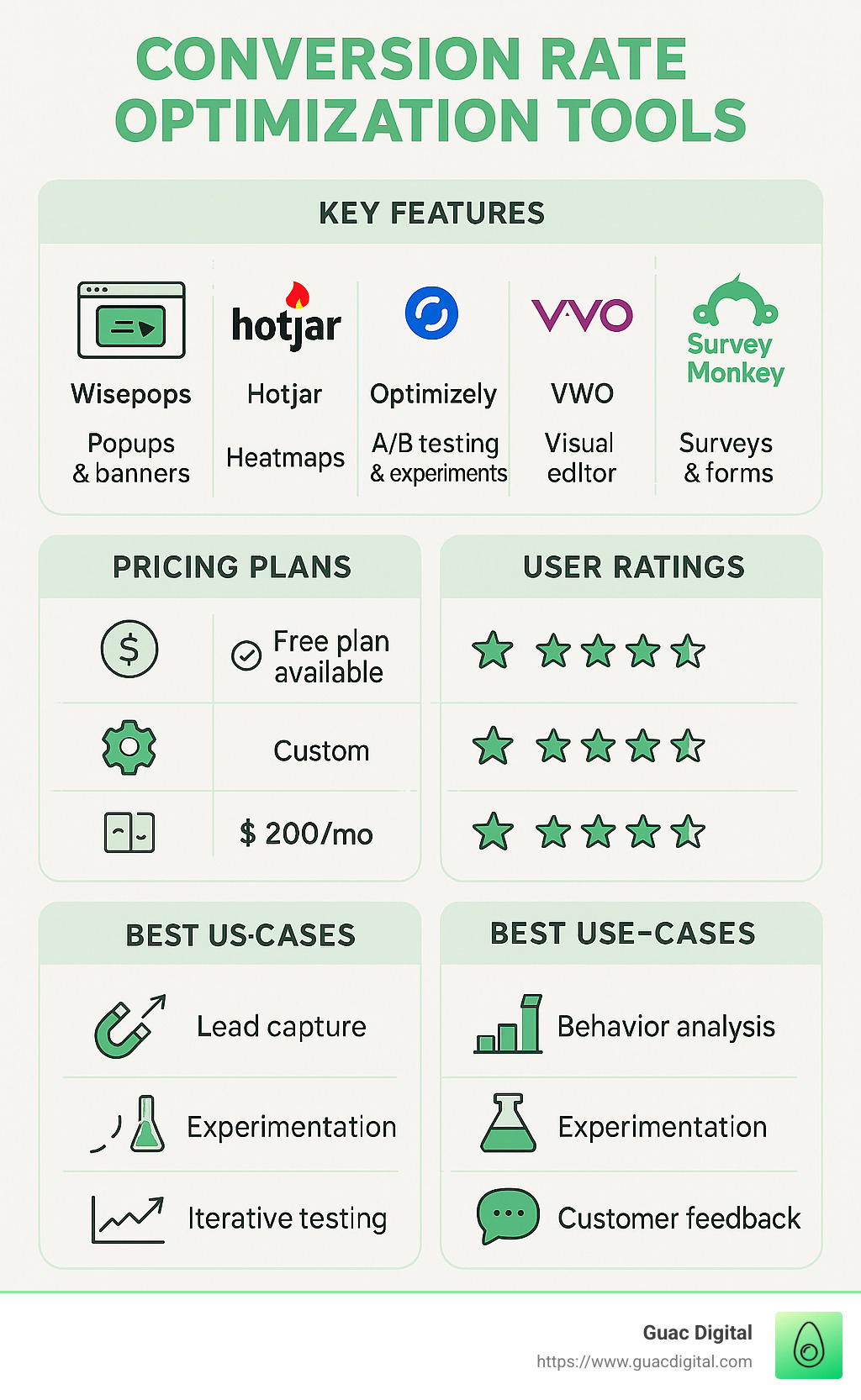
| Wisepops | Personalized Messaging & Lead Capture | A/B testing, AI-driven personalization, advanced targeting |
| Hotjar | User Behavior Analytics | Session recordings, heatmaps, user feedback surveys |
| Optimizely | Advanced A/B Testing & Experiments | Multivariate tests, personalization, analytics integration |
| VWO | Comprehensive CRO Suite | Funnels, heatmaps, A/B testing, AI-powered insights |
| SurveyMonkey | User Feedback Collection | Custom surveys, quizzes, and feedback forms |
Businesses today lose enormous revenue to poor website experiences and low conversion rates. In fact, the average conversion rate across industries sits around just 2–5%. Yet, successful businesses grow rapidly by investing in conversion optimization, continuously improving how visitors interact with their websites.
I’m Guy Leon, and as founder of Guac Digital, I’ve guided dozens of clients to significant growth—often by deploying and leveraging powerful conversion rate optimization tools. I’ve helped companies boost their conversion rates by up to 350% through targeted experimentation and analytics, and now I’m here to help you achieve similar results.
To help you visualize the CRO landscape today, here’s a useful infographic:
Conversion rate optimization tools terms to know:
– conversion optimization for ecommerce website
– conversion optimized website
– how to optimize website for conversions
Understanding Conversion Rate Optimization Tools
Conversion Rate Optimization (CRO) might sound complicated—but it’s really just about making your website better at turning visitors into customers. Whether you want your visitors to buy something, sign up for your newsletter, or fill out your contact form, CRO helps you make that happen more often.
So, how exactly do conversion rate optimization tools fit into the picture?
Think of these tools as your friendly digital detectives. They dig through user data, uncover clues about visitor behavior, and pinpoint exactly what’s stopping users from converting. With this insight, you can confidently make smart changes and watch your conversion rate climb.
At Guac Digital, we often remind our clients, “Even the best conversion rate optimization tools won’t magically boost your conversions overnight—you need a solid strategy.” Tools give you valuable data and testing capabilities, sure—but it’s up to you (or an experienced digital marketing agency—hint hint) to interpret the results and make winning decisions.
Types of CRO Tools
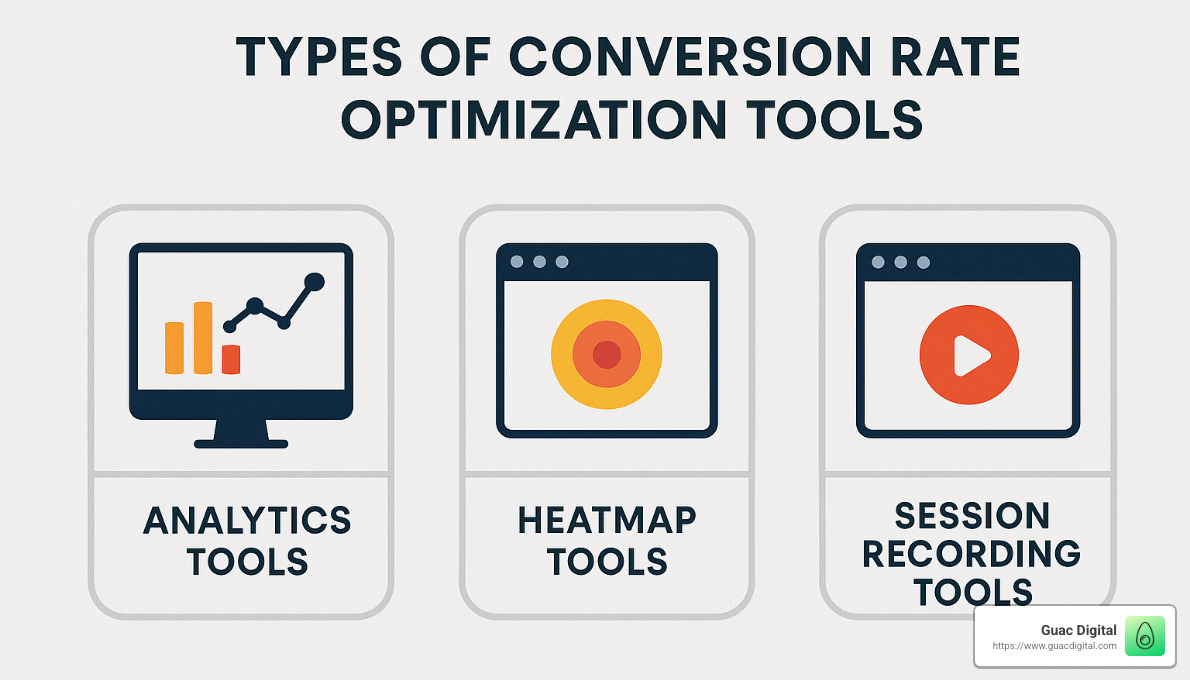
There’s a whole universe of CRO tools, and each type plays a different role in optimizing your conversions. Let’s break down the main ones you’ll often encounter:
First up are analytics tools. These platforms crunch numbers to reveal key insights about your users—like which pages they visit most, how long they stick around, and where visitors typically leave your site. This quantitative data is the backbone of any good CRO strategy.
Next, you have heatmap and session recording tools such as Hotjar and Crazy Egg. These visually show you how visitors interact with your website, highlighting exactly where they click, how far they scroll, and any frustrating spots where they’re getting stuck. (It’s like spying—but completely legal and very helpful!)
Another powerful option is A/B testing and experimentation tools like Optimizely and VWO. These let you test different versions of your pages with real users to see which one converts best. It takes the guesswork out of optimization decisions.
Survey and feedback tools, such as SurveyMonkey, give you direct insight from your customers. By asking thoughtful questions, you uncover exactly what users think, need, and want—straight from the source.
Then, there are specialized form analytics tools, which analyze how your visitors interact with your website forms. They’ll show you exactly where people abandon forms, so you can fix the issue and boost conversions.
You also have personalization engines like Wisepops, which dynamically tailor your site content to match visitor preferences, behavior, or demographics. (Think “Netflix recommendations,” but for your website!)
Finally, landing page builders make it incredibly easy to create beautiful, high-converting landing pages without needing a developer. (We promise your developers won’t mind.)
Here’s a helpful visual overview breaking down these different CRO tool categories:
According to our research at Guac Digital, businesses that actively use CRO tools typically see an average ROI boost of around 223%. That’s a lot of extra revenue just waiting to be opened up!
We’ve witnessed the power of CRO right here in Tampa, Florida. One of our local e-commerce clients started with a conversion rate of just 1.8%. After using the comprehensive conversion rate optimization tools stack we recommended, their conversions jumped to 4.2% in just three months. That’s an impressive 133% improvement—and more importantly, a happy client with significantly increased sales.
Ready to see similar results for your business? The right CRO tools can make all the difference—just ask your friendly neighborhood digital agency (that’s us!) at Guac Digital.
Key Features to Look for in Conversion Rate Optimization Tools
When you’re ready to choose the right conversion rate optimization tools for your business, it can feel a bit like shopping for a new car—exciting, a little overwhelming, and full of features you may not even know you needed. To help you steer this decision confidently, we’ve narrowed down the key features that’ll really drive your conversions higher (pun absolutely intended).
At Guac Digital, we’ve tested dozens of CRO tools with our clients, and we’ve finded what separates a good tool from a truly fantastic one. Here’s what to look out for:
User Behavior Analytics
If you want to improve your website, you first need to understand how visitors interact with it. A great CRO tool should offer comprehensive user behavior analytics so you can identify exactly where visitors get stuck or lose interest.
Heatmaps deliver visual cues that show you where visitors click, how far they scroll, and what catches their eye. Session recordings act like your own personal (and totally legal) surveillance system by replaying actual user visits, revealing where visitors get frustrated or confused. Funnel analysis helps you follow your visitors’ digital footprints through your conversion path, identifying exactly where they drop off.
As we often tell our Guac Digital clients, understanding user behavior with these analytics is like secretly reading your visitors’ minds—without the creepy factor.
A/B Testing Capabilities
To refine your website effectively, you’ll need to test different approaches. That’s where A/B testing (or split testing) comes into play. This lets you experiment with variations of your webpages, emails, or forms to pinpoint exactly what’s resonating with users—and what’s not.
Top-notch CRO tools should include easy-to-use visual editors that let you whip up test variations without calling in the tech team. They should also feature built-in statistical significance calculators, ensuring you’re making decisions based on trustworthy data, not guesswork. Multivariate testing capabilities will let you try multiple page elements simultaneously, while segmentation tools allow you to test versions on specific audience groups.
The ability to test, refine, and perfect your pages is your secret weapon to consistently higher conversion rates.
Personalization Features
In 2025, personalization isn’t just nice to have—it’s expected. Today’s customers expect experiences custom just for them. So your chosen CRO tools should come equipped with powerful personalization features.
Dynamic content that adapts based on a user’s past behavior, demographics, or interests is essential. Behavioral targeting lets you deliver targeted messages or offers at exactly the right moments. And modern tools with AI-driven recommendations can truly wow your visitors, serving up content, products, or offers uniquely matched to their preferences and previous interactions.
Considering that 91% of customers say they’re more likely to shop with brands offering personalized experiences, this isn’t something you’ll want to overlook.
Integration with Existing Platforms
Imagine choosing the perfect CRO tools—only to find they’re a total nightmare to integrate with your current tech setup. Avoid this headache by selecting tools that integrate effortlessly with your existing platforms.
Your ideal CRO toolkit should smoothly connect with your CRM, allowing insights gathered about your visitors to enrich your customer data. Analytics platform compatibility (especially with essentials like Google Analytics) should be seamless, ensuring accurate measurement and reporting. They should also work nicely alongside your marketing automation platforms, streamlining workflows and making your job easier. For e-commerce businesses, direct integration with platforms like Shopify or WooCommerce ensures you can track sales and revenue without hassle.
Data Privacy and Security
In today’s digital landscape, data privacy and security aren’t just good practice—they’re non-negotiable. Your customers trust you with their data, and your CRO tools should help you maintain that trust by complying with data privacy laws like GDPR and CCPA.
Ensure the tools you’re evaluating offer consent management features and data anonymization to keep user data safely protected. Secure data storage with proper encryption and clear processes for data export or deletion (when a visitor requests it) are also critical.
When your audience feels safe browsing your site, they’re far more likely to stay—and convert.
Here’s a quick comparison table to help you see how some top conversion rate optimization tools stack up on these key features:
| Feature | Wisepops | Hotjar | VWO | Google Analytics | Optimizely |
|---|---|---|---|---|---|
| Heatmaps | ✓ | ✓ | ✓ | Limited | ✓ |
| Session Recording | ✓ | ✓ | ✓ | ✗ | Limited |
| A/B Testing | ✓ | ✗ | ✓ | Limited | ✓ |
| Personalization | ✓ | ✗ | ✓ | Limited | ✓ |
| Form Analytics | ✓ | ✓ | ✓ | Limited | ✓ |
| Survey Tools | ✓ | ✓ | ✓ | ✗ | ✗ |
| GDPR Compliance | ✓ | ✓ | ✓ | ✓ | ✓ |
| Free Plan Available | ✓ | ✓ | ✗ | ✓ | ✗ |
At Guac Digital, we’ve found the most successful CRO strategies tap into a combination of these powerful features. We’ve helped our clients achieve impressive conversion rate boosts—often seeing improvements of 30% or more in just a matter of months.
Finding the right conversion rate optimization tools isn’t about choosing the flashiest options. It’s about selecting those offering the functionality that aligns with your goals, integrates easily into your workflow, and fits your budget.
When in doubt, ask yourself: Does this tool genuinely help me understand and delight my site visitors better? If the answer is an enthusiastic “Yes!” you’re probably onto a winner.
Top 12 Conversion Rate Optimization Tools for 2025
Choosing the right conversion rate optimization tools can feel overwhelming—there are dozens of options available, each promising great results. But don’t worry, we’ve done the homework for you! At Guac Digital, we’ve tested, tried, and narrowed it down to the 12 best tools that’ll help your business thrive in 2025. Here they are, in no particular order (because they’re all fantastic in their own way!).
1. Wisepops
Wisepops is a standout among conversion rate optimization tools, offering features that make it easy for businesses to run advanced experiments, capture leads, and deliver personalized marketing messages.
Its dynamic content capabilities let you display targeted messages custom to each visitor. With robust A/B testing, quickly identify what resonates best with your audience. Wisepops integrates beautifully with major platforms, making it effortless to incorporate into your existing marketing workflows.
A unique highlight is Wisepops’ innovative AI Wishlist feature, giving your visitors exactly what they’re looking for—even if they don’t know it yet!
Here’s what one happy user had to say:
“Wisepops helped me in many ways. I increased my conversion rate with marketing messages displayed at the right moment thanks to their targeting options…” —Alexander B., Trustpilot
Want to give it a try yourself? Get started with a free trial of Wisepops.
2. Hotjar
Ever wish you could look over your customers’ shoulders as they browse your site (without being creepy)? Hotjar lets you do just that—virtually, of course.
With its popular heatmaps, session recordings, and user feedback tools, Hotjar gives you both quantitative and qualitative user data at your fingertips. Trusted by over 1.3 million websites, it’s a must-have tool for understanding visitor behavior.
3. Optimizely
Looking for enterprise-level experimentation capabilities? Optimizely is your friend. It’s a powerful A/B testing and experimentation platform that lets you run multivariate tests with ease.
Optimizely shines with its real-time analytics and seamless integrations with popular CMS and e-commerce platforms. It’s perfect for marketers who love experimenting—and learning exactly what works (and what doesn’t).
Ready to experiment? Find Optimizely today.
4. VWO
VWO (Visual Website Optimizer) is the Swiss army knife among conversion rate optimization tools. With comprehensive testing features like A/B testing, heatmaps, funnels, and AI-powered insights, VWO covers all your CRO needs in one handy platform.
Users enjoy VWO’s friendly interface and actionable data, making it simple to spot what’s hurting your conversions and fix it fast.
5. SurveyMonkey
Feedback is priceless, and SurveyMonkey helps you collect and analyze it quickly. Offering surveys, quizzes, and forms, it’s a fantastic tool for understanding what your customers really think (even if sometimes that hurts!).
Use SurveyMonkey to boost your CRO strategy by pinpointing problems directly from your customers. It’s easy to integrate with your existing marketing tools, keeping everything conveniently connected.
Start building better experiences with SurveyMonkey.
6. HubSpot
You probably already know HubSpot as an all-in-one marketing powerhouse, but did you realize it’s also fantastic for optimizing conversions? HubSpot gives you a complete CRO toolkit, including marketing automation, CRM, landing page builders, and built-in A/B testing.
Its advanced AI-powered content creation and analytics dashboards offer deep insights into customer behavior, making optimization a breeze.
7. Google Analytics
Google Analytics might seem like a basic tool, but it’s one of the most powerful (and free!) tools available for tracking website performance and user behavior.
Use Google Analytics to identify conversion bottlenecks, see exactly where visitors drop off your funnel, and combine data with other CRO tools for maximum impact. It’s the perfect starting point for businesses dipping their toes into conversion optimization.
Start using the power of Google Analytics today.
8. Crazy Egg
Crazy Egg helps visualize how your visitors interact with your website using intuitive visual data, including heatmaps, scroll maps, and click-tracking.
It also offers handy A/B testing tools. Crazy Egg makes it easy to test new layouts, buttons, or CTAs and quickly see what drives conversions.
Check out Crazy Egg to start optimizing your site visually.
9. Kissmetrics
Want to understand your customers’ entire lifecycle journey? Kissmetrics has you covered. This tool provides powerful insights through funnel analysis and cohort reports, allowing you to personalize your marketing strategies and optimize campaign ROI.
It’s ideal for businesses looking to dive deeper into customer behavior and drive long-term growth.
Get closer to your customers with Kissmetrics.
10. Mixpanel
Another fantastic user analytics tool, Mixpanel focuses specifically on product analytics and user behavioral tracking. It’s great for analyzing conversion funnels, user segmentation, and even predicting user behavior with predictive analytics.
If real-time analysis and user behavior insights are your priority, Mixpanel could be your new best friend.
11. Unbounce
Need a high-converting landing page? Unbounce is a marketer’s dream, offering an intuitive drag-and-drop landing page builder, built-in A/B testing, and cutting-edge AI copywriting tools.
It integrates smoothly with your existing marketing stack and lets you create stunning, effective landing pages—fast.
12. Convert
Convert is a robust, enterprise-grade A/B testing platform suited for businesses serious about CRO. With advanced targeting, real-time reporting, and smooth onboarding, Convert makes running complex tests feel simple.
Here’s what one satisfied user said:
“Convert allows us to use data from our website visitors to not only better define our customers’ interests but also build a better product.”
Explore Convert for a powerful testing experience.
At Guac Digital, we’ve personally used and recommended these conversion rate optimization tools to our clients and seen impressive results. Whether you’re just starting your CRO journey or looking to upgrade your existing toolkit, these are the best tools to help your business thrive in 2025 and beyond!
1. Wisepops
Wisepops has truly emerged as one of the most versatile conversion rate optimization tools available today, especially for businesses that want to level up their lead capture game and implement smarter marketing personalization.
What makes Wisepops special in the crowded CRO landscape of 2025? It’s the perfect blend of powerful functionality wrapped in an intuitive interface that doesn’t require a tech degree to master. The platform lets you create eye-catching popups, banners, and on-site messages that actually convert visitors instead of annoying them.
Why Wisepops is a Leading Conversion Rate Optimization Tool
When we recommend Wisepops to our clients at Guac Digital, we’re always impressed by how quickly they see results. The platform’s strength comes from several key capabilities that make it stand out:
Dynamic Content is perhaps my favorite feature. Instead of showing the same generic message to everyone, Wisepops lets you display different content based on who’s visiting. Shopping behavior, location, device type, time spent on page—all these factors can trigger personalized messages that feel relevant rather than random. We’ve seen conversion rates jump by 15-20% just by implementing this targeted approach.
The AI Wishlist Feature takes personalization to another level. This clever bit of AI magic analyzes visitor behavior and recommends products they’re most likely to purchase. One of our Tampa-based retail clients implemented this feature and saw a 5% boost in sales almost immediately. It’s like having a digital sales assistant who knows exactly what each customer wants.
Integration with Major Platforms makes Wisepops play nicely with practically everything in your tech stack. Whether you’re using Shopify, Magento, HubSpot, or dozens of other platforms, Wisepops connects smoothly without causing technical headaches. This seamless integration is something our clients particularly appreciate—no one wants another siloed tool that creates more work.
I was particularly impressed when working with a local Tampa boutique that used Wisepops to create a simple exit-intent popup offering a 10% discount. Not only did they capture 300+ email addresses in the first week, but they tracked over $4,000 in sales directly from that campaign. Small investment, significant return.
Alexander B., a verified Trustpilot user, puts it perfectly:
“Wisepops helped me in many ways. I increased my conversion rate with marketing messages displayed at the right moment thanks to their targeting options… Last but not least, it integrates very well within my stack.”
What I love about Wisepops is that it doesn’t just focus on capturing emails (though it does that exceptionally well). The platform genuinely helps create meaningful touchpoints throughout the customer journey. Whether it’s highlighting limited-time offers, showcasing new products, or simply guiding visitors to relevant content, Wisepops turns passive browsers into active participants.
And the best part? You don’t need to be a conversion expert to see results. The platform’s intuitive dashboard and template library make it accessible for businesses of any size. That’s why we’ve made it a core recommendation in our conversion rate optimization tools stack at Guac Digital.
2. Hotjar
When it comes to getting to know your website visitors better, Hotjar is like that friend who always spots the things you miss. As one of today’s favorite conversion rate optimization tools, Hotjar takes the guesswork out of understanding how visitors interact with your site.
Instead of just showing you numbers and graphs, Hotjar uses visual tools to help you actually see what visitors are doing. Think of it as looking over your users’ shoulders (without the creepiness factor, of course!). With easy-to-grasp heatmaps, session recordings, surveys, and more, Hotjar offers both the numbers and the human insights you need to improve conversions.
Hotjar: A Must-Have Conversion Rate Optimization Tool
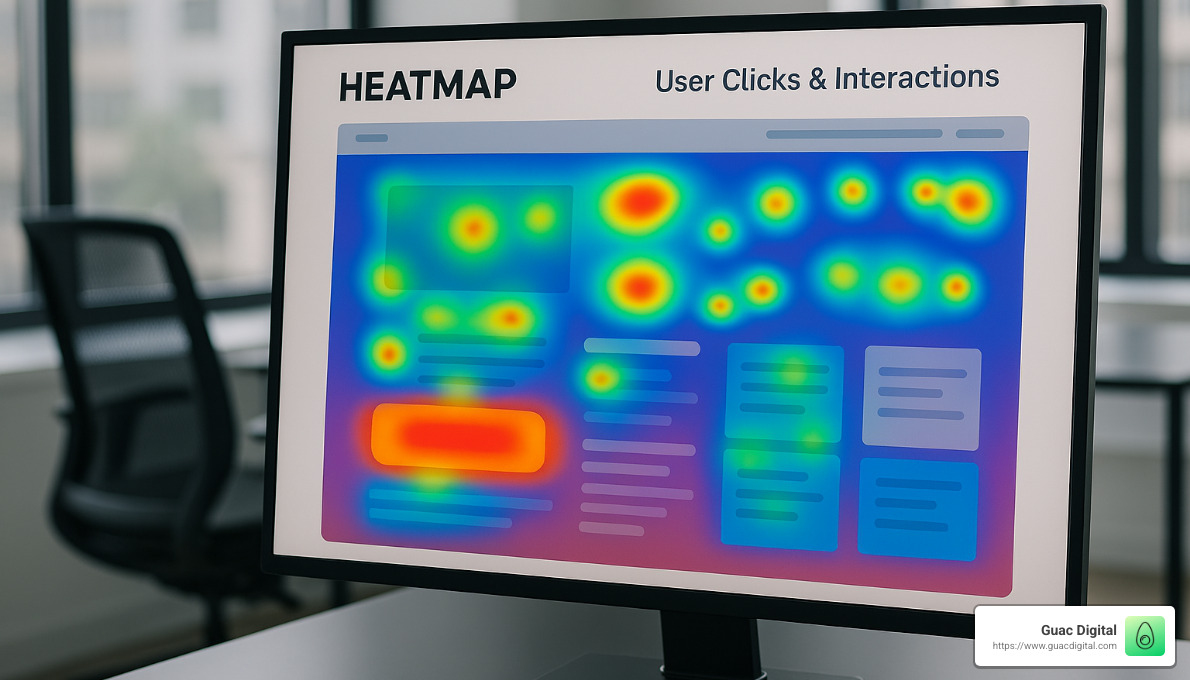
One of Hotjar’s most beloved features is its heatmaps. These handy visuals show you exactly where your visitors click, how far they scroll, and where their mouse hovers most often. Ever wondered if users really notice your carefully designed call-to-action button? Hotjar heatmaps will quickly let you know whether it’s getting love or being overlooked.
Hotjar goes even further with session recordings, which function a bit like instant replays. You can watch real visitor sessions play out, seeing where users get stuck and what might be confusing. It’s the closest you’ll get to being inside your visitors’ heads—minus the mind-reading superpower.
To dig deeper into the “why” behind user actions, Hotjar provides feedback polls and surveys. With these intuitive tools, you can ask your visitors directly what’s working, what isn’t, and how they’d like their experience improved.
And if forms are central to your business (think checkouts or lead generation forms), Hotjar’s form analytics can be a game-changer. It pinpoints exactly where users drop off, helping you fix frustrating areas and rescue potential conversions.
Today, over 1.3 million websites trust Hotjar, and it’s easy to see why. Its approachable and user-friendly dashboard makes powerful insights accessible to any business—no Ph.D. in analytics required!
At Guac Digital, we’ve personally seen the impact Hotjar can have. For example, one of our financial services clients struggled with a multi-step application form. Session recordings revealed users dropping off repeatedly at the same confusing step. After a quick redesign based on Hotjar insights, the form completion rate jumped a whopping 34%.
When attention spans are shrinking and user expectations are rising, tools like Hotjar become your secret weapon. Because sometimes seeing is not just believing—it’s converting.
3. Optimizely
When it comes to running thoughtful, data-driven experiments that boost your conversions, Optimizely is one of those conversion rate optimization tools that truly shines. It’s a heavyweight in the experimentation and personalization arena, ideal for businesses looking to scale their optimization efforts and make every decision count.
As an enterprise-grade platform, Optimizely goes way beyond basic A/B testing. It lets you perform sophisticated experiments, including multivariate testing, feature experimentation, and personalized experiences custom specifically to your visitors. Whether you’re an e-commerce giant or a growing business with a complex digital setup, Optimizely gives you the tools you need to confidently test and implement changes.
Optimizely’s Role in Conversion Optimization
What truly sets Optimizely apart is its comprehensive approach to experimentation. Rather than just tweaking button colors or images, you can test entirely new features and functionality before rolling them out site-wide. This feature experimentation helps you avoid costly mistakes and ensures you’re delivering experiences your visitors really want.
Another standout benefit of Optimizely is its real-time analytics. With instant insights into how your tests are performing, you don’t have to wait weeks or months to make informed decisions. Instead, you can quickly identify winning variations, implement improvements, and watch your conversions climb.
Optimizely also seamlessly integrates with your existing content management systems (CMS) and e-commerce platforms, making it easy to implement even in complex digital ecosystems. This way, you won’t have to reinvent the wheel—or your entire website—to start running powerful experiments.
Advanced targeting and segmentation capabilities are another reason marketers love Optimizely. You can create highly personalized experiences by targeting specific user groups based on behavior, demographics, or other key attributes. After all, when you understand exactly who your visitors are, it’s easier to give them exactly what they’re looking for.
Plus, Optimizely supports server-side testing, a capability many other tools lack. This allows you to run more complex experiments that affect your website’s core functionality, giving you deeper insights and greater flexibility in your optimization approach.
At Guac Digital, we’ve had some great success stories implementing Optimizely for our enterprise clients. One of our partners in the healthcare industry dramatically improved their patient portal experience. By testing different user journeys with Optimizely, they saw a 27% increase in appointment bookings—and plenty of happy patients, too.
Additionally, Optimizely leverages Bayesian statistics to deliver faster, more reliable test results. This helps you make confident, data-backed decisions without needing massive traffic volumes or long testing periods—perfect for businesses eager to move quickly.
If you’re serious about conversion optimization and looking for a robust, scalable solution, Optimizely is definitely worth exploring.
4. VWO
Visual Website Optimizer (VWO) has earned its spot as one of the most robust and user-friendly conversion rate optimization tools available in 2025. With its powerful yet intuitive suite of features, VWO helps businesses of all sizes turn website visitors into loyal customers through targeted, data-driven experiments.
At Guac Digital, we’ve seen how VWO simplifies the entire optimization process, putting powerful functionality within reach—even if you’re not exactly a tech wizard. Whether you’re new to CRO or an experienced marketing professional, VWO’s intuitive interface and clear reports make it easy to run meaningful tests and uncover valuable insights about your website visitors.
Enhancing Conversions with VWO
Think of VWO as your all-in-one CRO command center. It combines everything you need to improve conversions—A/B testing, multivariate testing, split URL testing, and even advanced personalization capabilities—into one streamlined platform.
One thing we particularly love here at Guac Digital is VWO’s AI-powered insights. It doesn’t just throw data at you; it actively helps you spot high-impact testing opportunities and suggests smart optimizations. This takes much of the guesswork out of prioritizing your experiments, so you can focus on what really moves the needle.
Beyond testing alone, VWO also offers built-in visual analytics like heatmaps and session recordings to better understand user behavior. These visual tools clearly show you areas of friction where users hesitate or drop off. By pairing testing with behavioral data, your experiments become even more powerful, targeted, and effective.
For businesses concerned about managing multiple platforms, VWO stands out for its integrated analytics. There’s no need to switch back and forth among different tools—everything you need for analysis and reporting lives right there on your dashboard. Plus, the platform integrates smoothly with your existing CMS, analytics tools, and ecommerce systems, making it a seamless addition to your marketing tech stack.
Larger businesses and enterprise teams will appreciate VWO’s thoughtful, enterprise-grade features like test scheduling, role-based access control, and advanced integration capabilities. This makes collaboration easy and ensures your data stays secure and organized, no matter how large your organization grows.
In fact, a senior product manager at a major e-commerce brand recently told us, “I really like that we can use the platform across every department. It’s user-friendly, straightforward, and test results are easily comprehensible even for non-testing individuals.“
Here at Guac Digital, we’ve helped many clients leverage VWO to boost their results significantly. One Florida-based retail client saw their product page conversion rates jump by 15% after running just a few targeted tests on the platform. And as their conversions climbed, they saw a healthy boost in their average order value too.
If you’re looking for a solution that takes care of every step in your CRO journey—from forming hypotheses and running experiments, to analyzing results and implementing changes—VWO might just be your new best friend.
5. SurveyMonkey
When it comes to understanding your audience’s wants, needs, and frustrations, nothing beats simply asking them directly—and that’s exactly what makes SurveyMonkey one of the most valuable conversion rate optimization tools around.
SurveyMonkey helps you quickly create engaging surveys, quizzes, and feedback forms, letting you tap right into your visitors’ thoughts. Instead of guessing why people bounce off your site or abandon their carts, you can collect real, actionable insights straight from the source.
Leveraging SurveyMonkey for CRO
One of SurveyMonkey’s biggest charms is its simplicity. You don’t need a tech wizard or advanced coding skills to start gathering customer insights. With its friendly interface, crafting professional-looking surveys takes just minutes—even your intern can do it (no offense to interns!).
Wondering why visitors keep leaving your checkout page? Or curious about what holds people back from booking a consultation? With SurveyMonkey, you can easily collect customer feedback at key points in your sales funnel. This helps you identify exactly what’s causing friction or confusion, and then quickly tackle those specific issues.
Beyond just collecting feedback, SurveyMonkey lets you measure overall user satisfaction using standardized metrics like Net Promoter Score (NPS), Customer Satisfaction Score (CSAT), and Customer Effort Score (CES). These metrics paint an accurate picture of how happy (or frustrated) your visitors are, giving you powerful benchmarks to track improvements over time.
Another standout feature is SurveyMonkey’s seamless integration with other marketing and CRM tools. By connecting it with your existing email marketing software or customer relationship platform, you can automatically collect feedback at strategic moments—like after a purchase or support interaction. This helps you stay on top of user sentiment without lifting a finger.
SurveyMonkey also lets you dig deeper with segmented analysis. Want to see feedback specifically from first-time visitors, or maybe returning customers who’ve spent over $100? You can easily sort responses by user demographics, behaviors, or shopping habits, highlighting valuable opportunities for targeted improvements.
One clever tactic our team at Guac Digital loves is using SurveyMonkey for exit-intent surveys. Right as visitors are about to leave your website, a simple, friendly pop-up can ask them why they’re leaving. This typically uncovers some eye-opening insights—whether users found your pricing confusing, encountered technical glitches, or simply weren’t finding the information they needed.
In fact, we’ve seen how powerful this approach can be. One of our SaaS clients was stumped by high abandonment rates on their pricing page. After running a quick SurveyMonkey survey, we learned visitors felt overwhelmed by the complexity of their pricing structure. By simplifying and clarifying that page based on user feedback, our client saw a 23% increase in conversions practically overnight.
At Guac Digital, we’re firm believers in combining qualitative feedback from SurveyMonkey with quantitative data from other conversion rate optimization tools such as Hotjar or Google Analytics. Quantitative data shows you where users are struggling, while qualitative insights reveal why they’re struggling. When used together, these insights can truly transform your website conversions and drive meaningful business growth.
6. HubSpot
HubSpot started as a marketing automation solution, but today it’s one of the most powerful conversion rate optimization tools available. It’s an all-in-one platform that helps you attract visitors, delight prospects, and convert leads into loyal customers—all from one convenient place.
What makes HubSpot particularly appealing is how smoothly it integrates CRO tools with its built-in CRM, marketing automation, and sales features. Instead of optimizing a single landing page or campaign in isolation, HubSpot lets you optimize every step in your customer’s journey, from their first click to their latest repeat purchase.
Check out HubSpot’s Starter Platform to see how it might fit into your business.
HubSpot as a Conversion Rate Optimization Tool

When clients at Guac Digital ask us about HubSpot, we often say, “It’s kind of like having a Swiss Army knife for your digital marketing.” You have everything you need—right when you need it.
One of our favorite features is A/B testing landing pages. You can create multiple versions of a page to easily find out which design, messaging, or layout converts visitors most effectively. No more guesswork or gut feelings—make smart, data-driven decisions.
Another standout feature is HubSpot’s AI-powered content creation. With artificial intelligence guiding your content strategy, you’ll find the right messaging and topics your visitors actually care about, resulting in higher engagement and conversions.
Smart forms and progressive profiling are other game-changers. These forms dynamically adjust based on what you already know about the visitor. If someone previously shared their email and company size, HubSpot can hide those fields next time—reducing friction and increasing form submissions.
HubSpot also gives you valuable conversion analytics right at your fingertips. You can easily track how your efforts are performing across your whole digital strategy. This helps you spot opportunities to boost conversion rates quickly and understand exactly what’s driving your bottom-line growth.
And let’s not forget marketing automation, which lets you set up automatic customer nurturing based on user behavior. No more manually sending emails or reminders—HubSpot does the heavy lifting so you can stay focused on bigger-picture optimization.
At Guac Digital, we’ve implemented HubSpot for several of our clients—with results that speak for themselves. For example, a B2B client saw an impressive 45% jump in qualified leads after we optimized their landing pages with HubSpot’s CRO tools and smart forms.
What makes HubSpot especially powerful for businesses is its ability to connect marketing efforts directly to sales outcomes. This means you’re not only optimizing for leads but also optimizing for the kind of leads that bring in the most revenue.
As a HubSpot partner agency based in Tampa, Florida, we’ve seen how this cohesive approach to marketing, sales, and customer service can drive sustainable, profitable growth for our clients.
7. Google Analytics
Google Analytics continues to be one of the most fundamental conversion rate optimization tools available today—and the best part is, it’s free! If you’re serious about improving your website’s performance, it’s almost impossible to go without it.
Google Analytics doesn’t have fancy heatmaps like Hotjar or advanced A/B testing features like Optimizely. But what it does have is rock-solid analytics that provide a clear picture of how your visitors interact with your website. This foundational data informs nearly every CRO decision you’ll make and serves as the backbone for your overall optimization strategy.
Utilizing Google Analytics for CRO
Google Analytics empowers you to track user behavior with precision. You’ll see exactly how visitors move through your website—which pages keep their attention, where they exit, and how much time they spend on each page. It’s like having a magnifying glass that reveals the spots where your visitors might be losing interest or getting confused.
One of our favorite features at Guac Digital is the ability to quickly identify drop-off points—those troublesome places where visitors leave your site instead of taking the action you want them to take. Using funnel visualization and behavior flow reports, you can pinpoint exactly where in the journey they’re abandoning ship. (And believe us, knowing where is half the battle.)
Google Analytics also offers audience segmentation, so you can see how different visitor groups behave differently. Want to know if mobile visitors convert less than desktop users, or if visitors from social media interact differently than those from search engines? Google Analytics has you covered. This allows you to create targeted CRO strategies rather than taking a one-size-fits-all approach.
Of course, measuring your success is crucial to any optimization effort. With Google Analytics, you can set specific conversion goals like newsletter sign-ups, contact form completions, or purchases—and easily track your progress over time.
And because Google Analytics integrates seamlessly with countless other CRO tools like Wisepops, VWO, and HubSpot, it serves as a central data hub for all your optimization efforts. Think of it as the home-base platform you always come back to.
At Guac Digital, we’ve helped multiple businesses here in Tampa (and beyond!) get their Google Analytics set up correctly from day one. For example, one of our e-commerce clients finded through Google Analytics data that their mobile conversion rate was a whopping 68% lower than on desktop. With that insight, we redesigned their mobile experience, resulting in an incredible 42% boost in mobile conversions within just a few months.
The latest version—Google Analytics 4 (GA4)—brings even more powerful features to the table. GA4 offers improved event tracking to capture detailed user interactions, better cross-device tracking to see complete user journeys, and AI-powered insights that automatically highlight important trends and issues. It’s a major upgrade that makes Google Analytics even more valuable for CRO in 2025.
While Google Analytics is at its best when combined with specialized tools, it remains the cornerstone of a successful CRO strategy. It’s simple, powerful, and free—which, let’s be honest, every marketer loves.
If your business hasn’t yet fully acceptd Google Analytics, now’s definitely the time to start.
8. Crazy Egg
Crazy Egg is one of those conversion rate optimization tools that makes understanding user behavior feel delightfully simple (and even a little fun). Founded by digital marketing legends Neil Patel and Hiten Shah, Crazy Egg quickly became known for its intuitive, easy-to-understand visuals—perfect for marketers and team members who don’t necessarily speak “tech.”
At its core, Crazy Egg helps you visualize exactly how visitors interact with your website, highlighting what’s working and what’s not in an incredibly clear way. If you’re tired of poring over endless spreadsheets, Crazy Egg will feel like a breath of fresh air.
How Crazy Egg Improves Conversion Rates
Crazy Egg turns complex user data into simple visuals you’ll actually enjoy looking at. With its heatmaps, you can instantly see exactly where visitors click most often. These colorful “heat” spots show you what grabs attention—and what gets ignored. Want to know if that shiny new button might boost conversions? Crazy Egg’s heatmaps explain user preferences fast.
The platform also offers insightful scroll maps, which are especially helpful for longer, content-rich pages. Ever wondered how far down your visitors actually scroll? Scroll maps show you exactly where visitors lose interest, helping you pinpoint the perfect location for your key calls-to-action, signup forms, or important content.
And if you’ve ever wished you could look over your visitors’ shoulders (virtually, of course), Crazy Egg’s session recordings come pretty close. These recordings let you watch actual user sessions, showing you exactly how visitors steer your site. It’s like having a front-row seat to all user frustrations, confusion points, and “aha!” moments.
On top of these visual insights, Crazy Egg includes built-in A/B testing capabilities. You can easily experiment with different page layouts, wording, or design elements and instantly see how each variation impacts your conversions. No more guesswork—just real results you can act on.
One particularly useful feature is Crazy Egg’s ability to segment user behavior. Want to find out if new visitors behave differently from returning customers? Curious how mobile users interact compared to desktop browsers? Crazy Egg lets you slice and dice your visual data effortlessly, helping you craft targeted optimization strategies for different audience segments.
At Guac Digital, we’ve seen how Crazy Egg’s visual insights can quickly uncover surprising issues. For example, we recently worked with a local service business in Tampa whose visitors kept clicking on images that looked clickable—but weren’t. Crazy Egg’s heatmaps made this confusion clear within minutes. After we turned those non-clickable images into interactive elements linking to relevant service pages, conversions jumped 18%.
Overall, Crazy Egg provides the kind of easy-to-understand, actionable insights that your entire team—from developers and designers to marketers and managers—can appreciate. It’s truly a user-friendly way to help everyone get on the same page about what’s working and what’s not, turning website improvements into a fun, team-driven effort.
9. Kissmetrics
When you’re looking for conversion rate optimization tools that give you more than basic analytics, Kissmetrics shines bright. Unlike typical analytics platforms, Kissmetrics doesn’t just show you standard metrics like clicks or page views. It focuses on the real people behind the data, tracking users throughout their entire journey—from their first visit to becoming loyal customers (and maybe even your biggest fans).
At its heart, Kissmetrics is about truly understanding your customers one-by-one. It captures individual user behaviors, even if those interactions take place across multiple visits and different devices. This way, you get a complete and detailed picture of the entire customer lifecycle, not just an isolated snapshot.
With these powerful insights, you can easily segment your audience based on their behaviors. This lets you personalize your marketing strategies and optimize your website based on what specific user groups actually need and want. It’s like having a secret recipe for each customer segment—making each interaction truly relevant and impactful.
One of the standout features of Kissmetrics is how clearly it connects your marketing campaigns directly to revenue outcomes. Instead of merely tracking conversions, it measures the real ROI of every campaign you run. So, you can confidently double down on the channels and tactics that genuinely boost your bottom line.
Another helpful feature Kissmetrics provides is its cohort analysis. This lets you compare groups of users (cohorts) to see how their behavior evolves over time. Want to know which traffic sources or marketing efforts lead to long-lasting customers with the highest lifetime value? Cohort analysis makes that crystal clear.
Kissmetrics also offers intuitive funnel reports, helping you visualize the exact path users take toward conversions. You’ll quickly spot exactly where visitors drop off, giving you essential clues for targeted improvements. It’s like a treasure map guiding you directly to the conversion barriers you need to fix.
Here at Guac Digital, we’ve seen how powerful Kissmetrics can be, especially for our SaaS clients or subscription-based businesses that have longer customer journeys. One of our SaaS clients finded something fascinating—thanks to Kissmetrics, we found that users who engaged with certain educational content had a 3.5 times higher conversion rate from their free trial to a paid subscription. This insight allowed us to reshape their content strategy completely, boosting trial-to-paid conversions by an impressive 28%.
If your business depends on building long-term relationships and customer lifetime value, Kissmetrics is hard to beat. By giving you incredibly detailed, person-level insights, it helps you optimize every step of your user journey. No more guessing games—just data-driven decisions that lead directly to growth.
10. Mixpanel
When it comes to understanding exactly how users interact with your digital products, Mixpanel is one of the most insightful conversion rate optimization tools available in 2025. Unlike some analytics tools that mainly track page views and where traffic comes from, Mixpanel digs much deeper. It focuses on every action users take, helping you get a detailed view of user behavior within mobile apps, digital products, and complex websites.
Mixpanel’s Impact on Conversion Optimization
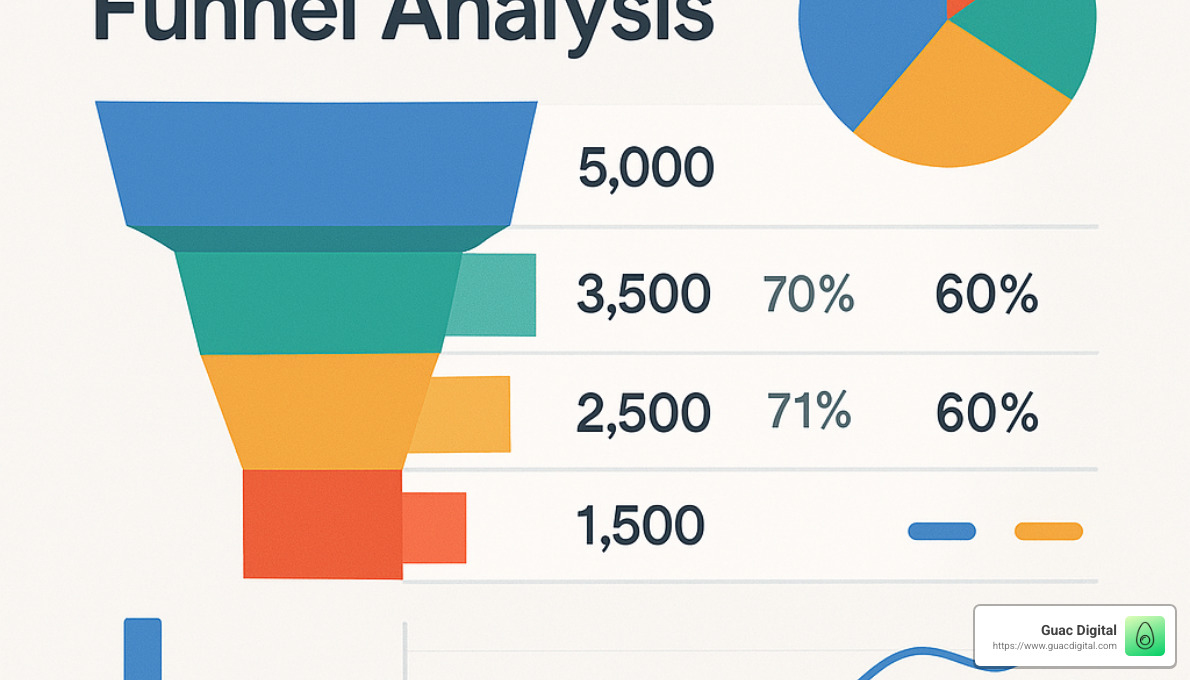
Mixpanel makes it easier to boost conversions by giving you a clear, step-by-step view of what users do—and don’t do—on your website or app. By tracking detailed user behaviors, Mixpanel helps you pinpoint exactly where potential customers might get stuck or lose interest.
One of Mixpanel’s standout features is its real-time data analysis, letting you see how changes immediately affect user actions. Rather than waiting days or weeks, you can quickly adjust your strategies based on fresh insights. Mixpanel also offers robust user segmentation, meaning you can group users based on their actions, demographics, or characteristics—and then tailor experiences specifically for each group.
If you’re aiming to stay ahead of user behavior, Mixpanel’s predictive analytics is another powerful tool. Using machine learning, it forecasts how users might behave in the future, helping you proactively optimize your site or app for better conversions. Its detailed funnel analysis is particularly helpful too, clearly showing the exact moments where visitors drop off—allowing you to smooth out any rough edges in your user experience.
Additionally, Mixpanel provides excellent retention analysis tools. These help you understand not only how your product attracts users initially, but also how effectively it keeps users returning over time. For businesses focused on subscription models or user loyalty, this insight is priceless.
And of course, Mixpanel integrates smoothly with A/B testing. You can test different versions of your product, measure results, and make informed decisions based on clear, reliable data.
At Guac Digital, we’ve found Mixpanel especially valuable for clients with complex products or multi-step conversion flows. For instance, one of our Tampa-based technology clients faced a challenge with their onboarding process. After analyzing the funnel in Mixpanel, we finded a particular verification step causing a significant drop-off. By redesigning that step, our client saw a 37% increase in successful sign-ups. Talk about a win!
Mixpanel offers a generous free plan covering up to 100,000 monthly tracked users, making it ideal for startups and growing businesses. When you’re ready to scale up, paid plans start at just $25 per month—perfect if your business is ready to dive even deeper into user behavior analytics.
All in all, if you’re a product-driven business looking to deeply understand your users and boost conversion rates, Mixpanel could be your new best friend.
11. Unbounce
Unbounce has become one of the most popular conversion rate optimization tools specifically focused on landing page creation and optimization, helping businesses turn more visitors into customers without requiring technical expertise.
As the name suggests, Unbounce specializes in reducing bounce rates by enabling marketers to create and test high-converting landing pages quickly and easily, without depending on developers or IT teams.
Boosting Conversions with Unbounce
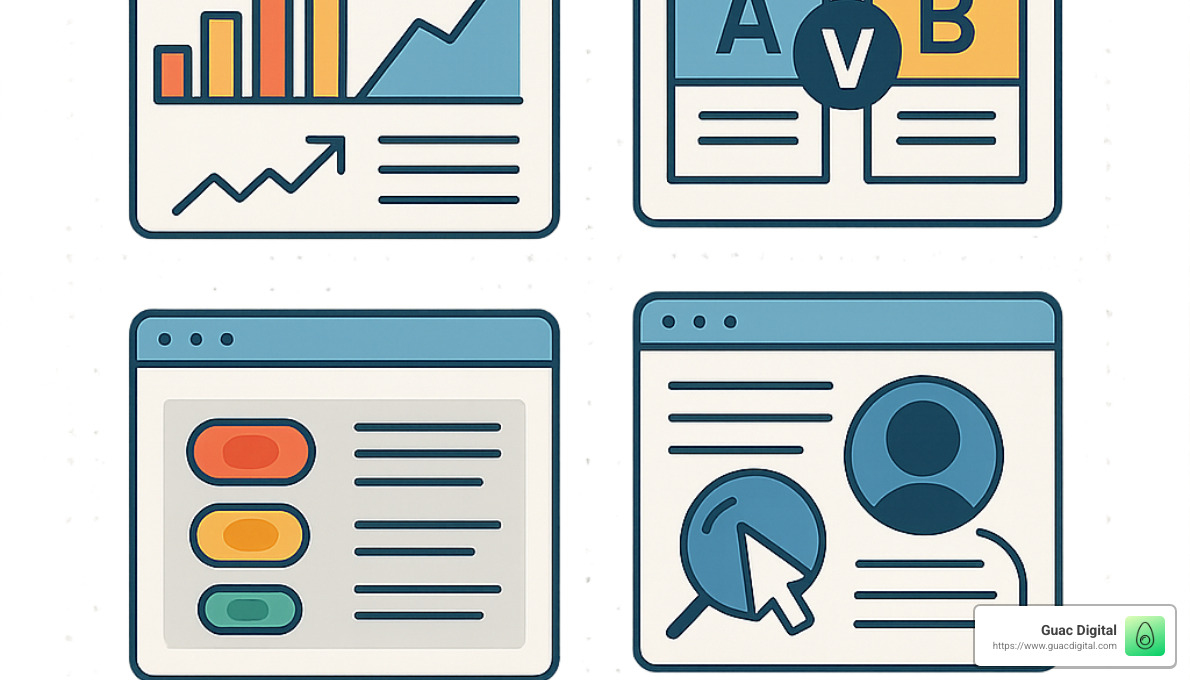
When I first introduced Unbounce to our clients at Guac Digital, many were skeptical about how much difference a specialized landing page tool could make. Those doubts quickly vanished when they saw their conversion rates climb.
What makes Unbounce stand out is its incredibly intuitive drag-and-drop builder that feels like designing in PowerPoint, but produces professional-grade landing pages. You don’t need to know a single line of code – just drag, drop, and watch your conversion-focused pages come to life.
The platform’s AI copywriting capabilities have been a game-changer for many of our Tampa-based clients. I remember working with a local financial advisor who struggled with writing compelling copy. Unbounce’s AI suggested headline variations that resonated much better with his target audience, ultimately boosting his lead conversion rate by 28%.
Connecting Unbounce with your existing marketing tools is refreshingly simple. The platform offers seamless integrations with marketing stack essentials like Mailchimp, HubSpot, and Salesforce, creating a unified ecosystem where your landing page data flows directly into your CRM or email platform.
Perhaps the most powerful feature is Unbounce’s Smart Traffic system. Unlike traditional A/B testing where you wait for statistical significance, Smart Traffic uses AI to automatically direct visitors to the landing page variation where they’re most likely to convert. One of our e-commerce clients saw a 34% uplift in conversions within the first month of implementing this feature.
“I’m a one-person marketing team, so I can’t dive super deep into everything,” shares Claire Seymour, a Marketing Director using Unbounce. “Unbounce lets me quickly build campaigns on my own and provides all the insights I need to make informed decisions.”
For businesses running paid ads, Unbounce is particularly valuable. Instead of sending expensive traffic to generic website pages, you can create highly targeted landing pages specific to each campaign. We helped a Tampa-based professional services firm implement this strategy, and they saw their lead generation increase by 42% compared to their previous generic contact page.
The impressive statistic that landing page visitors can potentially convert and spend twice as much compared to standard website traffic isn’t just marketing hype – we’ve seen this play out with real clients using well-optimized Unbounce pages.
What I personally love about Unbounce is how it democratizes conversion optimization. Small businesses with limited resources can now create and test professional landing pages that rival those of much larger competitors. It’s like having a conversion specialist and web designer on your team without the hefty price tag.
12. Convert
Convert has earned its reputation as one of the most reliable and robust conversion rate optimization tools on the market. If your business is serious about taking a data-driven approach to optimization, Convert offers an advanced A/B testing platform that’s packed with powerful features.
This platform has been helping businesses optimize websites for over 15 years, serving more than 40,000 sites in the process. With Convert, companies can confidently run sophisticated experiments to identify precisely what resonates best with their audience.
Convert’s Contribution to CRO
One of the key reasons Convert has become indispensable for many businesses is its advanced targeting capability. You can effortlessly create highly specific audience segments based on user behavior, demographics, or other relevant attributes. This means your experiments reach exactly the right visitors, providing more accurate—and valuable—results.
Convert also offers real-time reporting, allowing you to track how your tests perform as they happen. With built-in statistical significance calculators, the platform ensures you’re making optimization decisions based on sound data rather than guesswork. No more waiting around—Convert provides quick, actionable insights.
Another major advantage is Convert’s seamless onboarding process. From snippet installation to initial test monitoring, Convert goes the extra mile to make sure your implementation is flawless. This means fewer headaches and more accurate experiment results from day one.
Beyond basic visual tests, Convert shines in full-stack experimentation. This lets your team test not just changes to images, text, or buttons—but also backend features, product updates, and other complex functionality. It’s perfect for businesses that need a deeper level of testing.
Data privacy is another strong suit. Convert takes security seriously, offering features that make it fully compliant with GDPR, CCPA, and HIPAA. Your users’ data stays protected, giving both you and your visitors peace of mind.
At Guac Digital, we’ve had great success implementing Convert for clients who need advanced experimentation capabilities. For example, one of our e-commerce clients with very high website traffic leveraged Convert’s powerful multi-stat engine and sequential testing to run detailed, accurate tests. The result? A 16% boost in revenue from a series of carefully optimized experiments.
A Convert user put it perfectly, saying:
“Convert allows us to use data from our website visitors to not only better define our customers’ interests but also build a better product. Any B2B SaaS company looking to improve their customer experience and reach more targeted prospects will find Convert a vital addition to their marketing assets.”
Convert strikes a unique balance between technical sophistication and ease of use. Despite offering advanced features like feature flags, controlled rollouts, and multiple test correction methods, its intuitive interface ensures everyone in your team—whether tech-savvy or not—can easily understand and manage experiments.
Pricing starts at $299 per month, positioning Convert as a premium, enterprise-grade tool. But don’t let that deter you. If your business has enough traffic and is committed to optimization, Convert provides incredible value and can quickly pay for itself through improved conversion rates.
For companies ready to level up their optimization game, Convert is an exceptional choice to drive meaningful business growth.
Frequently Asked Questions about Conversion Rate Optimization Tools
What are Conversion Rate Optimization Tools?
Simply put, conversion rate optimization tools are software applications designed to help more of your website visitors take the action you want—like buying a product, subscribing to a newsletter, or contacting you. Think of these tools as your personal team of digital investigators, working around the clock to uncover why some visitors become customers and others vanish into the digital abyss.
These tools help you understand user behavior by analyzing how visitors interact with your site, identifying areas where people get stuck or frustrated. They also empower you to test different versions of your web pages (known as A/B testing), collect direct user feedback, and even deliver personalized experiences based on visitor behavior or preferences.
In other words, they’re your secret weapon to stop guessing and start making informed, data-driven decisions to boost your conversions consistently.
How Do I Choose the Right CRO Tool for My Business?
Choosing the right conversion rate optimization tools can feel overwhelming—with so many options available, where do you even start? Don’t worry; we’ve got your back.
First, pinpoint what your primary goals are. Are you looking to boost online sales, generate more leads, or improve user engagement? Different tools specialize in different areas, so knowing your goal helps narrow things down.
Next, consider how comfortable your team is with technology. Some tools are super user-friendly with drag-and-drop interfaces (no developers needed!), while others might require some technical support to set up. Pick something that aligns with your team’s skills and resources.
You’ll also want to think about your budget. Some CRO tools offer free options or affordable plans perfect for smaller businesses, while others target enterprise-level budgets. Balance cost with your expected ROI to find the sweet spot.
Another big factor is integration. Ensure the tool you choose plays well with your existing systems like Google Analytics, your CRM, or email marketing platforms. The smoother the integration, the easier your life will be.
Finally, don’t forget about scalability. Choose tools that will grow with you, handling higher traffic and more complex needs down the line. After all, who wants to switch tools every year as their business expands? Not us!
At Guac Digital, we’ve found most businesses get great results by starting with a simple combination of tools. For instance, using Google Analytics for foundational data, Hotjar or Crazy Egg for visual insights, and Optimizely or VWO for testing provides a solid starting point. This trio covers most CRO needs without overwhelming your team (or your wallet!).
Can I Use Multiple CRO Tools Together?
Absolutely! In fact, we highly recommend it. Using multiple conversion rate optimization tools together gives you a more complete picture of your visitors’ behavior and helps you uncover insights you might miss otherwise.
For example, pairing Google Analytics with a visual tool like Hotjar gives you not only quantitative data (“how many people left this page?”) but also qualitative insights (“why did they leave? What were they clicking?”). Combining A/B testing platforms like Optimizely or VWO with feedback tools like SurveyMonkey lets you test changes based on real visitor input.
Think of it this way: each tool is like a different piece of the puzzle. Alone, they’re useful—together, they reveal the full picture.
At Guac Digital, we often build integrated CRO tool stacks for our clients. Let’s say Google Analytics identifies a page where most visitors leave. We then use Hotjar’s heatmaps and recordings to pinpoint exactly what’s causing confusion or frustration. Armed with that knowledge, we use a tool like VWO or Optimizely to test improvements. This holistic process consistently leads to better user experiences and higher conversion rates.
Just remember: ensure smooth integrations between your chosen tools, and have a clear process for combining insights into actionable strategies. Trust us—your team (and your bottom line) will thank you!
Conclusion
We’ve covered a lot of ground together, and one thing has become abundantly clear: conversion rate optimization tools are no longer just “nice to have”—they’re absolutely essential for businesses striving to stay competitive in 2025 and beyond.
The digital landscape is shifting rapidly. Businesses that rely on old-school guesswork or gut feelings risk getting left behind. Those who accept data-driven insights and continuous experimentation will win—and keep winning.
At Guac Digital, we’ve seen how the right combination of CRO tools can create transformative growth. Our clients in Tampa, Florida (and across the globe) who accept a structured, data-focused approach routinely surpass their competition in conversions, customer satisfaction, and revenue.
One key takeaway from our exploration is that a diverse toolset truly matters. There’s no single magic bullet. Instead, the most effective optimization programs blend complementary tools—from analytics platforms like Google Analytics, heatmap tools such as Hotjar and Crazy Egg, to robust testing solutions like Optimizely or VWO. By integrating these solutions, you’re able to gain deep, meaningful insights into your users’ behaviors and motivations.
Speaking of integration, don’t underestimate its importance. The true power of CRO tools shines brightest when they work seamlessly together and integrate smoothly with your existing marketing stack. Tools that offer integrations with your CRM, CMS, and e-commerce platforms enable you to paint a clearer, more detailed picture of your customer journey—and optimize every step along that path.
Another critical lesson is balancing quantitative and qualitative data. Numbers alone don’t tell the whole story, and neither does user feedback alone. The best CRO strategies blend hard data on user actions (“What are visitors doing?”) with qualitative feedback (“Why are they doing it?”). Tools like SurveyMonkey allow you to gather direct user insights, while powerful analytics tools provide the hard data required to back up those insights.
We also can’t ignore the growing impact of AI-driven capabilities. Advances in artificial intelligence are making CRO tools smarter, faster, and more effective. Features like automated personalization, predictive analytics, and AI-powered content creation—seen in tools like Wisepops, HubSpot’s Starter Platform, and Unbounce—are empowering businesses to deliver highly relevant, personalized experiences at scale.
Above all, successful conversion rate optimization is about continuous improvement. It’s not a set-it-and-forget-it situation; it’s a journey. The tools we’ve explored here today are your trusty companions on that path, providing you with constant feedback and opportunities to test, learn, and refine your approach.
At Guac Digital, we don’t just show you how to use these conversion rate optimization tools. We’re here to help you build a sustainable, ongoing optimization strategy custom specifically to your business goals and audience. After all, it’s not just about the tools you choose—it’s how you use them.
Ready to take your conversions to the next level? We’d love to help! Explore our services at Guac Digital and see how we can support your CRO journey, helping you leverage the right tools and strategies to drive meaningful, measurable results.
In short: the future belongs to businesses that continuously evolve their digital experiences based on real user insights. With the right blend of tools, strategic thinking, and a little expert guidance, there’s no reason your business can’t be among them.