
Conversion optimization for ecommerce website is crucial in today’s digital buying world, where online shopping has become a driving force within retail. Converting visitors into customers on ecommerce sites significantly impacts your business’s bottom line. With more people shopping online than ever, ensuring your ecommerce platform converts efficiently is key to achieving success.
Here’s a quick look at why conversion optimization is essential for your ecommerce website:
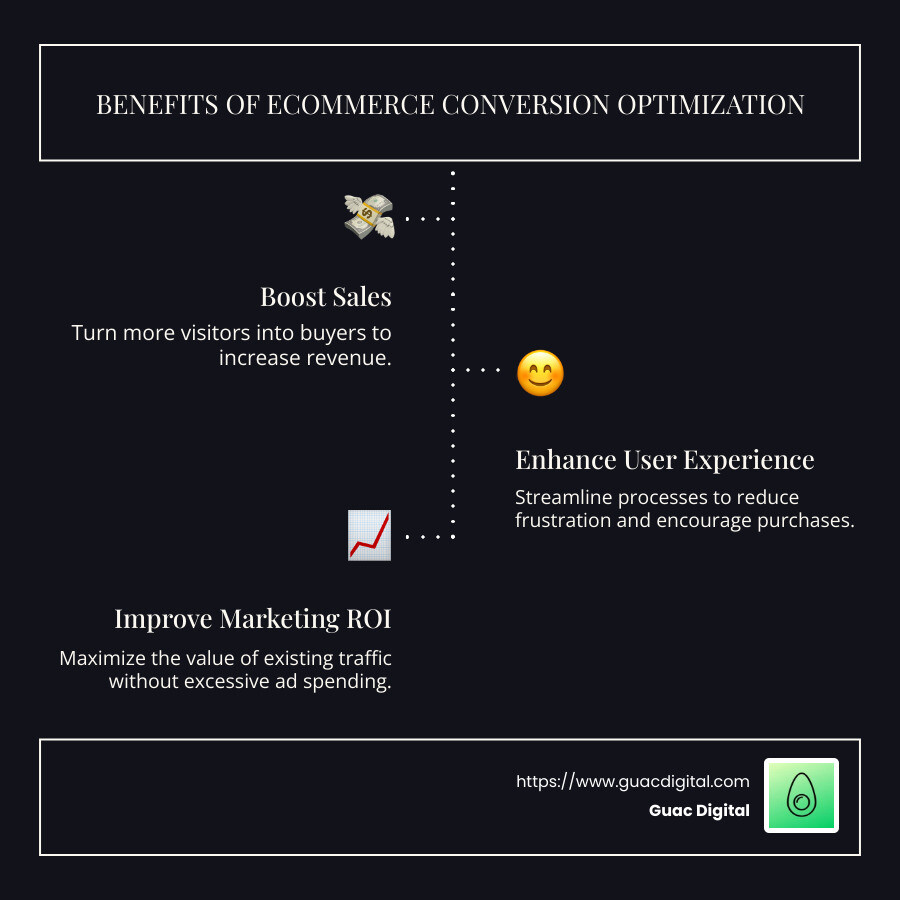
- Boost sales: More visitors into buyers equals increased sales.
- Improve user experience: Streamlined processes reduce frustration and encourage purchases.
- Improve marketing ROI: Get more value from existing traffic without overspending on ads.
- Increase customer retention: Happy customers tend to return and recommend.
As the founder and CEO of Guac Digital, I, Guy Leon, have experience in conversion optimization for ecommerce websites. With a proven track record of changing digital marketing landscapes, I am dedicated to helping businesses open up their full potential online.
Understanding Ecommerce Conversion Rates
When running an ecommerce website, grasp what conversion rates are and how they impact your business. Conversion rate is the percentage of visitors to your site who take a desired action—like making a purchase or signing up for a newsletter. Understanding this metric helps you gauge the effectiveness of your site in turning visitors into customers.
How is Conversion Rate Calculated?
Calculating your conversion rate is straightforward. Use this formula:
[ \text{Conversion Rate (\%)} = \left( \frac{\text{Number of Conversions}}{\text{Total Number of Visitors}} \right) \times 100 ]
For example, if your online store has 5,000 visitors and 50 of them make a purchase, your conversion rate is 1%.
Analytics tools like Google Analytics are invaluable for tracking this metric. They offer insights into visitor behavior, helping you identify where users might be dropping off.
What is a Good Ecommerce Conversion Rate?
Average conversion rates for ecommerce sites typically hover around 2.5% to 3%. Even if your online store is well-optimized, converting around 2-3% of visitors is standard. This doesn’t mean you’re underperforming; it reflects the competitive nature of online shopping.
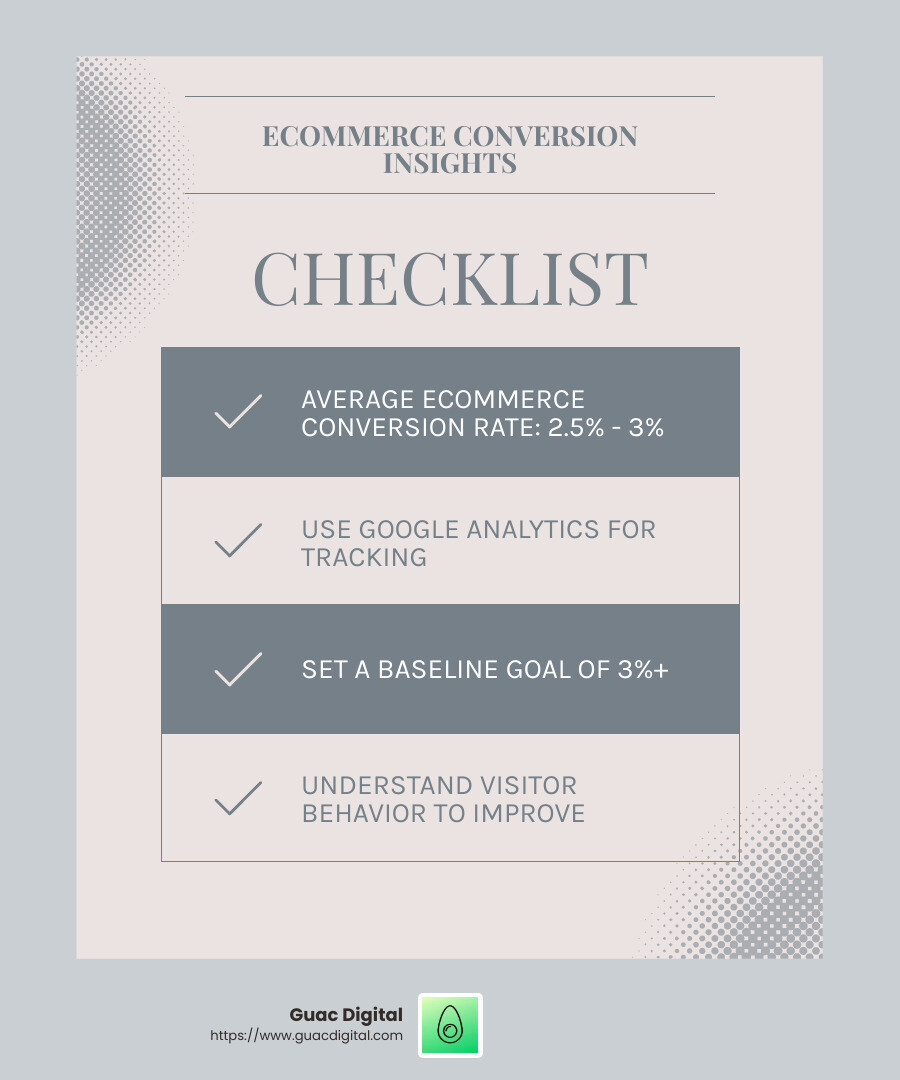
Setting a baseline goal of at least 3% is often recommended. Once you hit this target, you can explore advanced strategies to push the needle even further. Comparing your benchmarks against industry standards gives you a clearer picture of your performance and areas for improvement.
Typical Conversions and Ecommerce KPIs
In ecommerce, conversions aren’t limited to just sales. Here are common conversion actions:
- Online sales: The ultimate goal for most ecommerce sites.
- Adding products to a cart or wishlist: Indicates purchase intent.
- Email signups: Helps in building a customer database for future marketing.
- Social media shares: Expands your reach and brand awareness.
- Any other KPI your business values: Tailor these to your specific goals.
Each of these actions contributes to your overall Key Performance Indicators (KPIs), which are crucial for evaluating the success of your ecommerce strategies.
Understanding and optimizing these conversion points can lead to significant improvements in your site’s performance and your business’s bottom line.
Next, we’ll dive into key metrics to measure ecommerce conversions, helping you further refine your strategy for success.
Key Metrics to Measure Ecommerce Conversions
To optimize your ecommerce website effectively, it’s crucial to track key metrics. These metrics provide insights into user behavior and help identify areas for improvement. Let’s explore some of the most important ones: bounce rate, exit rate, click-through rate, average session duration, and average page depth.
Bounce Rate
Bounce rate is the percentage of visitors who leave your site after viewing only one page. A high bounce rate can signal that visitors aren’t finding what they’re looking for, or that your site isn’t engaging enough to keep them exploring. For instance, if your homepage has a 70% bounce rate, it might be time to reevaluate your content or design to better capture visitor interest.
Exit Rate
While often confused with bounce rate, exit rate measures the percentage of users who leave your site from a specific page, regardless of how many pages they’ve visited beforehand. A high exit rate on a key page, like a checkout page, could indicate friction points in the purchase process that need to be addressed.
Click-Through Rate (CTR)
Click-through rate (CTR) is the ratio of users who click on a link compared to the number of users who view a page, email, or ad. A high CTR indicates that your content, ads, or emails are compelling enough to prompt further engagement. For example, if a promotional email has a 5% CTR, it means 5% of recipients clicked on a link within the email, suggesting effective messaging.
Average Session Duration
Average session duration gives you a sense of how long visitors are staying on your site. Longer sessions typically mean more engagement, which can lead to higher conversion rates. If your average session duration is low, consider enhancing your content or simplifying navigation to encourage visitors to stay longer.
Average Page Depth
Average page depth measures the number of pages a visitor views per session. A higher average page depth suggests that users are exploring your site more thoroughly, which can be a positive sign of engagement. However, if users are viewing many pages without converting, it might indicate confusion in your conversion funnel.
Understanding these metrics allows you to pinpoint where users might be dropping off and where improvements can be made. By focusing on these key areas, you can improve the user experience and, ultimately, increase your conversion rates.
Next, we’ll explore conversion optimization strategies for ecommerce websites to help you capitalize on these insights.
Conversion Optimization Strategies for Ecommerce Websites
Optimize Your Site Speed
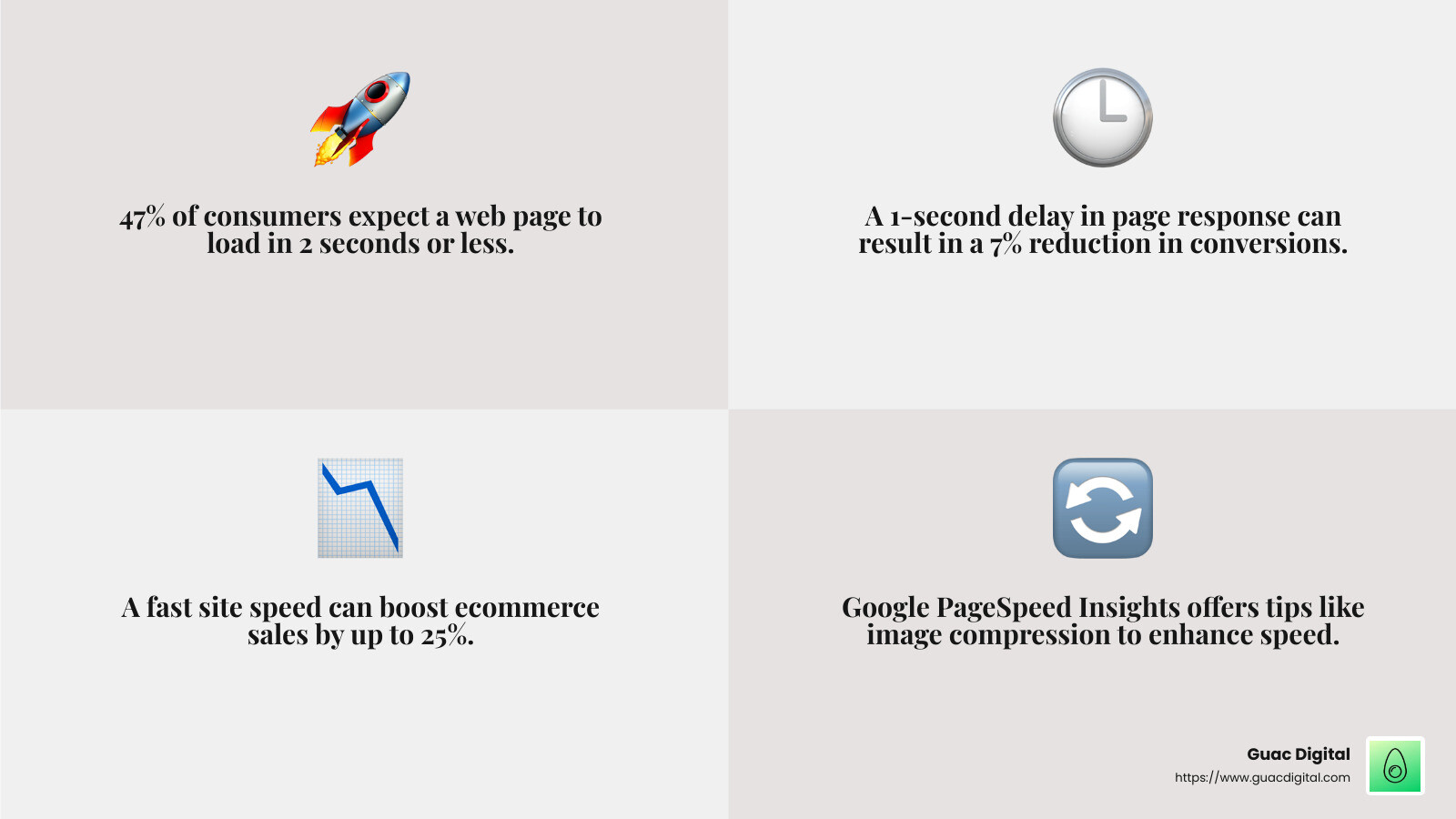
In the world of ecommerce, site speed is crucial. A slow-loading website can frustrate users and lead them to abandon their shopping carts. According to industry experts, if your page takes more than a second to load, you’re likely losing potential sales. Tools like Google PageSpeed Insights offer valuable recommendations to improve your site’s speed, such as compressing images and enabling browser caching.
Simplify Navigation
A well-organized website is like a well-organized store. Simplified navigation helps customers find what they need quickly and easily. Use logical product categories and ensure your site has a robust search functionality. This improves the user experience and keeps visitors engaged. A clear path to purchase can make all the difference in converting browsers into buyers.
Offer Personalized Shopping Experiences
Personalization is more than just a buzzword—it’s a powerful tool. By offering personalized shopping experiences, you cater to individual customer preferences. Use personalization tools to track customer journeys and offer custom recommendations. A simple “Products you might like” section can significantly increase engagement and sales. It’s all about making your customers feel understood and valued.
Provide Clear Pricing Upfront
Nobody likes surprises at checkout. Clear pricing is essential for building trust with your customers. Be transparent about costs, including shipping and taxes. Competitive pricing can also be a strong selling point. Consider using psychological pricing tactics, like pricing an item at $9.99 instead of $10, to make your prices more appealing.
Enrich Product Pages with Relevant Copy and Descriptions
Your product pages are your virtual salespeople. Enrich them with high-quality images, detailed descriptions, and product videos to provide a comprehensive view of what you’re offering. Customer reviews are invaluable; they build trust and provide social proof. A well-crafted product page can answer questions, alleviate concerns, and drive conversions.
By focusing on these conversion optimization strategies, you can create a seamless and engaging shopping experience that not only attracts customers but also encourages them to complete their purchases. Next, we’ll dive into the tools that can help you improve your ecommerce conversion rates.
Tools to Improve Ecommerce Conversion Rates
In ecommerce, understanding your customers is key. Luckily, there are several tools designed to help you do just that. These tools offer insights into visitor behavior, enabling you to optimize conversion rates effectively.
Lucky Orange
Lucky Orange is a powerful tool for visitor behavior analysis. It provides dynamic heatmaps and session recordings that show exactly how users interact with your site. By observing real-time visitor actions, you can identify trends and potential issues. This allows you to make data-driven decisions to improve the user experience and boost conversions.
HotJar
HotJar is another excellent tool for understanding user interaction insights. It offers heat mapping to visualize where users click, scroll, and move their cursors. Additionally, HotJar provides personalized surveys that let you gather direct feedback from visitors. These insights can help you fine-tune your site to better meet customer needs and increase conversion rates.
Quantcast Measure
For those interested in advanced demographic data, Quantcast Measure is an invaluable resource. It offers a composition view of your audience, showing demographics as a percentage of your total visitors. This business intelligence can guide your marketing strategies, ensuring that your messaging resonates with the right audience. By understanding who your visitors are, you can tailor your site to better serve them and improve conversion rates.
Google Analytics
Google Analytics is a staple for any ecommerce business. It offers comprehensive visitor insights, including traffic sources and conversion tracking. By linking Google Analytics with your Google Ads campaigns, you can track the effectiveness of your paid traffic. This data is crucial for understanding how visitors find your site and what actions they take, enabling you to optimize your strategies for better conversions.
BigCommerce Analytics
For BigCommerce users, the platform’s built-in analytics offer unique advantages. Abandoned cart analysis helps you understand what products are left behind and why. Additionally, in-store search analytics reveal what customers are looking for, allowing you to adjust your offerings accordingly. BigCommerce also provides conversion rate coaching through their University, helping you refine your tactics and drive more sales.
By leveraging these tools, you can gain valuable insights into your ecommerce site and make informed decisions to improve your conversion rates. Next, we’ll explore 30 ways to boost your ecommerce conversion rates.
30 Ways to Boost Your Ecommerce Conversion Rates
Improving your ecommerce conversion rates is crucial for success. Let’s explore 30 effective strategies that can make a big difference.
High-Quality Images
First impressions matter. Use high-quality images to showcase your products. Clear, detailed images help customers visualize what they’re buying, increasing their confidence in the purchase.
Free Shipping
Offering free shipping can reduce cart abandonment. Customers often leave when they see unexpected shipping costs. By including shipping in the price, you make the purchase decision easier.
Limited-Time Coupon Codes
Create urgency with limited-time coupon codes. This taps into the fear of missing out (FOMO), encouraging customers to buy now rather than later.
Competitive Pricing
Ensure your products are competitively priced. Research what your competitors charge and adjust your prices to offer better value, without compromising on quality.
Checkout Process Optimization
Streamline your checkout process. A complicated checkout can deter customers. Simplify it to just a few steps and offer a guest checkout option to make it faster.
Cart Abandonment Software
Use cart abandonment software to remind customers of items left in their cart. Sending a follow-up email can gently nudge them to complete their purchase.
Live Chat Software
Implement live chat software for instant customer support. Quick answers to questions can prevent customers from leaving your site for a competitor.
Trust Signals
Display trust signals like SSL certificates and security badges. Customers need to know their information is safe with you. Trust signals can significantly boost conversion rates.
Easy Product Finding
Make it easy for customers to find what they need by organizing products into logical categories and offering a robust search function.
Simple Checkout Forms
Keep checkout forms simple. Only ask for necessary information to avoid frustrating customers. Fewer fields mean a quicker checkout.
Guest Checkout
Offer a guest checkout option. Forcing account creation can lead to cart abandonment. Let customers decide if they want to register.
Detailed Product Descriptions
Provide detailed product descriptions with all the information a customer might need. This helps them make informed decisions and reduces the likelihood of returns.
Customer Reviews
Include customer reviews to build trust. Shoppers often rely on reviews to gauge product quality and satisfaction.
Prominent CTAs
Use prominent calls-to-action (CTAs) to guide users through the buying process. Clear and compelling CTAs can improve engagement and conversions.
Return Policy
Have a clear and fair return policy. Knowing they can return a product if needed makes customers more comfortable purchasing.
Mobile Optimization
Optimize your site for mobile devices. Many shoppers use mobile phones, and a poor mobile experience can lead to lost sales.
Phone Number Display
Display your phone number prominently. It reassures customers that they can reach you if needed.
Valuable Content
Provide valuable content that informs and engages your audience. Blog posts, guides, and videos can drive organic traffic and build trust.
Email Capture
Capture emails to build a relationship with potential customers. Offer a discount or freebie in exchange for their email address.
Attention-Grabbing Elements
Use attention-grabbing elements like banners and pop-ups wisely. They can highlight deals or new products without overwhelming the user.
By implementing these strategies, you can significantly boost your ecommerce conversion rates and drive more sales. Let’s move on to frequently asked questions about conversion optimization for ecommerce websites.
Frequently Asked Questions about Conversion Optimization for Ecommerce Websites
What is Conversion Rate Optimization (CRO)?
Conversion Rate Optimization (CRO) is the process of enhancing your ecommerce site to increase the percentage of visitors who complete a desired action, like making a purchase. Think of it as fine-tuning your website to turn more of your existing visitors into paying customers. This is crucial because it directly impacts your sales without necessarily increasing your marketing budget.
How Can I Improve My Ecommerce Conversion Rate?
Improving your ecommerce conversion rate involves a mix of strategies and tools:
CRO Tools: Leverage tools like Google Analytics for insights on visitor behavior, and VWO for A/B testing. These help you identify what’s working and what isn’t.
User Experience (UX): Focus on simplifying navigation, speeding up your site, and ensuring a seamless checkout process. A smooth UX makes it easier for customers to make purchases.
Testing Strategies: Regularly perform A/B tests to see which elements of your site drive conversions. For example, try different headlines, images, or CTA buttons to find the most effective combinations.
What Are the Best Practices for Ecommerce CRO?
To excel in conversion optimization for ecommerce websites, consider these best practices:
Personalization: Tailor the shopping experience to individual customers. Use data to offer personalized recommendations, which can increase sales and customer satisfaction.
Site Speed: A fast-loading site is essential. Use tools like Google PageSpeed Insights to identify areas for improvement. Faster sites lead to higher conversion rates.
Clear Pricing: Be transparent about pricing to avoid cart abandonment. Use psychological pricing tactics, like showing discounts, to make offers more appealing.
Detailed Product Pages: Enrich product pages with high-quality images, detailed descriptions, and customer reviews. This helps build trust and informs customers, reducing hesitation to buy.
By focusing on these areas, you can create a more effective ecommerce site that not only attracts visitors but turns them into loyal customers. Let’s dive deeper into tools that can help improve your ecommerce conversion rates.
Conclusion
At Guac Digital, we understand that open uping ecommerce success hinges on effective conversion optimization strategies. As a digital marketing agency based in Tampa, Florida, we specialize in crafting custom digital campaigns custom to meet the unique needs of our global clients. Our expertise lies in leveraging big data for programmatic marketing, which helps us achieve a high ROI for our clients.
Personalized Strategies for Maximum Impact
We believe in the power of personalized strategies to drive ecommerce success. By understanding the nuances of your business and audience, we create campaigns that resonate. Our approach ensures that every digital touchpoint is optimized to engage and convert, providing a seamless user experience.
Achieving High ROI Through Data-Driven Insights
Our focus on data-driven insights allows us to fine-tune your ecommerce website for optimal performance. We use advanced analytics tools to track visitor behavior, identify conversion barriers, and implement changes that drive results. This meticulous approach ensures that our clients not only see an increase in conversion rates but also in the overall value per customer.
Custom Digital Campaigns That Deliver Results
Whether it’s enhancing site speed, simplifying navigation, or offering personalized shopping experiences, our team is dedicated to implementing strategies that make a difference. We also prioritize clear pricing and enriching product pages, as these elements are crucial in turning visitors into loyal customers.
Partner with Guac Digital to open up the full potential of your ecommerce business. Our custom digital campaigns and personalized strategies will help you achieve a high ROI and sustainable growth.
Explore our services and find how we can boost your ecommerce success.
By focusing on these strategies, we help businesses not just survive but thrive in the competitive ecommerce landscape. Let’s work together to transform your digital presence and drive meaningful results.