
Boost Your Business with a Data-Driven Content Marketing Strategy
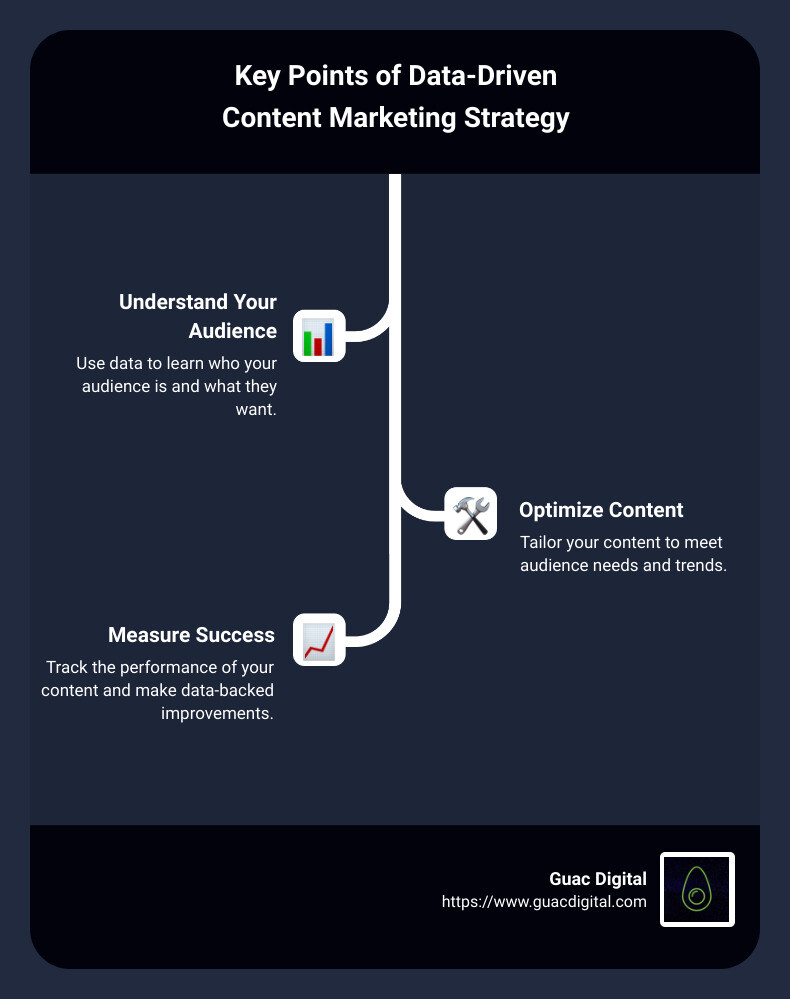
A data-driven content marketing strategy is essential to boost your business’s visibility and effectiveness online. To quickly understand how data-driven content marketing can transform your business, consider these key points:
- Understand your audience: Use data to learn who your audience is and what they want.
- Optimize content: Tailor your content to meet audience needs and trends.
- Measure success: Track the performance of your content and make data-backed improvements.
Data is crucial in content marketing because it helps you understand your audience better, create content that resonates with them, and measure your success accurately.
Content marketing involves creating valuable, relevant content that attracts and engages your target audience. But to cut through the noise and truly connect with your audience, you need insights from data.
Audience insights come from analyzing demographics, behaviors, and preferences. These insights allow you to create content that speaks directly to your audience’s needs and pain points, setting you apart from the competition.
My name is Guy Leon, founder and CEO of Guac Digital. With experience in data-driven content marketing strategy, I’ve helped various clients boost their engagement, web traffic, and ROI. As you read on, you’ll learn how to leverage data to create content that stands out.
What is Data-Driven Content Marketing?
Data-driven content marketing uses data to craft content that speaks directly to your audience. Instead of guessing what might work, you use hard facts to guide your strategy.
Audience Insights
Understanding your audience is the first step. By analyzing demographics, behaviors, and preferences, you can create content that resonates with them.
For example, you might find that your audience is mostly young professionals who are interested in quick, actionable tips. This insight helps you tailor your content to meet their needs.
Analytics
Analytics play a crucial role in this process. Tools like Google Analytics provide valuable data on how your content performs. You can track metrics like page views, time on page, and conversion rates to see what works and what doesn’t.

Personalized Content
Personalization is key in today’s digital world. By using data, you can create personalized content that addresses specific pain points and interests of your audience.
For instance, if your data shows that a segment of your audience struggles with a particular problem, you can create content that offers solutions to that problem. This makes your audience feel understood and valued, increasing engagement and loyalty.
Define Clear Objectives
Defining clear objectives is the foundation of a successful data-driven content marketing strategy. Without clear goals, your content efforts can become scattered and ineffective.
Brand Awareness
Brand awareness is about making your audience familiar with your brand. It’s the first step in the customer journey. Your content should aim to introduce your brand and highlight what makes it unique.
Lead Generation
Lead generation is about turning your audience into potential customers. To achieve this, create content that captures interest and encourages action, like downloading an e-book or signing up for a webinar.
Customer Engagement
Customer engagement involves creating content that interacts with and retains your existing audience. Engaged customers are more likely to become loyal advocates for your brand.
Measurable Goals
Your objectives must be specific and measurable. This allows you to track progress and make data-driven adjustments.
For instance, instead of a vague goal like “increase blog traffic,” aim for “increase blog traffic by 20% in the next three months.” Use analytics tools like Google Analytics to track metrics like page views, time on page, and bounce rates.
By setting clear, measurable goals, you ensure that every piece of content serves a purpose and contributes to your overall strategy.
Understand Your Audience
To create content that truly resonates with your audience, you must first understand who they are. This involves developing customer personas, analyzing demographics, studying buying behavior, and monitoring user engagement.
Customer Personas
Customer personas are fictional characters that represent different segments of your audience. They help you visualize and understand your customers’ needs, experiences, behaviors, and goals.
For example, if you’re targeting small to medium-sized businesses, a persona might be “Tech-Savvy Tim,” a 35-year-old IT manager who values efficiency and cost-effectiveness.
Creating detailed personas involves:
– Demographic details (age, gender, job title)
– Behavioral patterns (tech-savvy, budget-conscious)
– Pain points (inefficiency, high costs)
– Goals (streamline operations, reduce expenses)
Demographics
Demographics provide a snapshot of your audience’s characteristics. This includes age, gender, income level, education, and job titles.
For instance, if your product is a high-end software solution, your target demographic might include senior IT professionals in large enterprises with high purchasing power.
Buying Behavior
Understanding buying behavior is crucial. This involves knowing:
– What products/services they purchase
– How often they buy
– What influences their purchasing decisions
For example, if data shows that your audience frequently purchases software solutions after attending webinars, you might want to invest more in creating high-quality webinar content.
User Engagement
User engagement metrics show how your audience interacts with your content. This includes:
– Page views
– Time spent on page
– Click-through rates
– Social media interactions
Tools like Google Analytics and social media insights can help track these metrics. For instance, if a particular blog post has a high engagement rate, it indicates that the content is valuable to your audience.
Case Study: Successful Audience Understanding
A great example of leveraging audience insights is HubSpot. They used detailed customer personas to tailor their content marketing strategy. By understanding their audience’s needs and behaviors, they created highly targeted content that led to a significant increase in user engagement and conversions.
By developing customer personas, analyzing demographics, studying buying behavior, and monitoring user engagement, you can create content that truly resonates with your audience.
Next, we’ll delve into how to analyze competitor content to find gaps and opportunities in your content strategy.
Analyze Competitor Content
Analyzing your competitors’ content is a key step in building a data-driven content marketing strategy. Understanding what your competitors are doing well—and where they fall short—can help you identify content gaps and opportunities for unique positioning.
Competitor Analysis
Start by identifying your main competitors. Use tools like SEMrush or Ahrefs to see which companies rank for your target keywords. Look at their websites, blogs, social media, and other content platforms.
Key areas to focus on:
- Content Types: What types of content are they producing? Blog posts, videos, infographics, or podcasts?
- Frequency: How often are they publishing new content?
- Engagement: How are their audience engaging with their content? Look at likes, shares, comments, and backlinks.
Identify Content Gaps
Once you’ve analyzed your competitors, look for gaps in their content strategy. These are opportunities for you to provide value where they are lacking.
Steps to identify content gaps:
- Keyword Analysis: Use tools like Moz to see which keywords your competitors rank for and which they don’t. Target the keywords with high search volume and low competition.
- Content Depth: Are your competitors covering topics superficially? Create in-depth, comprehensive content that adds more value.
- Format Gaps: If your competitors focus mainly on blog posts, consider creating videos or infographics to stand out.
Audience Engagement
Understanding how your competitors engage their audience can provide insights into what works and what doesn’t.
Metrics to consider:
- Social Media Metrics: Look at the engagement rates on their social media posts. Are certain topics or formats getting more traction?
- Comments and Feedback: Read through the comments on their blog posts and social media. This can give you insights into what the audience likes or dislikes.
- Backlinks: High-quality backlinks are a sign of valuable content. Use tools like Turtl Analytics to see which pieces of content are earning the most backlinks.
Unique Positioning
Finally, use the insights from your competitor analysis to carve out a unique position in the market. Your goal is to offer something that your competitors don’t.
Tips for unique positioning:
- Brand Voice: Develop a distinct brand voice that resonates with your audience. This could be more casual, authoritative, or even humorous, depending on your brand.
- Unique Insights: Leverage your own data and expertise to provide unique insights that competitors can’t offer.
- Niche Focus: Consider focusing on a niche within your industry that is underrepresented. This can help you become a go-to resource for that specific audience.
By thoroughly analyzing competitor content, identifying gaps, and finding unique ways to engage your audience, you can create a content strategy that stands out and drives results.
Next, we’ll explore how to utilize SEO data to optimize your content and improve your search engine rankings.
Utilize SEO Data
SEO data is a goldmine for any data-driven content marketing strategy. Here’s how you can leverage it to optimize your content:
Keyword Research
Start with keyword research. Tools like Google Ads Keyword Planner, SEMrush, and Moz can help you discover what your audience is searching for. Look for keywords with high search volume but low competition. These are your sweet spots.
Search Terms
Understand the search terms your audience uses. Dive into tools like Google Trends to see what’s trending in your industry. This can help you tailor your content to match the language and interests of your audience.
Content Optimization
Once you have your keywords and search terms, it’s time for content optimization. This means integrating these keywords into your content naturally. Use them in your titles, meta descriptions, headers, and throughout your text. But remember, keyword stuffing is a no-go. Aim for a natural flow.
SEO Metrics
Finally, track your SEO metrics. Tools like Google Analytics, Google Search Console, and Turtl Analytics can show you how your content is performing. Key metrics to watch include:
- Organic Traffic: Indicates how well your content is attracting visitors from search engines.
- Rankings: Shows your position in search engine results. Higher rankings mean more visibility.
- Page Views: Tells you how many times your content is viewed.
- Time on Page: Measures how long visitors stay on your page, indicating engagement.
- Conversion Rates: Tracks how many visitors take a desired action, like signing up for a newsletter.
By focusing on these aspects, you can create content that not only ranks well but also resonates with your audience. Next, we’ll delve into measuring content performance to understand what works and what doesn’t.
Measure Content Performance
To create impactful content, you need to know what works and what doesn’t. Here’s how to measure content performance using key metrics:
Page Views
Page views tell you how many times your content is viewed. This metric helps you understand which topics or formats grab attention. For example, if a blog post about “affordable SEO services” gets thousands of views, you know this topic resonates with your audience.
Tip: Look for patterns in high-view pages. Are they on similar topics, or do they use a specific format? Use these insights to guide future content creation.
Time on Page
Time on page measures how long visitors stay on your page. Longer time means higher engagement. If users spend more time on your “guide to programmatic ad buying,” it indicates they find the content valuable and engaging.
Tip: If your time on page is low, consider improving the content quality or navigation. Make sure the page delivers what the title promises to avoid misleading visitors.
Conversion Rates
Conversion rates track how many visitors take a desired action, like signing up for a newsletter or purchasing a product. High conversion rates mean your content is effective in driving actions. For instance, if a landing page for “front-end development services” has a high conversion rate, it’s doing its job well.
Tip: Use A/B testing to see which version of your content converts better. Tweak headlines, images, or CTAs to find the most effective combination.
Trend Analysis
Trend analysis involves looking at performance data over time to identify patterns. This helps you understand what’s working and what’s not. For example, if you see a steady increase in blog traffic after publishing a series of posts on “programmatic trading,” you know this topic is gaining interest.
Tip: Regularly review your analytics to spot trends. Adjust your content strategy based on what’s performing well and what needs improvement.
By measuring these metrics, you can refine your data-driven content marketing strategy to create more engaging and effective content. Next, we’ll look into personalizing content to better connect with your audience.
Personalize Content
Personalizing content means tailoring your messages to meet the specific needs and preferences of your audience. It’s about making each reader feel like the content was created just for them. Let’s break this down into key steps.
Understand Audience Preferences
Start by using data to understand what your audience likes. Look at their behavior on your site. Which articles do they read the most? What topics get the most comments and shares?
Example: If your audience frequently engages with content about “affordable SEO services,” then you know this is a topic of interest. You can create more content around this subject to keep them engaged.
Tailored Recommendations
Once you know what your audience prefers, offer tailored recommendations. This can be as simple as suggesting related articles at the end of a blog post or sending personalized emails based on their browsing history.
Case Study: Amazon does this exceptionally well. They use data from past purchases and browsing behavior to recommend products. This personalized experience keeps users coming back.
Unique Offers
Personalization can also extend to unique offers. Use data to create special deals that cater to individual needs. For instance, if a segment of your audience frequently purchases tech gadgets, you can offer them exclusive discounts on the latest devices.
Quote: “Personalized offers can increase engagement and conversion rates significantly,” says marketing expert Neil Patel.
Increase Engagement
Personalized content drives higher engagement. When users see content that resonates with them, they are more likely to interact with it. This can mean more comments, shares, and time spent on your site.
Statistic: According to a study by the Content Marketing Institute, 85% of B2B marketers use personalized content to engage their audience.
Implementing Personalization
To implement personalization effectively:
– Use tools like Google Analytics to gather data.
– Segment your audience based on their preferences and behavior.
– Create content that speaks directly to each segment.
Tip: Regularly update your content based on new data insights to keep it relevant and engaging.
By personalizing your content, you make your audience feel valued and understood, which can lead to increased loyalty and higher conversion rates. Next, we’ll explore how A/B testing can help fine-tune your content strategy.
Implement A/B Testing
A/B testing is a powerful tool in a data-driven content marketing strategy. It helps you understand what works best for your audience by comparing two versions of a piece of content. Here’s how to do it effectively:
Version Testing
Create two versions of your content, changing one element at a time. This could be a headline, image, call-to-action, or even the layout.
For example:
– Version A: “10 Tips for Better SEO”
– Version B: “Boost Your SEO with These 10 Tips”
Performance Tracking
Once both versions are live, track their performance using metrics like click-through rates (CTR), engagement, and conversions. Tools like Google Analytics or Turtl Analytics can help you gather this data.
Informed Decisions
Analyze the data to see which version performs better. If Version B has a higher CTR, it’s likely more appealing to your audience. Use these insights to make informed decisions about your content.
“Insanity is doing the same thing over and over and expecting different results.” – Albert Einstein
Continuous Improvement
A/B testing is not a one-time activity. Continuously test different elements to keep improving your content. This iterative process ensures that your content stays relevant and effective.
By implementing A/B testing, you can fine-tune your content strategy, ensuring each piece resonates with your audience. Next, let’s delve into how social media analytics can further enhance your content marketing efforts.
Use Social Media Analytics
Social media analytics are essential for a data-driven content marketing strategy. They provide insights into how your audience interacts with your content and reveal which types of posts perform best.
Engagement Metrics
Start by tracking engagement metrics like likes, shares, comments, and retweets. These metrics show how your audience is responding to your content. High engagement indicates that your content resonates with your audience.
- Likes: Simple but effective indicator of content appreciation.
- Shares: Shows content is valuable enough to share with others.
- Comments: Indicates deeper engagement and interest.
Content Patterns
Analyzing content patterns helps identify what works and what doesn’t. Look for trends in the types of content that get the most engagement.
For example:
– Visual Content: Images and videos often get more engagement than text-only posts.
– Timing: Posts made at certain times of the day or week may perform better.
– Topics: Certain subjects might resonate more with your audience.
Audience Insights
Audience insights provide valuable information about who is engaging with your content. Platforms like Facebook and Instagram offer detailed demographics, including age, gender, location, and interests.
- Demographics: Understand who your audience is.
- Behavior: See how different segments of your audience interact with your content.
- Preferences: Tailor your content to match audience interests.
Platform Effectiveness
Not all social media platforms are created equal. Use analytics to determine which platforms are most effective for your content.
- Facebook: Great for broad reach and diverse content types.
- Instagram: Best for visual content and younger audiences.
- LinkedIn: Ideal for B2B content and professional engagement.
By continuously monitoring and analyzing these social media analytics, you can refine your content strategy to better meet the needs and preferences of your audience. This ensures your content remains effective and engaging across all platforms.
Next, let’s explore the power of leveraging user-generated content to further enhance your data-driven content marketing strategy.
Leverage User-Generated Content
User-generated content (UGC) refers to content created by your customers or fans. This can be a powerful addition to your data-driven content marketing strategy.
Authenticity
UGC brings a level of authenticity that branded content often can’t match. According to a study by Nielsen, 92% of consumers trust peer recommendations over traditional advertising. When customers see real people using and enjoying your products, it builds trust and credibility.
Engagement
Encouraging customers to share their experiences with your brand increases engagement. Take Starbucks, for example. Their #RedCupContest on Instagram invites users to share photos of their holiday-themed cups. This not only boosts engagement but also creates a sense of community around the brand.
Customer Insights
Analyzing UGC can provide valuable insights into what your customers love about your products. For instance, if users frequently post about a specific feature, it indicates what resonates most with your audience. This information can guide future product development and marketing efforts.
Cost-Effectiveness
UGC is a cost-effective way to generate content. Instead of relying solely on in-house production, you leverage the creativity of your audience. This not only saves money but also diversifies the types of content you can share. For instance, GoPro often features videos shot by its users, showcasing the product’s capabilities in various real-world scenarios.
By integrating UGC into your data-driven content marketing strategy, you can enhance authenticity, boost engagement, gain valuable customer insights, and do so in a cost-effective manner. This approach not only strengthens your content but also builds a loyal community around your brand.
Next, we’ll discuss how adopting an agile approach can further optimize your content marketing efforts.
Adopt an Agile Approach
In the world of digital marketing, staying flexible and responsive is crucial. Adopting an agile approach to your data-driven content marketing strategy allows you to quickly adapt to changing trends and audience behaviors.
Flexibility
An agile approach means being ready to pivot your strategies based on real-time data. For example, if your data shows a sudden interest in a new topic, you can quickly create and share relevant content. This keeps your brand current and engaging.
Responsiveness
Being responsive is about acting on data promptly. If a particular type of content is performing well, you can produce more of it. Conversely, if something isn’t working, you can adjust or discontinue it swiftly. This ensures your content always resonates with your audience.
Performance Metrics
To implement an agile approach, you need to track key performance metrics. Metrics like page views, conversion rates, and engagement levels provide insights into what’s working and what isn’t. Regularly reviewing these metrics helps you make informed decisions.
Quick Adjustments
The beauty of an agile approach is the ability to make quick adjustments. For instance, if a blog post isn’t attracting traffic, you can tweak the headline or update the content based on SEO data. This continuous improvement cycle keeps your content effective and relevant.
By embracing flexibility, responsiveness, performance metrics, and quick adjustments, your data-driven content marketing strategy will be more resilient and successful.
Next, we’ll explore the benefits of partnering with a digital analytics expert to further refine your content strategy.
Partner with a Digital Analytics Expert
Partnering with a digital analytics expert can elevate your data-driven content marketing strategy to new heights. Here’s how:
Data Interpretation
Experts in digital analytics can interpret complex data sets, uncovering insights that might be missed. They can tell you what the numbers really mean and how to act on them. For example, a spike in page views might look good, but an expert can determine if those views are converting into leads.
Content Alignment
Aligning your content with business goals is crucial. An expert helps ensure your content strategy supports your company’s objectives, whether it’s increasing brand awareness or generating leads. They use data to identify what content resonates with your audience and aligns with your goals.
Sophisticated Tools
Digital analytics experts have access to sophisticated tools like Google Analytics, Google Search Console, and Turtl Analytics. These tools provide in-depth insights into content performance, audience behavior, and SEO metrics. They help you track user engagement, identify trends, and optimize content for maximum impact.
Expert Collaboration
Working with a digital analytics expert is a collaborative process. They bring their expertise to your team, helping you make informed decisions based on data. For instance, Sachs Marketing Group specializes in data-driven content strategies. They analyze customer data and develop tailored content strategies that drive results.
By partnering with an expert, you ensure your content is not just hitting the mark but continuously evolving with the digital landscape. This collaboration translates to more targeted, effective content and a higher return on investment.
Next, we’ll dive into why data is so important in content marketing and how it drives success.
Why Data is Important in Content Marketing?
Audience Understanding
Data is your golden ticket to understanding your audience. By analyzing audience demographics, behavior, and preferences, you can create detailed customer personas. These personas help you tailor content that resonates deeply with your target audience.
For example, if your data shows that your audience is primarily young professionals interested in tech gadgets, you can focus your content on the latest tech trends and reviews. This targeted approach ensures your content speaks directly to your audience’s interests and needs.
Content Optimization
Data-driven content marketing strategy revolves around optimizing your content for better engagement and visibility. Utilizing SEO data, you can identify high-performing keywords and search terms. Tools like Google Trends and SEMrush help you understand what your audience is searching for online.
By integrating these keywords into your content, you improve your chances of ranking higher in search engine results. This means more organic traffic and better visibility for your content.
Success Measurement
Measuring the success of your content is crucial. Key metrics like page views, time on page, and conversion rates provide insights into how your content is performing. By analyzing these metrics, you can identify what works and what doesn’t.
For instance, if a blog post has a high bounce rate, it may indicate that the content isn’t engaging enough. On the other hand, a post with high time-on-page and conversion rates is likely hitting the mark. Regular analysis helps you refine your strategy for better results.
Continuous Improvement
The digital landscape is constantly evolving, and so should your content strategy. Data enables continuous improvement by providing real-time feedback on your content’s performance.
A/B testing is a great way to experiment with different versions of your content. For example, you can create two versions of an email campaign and see which one performs better. This iterative process helps you make informed decisions and continuously improve your content.
In summary, data is the backbone of a successful content marketing strategy. It helps you understand your audience, optimize your content, measure success, and continuously improve. Next, let’s explore some frequently asked questions about data-driven content marketing strategy.
Frequently Asked Questions about Data-Driven Content Marketing Strategy
What is a data-driven content marketing strategy?
A data-driven content marketing strategy uses data to guide every step of your content creation and distribution process. Instead of guessing what your audience wants, you rely on hard data to make informed decisions. This approach involves collecting, analyzing, and interpreting data to understand your audience’s preferences, behaviors, and engagement patterns. By doing so, you can create personalized, relevant content that resonates with your target audience.
How can data improve content marketing?
Data can significantly enhance your content marketing efforts in several ways:
Targeting Your Audience: Data helps you understand who your audience is, what they like, and where they spend their time. This allows you to create content that speaks directly to them.
Creating Relevant Content: By analyzing data, you can identify your audience’s pain points and interests. This ensures your content is always relevant and valuable.
Personalization: Data enables you to tailor your content to individual preferences, making your audience feel seen and understood. This can lead to higher engagement and loyalty.
Optimizing Channels: Understanding which channels your audience prefers helps you allocate your resources more effectively. For instance, if data shows your audience is more active on Instagram, you can focus your efforts there.
Measuring Success: Data provides metrics to track the performance of your content. This helps you see what’s working and what’s not, allowing for continuous improvement.
What metrics should be tracked in a data-driven content strategy?
Tracking the right metrics is crucial for a successful data-driven content marketing strategy. Here are some key metrics you should monitor:
Page Views: The number of times your content is viewed. This helps you gauge its popularity.
Time on Page: How long visitors stay on your page. Longer times generally indicate more engaging content.
Conversion Rates: The percentage of visitors who take a desired action, like signing up for a newsletter or making a purchase. This measures the effectiveness of your content in driving actions.
Bounce Rate: The percentage of visitors who leave your site after viewing only one page. A high bounce rate might indicate that your content isn’t engaging enough.
Social Shares and Engagement: The number of times your content is shared on social media and the level of engagement it receives (likes, comments, shares). This shows how well your content resonates with your audience.
Keyword Rankings: Tracking how well your content ranks for specific keywords over time. This helps you understand your SEO performance and make necessary adjustments.
User-Generated Content: Monitoring content created by your audience, such as reviews or social media posts. This can provide insights into what your audience loves about your brand.
By keeping a close eye on these metrics, you can continually refine and improve your content marketing efforts.
Conclusion
At Guac Digital, we believe that a data-driven content marketing strategy is essential for success in today’s digital landscape. By integrating data into every step of our content creation and marketing process, we ensure that our strategies are not only effective but also personalized to meet the unique needs of each client.
Our data-driven approach involves using advanced analytics to gather insights about your target audience. We look at demographics, buying behavior, and user engagement to create content that truly resonates. This personalized strategy helps us craft messages that speak directly to your audience’s needs and interests, resulting in higher engagement and better ROI.
One of the key benefits of our approach is the ability to continuously improve. By monitoring metrics like page views, conversion rates, and user-generated content, we can make informed adjustments to our strategies. This agile methodology allows us to stay ahead of trends and ensure your content remains relevant and impactful.
Partnering with Guac Digital means leveraging sophisticated tools and expert knowledge to elevate your content marketing efforts. We specialize in creating data-driven strategies that not only boost your brand’s visibility but also drive meaningful engagement and conversions.
Ready to transform your content marketing strategy with data? Contact Guac Digital today and let’s create a personalized plan that delivers high ROI for your business.
By embracing a data-driven approach, we help you connect with your audience in a more meaningful way, ensuring your content not only reaches the right people but also drives the results you need.