
SEO Management: Master 3 Crucial Growth Steps
What is SEO Management and Why is it Crucial?
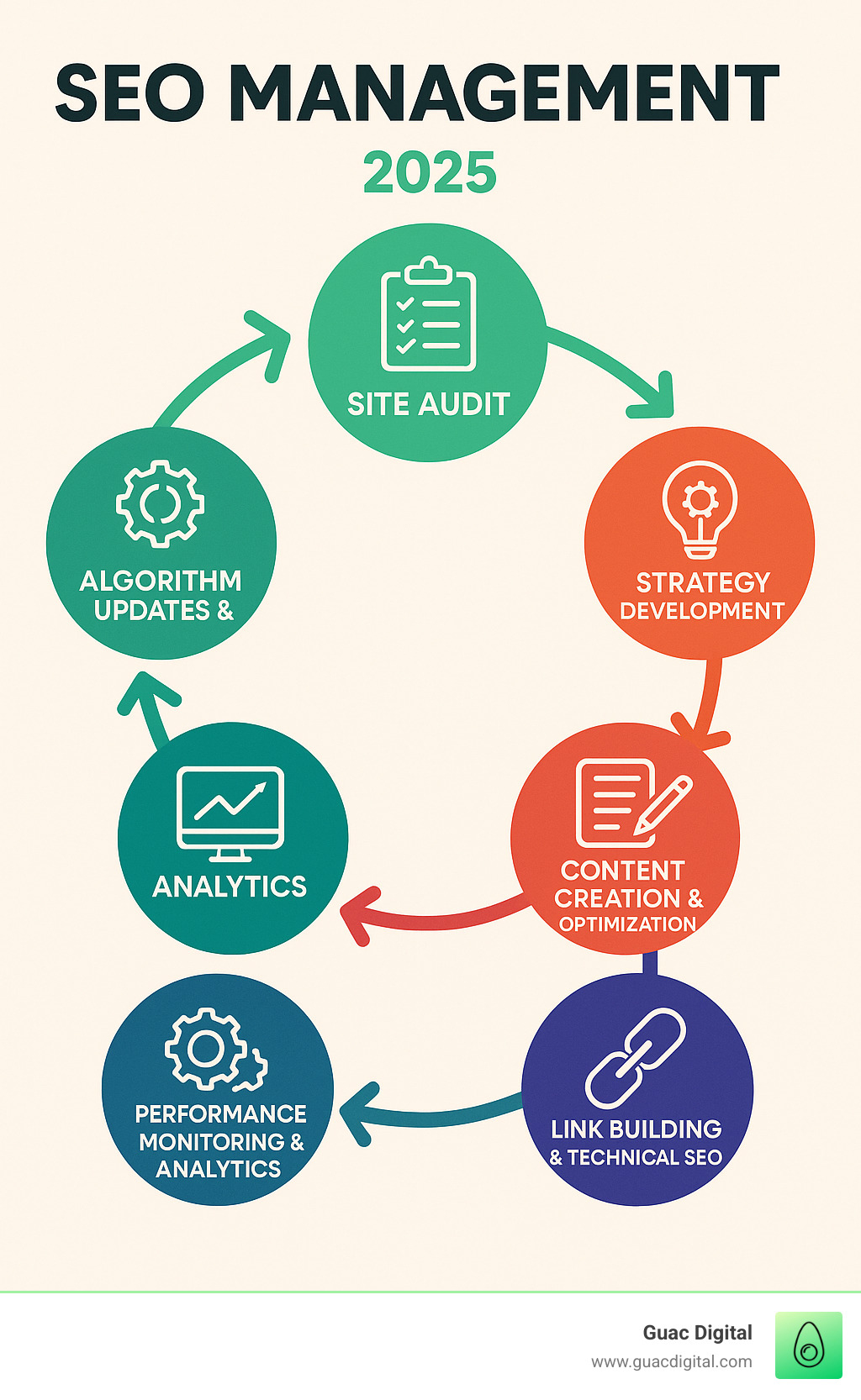
SEO management is the ongoing process of keeping your site visible in search, adapting to algorithm updates, and turning organic traffic into revenue. It combines the work of traditional SEO (getting ranked) with continuous optimization (staying ranked and growing).
Key tasks include:
- Monitoring keywords and traffic
- Updating and expanding content
- Maintaining site health and performance
- Adjusting strategy when Google changes the rules
- Tracking competitors and measuring ROI
Why care? More than 50% of website visits still come from organic search. Without solid management, rankings can slip, competitors can out-pace you, and paid ads become your only traffic source.
Done well, SEO management delivers:
- Steady streams of qualified leads
- Higher brand trust and credibility
- Lower dependence on paid ads
- Long-term ROI that compounds
At Guac Digital we’ve helped clients grow organic traffic by 300% through data-driven SEO management. The secret is simple: consistent action guided by real-time data.
Basic seo management terms:
- What is search engine optimization?
- How to improve SEO?
- seo copywriting and content optimization services
The Core Components of an Effective SEO Strategy
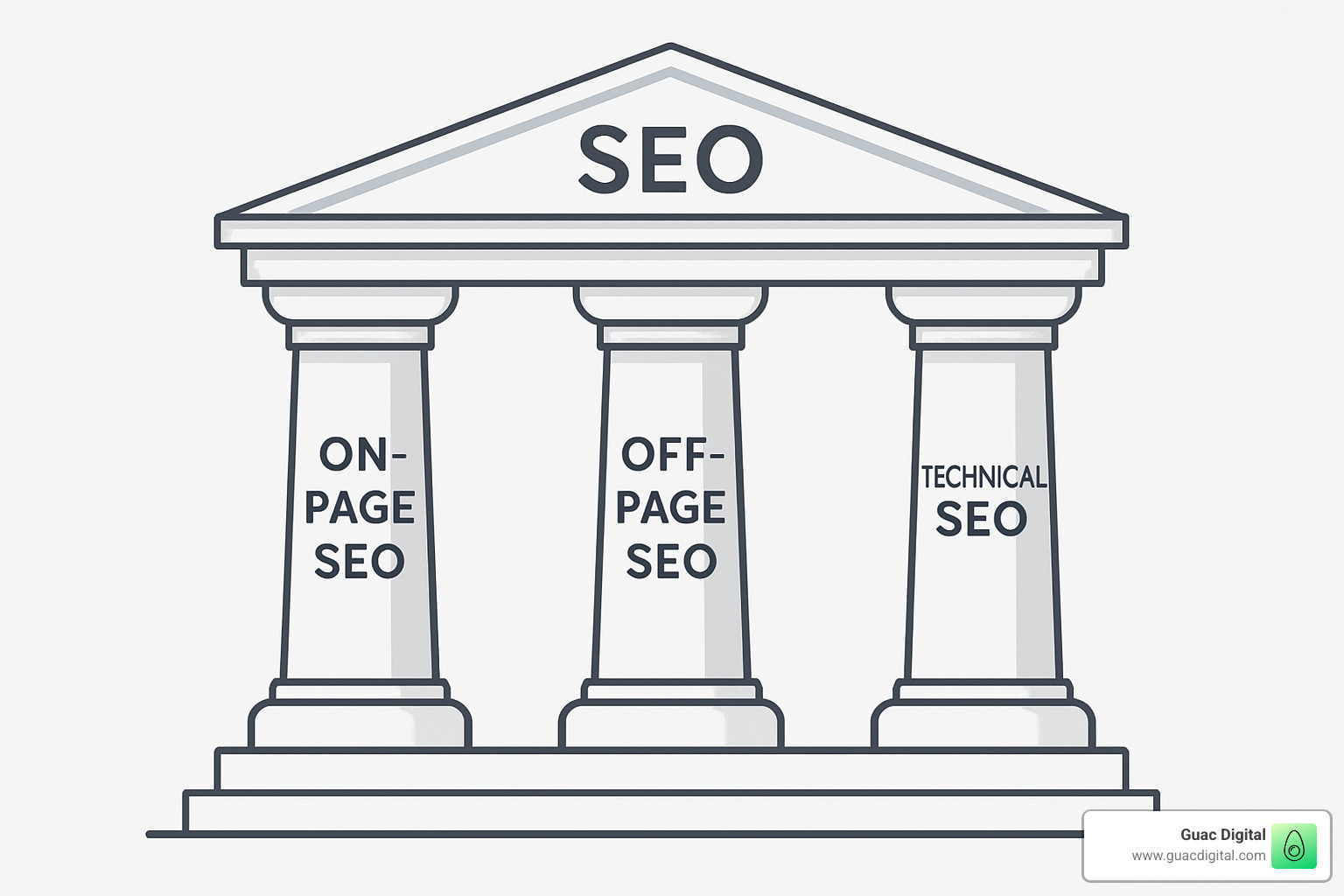
Think of SEO management like building a house. You need a solid foundation, strong walls, and a roof that protects everything underneath. In the SEO world, these three essential pillars are on-page SEO, off-page SEO, and technical SEO.
But here’s the thing – before you start building, you need to understand who you’re building for. That’s where audience research comes in. We always start by diving deep into your customers’ search behavior, pain points, and the journey they take from first search to final purchase.
Competitor analysis is equally crucial. You wouldn’t build a house without looking at what your neighbors are doing, right? We analyze what’s working for your competitors and identify gaps you can exploit.
Your content strategy becomes the blueprint for everything else. Research consistently shows that quality content is the most effective SEO tactic, with 54% of SEO experts ranking it as their top priority. This isn’t just about stuffing keywords into blog posts – it’s about creating valuable resources that genuinely help your audience.
Link building remains the currency of the internet. Think of backlinks as recommendations from other websites. Just like in real life, recommendations from respected sources carry more weight than those from random strangers.
Our comprehensive Services for SEO address all these components in a coordinated approach, ensuring nothing falls through the cracks.
On-Page SEO: Optimizing What’s on Your Site
On-page SEO is where you have complete control. It’s like decorating your house – you decide what goes where and how it looks to visitors.
Keyword research is your starting point, but it’s not about finding the most popular terms. Smart SEO management focuses on understanding why people search for specific things. Google categorizes search intent into four types: people looking for information, trying to find a specific website, ready to buy something, or comparing options before purchasing.
Long-tail keywords often deliver better results than broad terms. Instead of competing for “coffee,” you might target “best organic Ethiopian coffee beans online.” It’s more specific, less competitive, and attracts people who are closer to making a purchase.
Content creation has evolved beyond simple keyword placement. Google now prioritizes content that demonstrates experience, expertise, authoritativeness, and trustworthiness – what they call E-E-A-T. This means showcasing real credentials, citing credible sources, and providing comprehensive, accurate information.
Our SEO Copywriting and Content Optimization Services focus on creating content that serves both users and search engines naturally.
Title tags and meta descriptions are your first impression in search results. They should include your target keywords naturally while compelling users to click. Keep titles under 60 characters and descriptions under 160 characters for optimal display.
Image optimization involves more than just adding alt text. Use descriptive file names, compress images for faster loading, and write alt text that accurately describes the image content. This helps both accessibility and search engine understanding.
Internal linking creates connections throughout your site. Use descriptive anchor text and link to relevant pages strategically. This helps search engines understand your site structure and distributes authority effectively.
Google’s emphasis on creating helpful content means focusing on user value first, with optimization as a natural byproduct.
Off-Page SEO: Building Authority and Trust
Off-page SEO is about building your website’s reputation in the broader digital world. It’s like building your professional reputation – it takes time, consistency, and genuine value creation.
Backlink analysis and strategic link building form the foundation of off-page SEO. Quality trumps quantity every time. A single link from a highly authoritative, relevant site carries more weight than dozens of low-quality links.
Guest blogging remains effective when done thoughtfully. Rather than mass-producing generic content, focus on creating genuinely valuable pieces for relevant publications in your industry. This builds relationships and demonstrates expertise.
Digital PR extends beyond traditional link building. It’s about becoming a trusted voice in your industry through participating in discussions, contributing to publications, and building relationships with journalists and influencers.
Brand mentions, even without links, contribute to your authority. Google increasingly recognizes unlinked brand mentions as authority signals. Encourage satisfied customers to mention your brand in reviews, social media, and industry forums.
Social media signals aren’t direct ranking factors, but they amplify your content’s reach and can lead to natural link acquisition. Active community engagement builds relationships that often translate into valuable backlinks and brand mentions.
As research confirms, word of mouth remains one of the most effective and lasting ways to build authority and trust – and social media facilitates this at scale.
Technical SEO: Ensuring a Solid Foundation
Technical SEO is the behind-the-scenes work that ensures search engines can properly crawl, index, and understand your website. It’s like the plumbing in your house – when it works, you don’t notice it, but when it breaks, everything stops functioning.
Site audits help identify issues before they impact your rankings. Mobile-friendliness isn’t optional anymore, with over 60% of website traffic coming from mobile devices.
Site speed and Core Web Vitals are now ranking factors. Google measures page speed, interactivity, and visual stability. Compress images, minify code, leverage browser caching, and consider a content delivery network (CDN) to improve loading times.
Crawlability and indexing ensure search engines can find and understand your content. XML sitemaps help search engines find your pages, while robots.txt files guide crawling behavior. Ensure your site structure is logical and all important pages are easily accessible.
Schema markup helps search engines understand your content context. It can improve your search results with rich snippets, potentially improving click-through rates. Implement relevant schema for your business type, products, reviews, and events.
SSL certificates (HTTPS) are essential for security and trust. Google considers HTTPS a ranking factor, and browsers warn users about unsecured sites. This is non-negotiable for modern websites.
Check your site’s health with the URL Inspection Tool in Search Console to identify and fix crawling issues before they impact your rankings.
The Modern SEO Management Toolkit: Platforms, Tools, and AI
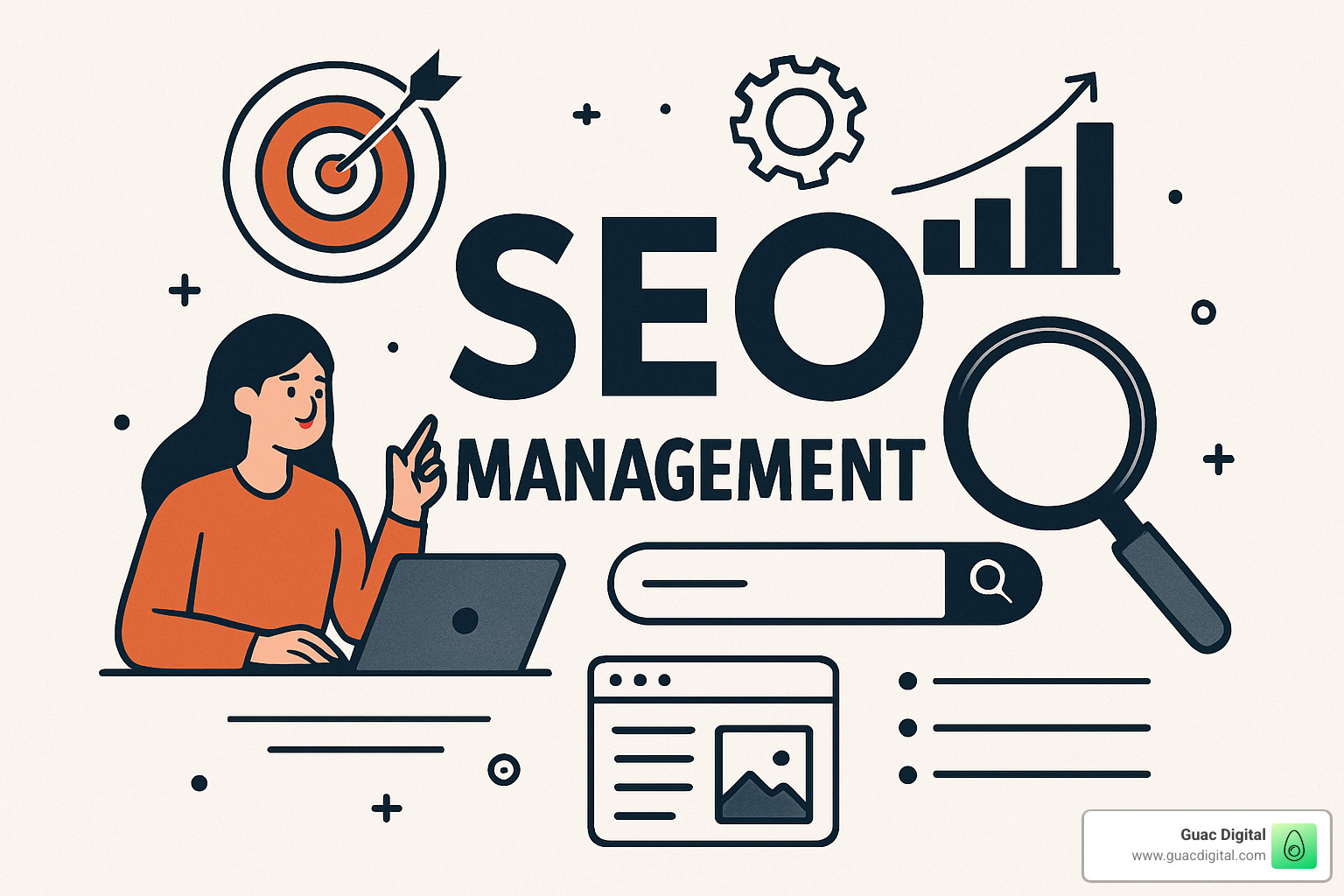
Gone are the days when SEO management was a handful of tricks. Today it’s a data-heavy discipline boosted by AI and automation.
Choosing the Right SEO Tools and Platforms for Your Business
Tool choice should match business size and goals. Enterprises often need all-in-one suites with collaboration features, while smaller teams may prefer focused, budget-friendly apps. Whatever you choose, make sure it can:
- Find and track keywords
- Suggest on-page improvements
- Analyse backlinks
- Audit technical issues
- Monitor rankings
- Generate clear reports
Modern platforms pull data from Google Analytics, Search Console and social channels into one dashboard, saving hours of manual work.
The Role of AI and Automation in SEO Management
Artificial intelligence now drafts outlines, flags content gaps, and forecasts keyword trends. Automation handles repetitive jobs like daily rank checks or scheduled site audits, giving strategists more time to create value.
Google still rewards experience, expertise, authority and trust (E-E-A-T), so every AI-assisted asset is reviewed by humans before it goes live. At Guac Digital, we blend AI speed with expert oversight to keep quality high while accelerating results.
Measuring Success: Tracking ROI and Overcoming Challenges
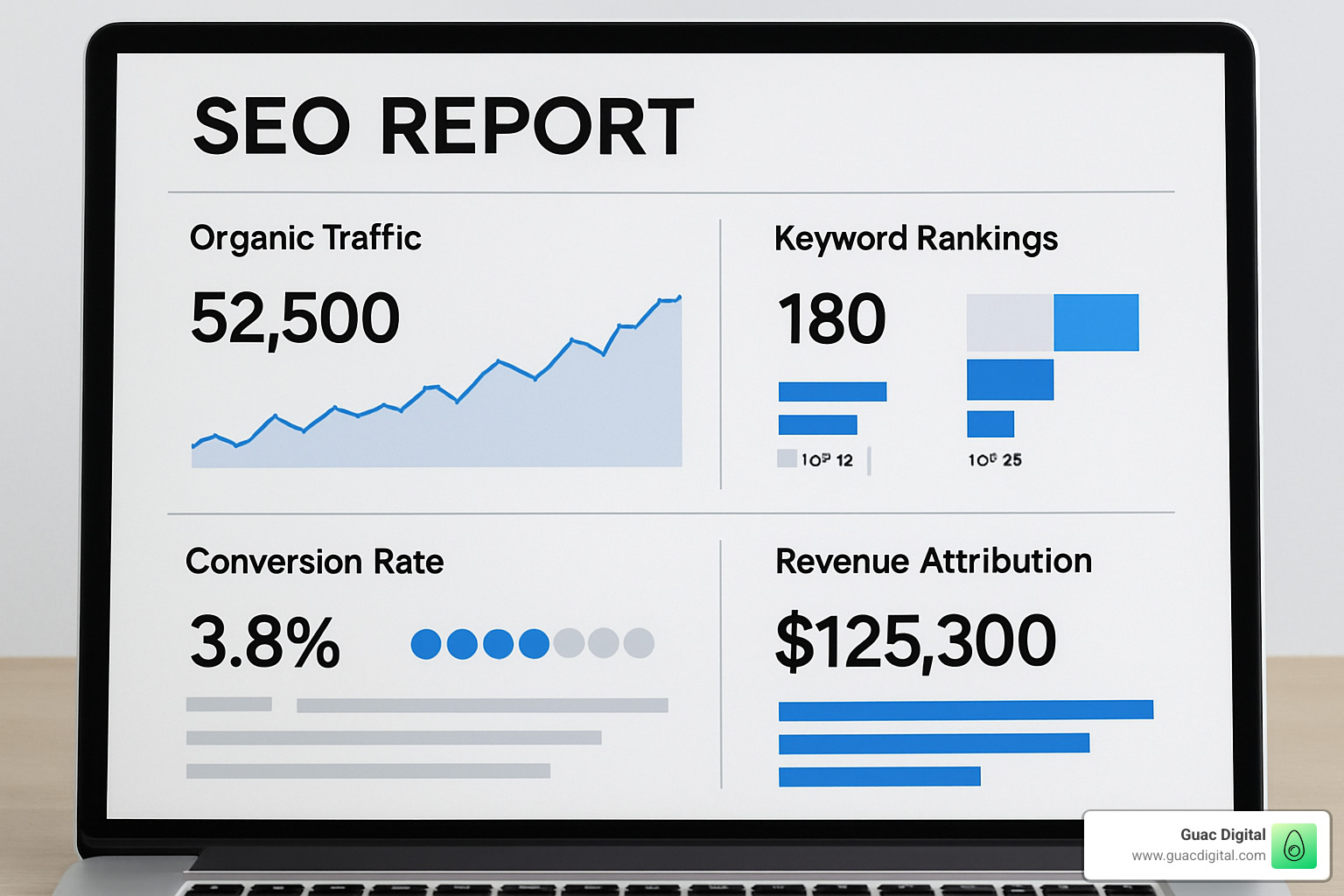
Great rankings are pointless unless they grow your business. That’s why Guac Digital reports on both search metrics and bottom-line impact.
How to Measure and Report on SEO Success
Leading indicators (early signs):
- Organic click-through rate (CTR)
- Pages indexed
- Technical health scores
- New content published
- Fresh quality backlinks
Lagging indicators (business results):
- Organic traffic growth
- Keyword rankings
- Conversion rate from organic visits
- Revenue attributed to organic search
We rely on Google Analytics and Search Console for reliable data and calculate ROI with:
((Organic Revenue – SEO Cost) / SEO Cost) × 100
Common Challenges and How to Overcome Them
- Algorithm updates: focus on quality content, UX and technical health to stay resilient.
- Proving value: tie rankings to leads, sales and cost savings in easy-to-read dashboards.
- Limited resources: prioritise quick wins first, schedule bigger fixes, and revisit plans monthly.
- Rapid industry change: partner with a Professional SEO Agency that makes staying current its full-time job.
Frequently Asked Questions about SEO
Got questions about how SEO management actually works in the real world? You’re not alone! These are some of the most common things people ask us, and we’re happy to shed some light on them.
How long does it take to see results from SEO?
This is probably the number one question we get, and it’s a great one! Think of SEO like planting a garden. You wouldn’t expect a lush, blooming landscape overnight, right? Similarly, SEO management is fundamentally a long-term strategy that truly rewards patience and consistent effort.
While you might see some initial changes and technical improvements show an impact within weeks 1-4, significant, game-changing results typically take 4-12 months to really blossom. Why the range? It depends on a few key factors: how competitive your industry is, where your website is starting from (is it brand new or established?), your budget and resources, and, of course, how consistently and expertly your strategy is executed.
Here’s a rough idea of what to expect:
- In the first few weeks, you might notice technical fixes kicking in.
- By months 2-3, your new content should start getting indexed by search engines, and you might begin to rank for some very specific, long-tail keywords.
- As you hit months 4-6, you’ll likely see broader keyword rankings improve, and traffic increases should become noticeable.
- By months 6-12, the magic of compounding effects really takes hold. This is when you’ll typically experience significant traffic and ranking gains, proving that consistent effort truly pays off. Just like staying fit, you can’t just work out for a month and expect permanent results from SEO. It’s an ongoing journey!
Is SEO a one-time task or an ongoing process?
This is another huge misconception we often encounter, and it’s super important to clear up: SEO is definitively an ongoing process, not a one-time task. If you treat it as a “set it and forget it” project, you’re missing out on the full power of SEO management and probably leaving your competitors in the dust.
Why does SEO require continuous attention? Well, search engines like Google are constantly refining their algorithms – they make thousands of changes every year! Plus, your competitors aren’t standing still; they’re always working to improve their own SEO efforts. Your content needs to stay fresh and relevant, and your website requires ongoing technical maintenance to ensure it’s healthy and performing its best. Not to mention, your business goals and the market itself are always evolving.
So, what does this ongoing care look like? It includes regular content creation and optimization, consistent technical audits and fixing any issues that pop up, monitoring your backlinks and finding new opportunities, constantly analyzing your performance, and adjusting your strategy as needed. Think of SEO like maintaining a beautiful garden – the initial planting is crucial, but it’s the ongoing watering, weeding, and pruning that determine its long-term success and vibrancy.
Can I do SEO management myself?
“Can I do my own SEO management?” It’s a question many business owners ponder, especially when starting out. And the short answer is: yes, it’s possible to do DIY SEO, especially if you’re armed with the right tools, knowledge, and a significant chunk of time. However, the sheer complexity and ongoing time commitment involved make professional management increasingly valuable for most businesses.
Let’s be realistic about DIY SEO management. It demands a serious time investment – we’re talking about an ongoing commitment, not a weekend project. There’s also a steep learning curve; SEO blends technical skills, creative thinking, and analytical prowess. Plus, those professional SEO tools that give you an edge? They can get quite expensive for individual users. And keeping up with Google’s ever-changing algorithms and the latest best practices? That requires constant learning and adaptation.
When might DIY SEO make sense for you? If you’re a small business with a tight budget, have a simpler website with a local focus, or perhaps you have dedicated internal resources eager to dive deep into SEO and learn the ropes. But for everyone else, especially businesses with complex websites, those in highly competitive industries needing sophisticated strategies, or companies looking for faster, more consistent results, professional help is often the smarter choice.
Hiring an SEO agency like Guac Digital provides you with immediate access to specialized expertise, advanced tools you might not otherwise afford, and proven processes that can significantly accelerate your results. It also frees up your valuable internal resources to focus on what they do best – running your core business!
Conclusion: Mastering Your Strategy for Long-Term Growth
Think of SEO management not as a finish line you cross, but as an exciting, ongoing journey. It’s a path of continuous improvement and smart adaptation. The businesses that truly shine in organic search understand this. They know that effective SEO management means combining clever strategy with steady action, all while being ready to adjust as the digital world shifts.
Throughout this guide, we’ve explored the crucial pieces that make up successful SEO management. We’ve digd into the bedrock of on-page, off-page, and technical SEO, and looked at the awesome modern tools and AI-powered solutions that make the process smoother. The big takeaway? While the specific tricks of the trade might change, the core ideas stay the same: always put your users first, keep your website technically sound, and build genuine authority in your field.
At Guac Digital, our data-driven approach has consistently delivered amazing results. We’re talking about clients seeing an average of 300% increase in organic traffic! Why? Because we tie every SEO effort directly to your business goals, focusing on the metrics that truly matter. It’s about more than just rankings; it’s about real growth.
So, what’s the secret to truly mastering your SEO strategy for lasting success? It boils down to a few key principles. First, think long-term. SEO isn’t a sprint; it’s a marathon where consistent effort really pays off over time. Second, always accept data-driven decision making. Let analytics be your compass, guiding your strategy rather than just relying on guesswork. Third, make sure you maintain technical excellence. A strong technical foundation is like the sturdy engine of your car – it makes everything else run smoothly. Fourth, always focus on user value. You’re writing for real people, so make sure your content truly helps and engages them. And finally, stay adaptable. The digital world changes fast, so be ready to tweak your approach while keeping your core goals in sight.
The investment you make in proper SEO management pays dividends that stretch far beyond just climbing search rankings. Improved organic visibility builds trust in your brand, helps you get new customers without breaking the bank, and creates lasting competitive advantages that grow stronger over time.
Whether you decide to handle SEO yourself or team up with an experienced agency, the most important thing is to commit to the ongoing process. Give it the resources it needs and approach it with realistic expectations. The businesses that treat SEO as a vital part of their operation, not just an afterthought, are the ones that truly conquer their digital markets.
Ready to transform your organic search performance? Explore our comprehensive engine optimization services and find how our data-driven approach to SEO management can drive sustainable growth for your business.