
Respond to reviews: Master Growth 2025
Why Every Business Needs to Respond to Reviews
Respond to reviews isn’t just good customer service—it’s essential for business survival. Here’s a quick guide:
- Positive reviews: Thank customers, mention specifics, invite them back.
- Negative reviews: Apologize quickly, show empathy, offer solutions, take the conversation offline.
- Neutral reviews: Thank them for feedback, ask clarifying questions, highlight improvements.
- Timeline: Respond within 24-48 hours (negative reviews get priority).
- Tools: Use your Google Business Profile dashboard or review management software.
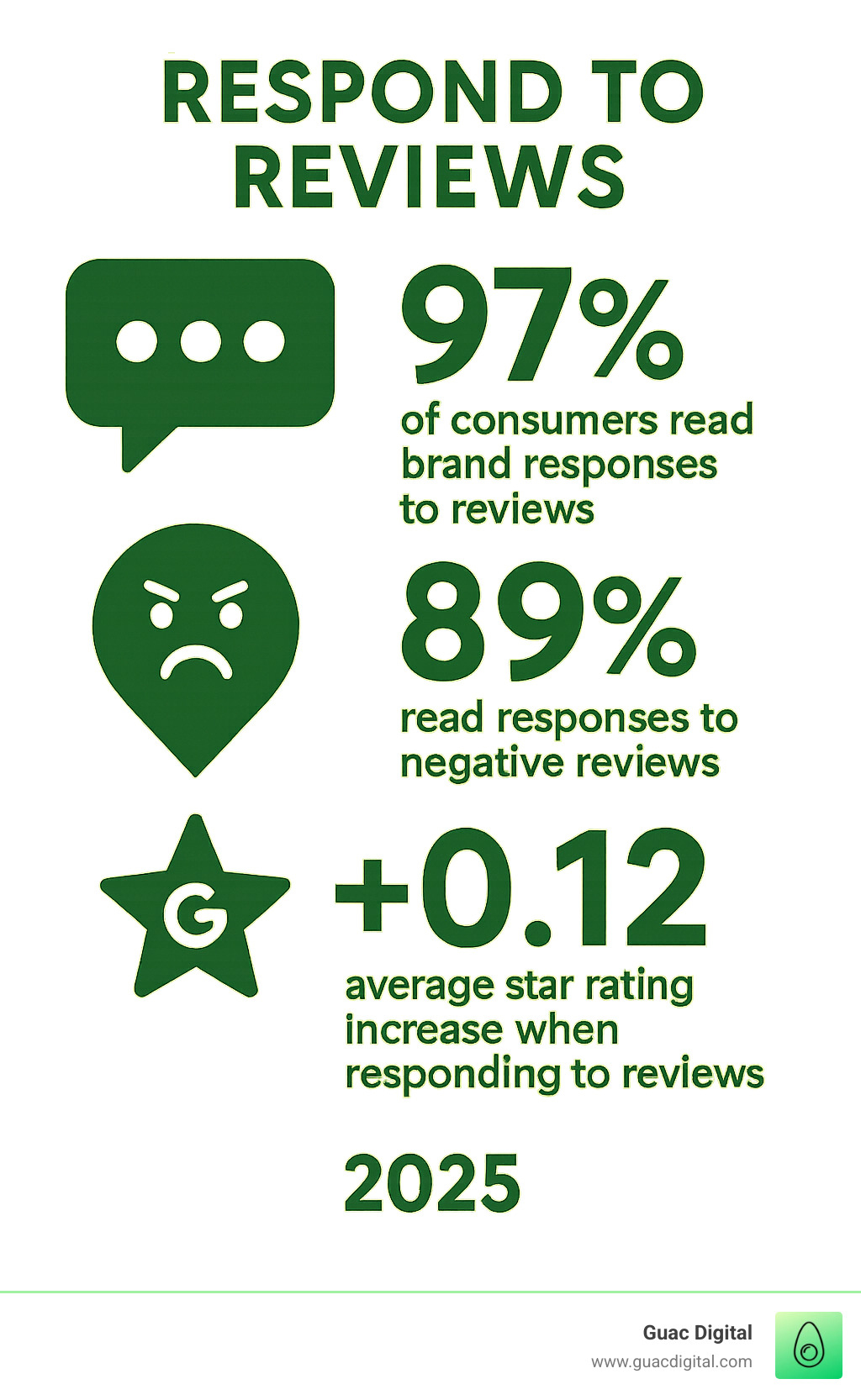
The numbers don’t lie: 97% of consumers read businesses’ responses to reviews, and 45% are more likely to visit a business if they see management responds to negative reviews on Google.
Think of your Google reviews as a digital storefront. Potential customers aren’t just reading reviews; they’re watching how you handle praise and criticism. Your responses reveal your brand’s personality and commitment to customer service.
Businesses that respond to reviews see an average rating increase of 0.12 stars. While that seems small, it can mean the difference between a 4.2 and 4.3-star rating—and a significant impact on revenue. How you respond shapes your reputation and influences every future customer.
I’m Guy Leon, founder of Guac Digital. We’ve helped hundreds of businesses transform their online reputation. Based on our experience, knowing how to respond to reviews effectively is one of the biggest competitive advantages you can have.
Respond to reviews word guide:
- do managers of a google listing receive review notifications
- google review management concepts
- google reviews reputation management
Why Responding to Reviews is a Non-Negotiable Business Strategy
Ignoring reviews is like ignoring a customer in your store—it’s bad for business. When you respond to reviews, you’re executing a reputation management strategy with tangible SEO benefits and a direct impact on customer loyalty.
Google notices when businesses engage with customers, and this activity can boost your local search ranking. Since 63.6% of consumers check Google reviews before visiting a business, being visible and engaged is essential.
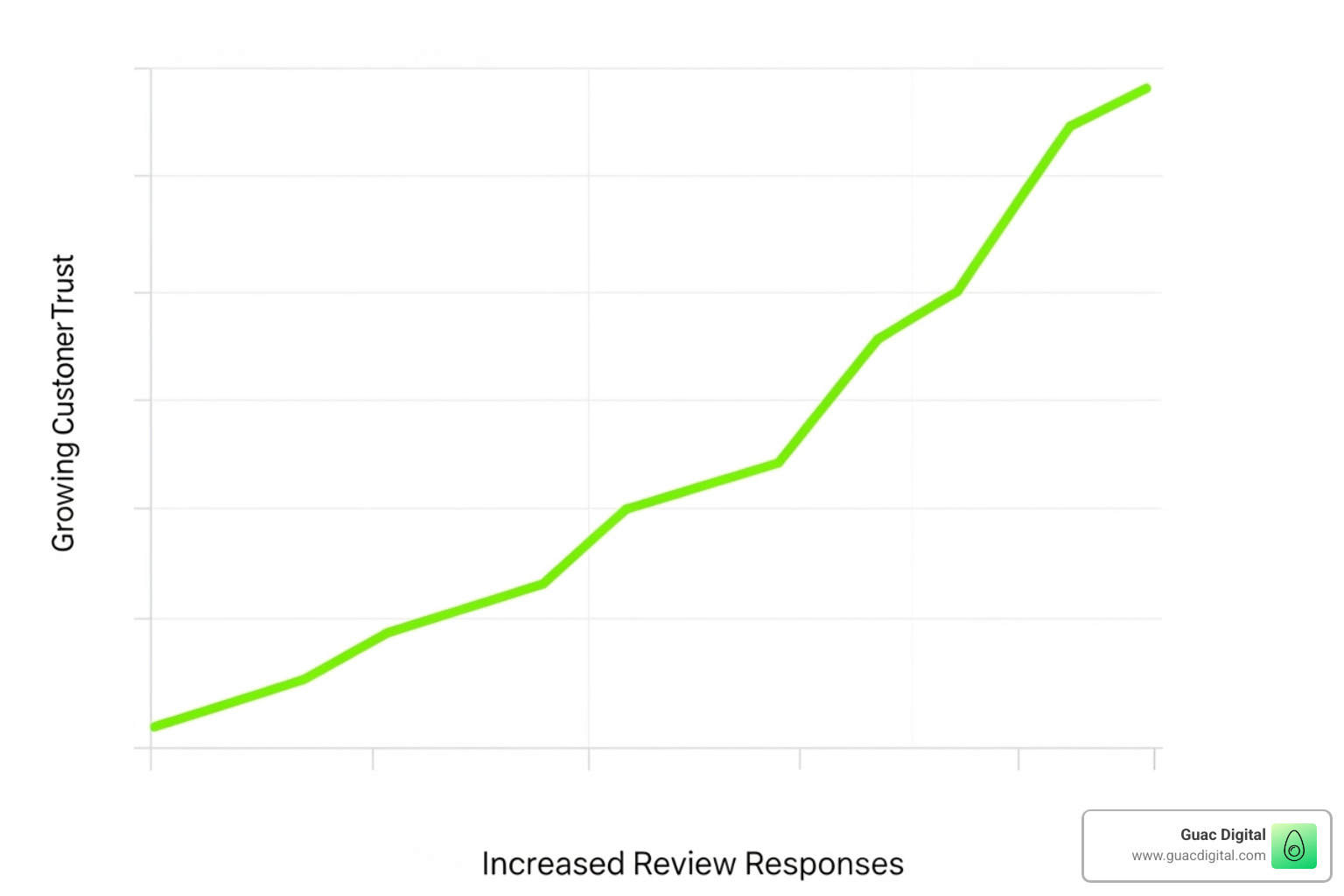
Responses also shape brand transparency. Acknowledging feedback shows you’re not a faceless corporation; you’re human, you listen, and you care. This builds credibility and turns browsers into loyal customers. Businesses that respond see a rating increase of about 0.12 stars on average. This is social proof in action, leading to increased conversions because people trust businesses that pay attention.
Think of responses as your damage control insurance. While 94% of consumers say negative reviews have steered them away, a thoughtful response can flip that script by showing everyone that when things go wrong, you step up to make them right.
The Impact on Potential Customers
Your review responses have an audience far bigger than the original reviewer. Before someone trusts you with their money, they’re reading not just what customers say, but how you handle what they say. And since 89% of consumers read responses, every reply is a customer service showcase.
Your responses reveal your brand personality in ways your website copy never could. They show if you’re professional, if you take responsibility, and if you celebrate with your customers. These first impressions create a powerful competitive advantage, as you build public relationships while competitors stay silent.
How Responses Affect Your Bottom Line
Consistently responding to reviews is an investment in measurable results. An increased star rating directly translates to higher conversion rates, as people trust businesses with higher, more engaged ratings.
Responding to negative reviews can save you money. Studies show that 45% of consumers are more likely to visit a business that responds to negative reviews. You’re turning potential lost revenue into new customers.
This practice also boosts customer retention. Thoughtful responses show existing customers their opinions matter, building brand advocates who return and bring others with them. You’re mitigating revenue loss from negative reviews by demonstrating professionalism.
The positive ROI comes from better search rankings, higher conversion rates, and increased customer lifetime value. Not responding isn’t just a missed opportunity—it’s leaving money on the table.
The Art of the Response: How to Respond to Reviews of Every Kind
Learning how to respond to reviews means mastering a public conversation. The secret is blending genuine personalization with a consistent brand voice. Think of it as customer service on a stage, where you’re performing for everyone who might read the exchange months from now.
Timeliness is crucial; a reply within 24-48 hours shows you’re paying attention. The goal is to blend empathy with professionalism, respecting the time each customer took to share their experience.
How to Effectively Respond to Positive Reviews
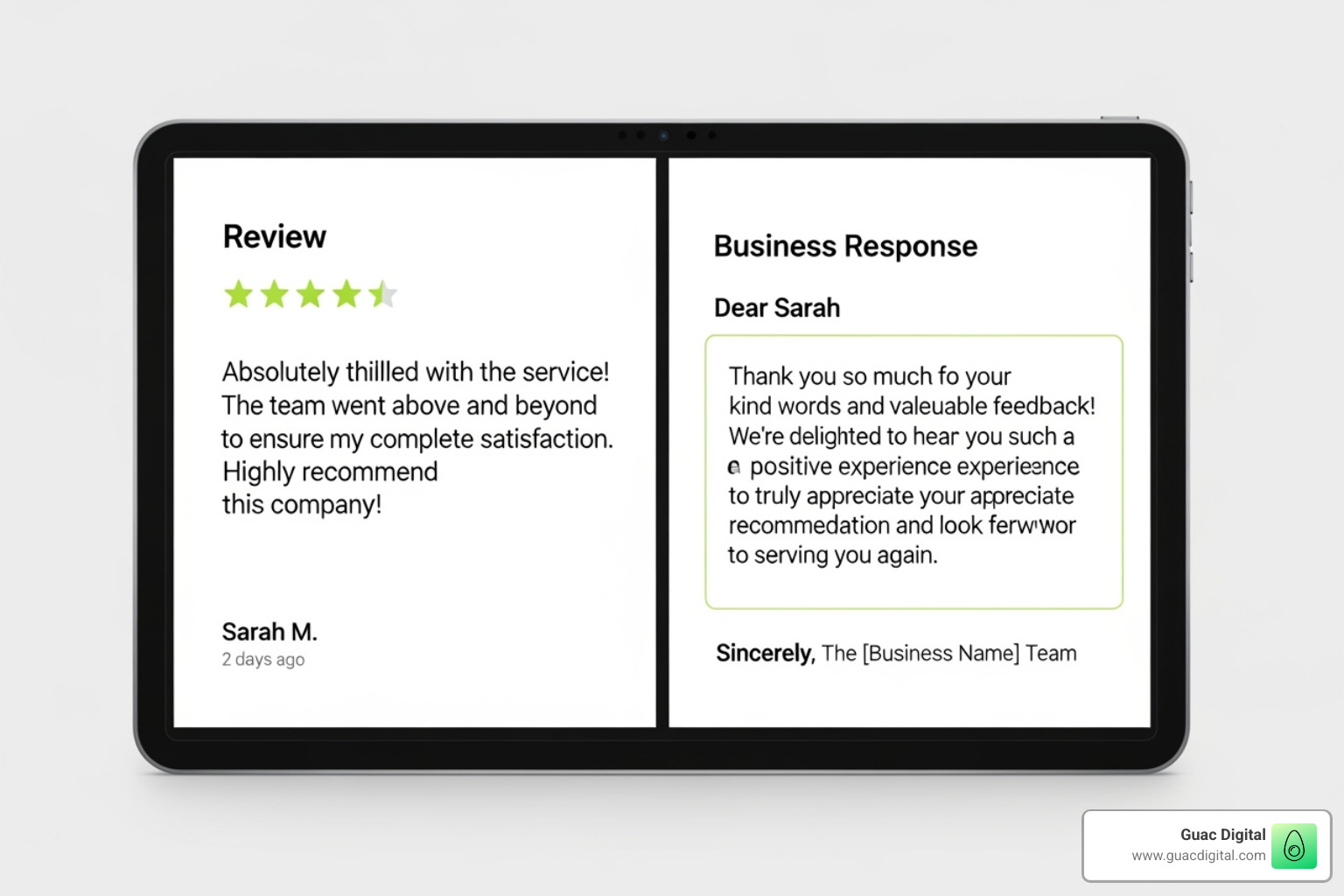
Positive reviews are relationship-building opportunities. When a customer leaves a glowing review, they’re acting as a brand advocate. Thank them genuinely and show you’ve read their comments. Avoid generic replies and dig into the specifics.
If they praised your customer service, reinforce that positive by mentioning the employee by name. This validates their experience and provides employee recognition. Smart businesses also mention their business name naturally in responses for local SEO benefits, like, “We’re so glad you enjoyed your visit to Tampa Bay Café!”
Personalization is key. Use their name and reference specific details from their review. This attention to detail can turn a happy customer into a loyal one. Always invite them back warmly to encourage repeat business.
Here’s an example:
“Thank you so much, Jennifer! We’re delighted you loved our fresh seafood and that Marcus took such great care of you. Creating memorable dining experiences is what we’re all about at Sunset Grill. We hope you’ll join us again soon to try our new summer specials!”
Best Practices to Respond to Negative Reviews and Mitigate Damage
Negative reviews are opportunities to demonstrate your professionalism. Since 89% of consumers read responses to negative reviews, your reply will be seen by many potential customers.
Respond quickly, ideally within 24-48 hours. Speed shows you take concerns seriously. Start with a sincere apology for their disappointing experience. You’re not admitting fault, just acknowledging their feelings.
Show genuine empathy by putting yourself in their shoes. If your business made a mistake, take responsibility without making excuses. Never get defensive or argue details publicly; stay professional and focused on a solution.
Offer concrete solutions whenever possible, specifying your next steps. Most importantly, take the conversation offline for detailed discussions. A simple, “Please contact us directly at (555) 123-4567 so we can resolve this,” prevents a public back-and-forth and shows you’re committed to making things right.
Here’s a solid response:
“Hi David, we’re truly sorry about the poor service you experienced. This doesn’t reflect our standards, and we understand your frustration. We’re investigating what went wrong and would love to make this right. Please call us at (555) 123-4567 so we can discuss this further.”
For more strategies, see our guide on How to Effectively Address Negative Reviews on Google. For personalized help, Contact Us.
Handling Neutral (3-Star) Reviews
Neutral reviews often contain the most actionable feedback, pinpointing what’s holding your business back from a 5-star experience. They aren’t angry, but something was missing.
First, thank them for their honest feedback. Acknowledge their specific points directly. If they said your restaurant was too noisy, address it: “We hear you about the noise level during peak hours and are working to improve it.”
If a review is vague, it’s okay to ask clarifying questions politely. Highlight any improvements you’ve made that are relevant to their feedback. This shows you’re actively working on common concerns.
Most importantly, show you value all feedback. Neutral reviewers can become loyal customers when they see their suggestions are taken seriously. “Your input helps us improve, and we’d love the chance to provide a 5-star experience next time.”
Here’s an example:
“Thank you for the 3-star review, Mike! We’re glad you enjoyed our coffee and understand your point about limited seating. We’re expanding our café space next month to address this. We’d love for you to come back once the renovation is complete!”
Beyond the Reply: Turning Feedback into Business Growth

When you respond to reviews, you’re collecting business intelligence. Each review offers free market research directly from your customers. Smart businesses turn this feedback into concrete improvements.
At Guac Digital, we’ve seen businesses transform when they treat reviews as their personal focus group. Your customers are telling you what’s working, what’s not, and what they wish you offered. The businesses that truly listen are the ones that stay ahead of the competition.
How to Use Customer Feedback for Business Improvement
Successful businesses turn review analysis into a systematic process. They analyze review data to find patterns. When multiple customers mention the same issue, it’s a signal to act.
Identifying common themes creates a roadmap for improvement. Perhaps customers praise your staff but complain about parking. Now you know what to reinforce and what to fix. These insights are invaluable because they come directly from paying customers.
The real power comes when you address operational issues based on this feedback. We’ve seen businesses redesign workflows or add staff based on review comments. These aren’t just customer service wins; they’re operational improvements that boost your bottom line.
Reviews also spark innovation. 66% of retailers and brands use reviews to improve products, and 50% use them to refine marketing. A customer complaint can be a product idea in disguise.
Share feedback internally with your team. Celebrate positive mentions and use constructive criticism for training. This turns every piece of feedback into actionable business intelligence.
Simple Strategies to Encourage More Customer Reviews
Getting more reviews should be easy for happy customers. Ask directly when you notice someone had a great experience. A simple, “If you enjoyed your visit, we’d love a quick review on Google,” works wonders.
- Email & SMS: Send follow-ups with a direct review link within a day or two of their visit.
- Website Links: Include prominent links to your review profiles on your site.
- In-Store Signage & QR Codes: Use QR codes on receipts, table tents, or business cards. They offer a convenient bridge from an offline experience to an online review.
Google makes this easy with its Business Profile tools, allowing you to generate a direct review link or QR code. The secret is timing and convenience. Ask when customers are happiest and make the process simple.
For more strategies, check out our guide on Missing Google Reviews? A Step-by-Step Recovery Guide. Every review you encourage is another opportunity to respond to reviews and show future customers you care.
Streamlining Your Review Management Process
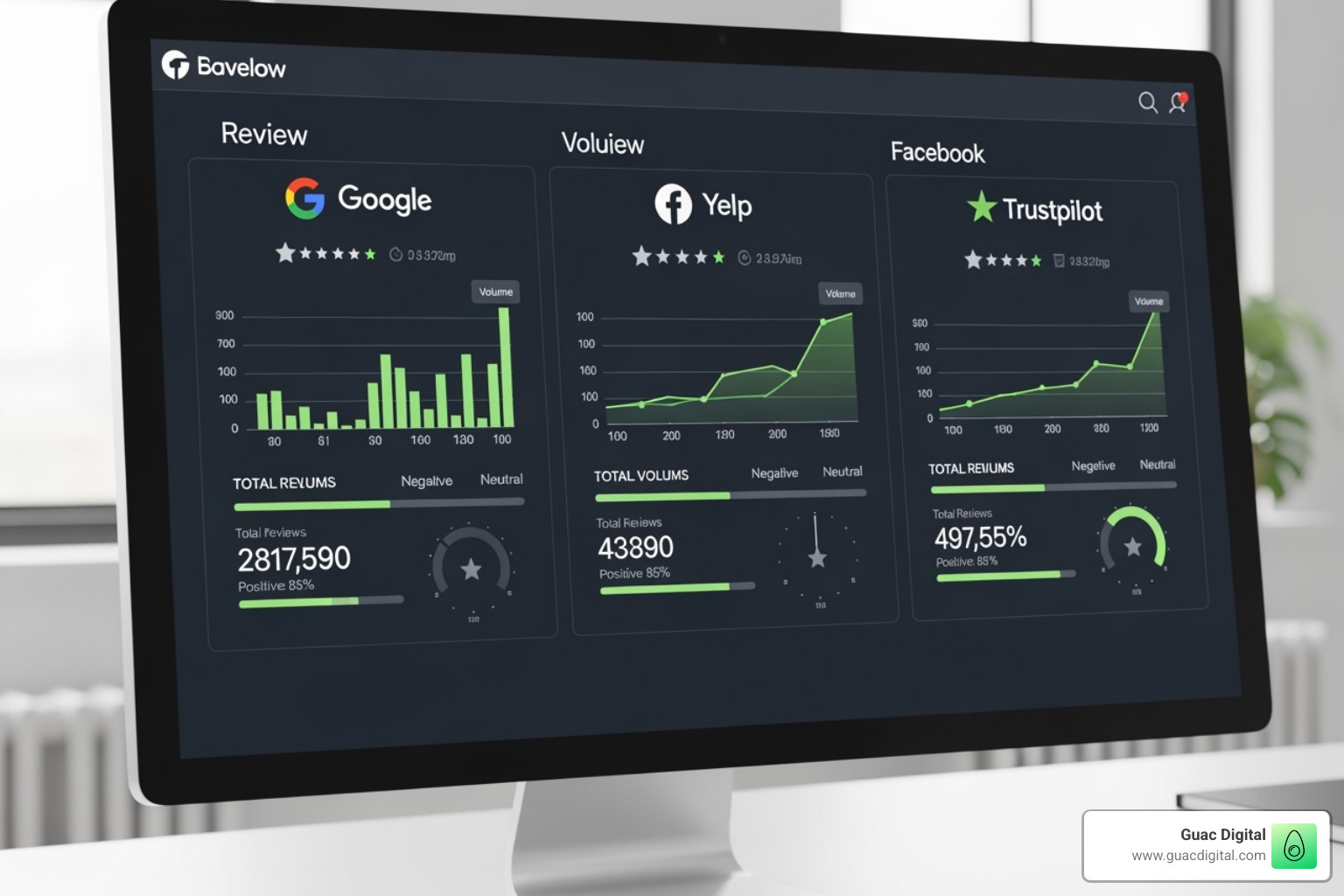
As your business grows, so does your review volume. What was once a manageable task can become overwhelming, with feedback flooding in from multiple platforms. The key isn’t working harder—it’s working smarter.
Streamlining your review management process is about building efficiency, consistency, and scalable systems. It’s about avoiding common mistakes that can turn your review responses from helpful to harmful.
Common Mistakes to Avoid When You Respond to Reviews
- Canned responses: Copying and pasting the same reply makes you look robotic. Customers deserve more than a form letter.
- Getting into arguments: Never get defensive or argue with reviewers online. Future customers are watching.
- Ignoring reviews: Silence, especially on negative feedback, tells the world you don’t care what customers think.
- Delaying responses: A frustrated customer only gets more frustrated when they don’t hear from you. Speed matters.
- Violating customer privacy: Never share personal details in a public response. It’s unprofessional and potentially illegal.
- Being overly promotional: A response is not a sales pitch. It feels manipulative and disingenuous.
Tools and Strategies for Efficient Review Responses
Managing reviews doesn’t have to be overwhelming. With the right approach, you can turn this task into a smooth, efficient part of your routine.
Review management solutions are game-changers for high-volume businesses. They pull all your reviews from different sites into one central dashboard, often with features like sentiment analysis and alerts.
For most businesses, the Google Business Profile dashboard is the perfect starting point. It’s free, powerful, and covers the platform where most customers leave reviews. You can read and reply directly from it. Google also provides guides on How to read & reply to reviews on Google.
Setting up alerts ensures you never miss a new review. Most platforms offer email or SMS notifications so you can respond quickly.
Creating response templates (with personality) is where efficiency meets authenticity. Develop a library of flexible templates for different scenarios, but always add personal touches and specifics from the review to make it feel human.
Assigning ownership is a critical strategy. Designate a team member as the review response champion to ensure consistency in tone and timeliness. Create a clear response policy that outlines your brand voice and procedures.
The goal is to make the human touch more efficient, not eliminate it. With the right systems, you’re not just managing your reputation; you’re scaling your customer relationships.
Frequently Asked Questions about Responding to Reviews
Managing online reviews can feel overwhelming. Here are the questions we hear most often from business owners who want to respond to reviews effectively.
How quickly should I respond to a customer review?
Timeliness is critical. Customers who take time to leave a review expect a prompt acknowledgment. A quick response shows their feedback is valued.
- Negative reviews: Respond within 24 hours. 53% of consumers expect a response to negative reviews within a week. A fast reply can de-escalate the situation and shows you’re attentive.
- Positive & Neutral reviews: A 24-48 hour window is ideal. For positive reviews, a timely response reinforces their good feelings. For neutral reviews, it shows you’re eager to learn and improve.
A prompt response signals to all customers that you are professional and care about their experience.
Should I respond to every single review?
The short answer is yes, if possible. However, the approach can vary.
- Negative & Neutral Reviews: Always respond. These are your best opportunities to resolve issues and demonstrate your commitment to customer satisfaction.
- Positive Reviews: Try to thank every happy customer, especially if you’re a small business. If you have a high volume of reviews, prioritize responding to the most detailed ones or those that mention specific team members.
For high-volume businesses, the key is a consistent strategy. Prioritize all negative and neutral feedback, then acknowledge a significant portion of positive reviews. This active engagement builds trust.
Can I ask a customer to change or remove a negative review?
This is a sensitive area. The golden rule is: focus on solving the problem first, not changing the review.
Your primary goal should be resolving the customer’s issue. When you genuinely fix what went wrong, many customers will voluntarily update their review to reflect the positive outcome. This happens naturally when people feel heard and valued.
After you’ve successfully resolved the issue, you can consider a polite request. You might gently ask if they’d consider updating their review to reflect their new experience. Never pressure them, offer incentives, or make it a requirement.
Review platforms like Google have strict policies against review manipulation. They typically only remove reviews that violate content policies (e.g., spam, hate speech). If a review breaks these rules, you can flag it for removal.
Focus on service recovery. Turning a negative experience into a positive one often creates a more loyal customer and shows potential customers how you handle criticism with grace.
For more guidance, see our guide on How to Effectively Remove Negative Reviews from Google. If you need help, don’t hesitate to Contact Us.
Conclusion: Turn Conversations into Conversions
Your online reviews are powerful conversations waiting to happen. Every time you respond to reviews, you’re not just answering one customer; you’re speaking to the hundreds of potential customers who are watching.
Since 97% of consumers read your responses, your thoughtful reply to a frustrated customer could be what convinces someone else to give you a chance. This isn’t just damage control; it’s proactive reputation building.
The businesses we work with at Guac Digital have found that consistently and authentically responding to reviews doesn’t just protect their reputation—it actively builds it. We’ve seen clients turn negative reviews into positive outcomes and boost conversion rates simply by showing potential customers how they handle problems with professionalism.
This is about turning conversations into conversions. When you apologize sincerely, celebrate your team’s successes, and demonstrate that customer satisfaction is your priority, you build the kind of trust that translates directly into revenue.
Your review responses reveal your brand’s true character. They show whether you’re open to feedback and whether your commitment to excellence is real. At Guac Digital, we know that successful marketing campaigns start with trustworthy brands, and your review management strategy is the foundation of that trust.
Ready to transform your online presence from reactive to proactive? Let’s help you create a review management strategy that turns feedback into growth.