
How to increase ROI? Skyrocket in 2025
Why ROI is the Ultimate Business Game-Changer
How to increase ROI? This question keeps business owners awake, and for good reason. Your return on investment is the key metric that separates thriving businesses from those just surviving in today’s competitive market.
Quick Answer: The fastest ways to increase ROI include:
- Optimize marketing campaigns by using data to focus on high-performing channels.
- Focus on customer retention, which costs 5x less than acquiring new customers.
- Automate repetitive tasks to free up resources for high-value activities.
- Improve conversion rates, where small changes can yield massive ROI increases.
- Leverage data-driven decisions, as companies using analytics see higher ROI.
The data is clear: many marketers struggle with underperforming campaigns that drain budgets. The good news is that strategic ROI optimization leads to dramatic improvements. Some companies achieve 391% higher conversions by responding to leads faster, while others find $1.5 billion in additional revenue by recycling old leads.
The key isn’t just spending less—it’s about spending smarter. Whether you’re dealing with low visibility or missed sales opportunities, the solution starts with measuring what matters and optimizing based on data.
I’m Guy Leon, founder and CEO of Guac Digital, where we’ve helped clients boost engagement and conversion rates by 350% through campaigns focused on maximizing ROI. My experience has taught me that How to increase ROI? isn’t just a question—it’s a systematic approach to business growth.
Easy How to increase ROI? word list:
Understanding the Foundations: What is ROI and Marketing Efficiency?
Let’s start with the basics. Understanding ROI is like having a GPS for your business decisions. Return on Investment is a simple way to measure how well your money is working for you, showing whether you’re winning or losing the financial game.
The beauty of ROI lies in its simplicity. You take your gain from investment, subtract your cost of investment, and see what’s left. The goal is always to get more out than you put in.
This is where marketing efficiency becomes your secret weapon. It’s not about spending less, but spending smarter. When you achieve superior results while reducing unnecessary costs, you’re hitting the ROI sweet spot. This transforms your thinking from “How much should we spend?” to “How to increase ROI?” with every decision. For a deeper dive, you can find More info about ROI Marketing to see how this plays out in real campaigns.
Defining and Calculating Your Return on Investment
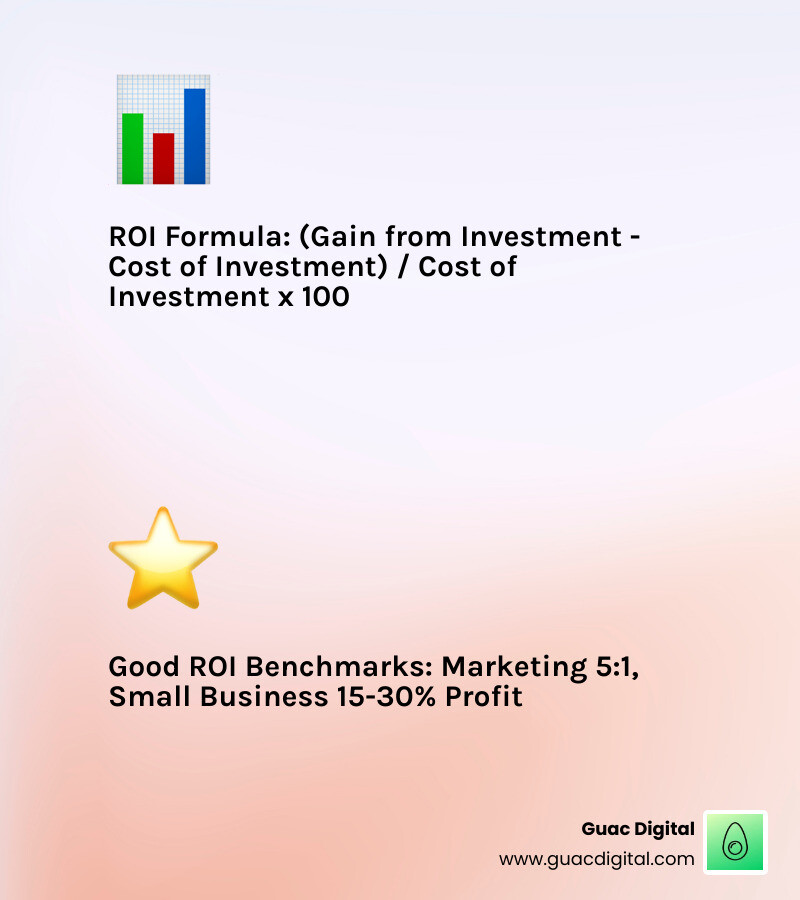
Here’s the simple math that matters. The basic ROI formula is:
(Revenue – Total Cost) / Total Cost x 100 = ROI %
In plain English, you take your net profit (revenue minus costs), divide it by the original cost, and multiply by 100 to get a percentage. For example, if you invest $5,000 in a campaign that brings in $15,000, your net profit is $10,000. That’s a 200% ROI, meaning you made two dollars back for every dollar spent.
This calculation becomes your North Star for strategic decisions, telling you which campaigns to repeat and which to overhaul. When you can calculate and track ROI consistently, you’re no longer guessing about what works.
The Link Between Marketing Efficiency and Higher ROI
Marketing efficiency is the bridge between spending money and making money. When you optimize your resource allocation, every dollar works harder.
Two key metrics are Cost Per Acquisition (CPA) and Customer Acquisition Cost (CAC). These tell you exactly how much it costs to win a new customer. Lower these costs, and your ROI automatically rises.
The Marketing Efficiency Ratio (MER), which divides total sales revenue by total marketing spend, gives you a high-level view of campaign effectiveness. Small improvements in efficiency can create massive ROI gains. When you reduce waste and focus on what converts, you’re not just saving money—you’re multiplying it.
At Guac Digital, we’ve found that answering “How to increase ROI?” often starts with these efficiency metrics. Once you know where your money goes and what it brings back, optimization becomes straightforward. For practical guidance, explore How to Calculate Digital Marketing ROI.
The Marketer’s Toolkit: Data-Driven Strategies to Increase ROI

Now that we’ve covered the basics, let’s dive into the practical strategies for how to increase ROI. The secret isn’t spending more; it’s getting smart with your data.
Think of data as your marketing GPS. With the right Key Performance Indicators (KPIs), Customer Lifetime Value (CLV), and conversion rate insights, you’ll know exactly where you’re going. Instead of guessing what customers want, you’ll know what makes them tick, turning your marketing from a cost center into a profit machine. Companies that use Data-Driven Marketing Strategies consistently outperform competitors because they rely on facts, not hunches.
Essential Metrics for Tracking Your Marketing ROI
These metrics are your marketing dashboard, telling you what you need to know at a glance.
| Metric | Formula | What It Tells You |
|---|---|---|
| Customer Acquisition Cost (CAC) | Total Marketing Spend / New Customers Acquired | The cost to gain one new customer. Lower is better. |
| Customer Lifetime Value (CLV) | (Avg. Purchase Value x Avg. Purchase Freq.) x Avg. Customer Lifespan | The total revenue expected from a single customer over time. |
| CAC to CLV Ratio | CLV / CAC | The relationship between customer value and acquisition cost. Aim for 3:1 or higher. |
| Conversion Rate | (Conversions / Total Visitors) x 100 | The percentage of visitors who complete a desired action. |
| Click-Through Rate (CTR) | (Clicks / Impressions) x 100 | The percentage of people who click your ad after seeing it. |
| Bounce Rate | (Single-Page Sessions / Total Sessions) x 100 | The percentage of visitors who leave after viewing only one page. |
The CAC to CLV ratio reveals the health of your business. If you spend $100 to acquire a customer who brings in $500, you have a winning formula. Similarly, a high bounce rate indicates a problem with your landing page or content. Focusing on lead quality over quantity is also crucial; 100 high-quality leads are better than 1,000 who won’t buy. For a deeper dive, see our guide on Creating a Data-Driven Marketing Strategy.
Leveraging Customer Data and Insights for Smarter Spending
Customer insights are like a crystal ball showing you what your audience wants. Key strategies include:
- Segmentation: Divide customers into groups based on behavior or demographics to tailor your messaging.
- Personalization: Tailor messages to individual customers. Conversations convert better than broadcasts.
- Customer Surveys: The best way to know what customers want is often to ask them directly.
- A/B Testing: Test different versions of ads, emails, and landing pages to see what resonates best.
- Predictive Analytics: Use historical data to forecast future behavior and adjust your strategy accordingly.
Research from McKinsey & Company on data-driven commercial growth shows that organizations using these strategies achieve a 15% increase in ROI on average. Finally, actively listen to customer feedback from reviews and support tickets. It’s invaluable intelligence for changing your approach.
How to Increase ROI with High-Impact Digital Marketing Campaigns

Here’s where the rubber meets the road. You have your data, and now it’s time for action. How to increase ROI? The answer lies in creating digital marketing campaigns that deliver real results.
This is about campaign optimization that goes beyond just spending on ads. It requires multi-channel digital marketing that creates a seamless customer journey. Your sales funnel analysis shows where people drop off, and your content marketing keeps them engaged. This integrated approach can transform your business. Understanding how to work with an expert can be a game-changer, as detailed in Maximizing ROI with a Digital Marketing Agency.
Optimizing Digital Campaigns and Landing Pages for Maximum Return
Running digital ads without optimization is like driving with your eyes closed. Properly optimized Google Ads campaigns can deliver 400% or higher returns, but that doesn’t happen by accident.
- Keyword Research: Hunt for the high-intent keywords your ideal customers use when they’re ready to buy.
- Ad Copy: Your message needs to speak directly to searchers with a compelling call-to-action (CTA).
- Landing Page Experience: Many campaigns fail here. A great landing page loads quickly, matches the ad’s promise, and makes it easy for visitors to convert. For detailed strategies, check out How to Optimize Website for Conversions.
Google’s Quality Score rewards advertisers who create relevant and helpful experiences with lower costs and better ad positions. If you’re working with an agency, understanding Determining the ROI of a PPC Agency will help you make smarter decisions.
Diversifying Your Digital Channels: From Social Media to Email
Here’s a reality check: 73% of consumers use multiple channels during their shopping journey. If you’re only in one place, you’re missing out.
Social Media Marketing: While 92% of marketers worry about social media ROI, it’s essential for building relationships and trust. When someone is ready to buy, you want to be the first name they think of. Our approach to Social Media ROI focuses on measurable results.
Email Marketing: This channel is a powerhouse, with an average return of $43 for every $1 spent. It’s personal, targeted, and effective.
SEO: This is your long-term investment. While it takes time, organic traffic is essentially free once you start ranking, and its value compounds over time.
Content Repurposing: Turn one piece of content into many. A webinar can become a blog post, social media content, and an email newsletter, maximizing the ROI of your creative efforts.
The key is a cohesive multi-channel approach where each channel reinforces the others, guiding prospects through your sales funnel.
Streamlining for Success: The Role of Automation and Technology

Managing every marketing task manually is inefficient and exhausting. Thankfully, we don’t have to do it the hard way anymore.
Marketing automation and AI in marketing are powerful tools that can dramatically transform your ROI. When you automate repetitive tasks, you free up your team to focus on strategic work. While you’re sleeping, your automated systems are nurturing leads and moving customers through your sales funnel. Your CRM systems collect data, and your lead nurturing sequences build relationships.
Industry reports show that companies using AI-powered marketing tools see significant improvements in efficiency and ROI. The question isn’t whether you should adopt these technologies—it’s how quickly you can implement them.
How to Increase ROI by Automating Your Digital Marketing Funnel
How to increase ROI? The answer often lies in automation. An automated funnel works around the clock to convert prospects into customers.
- Automated Email Sequences: Nurture leads with personalized content, answer questions, and guide them toward a purchase automatically.
- Chatbots: Handle initial inquiries, qualify leads, and schedule appointments 24/7, ensuring you never miss an opportunity.
- Lead Scoring: Automatically prioritize prospects based on their engagement and behavior, so your sales team can focus on the hottest leads.
- CRM Integration: Bring all your customer data into one central hub, eliminating silos and providing a complete view of each customer’s journey.
Speed matters. Research shows that contacting a lead within 5 minutes increases contact odds by 100 times compared to waiting 30 minutes. Responding in the first minute can increase conversions by 391%. Automation makes this lightning-fast response standard practice.
Businesses using marketing automation to nurture prospects see a 451% increase in qualified leads and report 25% higher revenue. For insights on optimizing your automated ad spend, explore Programmatic Advertising ROI.
Uncovering Hidden Revenue with Marketing Analytics
Sometimes the best way to increase ROI is to find money you didn’t know you were losing. This is where marketing analytics becomes your detective.
A shocking 62% of marketers fail to attribute revenue to inbound calls. Many conversions happen through offline conversions like phone calls. Without proper attribution strategies, you’re missing a massive piece of the ROI puzzle.
Analytics for inbound leads, such as call tracking and conversation intelligence, can bridge this gap. You can see which marketing efforts are driving phone calls that convert into sales. This insight is gold for paid search optimization. For example, some businesses have optimized their paid search campaigns by 25%, enabling over $1 million in annual savings by understanding which ads drive valuable calls.
Comprehensive analytics reveals patterns you never knew existed, allowing you to make smarter decisions about where to invest your marketing budget and optimize for maximum ROI.
Frequently Asked Questions about Increasing ROI
When it comes to How to increase ROI?, we get asked the same burning questions repeatedly. Let’s explore the most common ones.
What is a good marketing ROI?
This is the question that keeps most business owners up at night. The short answer? Most experts agree that a 5:1 ratio is the gold standard—meaning $5 in revenue for every $1 spent on marketing. This translates to a 500% ROI.
However, what’s considered “good” depends on your situation. Small and medium-sized companies often aim for a 15% to 30% ROI, while larger businesses might be happy with around 10%. Industry variations also play a huge role.
A good ROI is ultimately one that meets your financial goals and keeps your business growing sustainably. It’s about ensuring every dollar you invest is working hard for your bottom line.
How can I improve ROI without a big budget?
This question proves that smart spending beats big spending every time. You don’t need a massive budget to see impressive results.
- SEO: This is your best friend when money is tight. It’s primarily about time and expertise, not ad spend, and drives incredible long-term results.
- Content Repurposing: Multiply your content’s value without creating anything new. Turn a webinar into blog posts, social media updates, and an email series.
- Email Marketing: This channel remains an ROI champion, delivering an average of $43 for every $1 spent. Building a list and sending valuable content is highly cost-effective.
- Social Media: Engage authentically where your audience spends their time. Building relationships drives significant results without a huge ad budget.
- Reputation Building: Encourage satisfied customers to leave reviews. Word-of-mouth is a powerful and free marketing tool.
How long does it take to see an increase in ROI?
Everyone wants results yesterday, but the truth is, the timeframe varies dramatically depending on your strategies.
Short-term strategies like PPC advertising can show results in days or weeks. You can track clicks and conversions to see immediate revenue generation.
Long-term strategies like SEO and content marketing are a marathon, not a sprint. Significant ROI improvements from SEO typically take 3 to 6 months or longer to materialize. But once they gain momentum, they provide consistent, high-quality leads for years.
The secret is patience and consistency. Marketing is an ongoing process of learning, testing, and optimizing. The businesses that see the best long-term results are the ones that stick with their strategies and continuously refine their approach based on data.
Conclusion: Your Path to Higher Profitability
Answering How to increase ROI? isn’t a one-time fix; it’s an ongoing process that transforms your marketing spend. We’ve covered the essentials: understanding ROI, using data for smarter decisions, and creating digital campaigns that generate revenue.
Continuous improvement is the secret sauce. The most successful companies we work with at Guac Digital understand that marketing isn’t a “set it and forget it” game. They use data-driven decisions as their compass, letting real performance metrics guide their next moves.
Strategic optimization, combined with smart automation, becomes your competitive advantage. Companies that respond to leads within five minutes are 100 times more likely to make contact. That’s the power of having efficient systems in place.
At Guac Digital, we’ve built our entire approach around these principles. We specialize in creating custom digital campaigns and websites, but what truly sets us apart is our obsession with leveraging big data for programmatic marketing to achieve high ROI. We use sophisticated data analysis to understand where your ideal customers are, what they want, and how to reach them effectively.
Our focus on personalized client strategies means we don’t offer a cookie-cutter solution. Your business is unique, and your path to higher profitability should be too. We believe in getting you the right traffic—the kind that converts into real revenue.
The shift from asking “How to increase ROI?” to achieving it requires patience, persistence, and the right partnership. It’s about making every marketing dollar work harder and building systems that scale with your success.
Ready to stop wondering about ROI and start experiencing it? We’re here to help you turn your investment into the profitable returns you deserve. Open up your business’s potential with our engine optimization services and let’s start building your path to higher profitability together.