
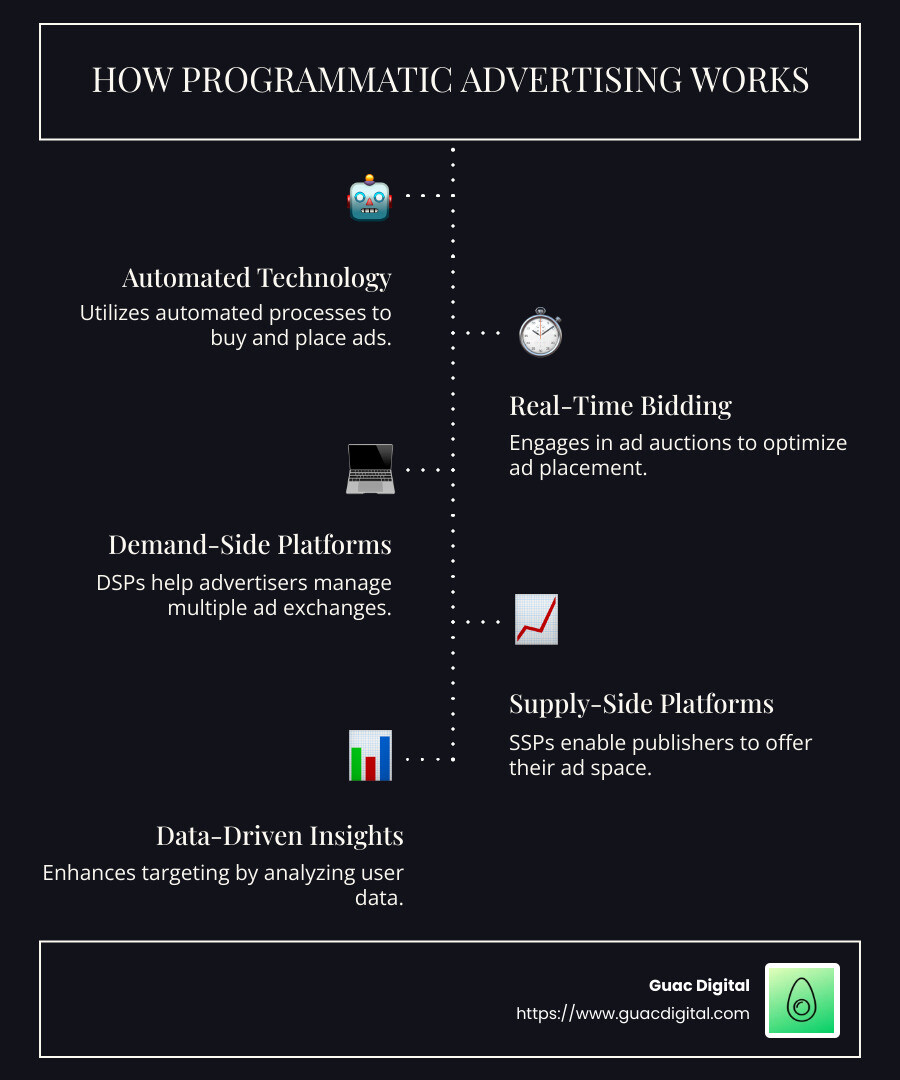
How does programmatic advertising work? It’s a question on the minds of many businesses eager to sharpen their digital marketing edge. Let’s break it down simply. Programmatic advertising involves automated technology, allowing advertisers to buy and place ads in real time using data-driven insights. This approach optimizes ad buying, ensuring the right message reaches the right person at the right time, across multiple platforms like display, video, native ads, and more.
Programmatic advertising uses real-time bidding and specialized platforms called Demand-Side Platforms (DSPs) and Supply-Side Platforms (SSPs). These tools handle the heavy lifting by automating the ad buying process, allowing businesses to focus on strategy and creativity rather than logistics.
I am Guy Leon, the founder and CEO of Guac Digital. My team and I have liftd businesses through programmatic advertising by boosting client conversion rates by 350% and increasing website traffic. At Guac Digital, we craft strategies that transform digital marketing challenges into opportunities.
How does programmatic advertising work? definitions:
– programmatic advertising explained
– programmatic ad buying
– programmatic trading
What is Programmatic Advertising?
Programmatic advertising is the modern way to buy and sell digital ads. It’s all about using automation and data to make the process faster and smarter.
Automated Buying
Gone are the days when ad buying meant endless negotiations and manual placements. With programmatic advertising, software takes over. This software uses algorithms to buy ad space automatically. It’s like having a super-smart robot that knows exactly where and when to place your ads for the best results.
Data-Driven Decisions
What makes programmatic advertising so powerful is its data-driven approach. It doesn’t rely on guesswork. Instead, it analyzes tons of data to decide which ads to show to which users. This means your ads are more likely to reach people who are actually interested in what you offer.
For instance, if someone frequently visits travel websites, programmatic tools might show them ads for flights or hotels. It’s all about getting the right message to the right person at the right time.
Ad Exchanges
Think of ad exchanges as busy marketplaces. Here, advertisers and publishers come together to buy and sell ad space. But instead of people shouting out prices, everything happens through software. Advertisers use Demand-Side Platforms (DSPs) to bid for ad space, while publishers use Supply-Side Platforms (SSPs) to offer it.
In milliseconds, the ad exchange matches the highest bidder with the available ad space. This quick process ensures that ads are always relevant and timely.

Programmatic advertising is reshaping the digital marketing landscape. By automating ad buying, using data-driven insights, and leveraging ad exchanges, it ensures that your advertising efforts are efficient and effective.
Next, let’s dive deeper into How Does Programmatic Advertising Work? to understand the mechanics that make this process seamless.
How Does Programmatic Advertising Work?
Programmatic advertising is like a well-oiled machine, running on data and automation. To truly understand how programmatic advertising works, let’s break down its core components and the magic of real-time bidding.
The Role of Real-Time Bidding
At the heart of programmatic advertising is Real-Time Bidding (RTB). Imagine a busy auction house where bids are placed in milliseconds. That’s RTB in the digital world.
Here’s how it works:
Ad Auctions: When a user visits a website, an ad auction kicks off. This auction determines which ad will be displayed based on bids from advertisers.
Impressions: Each time an ad is displayed, it’s called an impression. Advertisers bid for these impressions, aiming to reach the right audience.
The Highest Bid Wins: In just a blink—about 100 milliseconds—the highest bidder’s ad appears on the user’s screen. This swift process ensures ads are relevant and timely.
Key Components of Programmatic Advertising
To make all this happen, several key players work behind the scenes:
Demand-Side Platforms (DSPs): Advertisers use DSPs to manage their ad campaigns and bids. These platforms analyze data to decide the best ad spaces to bid on.
Supply-Side Platforms (SSPs): On the flip side, publishers use SSPs to sell their ad space. These platforms help maximize the value of each impression by connecting to multiple ad exchanges and DSPs.
Ad Exchanges: Think of ad exchanges as digital marketplaces where DSPs and SSPs interact. They facilitate the buying and selling of ad space, making the whole process seamless.
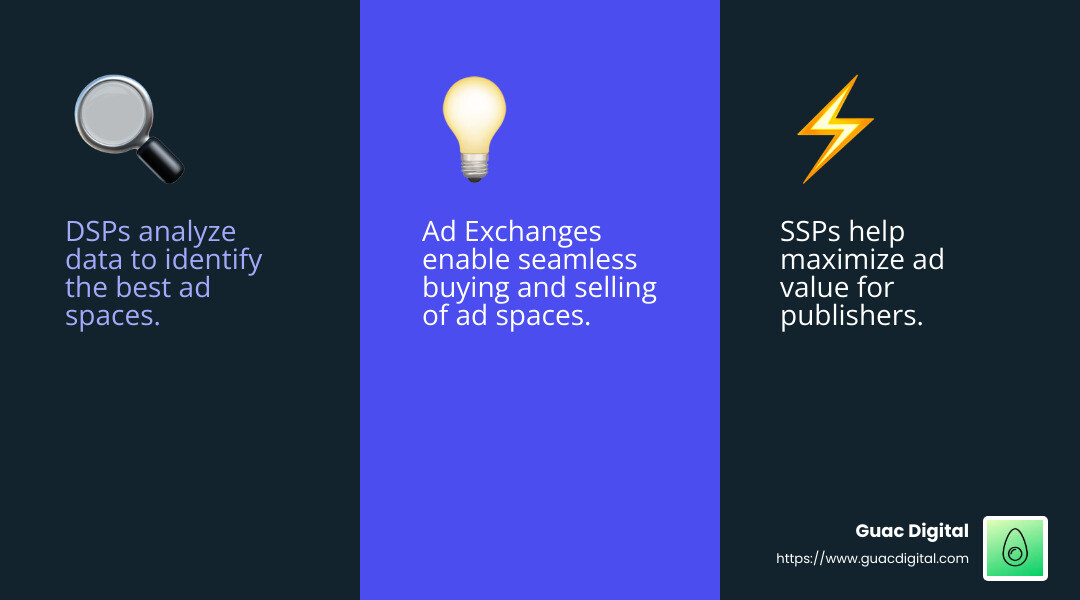
Programmatic advertising thrives on real-time bidding and a network of DSPs, SSPs, and ad exchanges. This ecosystem ensures that ads are placed efficiently and effectively, reaching the right audience at the right moment.
Next, we’ll explore the different Types of Programmatic Advertising to see how this technology is applied across various ad formats.
Types of Programmatic Advertising
Programmatic advertising isn’t just a one-trick pony. It spans a variety of ad types, each custom to engage audiences in unique ways. Let’s explore the most common types: display ads, video ads, native ads, Connected TV (CTV), and Digital Out-Of-Home (DOOH).
Display Ads
Display ads are the classic banners you see across websites. They’re the foundation of online advertising, but with programmatic technology, they become highly targeted. By using data, advertisers can ensure these ads reach the right people at the right time. For example, a health and fitness brand can place its display ads on health blogs frequented by its target audience, increasing engagement.
Video Ads
Video ads are perfect for storytelling. They capture attention and convey messages more dynamically than static images. With programmatic advertising, video ads can be shown to users who have previously engaged with similar content, enhancing relevance and impact. Brands like Geico use programmatic video ads to reach specific audiences on platforms like YouTube and Facebook, ensuring their humorous messages hit home.
Native Ads
Native ads blend seamlessly with the content around them, making them less intrusive. They’re designed to match the look and feel of the platform they’re on, whether it’s a news site or a social media feed. This approach allows advertisers to engage users without disrupting their experience. For instance, an article on a lifestyle blog might feature a native ad for eco-friendly products, aligning with the reader’s interests.
Connected TV (CTV)
As streaming becomes more popular, Connected TV (CTV) ads are on the rise. These ads appear on streaming platforms like Hulu or Roku, reaching viewers who have cut the cord on traditional TV. Programmatic CTV ads allow advertisers to target specific demographics, such as millennials who enjoy binge-watching series, thus ensuring their message is seen by the right audience.
Digital Out-Of-Home (DOOH)
Digital Out-Of-Home (DOOH) advertising brings the digital world to physical spaces. Think of digital billboards at bus stops or screens in elevators. These ads can be updated in real-time based on location data, time of day, or even weather conditions. For instance, a coffee brand might display a warm beverage ad on a chilly morning commute, capturing the attention of cold passengers.
By leveraging these diverse ad types, programmatic advertising offers a versatile toolkit for reaching audiences across multiple channels. Each format has its own strengths, allowing brands to craft comprehensive campaigns that engage users wherever they are.
Next, we’ll dig into the Benefits of Programmatic Advertising to understand why it’s becoming a must-have strategy for marketers today.
Benefits of Programmatic Advertising
Programmatic advertising has revolutionized how brands connect with their audiences. Let’s explore some of its key benefits: efficiency, targeting, transparency, and real-time optimization.
Efficiency
Gone are the days of lengthy negotiations and manual ad placements. With programmatic advertising, the entire process is automated. Advertisers can buy and place ads in seconds through Real-Time Bidding (RTB). This efficiency not only saves time but also allows brands to reach their audience faster. A small team can now handle what used to require a much larger workforce, making it a cost-effective solution.
Targeting
One of the standout features of programmatic advertising is its ability to target specific audiences with precision. By leveraging data signals like shopping habits and browsing history, advertisers can ensure their ads are shown to the right people at the right time. For example, a travel company can target users who recently searched for vacation spots, increasing the likelihood of conversion. This level of targeting minimizes wasted ad spend and maximizes impact.
Transparency
Traditional advertising often left advertisers in the dark about where their ads appeared. Programmatic advertising changes that by offering transparency in ad placements. Advertisers have full visibility into where their ads are shown, allowing them to ensure their brand appears in relevant environments. This transparency builds trust and enables brands to maintain control over their advertising efforts.
Real-Time Optimization
Programmatic advertising isn’t just about placing ads—it’s about optimizing them in real-time. Advanced algorithms analyze campaign performance and adjust strategies on the fly to maximize results. This means advertisers can tweak their campaigns based on live data, ensuring they always get the best possible outcomes. For instance, if a particular ad creative is underperforming, it can be swapped out for a more effective version almost instantly.
These benefits make programmatic advertising an essential tool for modern marketers. By offering unparalleled efficiency, precise targeting, full transparency, and real-time optimization, it ensures that advertising budgets are used wisely, delivering maximum return on investment.
Next, we’ll explore the Challenges in Programmatic Advertising to understand the problems brands may face when implementing these strategies.
Challenges in Programmatic Advertising
While programmatic advertising offers many benefits, it also comes with its own set of challenges. Let’s look at some of the key issues: learning curve, commoditization, and transparency issues.
Learning Curve
Programmatic advertising is a sophisticated system that uses complex algorithms and data analysis. For many marketers, especially those new to digital advertising, the steep learning curve can be daunting. Understanding how to set up and optimize campaigns requires knowledge of DSPs, SSPs, and RTB processes. As noted in the research, brands that don’t adopt programmatic strategies may miss out on efficiency and reach. However, investing time in learning can pay off by open uping the full potential of programmatic advertising.
Commoditization
As programmatic advertising becomes more widespread, there’s a risk of commoditization. This means that ads may become less distinctive as they compete in a crowded digital space. With so many advertisers using similar tactics, standing out becomes challenging. The key is to focus on creative and personalized content that resonates with your target audience. By leveraging features like Dynamic Creative Optimization (DCO), advertisers can deliver unique and relevant messages to different user segments, helping to differentiate their brand.
Transparency Issues
Despite the transparency benefits programmatic advertising can provide, there are still concerns about where ads appear and how they are measured. Advertisers may find it difficult to verify the quality of ad placements and the accuracy of reported metrics. Ad fraud remains a significant issue, with billions lost globally each year. Solutions like blockchain and initiatives like ads.txt aim to combat fraud and improve trust in the ecosystem. Ensuring transparency and accountability in programmatic campaigns is crucial for maintaining brand integrity and maximizing ROI.
Understanding these challenges is the first step in overcoming them. By addressing the learning curve, focusing on creative strategies to avoid commoditization, and prioritizing transparency, brands can effectively steer the programmatic landscape.
Next, we’ll dive into the Frequently Asked Questions about Programmatic Advertising to address common queries and provide further insights into this dynamic field.
Frequently Asked Questions about Programmatic Advertising
How is programmatic advertising done?
Programmatic advertising automates the buying and selling of ads in real time. It uses automated steps and advertiser-defined parameters to streamline the process. Here’s how it works:
Advertiser Sets Parameters: Advertisers define their target audience, budget, and campaign goals. They specify the type of ads, such as video or display, and the platforms where they want them to appear.
Real-Time Bidding (RTB): When a user visits a website, the ad space is auctioned off in real time. Advertisers bid for this space based on their set parameters. The highest bid wins, and the ad is displayed instantly.
Data-Driven Decisions: The system uses data like user browsing history and demographics to decide which ad to show. This ensures that the right message reaches the right audience.
What are the 4 key ways that programmatic advertising is sold?
Programmatic advertising offers several ways to buy ad space:
Real-Time Bidding (RTB): This is the most common method. It’s an open auction where any advertiser can bid for ad impressions as they become available.
Private Marketplace (PMP): In a PMP, publishers invite select advertisers to bid on their premium ad inventory. This offers more control over who can advertise on their platforms.
Preferred Deals: Advertisers can negotiate ad placements before they hit the open market. This ensures they have access to specific inventory without competing in an auction.
Programmatic Guaranteed: Here, advertisers and publishers agree on a fixed price for ad inventory. This guarantees ad space without the need for bidding.
What is an example of programmatic advertising?
A great example is the campaign by IHG (InterContinental Hotels Group). IHG used customized ads based on user browsing history. When potential customers searched for travel-related content, IHG displayed custom ads showcasing relevant hotel deals. By leveraging programmatic advertising, IHG could efficiently reach travelers with personalized messages, enhancing engagement and conversion rates.
These FAQs provide a glimpse into the dynamic world of programmatic advertising. Next, we will explore the various Types of Programmatic Advertising, including display, video, and more.
Conclusion
In the world of digital marketing, programmatic advertising stands out as a game-changer. Guac Digital leverages this powerful tool to craft personalized strategies that deliver high ROI for our clients. By tapping into big data, we ensure that every ad dollar is spent wisely, reaching the right audience at the right time.
Our approach is simple yet effective. We focus on understanding each client’s unique goals and challenges. Then, we tailor our campaigns to align perfectly with those objectives. This personalized attention is what sets us apart from other agencies.
With programmatic advertising, we automate the ad buying process, allowing us to optimize campaigns in real time. This means our clients benefit from increased efficiency, better targeting, and greater transparency. As a result, they see improved outcomes across the digital marketing funnel, from brand awareness to customer loyalty.
Moreover, our expertise in programmatic advertising ensures that our clients stay ahead of the curve. We continually monitor trends and adapt strategies to maximize results. Whether it’s through display ads, video ads, or other formats, we know how to make programmatic work for you.
If you’re ready to lift your digital marketing efforts and achieve impressive ROI, partner with Guac Digital. Our team of experts is here to help you steer the complex world of programmatic advertising and open up your brand’s full potential.