
Google reviews reputation management: Top 2025 Guide
The Modern Word-of-Mouth: Why Your Business Can’t Ignore Google Reviews
Google reviews reputation management is the cornerstone of modern business success, as customer feedback now drives purchase decisions more than traditional advertising. Here’s what you need to know about managing your online reputation:
Key Google Reviews Management Strategies:
- Monitor and respond to all reviews within 24 hours
- Encourage positive reviews through automated follow-up campaigns
- Flag inappropriate reviews that violate Google’s policies
- Use review insights to improve products and services
- Leverage positive reviews as marketing content across channels
The numbers tell the story: research shows that 98% of customers read online reviews for local businesses, and most turn to Google. With Google capturing 79% of all online reviews and holding an 88% search market share in North America, your reviews directly impact whether customers choose you or a competitor.
88% of consumers would use a business that replies to all reviews, positive and negative, while only 47% would use a business that doesn’t. Your response strategy can double your chances of winning new customers.
The reality is stark: almost 62% of online shoppers will research an unfamiliar company online, and few will buy if they find negative reviews. Your Google reviews aren’t just feedback—they’re your digital storefront’s first impression.
As Guy Leon, founder and CEO of Guac Digital, I’ve seen proactive google reviews reputation management deliver some of the highest ROI of any marketing investment. We’ve helped clients increase online engagement by 350% by strategically managing their digital reputations.

The Impact of Google Reviews on Your Reputation and SEO
Your Google reviews are powerful digital assets that can make or break your business. They act as your 24/7 sales team, working to attract or deter customers.
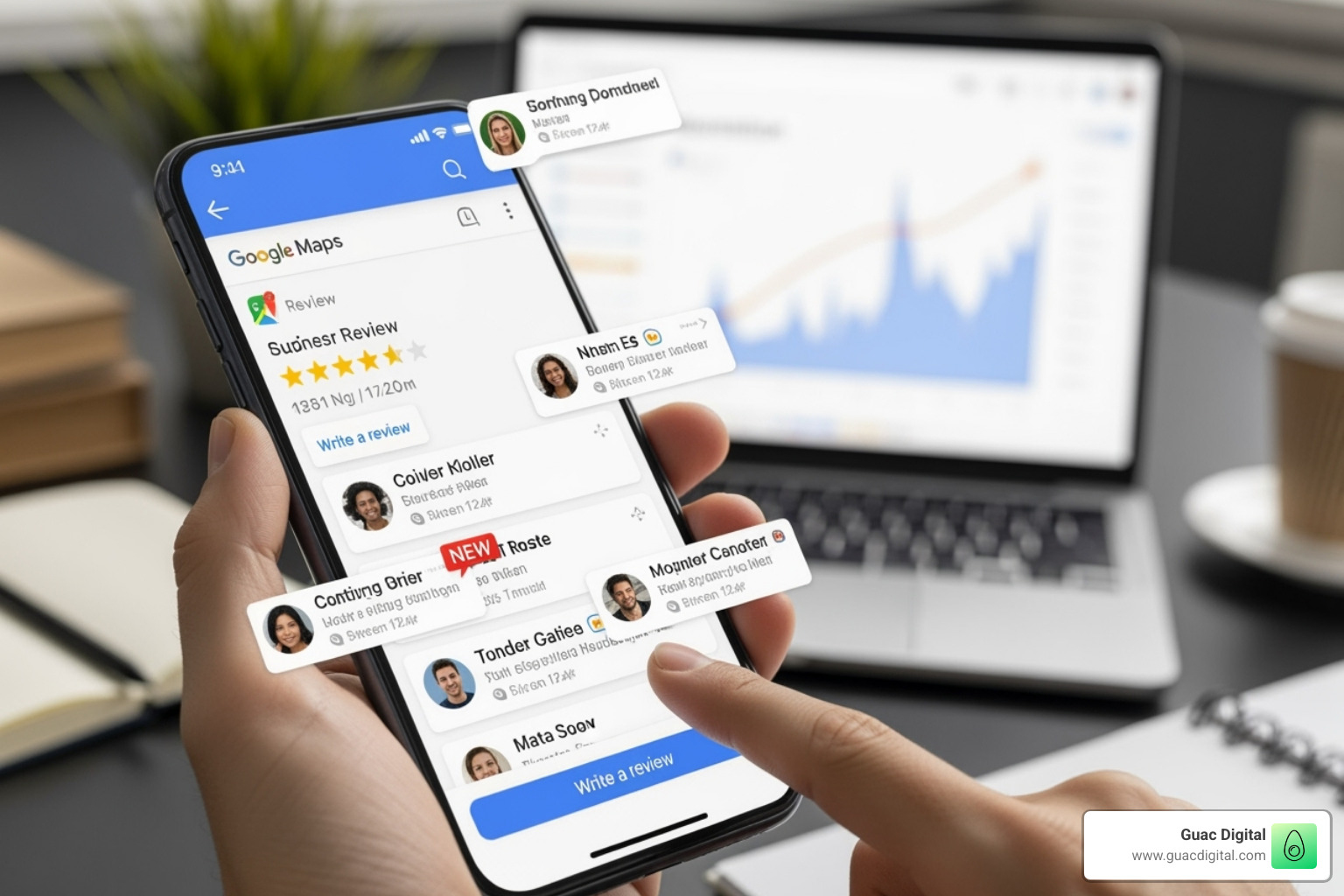
81% of consumers read Google reviews to assess a business before making purchasing decisions. That means four out of five potential customers are judging your business based on others’ opinions.
Your reviews create a customer feedback loop: experiences become reviews, which influence future customers, who then leave more reviews. It’s a digital word-of-mouth network that never sleeps.
At Guac Digital in Tampa, we’ve seen businesses transform by taking google reviews reputation management seriously. One local restaurant client improved their rating from 2.8 to 4.6 stars in six months, boosting revenue by 40%—a direct result of their efforts.
Reviews are also free market research, telling you what customers love and what needs improvement. It’s like a focus group offering honest opinions at no cost. If you’re looking to leverage these insights alongside professional guidance, you can find the benefits of a local SEO agency near you to maximize your online presence.
How Reviews Influence Your Local Search Ranking
Google’s local search algorithm evaluates businesses on three factors: relevance, distance, and prominence. Your Google reviews directly impact prominence, which measures how well-known and trustworthy your business is.
This is where google reviews reputation management becomes crucial for SEO. Google considers several review signals: quantity, velocity (frequency of new reviews), average star rating, and keywords within reviews.
For example, if a Tampa bakery’s reviews mention “best cupcakes in Tampa,” Google takes note. These keyword mentions in reviews help Google understand your business, boosting your ranking for those terms.
Consistent, fresh reviews (review quantity and velocity) signal to Google that a business is active and popular. Google rewards this by featuring these businesses in the Local Pack at the top of search results.
For businesses serious about dominating their local market, understanding these connections is essential. Our comprehensive guide on Local SEO Near Me dives deeper into these strategies.
Building (or Breaking) Customer Trust with Your Star Rating
Your star rating is your digital handshake—the first impression for potential customers. You want it to be trustworthy.
Consumer psychology plays a huge role here. A 4.5-star rating provides instant social proof, like dozens of friends recommending your business.
Conversely, negative reviews directly impact your bottom line. Almost 62% of online shoppers research unfamiliar companies, and few will buy if they find negative reviews.
Customers often prioritize reviews over price or convenience, willing to pay more for a well-regarded business. It’s the modern equivalent of asking a neighbor for a recommendation.
First impressions happen in seconds. A low star rating creates a negative impression, and a customer seeing a 2.5-star rating will likely move on to a competitor with a 4.3-star rating without a second thought.
The good news is that positive review benefits compound. Each great review encourages the next customer, creating a virtuous cycle that boosts your reputation and revenue.
A Proactive Guide to Google Reviews Reputation Management

88% of consumers would use a business that replies to all reviews, both positive and negative, while only 47% would use one that doesn’t. This statistic alone is a roadmap to doubling your appeal to potential customers.
Responding to every review signals to the online community that you care about each customer’s experience. This authenticity builds trust with the reviewer and all future readers.
The compound effect is powerful. Each thoughtful response and public resolution demonstrates your commitment to excellence, shaping a positive narrative about your business over time.
Step 1: How to Encourage a Steady Stream of Positive Reviews
The secret to managing negative reviews is to outnumber them with positive ones. It’s easier to encourage happy customers to share their experience than to perform damage control. With the average business getting 66 new Google reviews last year, there’s ample opportunity.
Timing is key when asking for reviews. Request one right after a great experience to capture that positive emotion while it’s fresh.
Making the process effortless is crucial. Use Google’s review request link or QR code in emails, on receipts, or in-store. The fewer clicks, the better.
QR codes are powerful for physical locations. A quick scan takes customers to your review page, removing all friction. Use them on business cards, packaging, or table tents.
Important: avoid offering incentives for reviews. Google’s policy prohibits this, and incentivised reviews can seem inauthentic. Aim for genuine enthusiasm, not purchased praise.
Make requests feel natural, not pushy. Train your team to spot satisfied customers and simply ask, “We’d love it if you could share your experience on Google — it really helps others find us.”
Step 2: The Art of Responding to All Reviews
Responding to reviews is a public conversation. Every response is a chance to show your professionalism to all potential customers.
Positive reviews deserve more than a generic “thanks.” Acknowledge specifics, credit team members by name, and invite the customer back. This shows you value their feedback and gives future customers a preview of your service.
Negative reviews are opportunities. They let you show how you handle challenges. Respond quickly, as 76% of customers appreciate promptness in addressing concerns.
Start with empathy and take responsibility. Then, move the conversation offline: “Please contact us directly at [phone/email] so we can make this right.” This approach shows you care, prevents public arguments, and can lead to updated reviews once the issue is resolved. For detailed guidance, Google’s own resource on How to read & reply to reviews on Google provides excellent instructions.
Remember: stay professional, never defensive. Your response reflects on your brand. If you’re dealing with challenging situations, our guide on How to Effectively Remove Negative Reviews from Google offers additional strategies.
Step 3: Handling Fake or Inappropriate Reviews
Occasionally, you’ll encounter fake or inappropriate reviews. This requires a different google reviews reputation management strategy.
Google’s policies prohibit off-topic content, illegal material, impersonation, offensive language, and conflict-of-interest reviews. If you receive a review that violates these guidelines, such as a fake review from a competitor, you have recourse. You can review Google’s official policy to understand what qualifies.
First, flag the review in your Google Business Profile to alert Google’s team. Document your evidence when flagging. Proof that the reviewer wasn’t a customer or that the information is false can help. While Google uses automated spam detection, human intervention is sometimes needed.
Be patient. Google receives many flags, so removal isn’t instant. If a violating review remains, contact Google Business Profile support. For reviews that don’t violate policies, respond professionally and focus on generating more positive reviews. Our guide on How to Remove Bad Reviews from Google My Business walks through this process.
The goal isn’t to eliminate all negative feedback — which can look suspicious. Instead, the goal is to ensure your online reputation accurately reflects your business and customer care.
Top Google Review Management Software and Services
Manually managing Google reviews is challenging, especially for businesses with multiple locations or high review volume. It’s time-consuming and difficult to do well.
This is where google reviews reputation management software becomes your best friend. These platforms transform this chaotic process into a streamlined, proactive system for business growth.
These tools act as a digital reputation assistant, automating tedious tasks like review requests and monitoring. They provide insights and analytics, including sentiment analysis, to help you make smarter business decisions. I’ve seen businesses increase review volume by 300% with the right automation. The efficiency is great, but the real value comes from using the data to improve the customer experience.
What to Look for in a Google Reviews Reputation Management Tool
Choosing the right tool is critical. It should fit your workflow and be scalable.
- Automated review requests are a top priority. The best tools send requests via email, SMS, or QR codes after an interaction to increase review volume.
- A centralized dashboard is non-negotiable for monitoring and responding to reviews from Google, Facebook, Yelp, and other platforms in one place.
- AI-powered response assistance helps you craft professional, on-brand replies quickly while maintaining a personal touch.
- Sentiment analysis analyzes the emotional tone of reviews to identify common themes. If “slow service” is a recurring complaint, you know what to fix.
- Great tools offer robust reporting and analytics. Insights into review volume, rating trends, and response times are invaluable for strategic decisions, a core part of our Data-Driven Marketing Strategies.
- For businesses with multiple locations, unified management is essential for brand consistency while allowing for location-specific responses.
- Integration capabilities with your CRM or POS system create automated workflows that save time and prevent customers from being overlooked.
A Comparison of Leading Review Management Platforms
The competitive market for review management software offers several excellent options, each with unique strengths.
Birdeye is a comprehensive customer experience platform strong in review generation and management. Its reputation management system offers extensive online reputation monitoring across multiple review sites and social media platforms.
Podium focuses on messaging, excelling at SMS-based customer communication and review requests. It’s ideal if your customers prefer text-based interactions and offers strong integration with popular business management tools.
ReviewTrackers is laser-focused on review management. It excels at competitive analysis and deep analytics, pulling reviews from many sites to reveal market trends and customer sentiment patterns.
Yext specializes in digital knowledge management, ensuring business information consistency across online directories. Its review features integrate seamlessly with this core function to maintain brand accuracy.
Sprout Social integrates social media and review management effectively. It’s excellent for leveraging reviews as marketing assets while maintaining a unified brand voice across all digital channels.
BrightLocal caters specifically to local businesses, combining review management with local SEO tools like citation building and rank tracking for comprehensive local market dominance.
When evaluating these platforms, consider your specific needs, such as business size, review volume, budget, and your team’s technical skill level. I highly recommend using free trials to test platforms with your own data. The right tool should feel intuitive and fit seamlessly into your existing workflow.
Frequently Asked Questions about Google Review Management
When it comes to google reviews reputation management, we hear the same questions from business owners time and again. Let’s tackle the most common concerns with straightforward answers.
Can I delete a negative Google review?
The short answer is no: you cannot delete legitimate negative Google reviews. Google’s system is designed this way to maintain authenticity.
However, you can flag reviews that violate Google’s content policies, such as fake reviews, hate speech, or off-topic rants. Google uses automated spam detection, but manual flagging is sometimes necessary.
Instead of focusing on deletion, respond thoughtfully and professionally. Handling criticism with grace can build more trust than having a perfect record.
The most powerful strategy is to drown out negatives with positives. A steady stream of positive feedback is the cornerstone of effective google reviews reputation management. Think of negative reviews as free consulting; they show you where to improve, and your response shows future customers you care.
How do I turn positive reviews into marketing content?
Positive Google reviews are marketing gold. These authentic testimonials carry more weight than traditional ads.
- Showcase them on your website on a testimonials page or with embedded widgets. Seeing real customer experiences can significantly boost conversion rates.
- On social media, share screenshots of glowing reviews. This user-generated content feels genuine and often outperforms promotional posts.
- In email newsletters, feature a “Review of the Month” to provide social proof for prospects and reinforce loyalty with existing customers.
- Sales teams can incorporate review snippets into proposals. Review quotes also work well in digital ads, often outperforming traditional ad copy.
- Share positive reviews internally to boost team morale and highlight the impact of their hard work, which can improve customer service.
Our guide on how to boost your business with local social media marketing shows you how to amplify these positive reviews across your social channels.
Is it worth paying for a Google reviews reputation management service?
For businesses with multiple locations or high review volumes, investing in a professional google reviews reputation management service is a smart move. The market includes a range of expert agencies, such as WebFX, NP Digital, and Thrive Agency, that can manage this process for you.
- Time savings alone often justify the cost. Manual management can consume many hours per week that could be better spent on growth.
- Professional expertise is invaluable for handling tricky situations, flagging content, and maintaining a consistent brand voice.
- Advanced analytics provide eye-opening insights into customer feedback, helping you identify patterns, strengths, and weaknesses for better business decisions.
- Scalability is crucial for growth. The right systems allow you to manage an increasing review volume without a proportional increase in workload.
Studies show that 94% of businesses using review management tools see measurable returns on their investment. Improved search rankings, conversion rates, and brand trust often generate more revenue than the service costs. Our insights on maximizing ROI with a digital marketing agency break down how to measure these returns.
The question isn’t whether you can afford professional google reviews reputation management—it’s whether you can afford to manage your reputation poorly while your competitors pull ahead.
Take Control of Your Online Narrative
Your online reputation is something you actively shape. This guide has shown how google reviews reputation management is the backbone of modern business, influencing search rankings and customer decisions.
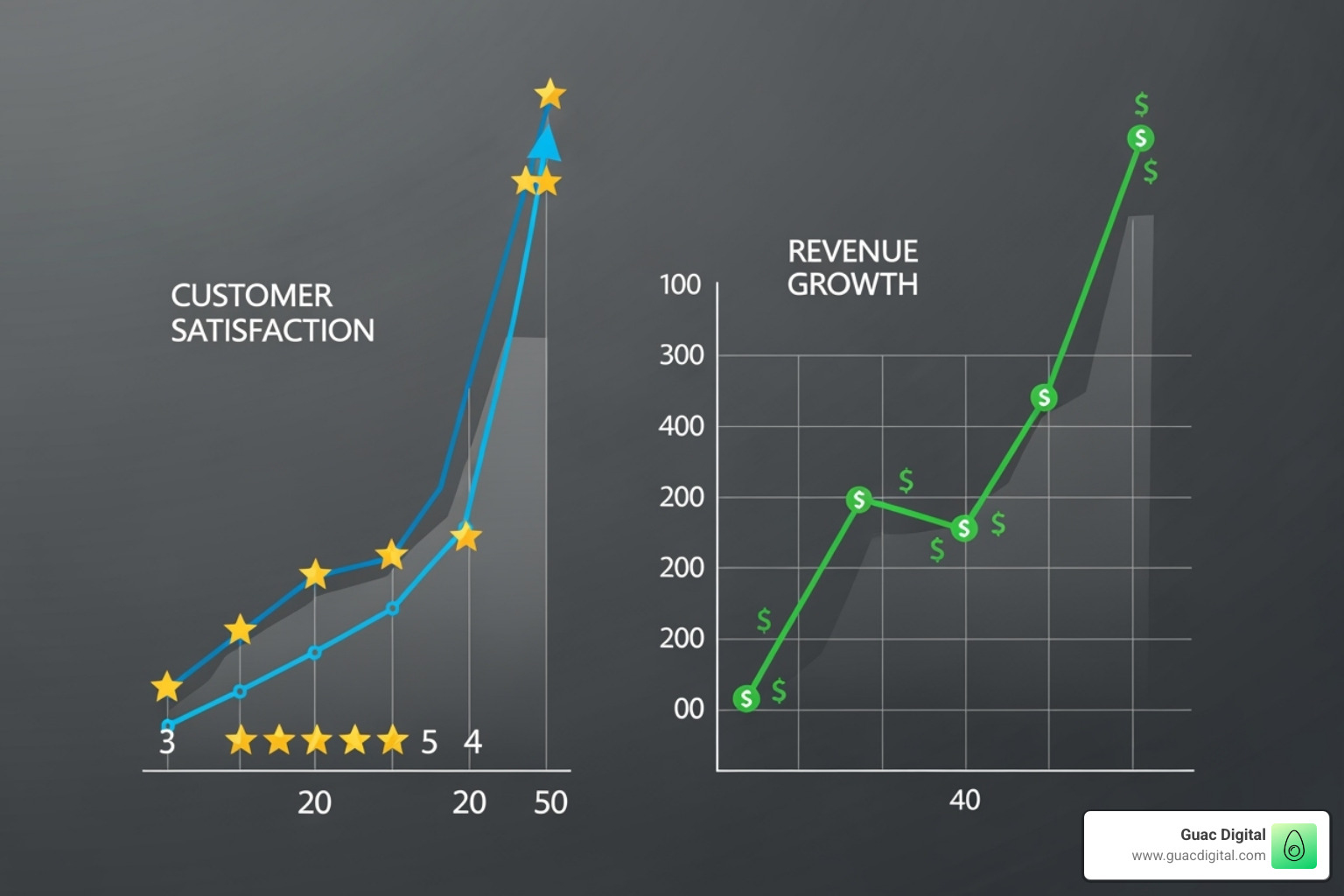
The evidence is clear: with 98% of customers reading reviews and 88% preferring responsive businesses, your review strategy is a competitive advantage. Thriving businesses use proactive management to turn customer feedback into a powerful growth engine.
Proactive engagement means encouraging reviews and responding to every single one with care. Your responses show all potential customers how you handle both praise and criticism.
Modern google reviews reputation management creates a feedback loop where reviews become market research, responses build trust, and testimonials become marketing gold. Using these insights improves your business, not just your reputation.
The right technology makes a huge difference. Review management platforms automate tedious tasks and provide analytics that turn sentiment into actionable intelligence, helping you spot trends early.
This isn’t just about damage control. Google reviews reputation management is a long-term investment in your brand perception and customer trust. It’s about recognizing that in today’s digital landscape, your online narrative directly impacts your bottom line.
At Guac Digital, we’ve seen businesses transform when they control their online reputation. Our clients see improved ratings, more foot traffic, higher conversions, and stronger customer relationships. Combining strategic review management with data-driven marketing delivers results.
Your online reputation is too important to leave to chance. Every day you wait is another day your competitors might be pulling ahead. The tools, strategies, and insights are all available—now it’s time to put them to work. Boost your local presence and reputation today!