
Looking for data driven marketing solutions to boost your business? You’re in the right place. Integrating customer intelligence with marketing strategies is key. It maximizes engagement and improves user experiences. Here’s a quick rundown of what you should know:
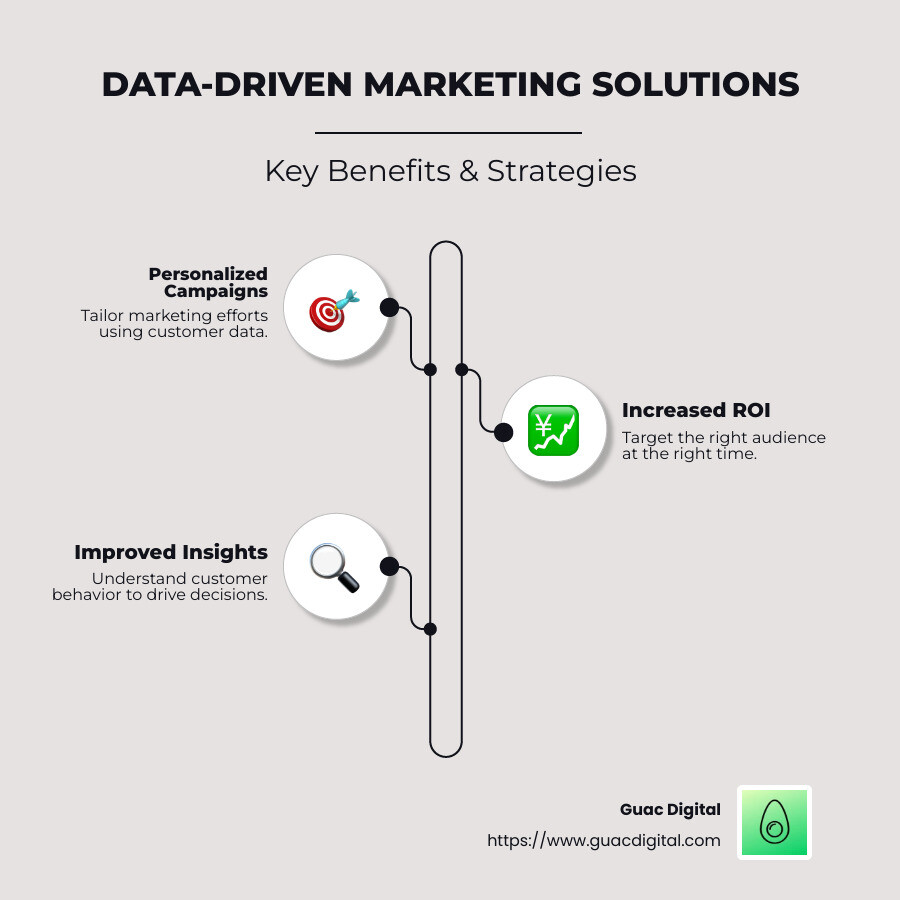
- Personalized Campaigns: Use customer data to tailor marketing efforts.
- Increased ROI: Target the right audience at the right time.
- Improved Insights: Understand customer behavior to drive decisions.
Technology allows businesses to mine valuable data. This helps to refine marketing strategies and achieve meaningful interactions. Understanding household economics is now critical to supercharging these strategies.
I’m Guy Leon, founder of Guac Digital. I’ve spent years creating innovative data driven marketing solutions that improve client engagement and improve their online presence. At Guac Digital, we specialize in utilizing advanced digital tools to transform your marketing approach.
Essential data driven marketing solutions terms:
– creating a data driven marketing strategy
– data-driven insights
– data-driven campaign management
Understanding Data-Driven Marketing
Data-driven marketing is all about using data to make better marketing decisions. It involves collecting and analyzing data to understand customer behavior and preferences. This approach helps businesses create more effective marketing strategies that resonate with their audience.
What is Data-Driven Marketing?
At its core, data-driven marketing uses insights from data to guide marketing strategies. Instead of relying on guesswork, marketers use real data to understand what customers want and how they behave. This approach allows for more precise targeting and personalized marketing efforts.
Customer Insights
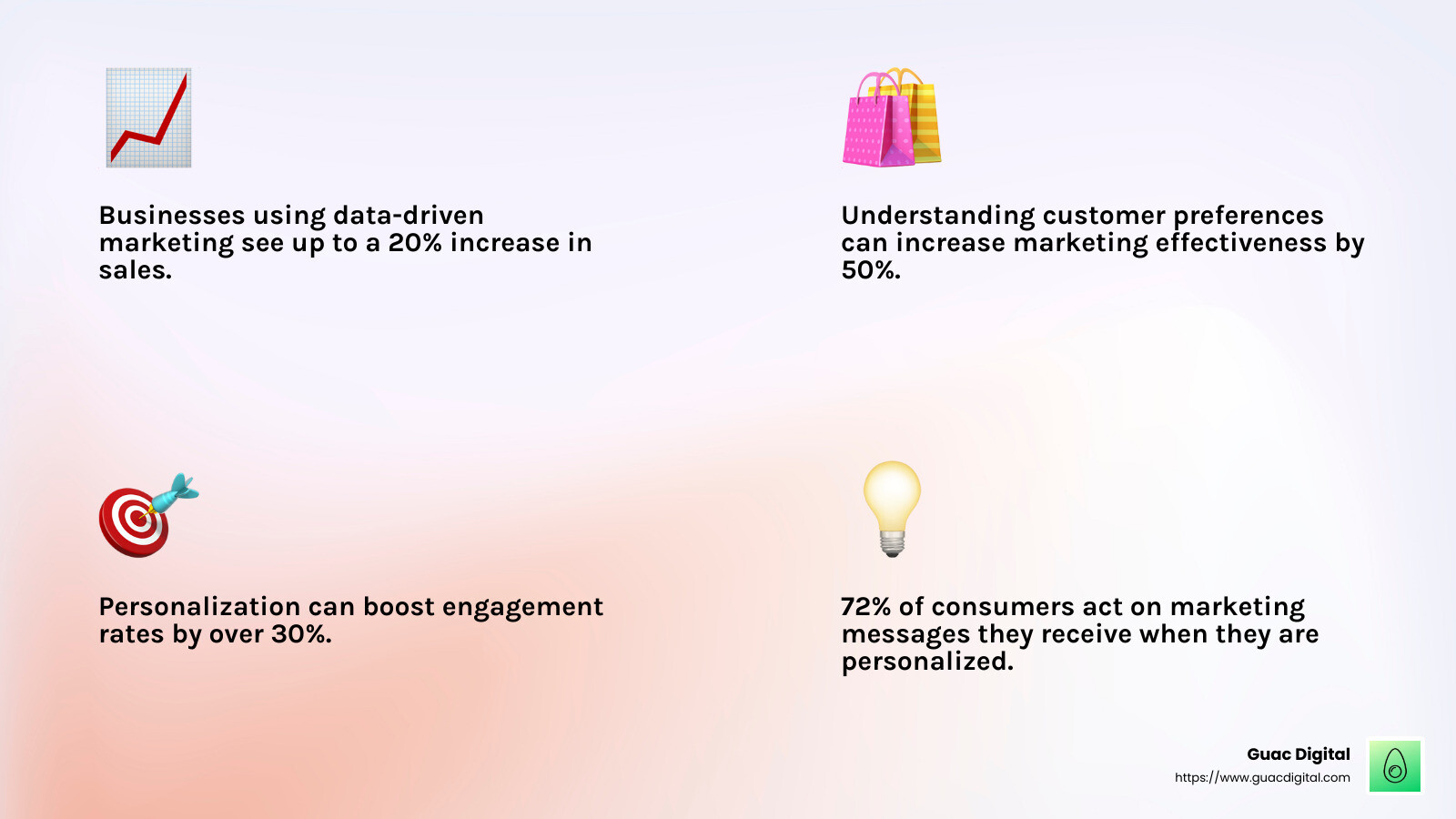
Customer insights are the foundation of data-driven marketing. By analyzing data from various sources, businesses can gain a deeper understanding of their customers. This includes what they like, what they buy, and how they interact with brands. For example, companies like Starbucks have successfully used customer data to tailor their marketing messages and offers, leading to increased engagement and sales.
Personalization
One of the main benefits of data-driven marketing is personalization. By using customer insights, businesses can create personalized marketing campaigns that speak directly to individual customers. This means tailoring messages, offers, and content to match each customer’s preferences and behaviors. Personalization not only improves customer experience but also boosts engagement and conversion rates.
Consider Spotify, which uses data analytics to provide personalized music recommendations. Their “Find Weekly” playlist is a great example of how personalization can improve user engagement and retention.
In summary, data-driven marketing is about leveraging data to understand customers better and deliver personalized experiences. This approach not only improves customer satisfaction but also drives better marketing results.
Next, we’ll explore the Benefits of Data-Driven Marketing Solutions, including improved targeting and increased ROI.
Benefits of Data-Driven Marketing Solutions
Data-driven marketing solutions are a game-changer for businesses aiming to improve their marketing strategies. Let’s explore the key benefits: improved targeting, better customer insights, and increased ROI.
Improved Targeting
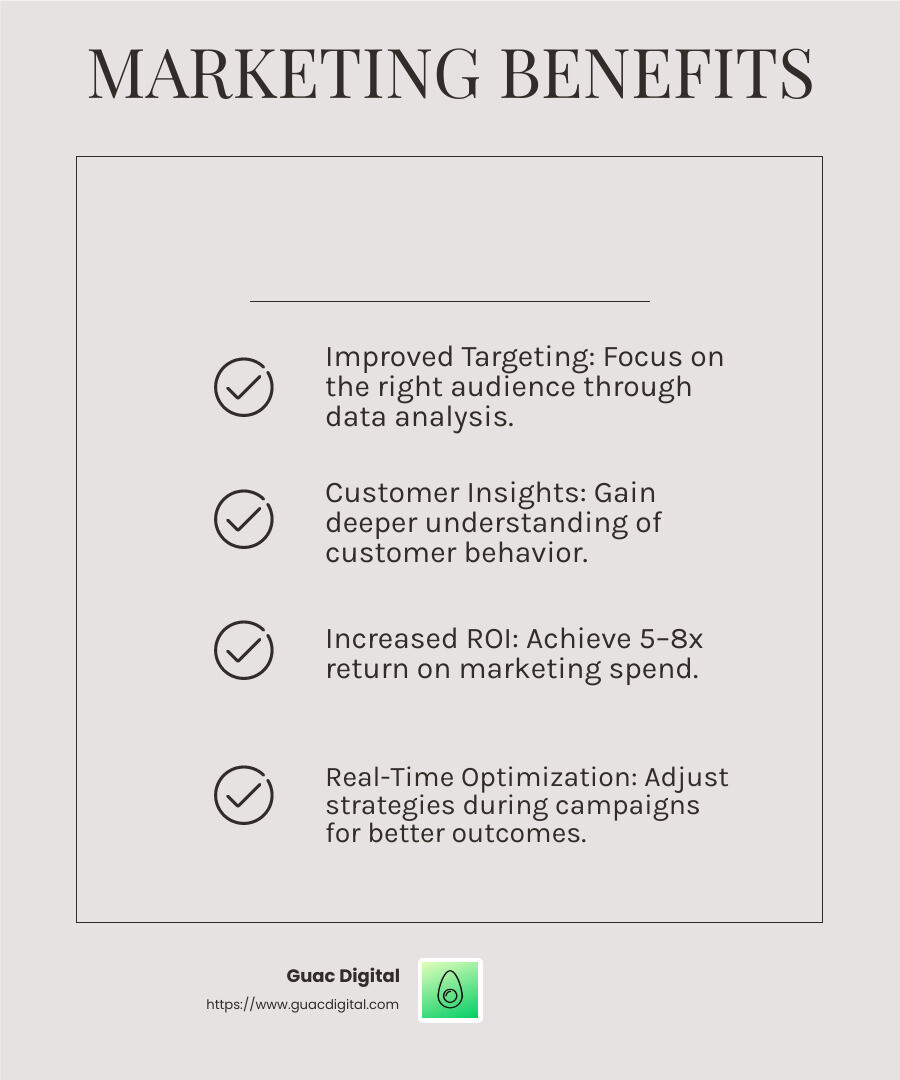
Data-driven marketing allows businesses to focus their efforts on the right audience. By analyzing customer data, companies can segment their audience based on demographics, behaviors, and preferences. This means you can send the right message to the right people at the right time. For example, A/B testing helps identify which version of an ad or email performs better, enabling real-time adjustments for optimal results.
Improved Customer Insights
Understanding your customers is crucial for any business. Data-driven marketing provides deeper insights into customer behavior and preferences. Tools like Google Analytics help businesses track what customers are interested in and how they interact with your brand. This information is invaluable for crafting marketing messages that resonate with your audience.
A great example is Spotify’s “Wrapped” campaign, which uses customer data to create personalized year-end summaries. This not only boosts engagement but also strengthens customer loyalty by making users feel understood and valued.
Increased ROI
When you know your audience and can target them effectively, your marketing spend becomes more efficient. According to McKinsey, businesses that use data-driven personalization can achieve a 5–8x ROI on marketing spend. By focusing resources on the most promising opportunities, data-driven marketing improves the return on investment.
Moreover, real-time insights from platforms like Google and Facebook allow businesses to optimize ad spending. This means you can adjust bidding strategies and targeting mid-campaign to ensure the best possible outcomes.
In summary, data-driven marketing solutions empower businesses to target more effectively, understand their customers better, and achieve a higher ROI. These benefits not only improve marketing performance but also provide a competitive edge in today’s digital landscape.
Next, we’ll explore the Key Components of Data-Driven Marketing Solutions, including data collection and segmentation.
Key Components of Data-Driven Marketing Solutions
For businesses to truly harness the power of data-driven marketing solutions, understanding the core components is essential. Let’s break it down into three critical parts: data collection, data analysis, and segmentation.
Data Collection
Data collection is the backbone of any data-driven strategy. Without a strong foundation of data, making informed marketing decisions is nearly impossible.
First-Party Data: This is the gold standard. It includes data collected directly from your audience through interactions on your website, email campaigns, and social media. For instance, tracking user behavior on your site can reveal which products are most popular, helping you tailor your offerings.
Second-Party Data: This involves data shared by trusted partners. Imagine a retailer collaborating with another company to share customer insights. This expands your reach without relying on third-party sources.
Third-Party Data: Collected by external companies, this data offers broad demographics and interests. It’s often used to fill in gaps in your own data, providing a more complete picture of your target audience.
Data Analysis
Once you’ve gathered data, the next step is analyzing it to extract valuable insights.
Google Analytics: This tool tracks user interactions, helping you understand customer behavior across your website and apps. It answers questions like, “Which pages are most engaging?” and “Where do users drop off?”
Tableau/Looker Studio: These data visualization tools transform complex data sets into easy-to-understand dashboards and reports. They help you spot trends and patterns at a glance.
HubSpot and SEMRush: These platforms offer integrated marketing and sales data, along with SEO insights. They allow for deep analysis of customer interactions and content strategies, ensuring you’re always one step ahead.
Segmentation
Segmentation is about dividing your audience into distinct groups based on shared characteristics. This allows for more personalized marketing efforts.
Demographics: Age, gender, location, and income are traditional segmentation criteria. They help tailor messages that resonate with specific groups.
Behavioral Segmentation: This focuses on how customers interact with your brand. For example, frequent buyers might receive loyalty rewards, while new visitors get introductory offers.
Psychographic Segmentation: This goes deeper, considering lifestyle, values, and interests. It’s about understanding the “why” behind consumer choices, allowing for truly personalized campaigns.
By focusing on these key components, businesses can leverage data-driven marketing solutions to create more effective and personalized strategies. Next, we’ll explore some of the Top Data-Driven Marketing Solutions, including platforms like Acxiom and Salesforce.
Top Data-Driven Marketing Solutions
When it comes to data-driven marketing solutions, several major players offer unique tools and services to help businesses harness the power of data for marketing success. Here, we explore some of the key solutions available in the market.
Acxiom
Acxiom is a leader in customer intelligence, providing businesses with comprehensive data solutions. They help companies understand customer motivations, preferences, and behaviors. With Acxiom, brands can improve and personalize customer experiences, ultimately driving growth. Their services are trusted by top global brands, including 9 of the top 10 credit card issuers and 7 of the top 10 retail banks. Acxiom’s Customer Intelligence Cloud offers integrated growth solutions, making it a go-to choice for many industries.
Deluxe Marketing Suite
The Deluxe Marketing Suite is another powerful tool for businesses looking to optimize their marketing strategies. This suite offers data-driven marketing services backed by deep data lakes, designed to improve campaign performance. Key features include access to credit data and life event triggers, which pinpoint consumers during major life events. Deluxe also provides agency support, ensuring expert guidance in building and executing marketing campaigns. Their three elements for success—the right audience, the right moment, and the right campaign and execution—help businesses maximize ROI.
Guac Digital
Guac Digital offers innovative data-driven marketing solutions tailored to meet the unique needs of businesses. With a focus on leveraging data to drive marketing success, Guac Digital provides tools and services that enable companies to gain deeper insights into their customers. Their solutions are designed to enhance customer engagement and improve marketing strategies through advanced analytics and personalized marketing efforts. By integrating data across various channels, Guac Digital ensures a unified view of customer interactions, helping businesses achieve their marketing goals effectively.
Each of these solutions offers unique advantages, catering to different business needs and goals. By leveraging these platforms, companies can gain deeper insights into their customers and create more effective marketing strategies. Next, we’ll explore how to implement data-driven marketing strategies effectively, focusing on strategy, data health, and analytics.
Implementing Data-Driven Marketing Strategies
Implementing data-driven marketing solutions isn’t just about having the right tools—it’s about the right approach, mindset, and processes. Let’s break it down into three key areas: strategy and mindset, data health, and analytics and enablement.
Strategy and Mindset
To successfully implement data-driven marketing, start by fostering a data-first mindset. This means embedding customer intelligence at the leadership level and aligning analytics with your commercial strategy. Leadership support is crucial. When leaders champion data-driven decision-making, it creates a culture that values and uses data effectively.
Encourage collaboration across departments. Break down silos and promote data literacy at all levels. This helps everyone understand the value of data and how to use it to make informed decisions.
Data Health
Your marketing strategy is only as good as the data it’s built on. Ensuring data quality is essential. Implement robust data governance practices to maintain accuracy and consistency. Regularly audit and cleanse your data to keep it reliable and up-to-date.
Invest in tools that help manage data efficiently. These tools can automate data validation and provide alerts for discrepancies. Keeping your data healthy ensures that your insights are trustworthy and actionable.
Analytics and Enablement
Analytics is where the magic happens. Use sophisticated analytics to transform raw data into actionable insights. This involves not just understanding customer behavior but also predicting future trends.
Enable your team with the right tools and training. Platforms like Salesforce and Acxiom provide powerful analytics capabilities. They help you analyze customer interactions and preferences, allowing for more personalized marketing efforts.
Finally, translate insights into action. Use data to inform your marketing campaigns and strategies. Continuously monitor performance and be ready to pivot as needed. This approach not only improves targeting and personalization but also boosts ROI.
By focusing on strategy and mindset, data health, and analytics and enablement, you can effectively implement data-driven marketing strategies that drive growth and improve customer experiences.
Next, we’ll address some frequently asked questions about data-driven marketing solutions to clear up any lingering doubts.
Frequently Asked Questions about Data-Driven Marketing Solutions
What is a data-driven marketing strategy?
A data-driven marketing strategy uses big data to inform and guide marketing decisions. This approach relies on insights from customer preferences and behaviors, gathered from various digital sources like website analytics, social media interactions, and purchase histories. By understanding these patterns, businesses can tailor their marketing efforts to better meet customer needs and preferences.
For instance, if data shows that a particular product is popular among a specific age group, marketers can target their campaigns to reach that demographic more effectively. This precision targeting helps in reducing wasted efforts and increasing the chances of conversions.
What are data-driven solutions?
Data-driven solutions are tools or approaches that leverage data to improve decision-making processes. These solutions help businesses understand market trends and customer behavior, enabling them to make informed choices that align with their goals.
For example, by analyzing data from digital sources, companies can identify which marketing channels are most effective for reaching their audience. This allows them to allocate resources more efficiently, optimizing their marketing spend and improving overall ROI.
What is database-driven marketing?
Database-driven marketing involves using databases to store and analyze customer information for more targeted marketing efforts. By compiling data on customer behavior and preferences, businesses can craft personalized marketing messages that resonate with specific segments of their audience.
This approach not only helps in understanding market trends but also in predicting future behaviors. For instance, if a customer frequently purchases a particular type of product, database-driven marketing can suggest similar items they might be interested in, enhancing their shopping experience and boosting sales.
By leveraging big data and digital sources, database-driven marketing allows for a more nuanced understanding of customer behavior, ultimately leading to more effective and personalized marketing strategies.
Next, we’ll explore the top data-driven marketing solutions available today, highlighting tools like Acxiom, Deluxe Marketing Suite, and Salesforce that can transform your marketing efforts.
Conclusion
At Guac Digital, we understand the power of data-driven marketing solutions. Our approach focuses on creating personalized strategies that cater to the unique needs of each client. By leveraging big data, we ensure that every marketing campaign is not only targeted but also highly effective.
Personalized Strategies
Personalization is at the heart of what we do. By analyzing customer data, we tailor our marketing efforts to resonate with specific audience segments. This means delivering the right message, at the right time, to the right people. Just like Starbucks and Spotify, who have successfully used data to improve customer engagement, we aim to create meaningful interactions that boost customer loyalty and satisfaction.
High ROI
Our data-driven approach is designed to maximize return on investment (ROI). By targeting the most promising opportunities and optimizing marketing spend, we help our clients achieve impressive results. For instance, companies have seen up to a 300% ROI from customer retention programs and a 60% reduction in client acquisition costs. These outcomes are not just numbers; they represent real growth and success for our clients.
In today’s competitive landscape, embracing data-driven marketing is not just an option—it’s a necessity. Let us help you harness the power of data to drive your marketing strategy forward.
Ready to lift your marketing game? Explore our services and see how Guac Digital can transform your business with personalized, high-ROI strategies.