
Artificial intelligence seo: Master 2025!
Why Artificial Intelligence is Revolutionizing Search Engine Optimization
Artificial intelligence seo is changing how businesses approach search marketing, moving beyond traditional keyword strategies to sophisticated, intent-driven optimization that delivers measurable results.
Here’s what AI means for your SEO strategy:
- Smarter keyword research – AI identifies semantic relationships and predicts trending topics before they peak
- Automated content optimization – Tools analyze top-ranking pages and suggest improvements in real-time
- Improved user intent matching – Search engines now understand context, not just keywords
- Predictive analytics – AI forecasts algorithm changes and market shifts weeks in advance
- Scale without sacrifice – Generate high-quality content faster while maintaining human oversight
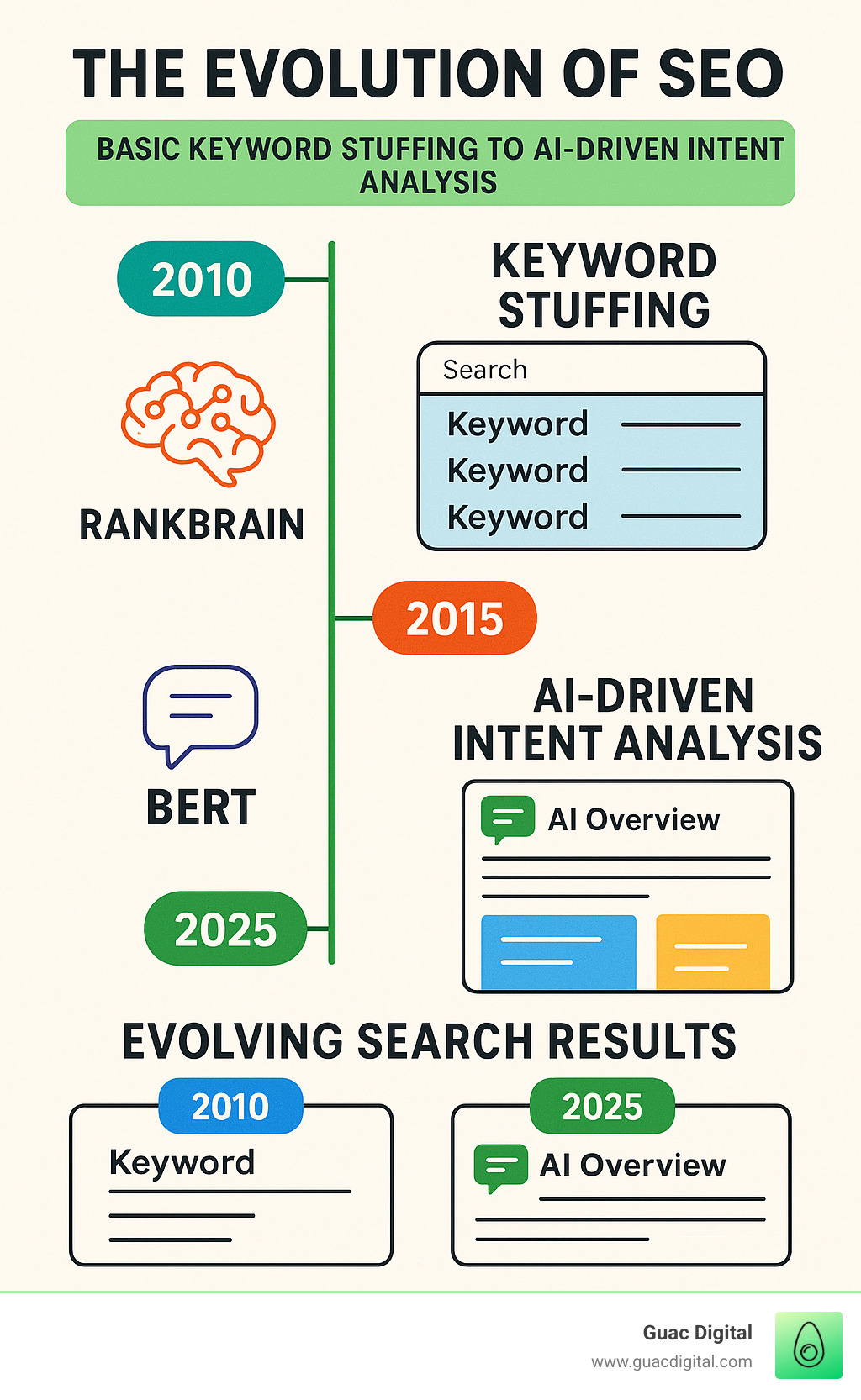
The numbers tell the story. Google processes 8.5 billion searches daily, and their AI algorithms like RankBrain and BERT now influence every single query. Meanwhile, 58% of SEO professionals plan to integrate generative AI into their workflows this year.
But here’s the reality check: AI isn’t replacing SEO professionals. It’s making them more powerful.
The shift is dramatic. Traditional SEO focused on ranking for keywords. Today’s AI-powered approach focuses on being the authoritative source that AI systems cite. Pages that directly address specific queries see 31% higher citation rates in AI-generated results.
This isn’t about gaming the system. It’s about understanding how search engines now process information and adapting your strategy accordingly.
As Guy Leon, founder of Guac Digital, I’ve helped businesses boost client engagement by 350% through strategic digital marketing that leverages artificial intelligence seo techniques. My experience implementing AI-driven campaigns has shown me that success comes from combining machine efficiency with human expertise.
Artificial intelligence seo vocab to learn:
What is AI SEO and How is it Changing Search?
Think of artificial intelligence seo as your marketing strategy’s evolution from a basic calculator to a smartphone. While traditional SEO focused on matching keywords, AI SEO uses machine learning, natural language processing, and sophisticated algorithms to understand what people actually want when they search.
This shift isn’t just technical jargon—it’s reshaping how we connect with our audiences online.
Google’s journey highlights this shift. RankBrain (2015) began deciphering unseen queries. BERT (2019) added human-like context, understanding nuances like the difference between a “river bank” and a “savings bank.” Then came MUM in 2021, an AI 1,000 times more powerful, capable of processing information across 75 languages and formats like images and video.
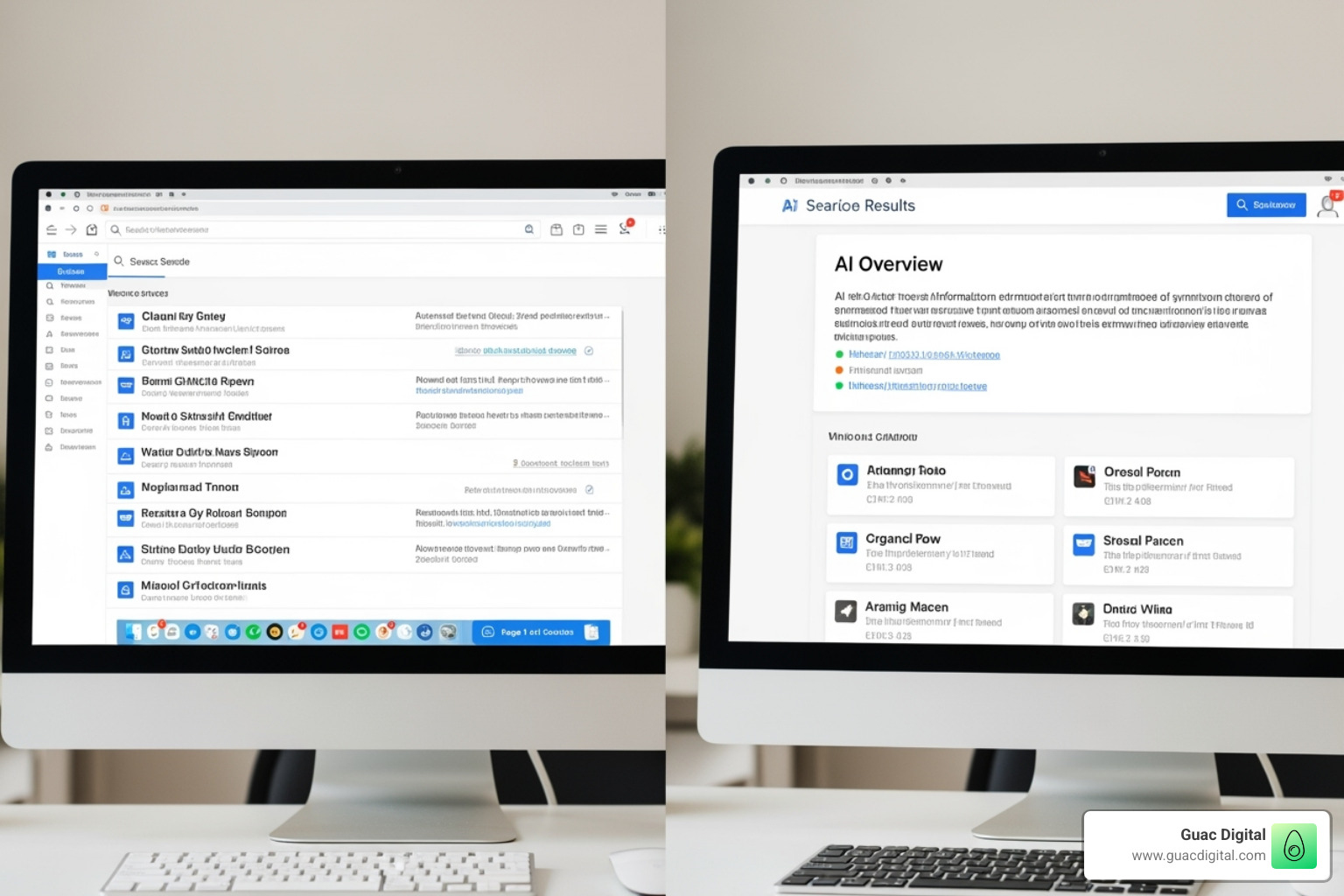
Now we’re seeing Google’s AI Overviews, which answer complex questions by pulling information from multiple sources and presenting it directly in search results. As of March 2025, these AI-generated answers appear in about 13% of all searches—nearly double what we saw at the beginning of the year.
This evolution from simple keyword matching to sophisticated artificial intelligence seo represents the biggest shift in search since Google launched. For businesses still thinking in terms of basic SEO, it’s time to catch up. Understanding What is Search Engine Optimization? in today’s AI-driven landscape is crucial for staying competitive.
The Shift from Ranking to Being the Source
Here’s where things get interesting: the goal isn’t just ranking anymore. It’s about becoming the trusted source that AI systems cite when answering questions.
Welcome to Generative Engine Optimization (GEO), where your content needs to be so valuable and authoritative that AI chooses to reference it. This matters because 58.5% of Google searches now end without a click—people find their answers directly on the search results page.
But here’s the silver lining: pages that directly address specific queries see 31% higher citation rates in AI-generated results. While some informational content might see decreased click-through rates when AI Overviews appear, branded searches actually benefit, with some seeing over 18% increases in clicks when they trigger an AI Overview.
The shift from chasing rankings to earning citations fundamentally changes how we approach content. Instead of optimizing for ten blue links, we’re optimizing to be the definitive answer to our audience’s questions.
How AI Understands Your Content
AI processes content like a detective analyzing evidence, which helps us create content it loves to cite.
- Semantic analysis helps AI grasp relationships between concepts, not just words. It understands that “digital marketing” relates to SEO and social media.
- Entity recognition identifies and connects specific people, places, and concepts. Mentioning “Tampa” connects your content to local search intent.
- Topical authority is built by consistently demonstrating deep knowledge on a subject, which builds trust with AI systems.
- Structured data via Schema markup acts like subtitles for AI, explicitly explaining your content. Content with interconnected entity schema is 51% more likely to appear in knowledge panels and AI-generated answers.
Unlike traditional crawlers, AI analyzes content for insights and context. This means writing naturally while organizing information for clarity. The beauty of artificial intelligence seo lies in this alignment—when you create genuinely helpful content that answers real questions, you’re simultaneously optimizing for both human readers and AI systems.
The Core Pillars of Artificial Intelligence SEO
Think of artificial intelligence seo as your digital marketing team’s superpower. Instead of spending hours on repetitive tasks, AI handles the heavy lifting while you focus on strategy and creativity. This change isn’t just about keeping up with trends—it’s about fundamentally improving how we approach SEO to deliver better results for our clients.
The beauty of AI in SEO lies in its ability to process massive amounts of data and identify patterns that would take humans weeks to uncover. At Guac Digital, we’ve seen how this technology can boost client engagement by 350% when implemented strategically.
Revolutionizing Keyword Research and Strategy
AI has transformed keyword research from simple brainstorming to a sophisticated, data-driven process.

Modern AI tools understand the semantic relationships between concepts, allowing us to build comprehensive topic clusters that capture user intent. This goes beyond isolated terms to form a cohesive content strategy.
AI’s predictive keyword analysis forecasts emerging topics by analyzing search trends, giving our clients a competitive advantage. We also use AI for topic gap identification, analyzing competitor content at scale to find opportunities manual research would miss.
AI also excels at uncovering long-tail conversational queries for voice search optimization and automates competitor analysis by examining millions of search results. With 60% of marketers already using AI for keyword research, the benefits of speed and deeper insights are clear.
This data-driven approach aligns perfectly with our philosophy at Guac Digital. By leveraging AI for our Data-Driven Insights, we ensure every keyword strategy is built on solid intelligence rather than guesswork.
Scaling High-Quality Content Creation with AI
Content creation used to be a bottleneck for many marketing teams. Not anymore. AI has opened up possibilities for creating high-quality, SEO-optimized content at a scale that was previously impossible—but with an important caveat: human oversight remains absolutely essential.
The content creation process now starts with AI-powered topic ideation. These tools can generate dozens of content ideas based on your target keywords, audience interests, and trending topics in your industry. About 48% of marketers use AI for content brainstorming, and 38% rely on it for creating detailed content briefs and outlines.
When it comes to first drafts, AI can produce initial content in about 10 minutes—a process that traditionally took hours. However, only about 20% of marketers use AI to draft complete SEO articles, and for good reason. The real magic happens when we use AI as a starting point and then apply human expertise to refine, fact-check, and infuse the content with unique insights.
AI excels at content optimization too. These tools analyze your content in real-time, suggesting improvements for keyword density, readability, and semantic relevance. Research shows that content written in natural language receives 37% more engagement in both search and voice results—something AI helps us achieve consistently.
Here’s where the human oversight becomes crucial. We treat AI as our co-pilot, not our autopilot. While AI can generate content quickly, humans ensure factual accuracy, maintain brand voice, and add the unique perspectives that make content truly valuable. Google’s guidance is clear: they don’t penalize AI-generated content, but they do penalize low-quality content created primarily to manipulate rankings.
The productivity gains are remarkable. AI is projected to deliver $460 billion in incremental productivity in marketing over the next decade. This means we can create more content, optimize it better, and free up our creative teams to focus on strategy and innovation. For more details on Google’s stance, check out Google Search’s guidance about AI-generated content.
Enhancing On-Page and Technical Optimization
Technical SEO can feel overwhelming, even for experienced marketers. AI changes that by automating complex analyses and providing clear, actionable recommendations. This is where artificial intelligence seo really shines in practical applications.
Automated site audits powered by AI can scan thousands of pages in minutes, identifying issues that would take days to find manually. These systems spot patterns in crawl errors, broken links, and server response issues that human analysis might miss. The result? Faster problem resolution and better site performance.
AI has revolutionized metadata optimization by creating dynamic title tags and meta descriptions based on real-time user behavior and search trends. Instead of writing static metadata and hoping it works, AI continuously optimizes these elements to improve click-through rates.
For internal linking, AI analyzes your content library to suggest optimal links that improve crawlability and establish topical authority, ensuring no opportunities are missed.
Core Web Vitals monitoring is another area where AI excels. These tools track your site’s performance metrics—Largest Contentful Paint (LCP), Interaction to Next Paint (INP), and Cumulative Layout Shift (CLS)—in real-time. They don’t just identify problems; they suggest specific fixes to meet Google’s performance benchmarks (LCP under 2.5 seconds, INP under 200 milliseconds, CLS under 0.1).
Finally, Schema markup recommendations have become much more sophisticated. AI doesn’t just suggest which schema types to use—it ensures comprehensive implementation with all relevant properties. Research shows that schema with 90% or higher property completion has a 43% higher impact on rich results. Even better, content with interconnected entity schema is 51% more likely to appear in knowledge panels and AI-generated answers.
By automating these technical tasks, we ensure our clients’ websites are optimized for both human users and AI crawlers, creating a solid foundation for long-term SEO success.
Actionable Strategies for an AI-First World
The digital marketing world is moving fast, and staying ahead means embracing change rather than fighting it. As AI reshapes how search engines understand and serve content, we need strategies that work with these new systems, not against them.
The key isn’t to outsmart AI—it’s to create genuinely helpful content that both humans and machines can recognize as valuable. This means focusing on quality signals, building real expertise, and using AI tools to amplify our human insights rather than replace them.

Prioritizing E-E-A-T in Your Content
In a world flooded with AI-generated content, Google is getting pickier about what it considers trustworthy. That’s where E-E-A-T comes in—Experience, Expertise, Authoritativeness, and Trust. Think of it as Google’s way of asking: “Should we really trust this content enough to show it to searchers?”
Experience is your secret weapon against generic AI content. When you share real stories from your work—like how you helped a client increase their conversion rate by 40% or the specific challenges you faced during a website redesign—you’re providing something AI simply can’t replicate. These first-hand accounts add authenticity that search engines increasingly value.
Expertise goes beyond just knowing your stuff. It means having qualified people create and review your content. This is why author bios matter more than ever. When someone with genuine credentials puts their name on an article, it signals to both readers and search engines that the information comes from a reliable source.
Authoritativeness builds over time through consistent quality and recognition from others in your field. When reputable websites link to your content or industry experts reference your work, you’re building the kind of authority that AI systems recognize and reward.
Trustworthiness is the foundation that holds everything together. It means being transparent about your sources, keeping your information current, and maintaining a secure, professional website. Pages with clear author credentials and up-to-date statistics often get preferential treatment in AI-generated responses.
This focus on E-E-A-T isn’t just good practice—it’s your crucial defense against low-quality AI content. While anyone can generate hundreds of articles with AI, not everyone can provide genuine expertise and real-world experience. For more details on implementing these guidelines, check out Google’s E-E-A-T guidelines.
Implementing a Topic Cluster Model
Here’s where artificial intelligence seo strategy gets really smart. Instead of creating random blog posts and hoping they rank, the topic cluster model organizes your content like a well-structured library that both humans and AI can easily steer.
Think of pillar pages as your comprehensive guidebooks. These are substantial, authoritative pieces that cover a broad topic from every angle. For example, if you’re a digital marketing agency, you might create a pillar page about “Complete Guide to Digital Marketing Strategy” that provides a thorough overview of the entire field.
Cluster content works like detailed chapters that dive deep into specific aspects of your main topic. These might include posts about “Email Marketing Automation,” “Social Media Analytics,” or “Content Marketing ROI.” Each piece links back to your pillar page, creating a web of related information that demonstrates your comprehensive knowledge.
This structure is incredibly powerful because comprehensive content covering a topic in-depth ranks for 68% more long-tail keywords than narrowly focused content. When AI systems scan your site, they can clearly see the relationships between your content pieces and understand that you’re not just dabbling in a topic—you’re an authority.
The beauty of this approach is how it serves both your audience and search engines. Visitors can easily find related information, while AI systems can quickly identify you as a comprehensive source worth citing. This makes the topic cluster model a core strategy for effective artificial intelligence seo.
When you implement this structure thoughtfully, you’re not just creating content—you’re building a knowledge base that positions your brand as the go-to expert in your field. And in an AI-driven world, being recognized as an authoritative source is exactly where you want to be.
The Future of Search: What’s Next for AI and SEO?
The digital marketing landscape is evolving at breakneck speed, and we’re just scratching the surface of what artificial intelligence seo can accomplish. As we look ahead, several exciting trends are reshaping how we approach search optimization.
Voice search optimization is becoming increasingly critical as smart speakers and virtual assistants find their way into more homes and pockets. People naturally speak differently than they type—they use longer, more conversational phrases and ask complete questions. This shift means optimizing for natural language patterns and question-based queries will be essential. Instead of targeting “pizza delivery Tampa,” we’ll optimize for “Where can I get pizza delivered near me tonight?”
The rise of visual search is equally transformative. Google Lens and similar technologies now allow users to search using images instead of words. This means our images, videos, and visual content need to be optimized with descriptive filenames, comprehensive alt text, and structured data. Computer vision AI can now “see” and understand visual content with remarkable accuracy, making visual SEO a competitive advantage.
Perhaps the most significant change coming is hyper-personalization. Search results are becoming incredibly custom to individual users based on their search history, location, device, and even the time of day they’re searching. This means we’ll need to create content that speaks to multiple micro-segments of our audience while maintaining our core message.
Predictive analytics for algorithm changes represents a game-changer for SEO professionals. Instead of scrambling to react after Google releases an update, AI tools are beginning to identify patterns that suggest upcoming changes. This allows us to adjust our strategies proactively rather than playing catch-up.
The increasing importance of data privacy and ethical AI use cannot be ignored. As AI becomes more powerful, users and regulators are demanding greater transparency about how their data is used. Search engines are responding by prioritizing websites that demonstrate ethical data practices and algorithmic fairness.
These changes aren’t happening in isolation—they’re interconnected. Voice searches often trigger visual results, personalized experiences rely on predictive algorithms, and all of this must happen within ethical boundaries. The businesses that thrive will be those that accept these technologies while maintaining a human-centered approach to their digital marketing strategies.
Frequently Asked Questions about Artificial Intelligence SEO
Let’s address the elephant in the room. When we talk about artificial intelligence seo with our clients, three questions come up every single time. And honestly, these are smart questions that deserve thoughtful answers.
Will AI replace SEO professionals?
Here’s the thing that might surprise you: AI isn’t coming for our jobs—it’s making us better at them.
Think of AI as your incredibly efficient research assistant who never needs coffee breaks. It can crunch through keyword data, audit websites, and even draft content outlines faster than any human ever could. But here’s what it can’t do: understand your brand’s unique voice, craft compelling narratives that connect with real people, or make those strategic decisions that require genuine human insight.
The numbers back this up. 17% of marketers report saving over 10 hours weekly using AI tools for SEO tasks. That’s 10 hours they’re not spending on repetitive data entry—it’s 10 hours they’re investing in creative strategy, relationship building, and high-level thinking.
A recent survey showed that AI advancements around productivity are of the most interest to SEO professionals right now. We’re not worried about being replaced; we’re excited about being empowered. AI handles the grunt work so we can focus on what humans do best: understanding nuanced user intent, building authentic connections, and adapting to those curveball market changes that no algorithm sees coming.
Is AI-generated content penalized by Google?
Google’s position on this is refreshingly straightforward: they care about “helpful content,” not who (or what) wrote it.
The key distinction isn’t between human-written and AI-written content. It’s between content that genuinely helps users and content that’s just trying to game the system. If you’re using AI primarily to manipulate rankings—churning out thin, low-value articles just to fill pages—that’s a problem. But if you’re using AI to improve human expertise, provide unique insights, and genuinely serve your audience’s needs? You’re golden.
One study analyzing 600,000 pages found that AI-generated content doesn’t inherently hurt Google rankings. The secret sauce is adding that human touch—your expertise, your experience, your unique perspective. AI might help you draft faster, but it’s your knowledge and insights that make content truly valuable.
We always tell our clients: let AI handle the heavy lifting, but keep your hands firmly on the steering wheel.
How do I measure the ROI of AI in my SEO efforts?
This is where things get exciting, because AI’s impact shows up in multiple ways that all add up to serious business value.
Efficiency gains are the most immediate win. When your team saves hours on keyword research and content outlining, that’s money back in your pocket. But the real magic happens when you track performance improvements—better rankings, increased organic traffic, and most importantly, more conversions.
Here’s what we’re seeing in the data: 64.48% of SEO professionals prioritize the accuracy and reliability of AI-generated insights. Why? Because AI reduces guesswork. Instead of hoping your content strategy will work, you’re making decisions based on solid data analysis.
The scalability factor is huge too. 82% of enterprise SEO specialists plan to invest more in AI because it lets them manage extensive web properties without proportionally expanding their teams. And when algorithm updates hit (and they always do), 49.2% of businesses reported improved rankings following these changes specifically because their AI tools helped them adapt quickly.
The bottom line? AI doesn’t just make your SEO more efficient—it makes it more effective. For a deeper dive into measuring your marketing success, check out our guide on How to Calculate Digital Marketing ROI.
When we implement artificial intelligence seo strategies for our clients at Guac Digital, we track both the time saved and the results gained. It’s not just about doing SEO faster; it’s about doing it smarter.
Conclusion
The integration of AI into SEO is not a future trend—it’s the current reality reshaping how we connect with our audiences online. Throughout this guide, we’ve explored how artificial intelligence seo is changing every corner of search marketing, from the way we uncover valuable keywords to how we craft compelling content and optimize our websites for both humans and machines.
What excites me most about this evolution is how AI empowers us to work smarter, not harder. Instead of spending hours on repetitive tasks like basic keyword research or technical audits, we can now focus on what truly matters: creating meaningful connections with our audience and delivering genuine value through our content.
The magic happens when we stop viewing AI as a replacement and start embracing it as our most capable teammate. AI brings incredible analytical power, lightning-fast processing, and the ability to scale our efforts beyond what we could achieve manually. But it’s our human creativity, strategic thinking, and deep understanding of our audience that transforms those AI insights into campaigns that truly resonate.
At Guac Digital, we’ve seen this partnership between human expertise and artificial intelligence create remarkable results for our clients. Based in Tampa, Florida, we leverage big data for programmatic marketing to achieve high ROI, always keeping personalized client strategies at the heart of everything we do. This approach allows us to guide our clients confidently through the ever-changing digital landscape.
The businesses that will thrive in this new era aren’t necessarily the ones with the most advanced AI tools—they’re the ones that understand how to blend AI efficiency with human insight to create experiences their customers genuinely value.
Ready to open up the full potential of artificial intelligence seo for your business? Explore our work with AI in SEO and find how we can help you not just adapt to the future of search, but lead it.